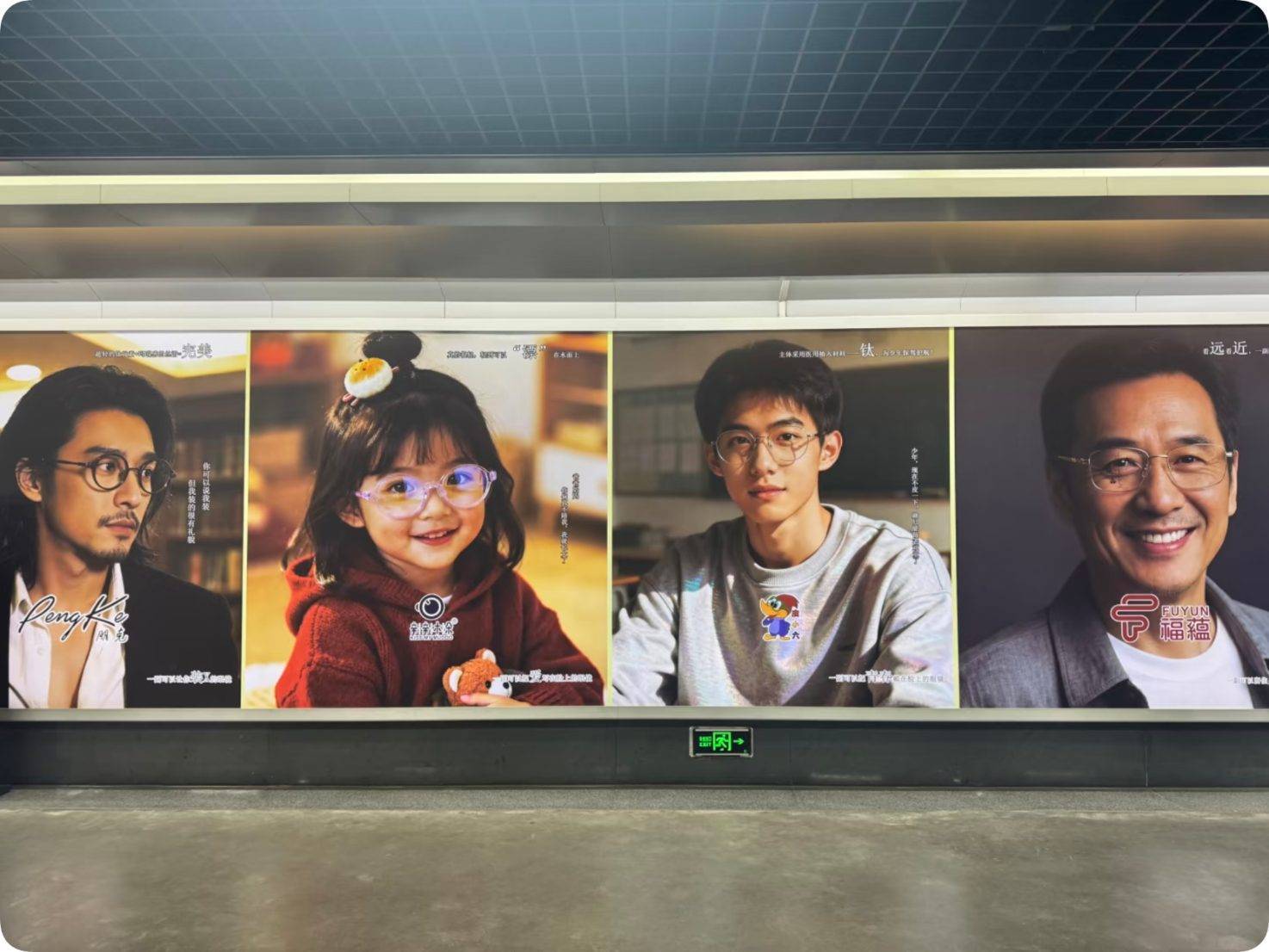
Tiyu West Road Station, known as “Hell West”, is a manifestation of the congestion level of the Guangzhou subway.
Every day, hundreds of thousands of people chatting and holding mobile phones pass through the station corridor, and their black silhouettes are illuminated by advertising light boxes.
But now, in addition to bosses, clients and deadlines, bleary-eyed passers-by who wake up early and work late at night also face a new fear——
That is the “AI pseudo-human advertisement” that is ubiquitous in subway stations and always evokes the uncanny valley effect.
The smell of AI is too strong, and the ads are very heart-burning.
The popularity of AI has always been quiet; in other words, you knew they would become popular, but you didn’t expect it to become popular so quickly. It was like finding out overnight that everyone around you was watching the Hongguo short drama.
The same goes for AI ads in subway stations.
AI advertising is actually nothing new. As early as two years ago, Shenzhen Metro’s “Your Look” series of advertisements, which were personally produced by Shenzhen Metro, as well as the slightly weird materials from Fliggy and JD.com, have been on the hot searches.
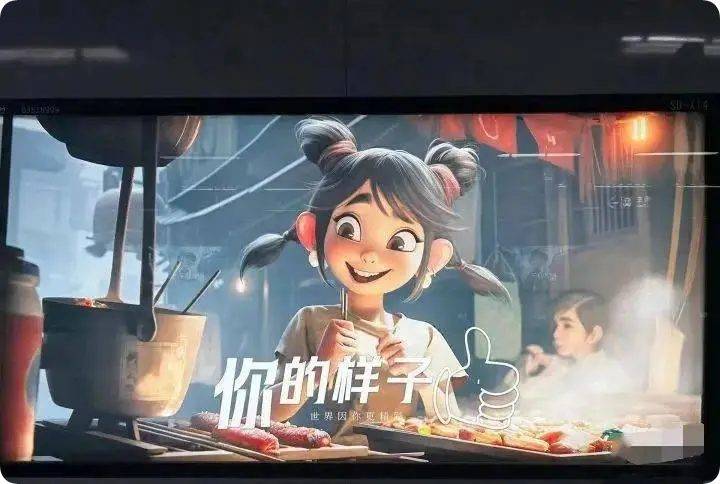
But it’s one thing to have AI ads, and another thing to have only AI ads. Nowadays, when standing in a subway station and looking around, almost all light box advertisements are marked with “image generated by AI”, which brings a completely different spiritual impact:
This day came much faster than expected.
Of course, if the “AI flavor” of the advertisement was not too strong, we would not have noticed the AI-generated annotation placed in the corner of the poster.
In this regard, commonly used models such as GPT Images are partly to blame.

Picture | Poster generated in one minute using ChatGPT
Every time the model is updated, readers always ask in the comment areas of Aifaner and APPSO whether the “dirty feeling” of the generated images has been resolved, but in the end they always come back disappointed – at least for now, AI-generated products without post-processing are still prone to flaws.
But what’s even more embarrassing is that brands are scrambling to put these “fake at first glance” direct materials onto posters intact, and a feast of “fake people” has begun.
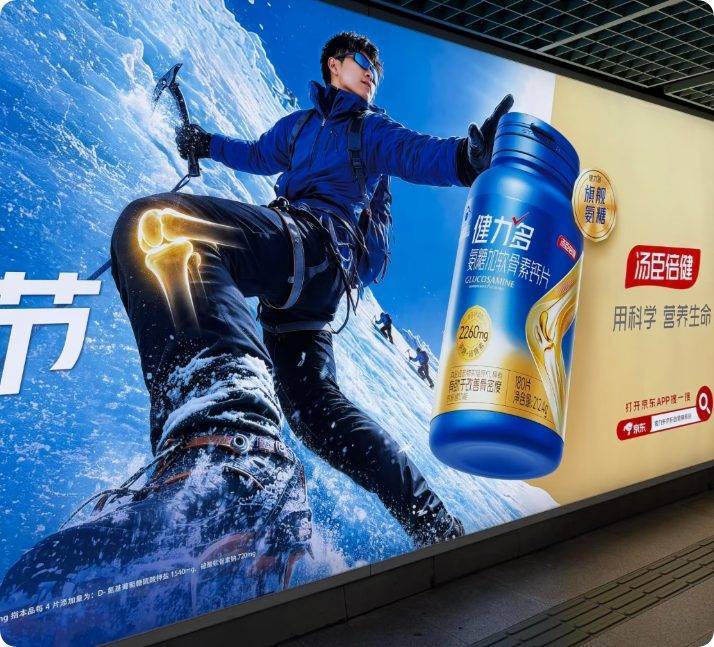
The recent protein powder advertisement that dominates the Guangzhou subway screen can be said to be “pseudo-human” to the point of being overbearing:
A very typical AI “average face”, skin with no texture details and a greasy picture texture are enough to make everyone who has used Douyin Hongguo and used AI to generate pictures say, “Where have I seen this girl before?”
Even when I traveled to Changsha, I couldn’t get rid of this advertisement’s constant pressure——
However, as the main product changed from blue to platinum cans, the cycling jerseys on the characters also changed from blue and black to gray and white. By the way, people revisited the “should the skirt be blue and black or platinum” debate that was popular 11 years ago.
Cruise travel, which represents high-end leisure needs, is also not immune.
In the cruise advertisement video posted in the subway station, a group of friends are holding wine glasses and chatting on the deck. Everything looks normal…until they reveal their big white teeth that are almost copied and pasted.
Chimelong Paradise, which is preparing for the Halloween event at the end of the month, has planned a complete set of themed space advertising.
However, neither the “glossy” characters nor the different space gates with interspersed fonts reveal half of the real environment of the park; it doesn’t look like a theme park, but more like a low-quality escape room poster hidden in a dilapidated building on Beijing Road.
From the roll-up banners in shopping malls outside the station to the interior layout of the carriages, similar examples can be listed endlessly. After all, “old-fashioned advertisements” that do not use AI are now a niche.
But looking at these ads, you will probably have the same question as me: What do AI ads tell us?
From a literal sense, the meaning of “advertising” should be to spread important information widely, but obviously, we can’t get any effective information from AI advertising——
AI characters can endorse health care products, but they are born perfect, and it is difficult to say how much the generated health image means to ordinary consumers; the AI dopamine girl in the carriage poster is holding a cup of milk tea, but everyone knows that she has never drunk milk tea; and the fictional cruise ship and amusement park scenes do not provide incremental knowledge for us who may actually go to the scene.
If traditional advertising hopes to convey products, services, brands or concepts, then in the case of AI advertising, the form has deviated from the function, and the information is almost completely lost. In the end, what is conveyed to us is only the anxiety of not being able to keep up with the AI trend.
Of course, we should not overly deify traditional advertising. There are also many perfunctory works in traditional advertising.
The favorite classic car commercials inserted in the middle of TV programs are often just a car driving through wilderness, bridges and ice fields, accompanied by exciting music, and finally end hastily when no one in the audience remembers the name of the model.
Picture | Station B UP owner @糳hongs’ car advertising practice
But the difference is that the faces, lights and scenes mass-produced by AI just constitute the traces of industrialization that are most easily recognized by the naked eye. The sense of disobedience and the overwhelming uncanny valley effect almost instinctively cause rejection and discomfort.
In this sense, AI advertising has unconsciously become a “developer” of inferior advertising.
The worst aspect of AI advertising is also its greatest contribution. The lingering “AI smell”, like an academic fluorescent marker, makes us realize that the boring advertisements that were originally formulated and produced by assembly lines have long been everywhere in every corner.
In other words, what we hate may never be just AI, but the perfunctory attitude that has become more unscrupulous with the help of new technologies.
Creativity and sincerity are the secret ingredients of good content
Ironically, before AI took over, there was no shortage of good advertisements in subway stations.
In March last year, children’s clothing brand balabala launched a special photography exhibition “Chinese Children” in subway stations in several cities. Every child under the camera lens has his or her own unique happiness and troubles:
Some people failed to be elected class captain, holding back tears with a bit of grievance and dissatisfaction in their eyes; some were hiding in the yard, spying on their parents’ movements while hiding their old clothes, hoping that their parents would give them new clothes; some saw soldiers running past their grandfather’s tricycle, and ignorantly imitated the way they saluted on TV…
More content to the left
The subtle expressions of these children are something that today’s AI is not yet able to understand or reproduce; but it is precisely these details that give the advertisement the power of emotion.
Also at Tiyuxi Road Station, the tomato sauce advertisement “Tomatoes that want to win is in Heinz” launched by Heaven & Hell for Heinz Foods during the National Games last year, used dozens of tomato pedicles of different shapes cosplayed into the image of athletes, playfully taking into account the “health” of tomatoes and support for sportsmanship.
Not surprisingly, Xiaohongshu Notes praising the ad quickly exceeded 100,000 likes. When I walked into the subway station during that time, I could always see passers-by stopping in front of the advertisements and taking out their mobile phones to take photos——
This is the value of creativity.
The above discussion can easily make people think that the popularity of AI is the direct cause of the “aesthetic downgrade” of advertising. But on the contrary, in the past period of time, there have been many cases of using AI to assist creativity:
For example, in June this year, You Benchang, who is in his 90s, authorized an AI digital clone to star in a short advertising film “At the age of 93, I have my first robot in my life.” At that time, “Uncle Grandpa” was physically incapable of high-intensity shooting, but in the world created by AI, he seemed to be in good spirits and talked about the simple happiness of the toilet robot allowing the elderly to wake up at night peacefully.
At the end of the advertisement, You Benchang himself appeared and recorded a blessing video; and this advertisement became the artist’s last work.
Although the prompt that “the picture and the dubbing of the advertising slogan are all generated with AI assistance” was marked on the screen from the first second, the always picky viewers of Bilibili did not point the finger at AI this time. Because technology does not overwhelm the focus, but allows the advertisement to convey what it really wants to express – it is an advertisement with a “soul”.
In the final analysis, advertising is a service industry that serves brand concepts and the inner pleasure of the audience; but judging from the current situation in subway stations, many practitioners may be using the perspective of manufacturing to produce advertising, mistakenly believing that the quantity and speed of production of visual materials can replace creativity and sincerity.
How to save public visual space?
Since AI has the ability to make advertisements colorful, why are the ones that end up in subway stations often the most boring ones?
The most intuitive answer is, of course, cost.
Traditional advertising production is a long work chain. Finding photographers, renting studios, hiring models, or even just finding a suitable background material requires repeated coordination between budget, time, copyright authorization, and design requirements.
Picture | Pixabay@Pexels
Take Adobe Stock/Tu Chong Creative as an example. Commercial stock materials have different authorization levels. If they are only posted on public accounts, it is easy to handle. There are ready-made cheap authorization packages. However, if they are used in “outdoor advertising” fields such as subway light boxes or shopping mall doorways, authorization will become extremely complicated. You must call a dedicated hotline to discuss outdoor commercial authorization, and the price of a piece of material will soar to more than a thousand yuan.
With AI, a prompt word can replace all the complicated communication and friction in the past. This is of course a huge temptation for advertising agencies that need fast delivery.
However, production and creativity are never the same thing. AI can only guarantee the speed at which an idea can be turned into a finished product, but it cannot guarantee that the idea itself is worth producing.
What’s more, decision-making power in commercial advertising has always been highly decentralized.
The designer may want to make it more interesting, but the account manager must ensure the project cycle, and the brand marketing department of Party A must consider the acceptance of the leadership and the market. Once all parties have different opinions, the one that can survive repeated revisions to the end may be the most mediocre plan.
More subtly, AI can now provide a seemingly advanced explanation for this banal solution. Once AI is used, it becomes politically correct to embrace new technologies. As for whether advertising is creative, it becomes a secondary issue.
In this way, it is not difficult to understand why AI advertising will quickly dominate subway stations – it is the biggest common denominator at the moment.
But we all know that individual rationality does not always lead to collective rationality.
Advertising in subway stations is certainly a solution acceptable to all parties involved, but in terms of results, the ubiquitous AI pseudo-humans are causing visual damage to the millions of citizens who pass by every day, and are also destroying the visual environment of urban public spaces.
Picture|小红书@ Swift Big Stupid Dog
Regarding visual pollution in public spaces, we may be able to borrow an idea from law and economics: whoever can avoid damage at a lower cost should take action.
If ordinary citizens do not want to be polluted by AI advertisements, the only way is not to enter the subway station, or to look straight ahead without seeing advertisements. However, this is almost an unrealistic requirement. In contrast, starting from the advertising side, “who pollutes, who controls” is obviously cheaper and more feasible.
In fact, many cities that are famous for their public visual spaces have strict regulations on outdoor advertising: Paris’s “Local Advertising Regulations” regard outdoor signs and advertisements as part of the city’s public landscape, requiring shop facades and signs to coordinate with the building facades in color, shape and lighting, creating a familiar Parisian style; New York has adopted the “Zoning Regulations” to maintain the coherence and coordination of the facades of Manhattan blocks.
Perhaps one day, Chinese cities should also formulate corresponding outdoor advertising management regulations to prevent the extensive growth of outdoor advertising from becoming part of the “urban aesthetic”.
Related Reading
- Original Wang Xingxing admitted his mistakes twice, Yushu soared by 110 billion2026-10-28
- Can AI actors beat real stars? Hollywood actors are having a complete falling out2026-10-27
- iPhone Duo Teardown: The best way to repair a foldable iPhone is to not tear off the film2026-10-27
- Original propaganda AI costs reduction, don’t forget people are still in the workshop2026-10-27
- Original overseas “red fruits”, harvesting the world?2026-10-27