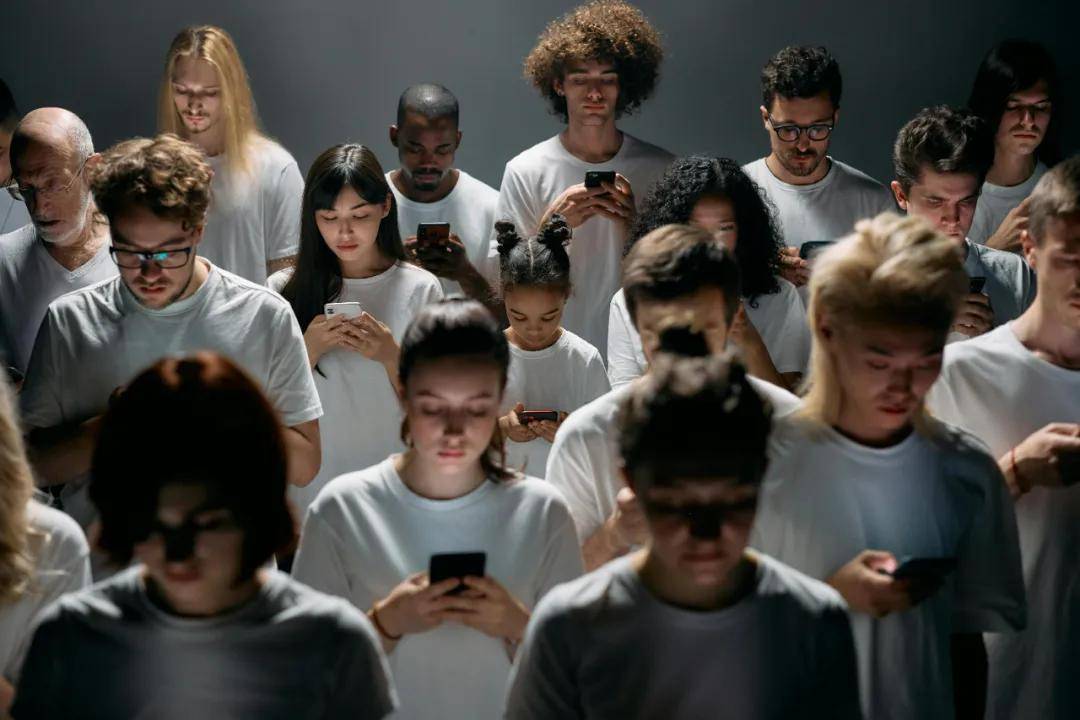
The first thing I do when I open my eyes in the morning, I touch my phone and scroll through Douyin for a while; on my way to work, I play soda music in my headphones; during my lunch break, I click on Red Fruit to catch up on two episodes of short dramas; when I get home from work, I collapse on the sofa and read Tomato novels until late at night; even when making plans at work, editing, flying books, and beanbags have become standard.
You may not realize that 24 hours a day, how much time is being quietly eaten up by byte-based products?
1. 時間殺手
The latest “China Internet and New Media” research report released by Nomura Securities gives a set of spine-chilling figures:
In August 2026, among the top 50 mobile applications in China by user time, ByteDance’s products took a total of 41.8% of the total time share, while Tencent’s dropped to 28.6%. The gap between the two suddenly widened to 13.2 percentage points from 3.3 percentage points a year ago.
You should know that these 50 top applications have accounted for about 93% of the usage time of the entire network, which can basically represent the entire mobile Internet. This means that more than 40% of China’s national attention is being captured by the same company.
Today’s Byte can be called a terrifying time killer. As long as you pick up your mobile phone, you can always fall into its products in a certain scene.
Short videos are the basic dish. Third-party monitoring data shows that the monthly active users of Douyin’s main app have exceeded 1 billion, and the average daily usage time of daily active users has reached 112-120 minutes.
However, what really widens the gap is the second growth curve that broke out in the past year – short dramas.
QuestMobile monitoring data shows that as early as February this year, the average daily usage time per user of the Hongguo Short Drama independent App had reached 125 minutes; by July, the App’s daily active users had reached 168 million.
In addition, there are free Tomato novels to take over the reading and listening scenes, soda music cuts away the listening time with a free model, Toutiao maintains the position of graphic and text information, and even the entrance to the AI era, ByteDance has preempted it with Doubao.
The terrifying thing about the byte system is that it uses matrix products to set up a “dragnet” and places a “time killer” on every time track. They divert traffic and coordinate algorithms, making it difficult for you to jump from one pit to another without stopping.
2. 成癮工業
Why can’t we stop scrolling through our phones even though we know it’s a waste of time?
Many people blame this on their own weak willpower. But the truth is that what you are facing is a complete set of industrial-grade addiction systems that are precisely designed and continuously iteratively optimized. Every swipe, every stay, and every like you feed is feeding the system, making it understand you better and make it harder to break free.
In its investigation earlier this year, the European Commission initially determined that TikTok’s addictive design violated the Digital Services Act.
The committee pointed out that infinite scrolling, auto-playing, push notifications and highly personalized recommendation systems will continue to stimulate users, prompting people to enter “autopilot mode”, weakening self-control and inducing compulsive use behavior.
Take the Hongguo short drama as an example. The secret of why it can become the new “King of Time Killers” is that it has a strong rhythmic plot with two minutes per episode and a reversal every thirty seconds. It is the emotional excitement that has been repeatedly verified, such as counterattack and slap in the face, rebirth and revenge, and the boss’s sweet pet. It is the seamless automatic serial broadcast mechanism and the positive feedback loop brought by gold coin incentives.
You think you are selecting dramas, but in fact, the algorithm is precisely feeding you the content that can best stimulate your dopamine secretion.
The same logic applies to short videos.
A content unit that lasts for tens of seconds just hits the shortest threshold of human attention. Swiping up is a brand new unknown stimulus. The sense of reward brought by this uncertainty stimulates users to keep swiping. The algorithm will constantly adjust the recommended direction based on how long you stay, trapping you in an increasingly comfortable and narrow information cocoon.
The scariest thing about this kind of obsession is its concealment. You don’t feel like you’re wasting time, because each video is very short, but the accumulation of countless videos is a whole life that will never come back.
What is even more alarming is that this addiction mechanism is penetrating into all age groups.
Teenagers are the first group to bear the brunt. Research from Beijing Normal University points out that the precise feeding of algorithms will amplify the cognitive biases of teenagers and form a closed information cocoon.
If children are immersed in fragmented and highly stimulating content for a long time, their concentration, in-depth thinking ability and logical reasoning ability will be irreversibly affected.
The elderly are not spared either. QuestMobile’s “2026 Short Drama Industry Insight Report” shows that among users of short drama WeChat mini programs, those over 51 years old accounted for 31.2%. Silver-haired users have become a group that cannot be ignored in short dramas and mini programs. Many commentators believe that silver-haired people are becoming the new hardest hit area for digital addiction.
From young adults to gray hair, Byte’s product matrix covers almost all age groups. It uses different content forms to hit the emotional pain points of different people, but the ultimate goal is highly consistent – occupying more of your time.
3. poverty of time
I often wonder, are our generation more free or less free?
The original intention of technology should have been to liberate mankind. But the paradox is that as these products become more and more useful, we feel that we are getting busier and have less and less time.
In fact, we are falling into a kind of “time poverty”. It’s not that there is no time, but that time is cut into pieces and filled to the brim, but not much of it truly belongs to you.
Have you ever had this experience: You wanted to check something, so you turned on your phone and watched short videos for half an hour. You wanted to relax before going to bed, but ended up watching short dramas until one in the morning. You wanted to use your commuting time to learn something, but in the end you spent the whole journey watching mindless funny videos.
Professor Ma Zhonghong of Soochow University calls this type of content “digital swill”. It can quickly fill your mental belly without any nutrition. Long-term consumption can also damage your cognitive function.
This is the most profound impact of byte products. It changes not only how much time we spend on our phones, but also the way we perceive time, process information, and think about problems. It is reshaping our brains.
Of course, I don’t mean to deny it entirely from the moral high ground.
Objectively speaking, byte-based products also have their irreplaceable social value. It makes information more accessible, gives ordinary people a stage for expression and creation, and gives people in high-pressure lives a low-cost emotional outlet. For many manual workers, young people in small towns, and stay-at-home mothers, Douyin and Hongguo may be the most relaxing and happiest moments of their day.
There is no right or wrong in technology itself, the problem lies in the degree.
When a company accounts for more than 40% of the nation’s online time, this matter is no longer just a business success story, but a public issue that deserves the vigilance of the whole society.
4. clear awareness
China’s Internet has developed for more than 20 years, and no company has ever achieved such an overwhelming advantage in the core battlefield of attention like ByteDance does today.
This is a victory for business, but it may not be a blessing for the times. What should we do in the face of this ever-growing “time beast”?
It is unrealistic to expect companies to take the initiative to brake. It is the nature of capital to pursue profits. In business, ByteDance has no obligation to be responsible for users’ time management. The more addictive its products are designed to be, the more successful it will be from a business perspective.
It is unrealistic to expect regulation to ban everything. This is a 100-billion-dollar industry, related to countless jobs and creative ecology. A simple and crude ban is not in line with the laws of the market, but also goes against the trend of technological development.
The final answer may still come back to ourselves.
Recognizing the existence of algorithms, realizing that you are being “fed”, and maintaining a clear awareness are the first steps. When you find yourself mindlessly scrolling again, stop and ask yourself, “Is this really what I want?”
Taking the initiative to set boundaries for yourself is the second step.
For example, you stipulate that you should not watch short videos for more than an hour a day, such as not touching your phone half an hour before going to bed, and not watching short dramas while eating. Fighting against industrial-level addiction systems is difficult with willpower alone, but you can rely on habits and rules.
More importantly, look for things that bring you a deeper sense of satisfaction.
Read a good book, chat with a friend face to face, go for a walk outside, and do something concrete. The pleasure brought by dopamine is fleeting, but the sense of fulfillment brought by endorphins can truly nourish a person.
Related Reading
- Audi moved a “rescue” from Chery2026-10-28
- Original: Liang Wenfeng still rents a house in Beijing after attracting 150 billion yuan in half a year2026-10-27
- The market value of the six luxury goods giants has shrunk by nearly 2 trillion since the beginning of the year, with LVMH losing the most blood.2026-10-27
- Original “Nothing to film” Jia Nailiang sold 570 million yuan in a single day, but the company behind him suffered a huge loss of 3.7 billion yuan in five years2026-10-27
- EDonkey, can you cross the river by touching a motorcycle?2026-10-26