Jiemian News Reporter | Song Jianan
European luxury goods giants that once dominated the global capital market are collectively facing a brutal round of revaluation.
According to data released by the Financial Times on October 25, quoted by Sino-Singapore Jingwei, the top six listed luxury goods companies in Europe by market value lost a total of 251 billion euros (approximately RMB 1.87 trillion) in market value during the year, approaching the 2 trillion mark. The six major groups are LVMH, Hermès, Kering, Richemont, PRADA and Moncler.
Among them, LVMH and Hermès have become the two companies that have lost the most market value. LVMH alone has lost 131.6 billion euros in market value (approximately RMB 984.881 billion); Hermès follows closely, with a market value of 93.3 billion euros (approximately RMB 698.248 billion) evaporated.
Behind the sharp plunge in market value are the dismal financial reports that these luxury goods giants have successively handed over.
As the industry leader, LVMH’s revenue in the first three quarters of 2026 reached 57.148 billion euros, a year-on-year decrease of 2% and an organic growth of 2%. Among them, revenue in the third quarter reached 18.504 billion euros, an organic growth of 1%, and the quarter-on-quarter growth rate slowed down. The fashion and leather goods department, which accounts for the largest proportion, saw a 5% decrease in organic revenue, becoming the biggest shortcoming dragging down overall performance. Other departments all achieved single-digit growth in organic revenue.
LVMH Group said that organic revenue in the third quarter reflected the weak environment in the Chinese market, but the US, European and Japanese markets grew well. In the Asian market except Japan, organic revenue in the third quarter fell by 5%, after growing by 7% and 4% respectively in the first and second quarters.
A 2025 study released by Bain and Altagamma, the Italian luxury goods industry association, shows that the number of global luxury consumers will drop from approximately 400 million in 2022 to approximately 340 million in 2025. High-spending customers continue to support the market, but their spending also shows signs of stabilizing.
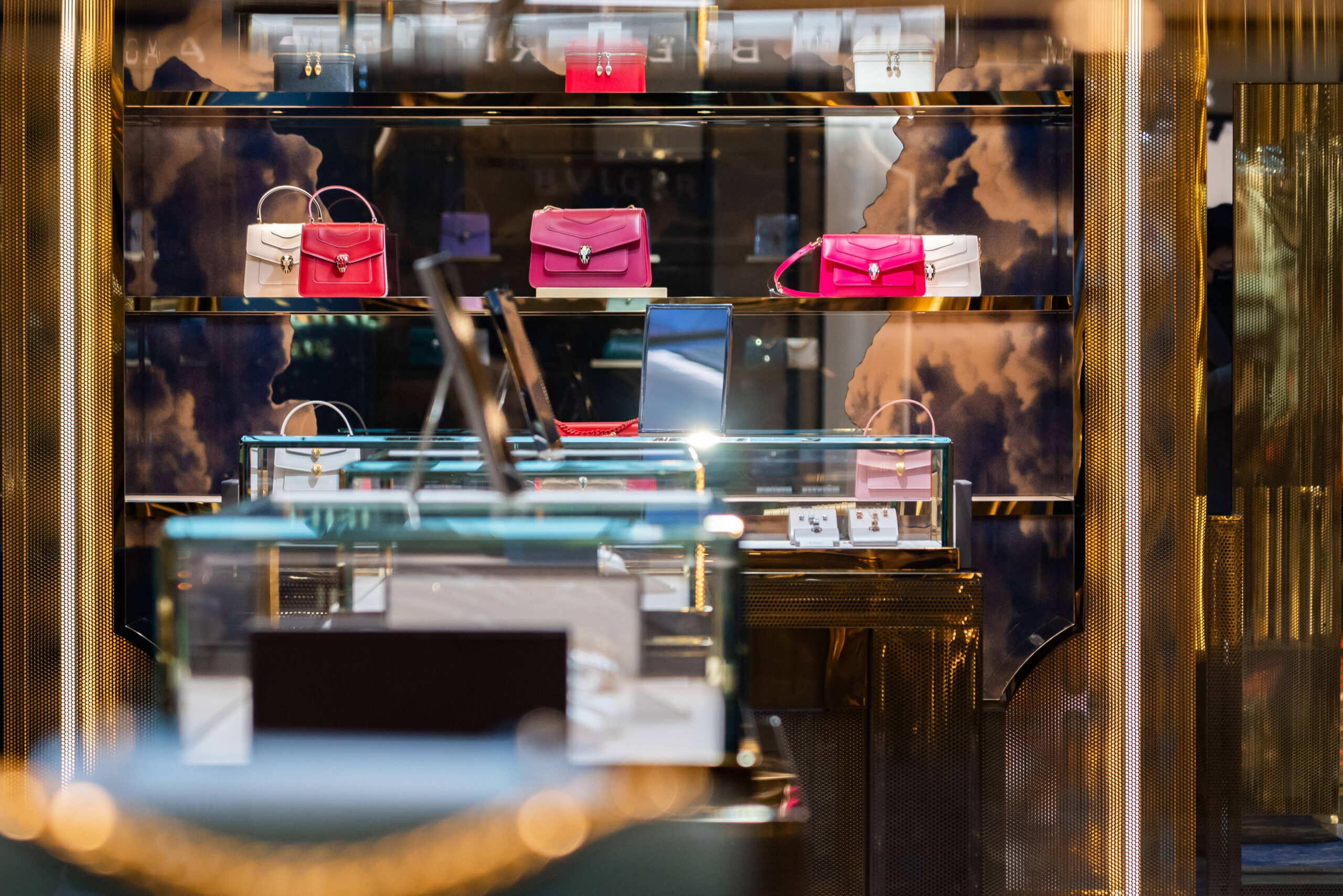
A research report released by Bernstein in September this year pointed out that factors such as inflation and European economic uncertainty are squeezing the luxury purchasing power of some consumers. For some consumers who yearn for luxury goods but have an annual luxury consumption budget of less than 1,500 euros, LVMH’s current full-size handbag entry price of about 1,550 euros has exceeded their annual budget, and the average selling price of its handbags has reached about 2,200 euros.
The personal wealth of Bernard Arnault, the head of LVMH, has also been affected. Forbes real-time rich list data shows that since this year, Arnault’s net worth has shrunk significantly, once falling from the world’s richest man to fifth on the list, and the scale of asset shrinkage has hit a new high in the past decade.
Hermès’s performance decline also exceeded market expectations. The group’s revenue in the third quarter was 4.1 billion euros, basically the same as in the second quarter, with only a year-on-year growth of 4.3%, marking the weakest quarterly growth rate since the epidemic in 2020, which was far lower than the 5.29% growth expectation previously given by analysts.
Eric du Halgouët, chief financial officer of Hermès, said on the earnings call: “The macro-environment in the Asia-Pacific region (excluding Japan) continues to be under pressure, which is weakening the consumption willingness of high-net-worth customers.” In this core market, which accounts for more than 40% of the group’s revenue, the revenue growth rate in the third quarter went directly to zero. Eric also said that the Chinese market is Hermès’ largest single market and is currently “very difficult.”
Hermès’ share price hit a historical high of 2,957 euros per share in early 2025, and then continued to weaken. After the release of data for the third quarter of 2026, the stock plummeted by more than 9%, hitting an intraday low of 1,234 euros, which was halved from the historical high. Hermès’ stock price fell by more than 40% during the year.
Kering Group, another luxury goods company, had revenue of 3.345 billion euros in the third quarter, which was flat year-on-year on a reported basis and down 1% on a comparable basis. Cumulative revenue in the first three quarters was 10.565 billion euros, a 2% year-on-year decrease on a reported basis and flat on a comparable basis. The pressure on the group’s performance mainly comes from the core brand Gucci. Revenue in the third quarter was 1.291 billion euros, a 4% decrease on a reported basis and a 6% decrease on a comparable basis.
On the day the financial report was released, Kering’s stock price fell nearly 9% during the session, and the closing decline narrowed to about 1.3%, closing at 213.5 euros.
Founder Francois Pinault’s personal wealth has shrunk along with the group’s stock price, with his net worth losing billions of dollars during the year. Faced with performance difficulties, the new CEO Luca de Meo launched a large-scale brand transformation and launched the new La Famiglia series in an attempt to boost Gucci sales. However, the implementation of new products was slow to achieve results, and it is still difficult to reverse the downward trend in the short term.
The Swiss Richemont Group, which specializes in watches and jewelry, suffered from a decline in global demand for high-end watches in the first three quarters. High-net-worth individuals no longer blindly buy limited-edition watches, and the prices of second-hand watches continue to fall, directly impacting new product sales.
PRADA is subject to lower-than-expected global tourist flow, a sharp drop in sales revenue from overseas duty-free stores, and the brand’s rejuvenation transformation has failed to effectively drive new consumption.
As a growing brand focusing on high-end down jackets, Moncler’s total revenue in the first three quarters was the same as last year. Under the strict logic of “no growth means recession” in the capital market, the stock price also experienced a significant correction. The group’s financial report shows that the downturn in the tourism markets in Europe, the Middle East and Japan offset the growth dividends in the Chinese market, and the final performance stagnated.
Faced with the overall downturn in the industry, many brokerages and research institutions have made systematic judgments, believing that the fading of favorable exchange rate dividends and weakening global consumer confidence are the macro-level triggers for this round of collective cooling off of luxury goods. In addition, years of aggressive price increases have overdrawn consumption potential. A large number of ordinary high-end consumers have been blocked out. The customer circle continues to shrink, and the foundation for industry growth has been loosened.
Related Reading
- Audi moved a “rescue” from Chery2026-10-28
- Original: Liang Wenfeng still rents a house in Beijing after attracting 150 billion yuan in half a year2026-10-27
- Original “Nothing to film” Jia Nailiang sold 570 million yuan in a single day, but the company behind him suffered a huge loss of 3.7 billion yuan in five years2026-10-27
- Original bit system is eating up our time crazily2026-10-27
- EDonkey, can you cross the river by touching a motorcycle?2026-10-26