01. “Admit mistakes” twice, emphasizing that AI was underestimated
After being listed as the first humanoid robot stock, the market value of Yushu Technology (hereinafter referred to as Yushu) dropped from a maximum of about 440 billion yuan to 163.8 billion yuan, which made many investors more restrained and sober. But now, investors’ enthusiasm can no longer be restrained.
On October 22, Yushu held the 2026 World Physical AI Conference and Yushu Partner Ecosystem Conference in Hangzhou. This is not only the first conference since Yushu’s listing, but also the first industry conference held in the 10 years since its establishment. Many upstream and downstream companies have come. Everyone is eager to know how Wang Xingxing views the development trend of embodied intelligence after experiencing the ups and downs of capital.
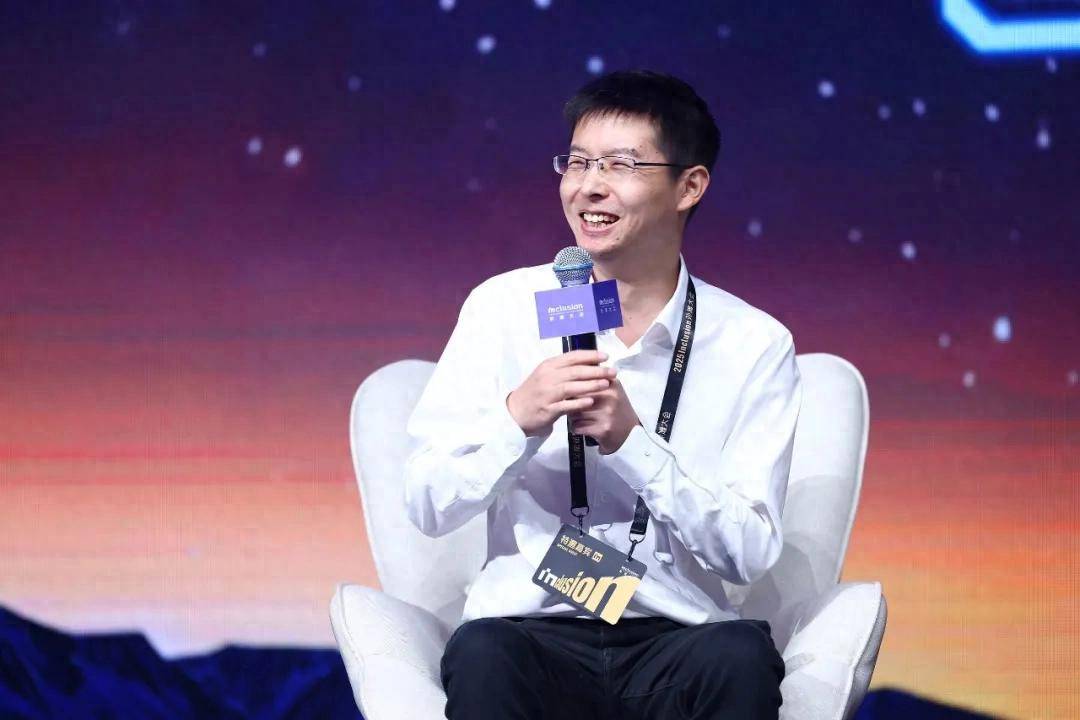
At the beginning of the event, Wang Xingxing took the stage and delivered a keynote speech titled “Believe in AI as much as possible.” In addition to talking about robots, more content was about AI.
In his speech, Wang Xingxing first talked about the public’s poor understanding of AI: “There are probably only a few thousand people in the world who really understand the potential of cutting-edge AI models. The vast majority of people have no idea where the true boundaries of AI’s capabilities are.”
Next, Wang Xingxing conducted another self-review, “The biggest mistake I have ever made was not believing in AI early enough. In the past few years, my expectations for AI can increase more than 10 times.”
This is the second time recently that Wang Xingxing has publicly “admitted mistakes.” Ten days before the conference, while talking on the same stage with Wang Jian, academician of the Chinese Academy of Engineering, and Xiang Shaoqing, co-founder of Sharpa, Wang Xingxing also reflected in public: “The biggest mistake I have made in the past ten years is that I do not believe enough in AI.”
“Many people still don’t know what the potential of AI is, or to what extent AI can develop in the next few years.” Wang Xingxing said that he thinks about an important question every day: If AI will subvert everyone’s life in the future, then where are the most important opportunities?
After long-term thinking, Wang Xingxing gave a radical prediction. He believes that large models may “break down” physical AI in the future. Wang Xingxing optimistically judged that “by the end of this year or next year, it will be possible for robots to complete tasks such as tidying up rooms according to instructions.”
After Wang Xingxing expressed this view, Yushu’s stock price rose again. On October 23, Yushu’s stock price reached its daily limit of 20%, and its total market value reached 250 billion yuan again. On October 26, Yushu rose again by 7.69%, with its total market value reaching 271.8 billion yuan. Compared with the periodic low of 163.8 billion yuan in market value on October 15, Yushu’s market value has soared by 108 billion yuan in just 7 trading days.
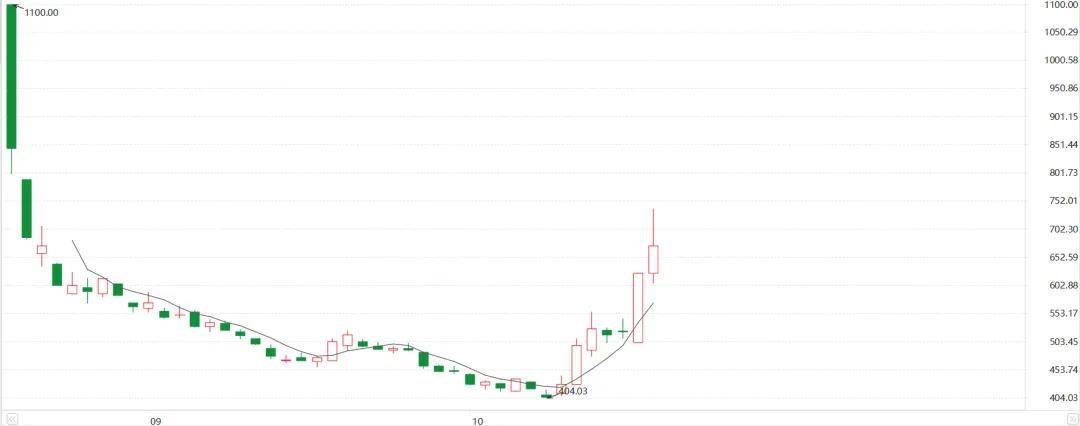
▲The stock price trend of Yushu after its listing on August 19
The market once again has high expectations for Yushu’s future. But to meet this expectation, Yushu needs to prove that he can not only build popular robots, but also make these robots better understand and perform tasks.
Compared with the “brain” narrative that the industry is keen on, Yushu’s greater advantage is based on a more certain ontology (the physical and mechanical structure of the robot), motion control and mass production capabilities.
A primary market investor who focuses on the field of embodied intelligence told Lin Feng’s “Financial World” that the industry knows that Yushu has limited investment in artificial intelligence before, and the help of AI in the underlying motion control of Yushu robots has not been fully reflected in task execution capabilities that are easier for the outside world to perceive. For Yushu, making a self-developed brain is far more difficult than making a robot body with different shapes.
Previously, Wang Xingxing bluntly stated that the success probability of Yushu’s self-developed large-scale robot model is less than 50%. “Ushu is number one in the world when it comes to making (robot) bodies; but when it comes to making brains, this battle is not easy to win.”
Currently, as the price of robots continues to reach new lows, new changes have occurred in the investment logic of the capital market. “In the primary market, some people will look at the hardware, but basically no one will look at the robot itself.” Lin Feng told Caijingtianxia.
“Yushu’s current income is still selling hardware. In the final analysis, it belongs to the logic of manufacturing. However, manufacturing is very cruel and cannot always maintain its advantage. Even if it has hardware advantages, Yushu must actively embrace the brain, just to see how to do it.” said the above person.
Wang Xingxing’s positive stance on AI has undoubtedly given the market new hope. If Yushu’s robot body can be equipped with an agile and powerful “AI brain”, it will completely open up the imagination of this new technology darling and tell a more tempting story.
02. “Afraid of wasting every day”, integrating AI into the R&D cycle
“I’m really afraid of wasting every day.” Wang Xingxing said that there are many things he wants to do every day, and there are many new things to learn, but there is too little time. He believes that the future market space for robots is huge, but the competition is also very fierce, and companies need to do better every day.
“Volume King” Wang Xingxing did not spread anxiety to the industry out of thin air, but the impact of the general model was indeed too great. Previously, Yushu’s stock price had been undervalued for a long time, but what really made practitioners anxious was the release of GPT-6 Astra (hereinafter referred to as GPT-6).
GPT-6 is known as “the most intelligent model in the world and the most consistent with human intentions.” Although its release report did not mention a single universal model of robots, it has dominated the list of robot evaluations for a long time, and even made many robots’ Benchmarks invalid.
Lin Feng said, “In the past two months, everyone has been much more cautious in investing. The main reason is the release of GPT-6, because everyone had expected that it might conflict with large multi-modal models, but they did not expect that the two lines would cross so soon.”
In the past, large basic model teams usually divided general language models and multimodal models into two routes. Now the two are converging. The general model begins to further participate in the generation and execution of actions from understanding tasks and planning steps.
Especially after the GPT-6 model came out, many robotics companies were shocked. There have been tests using it to control robotic arms and dexterous hands to complete operating tasks. Even when faced with small objects such as chopsticks, it can complete a series of actions.
After many tests, practitioners found that general-purpose large models such as GPT-6 are better at understanding, decision-making, and reasoning. However, in terms of multiple dimensions such as cost, real-time performance, and fine operations, the ceiling of GPT-6 is still clearly visible.
This has brought new opportunities to embodied intelligence companies like Yushu that focus on ontology. As the capabilities of general models such as GPT-6 increase, Yushu can directly borrow stronger general models to reduce the pressure of training “language understanding and task planning” from scratch.
“At present, most companies with high valuations are not very happy, and the industry structure will become more differentiated in the future. However, GPT-6 has strengthened the valuation logic of Yushu’s ontology.” Lin Feng said.
Although Yushu started a little slower on the “brain” track, compared with his peers, there is no unreachable gap. With the improvement of AI model capabilities, Yushu also has the opportunity to borrow external understanding and planning capabilities to connect its hardware to richer tasks.
Wang Xingxing mentioned at this conference that he hopes to use AI models to transform this process into a more automated and scalable training system, reducing the reliance of robot skill development on manual programming and debugging.
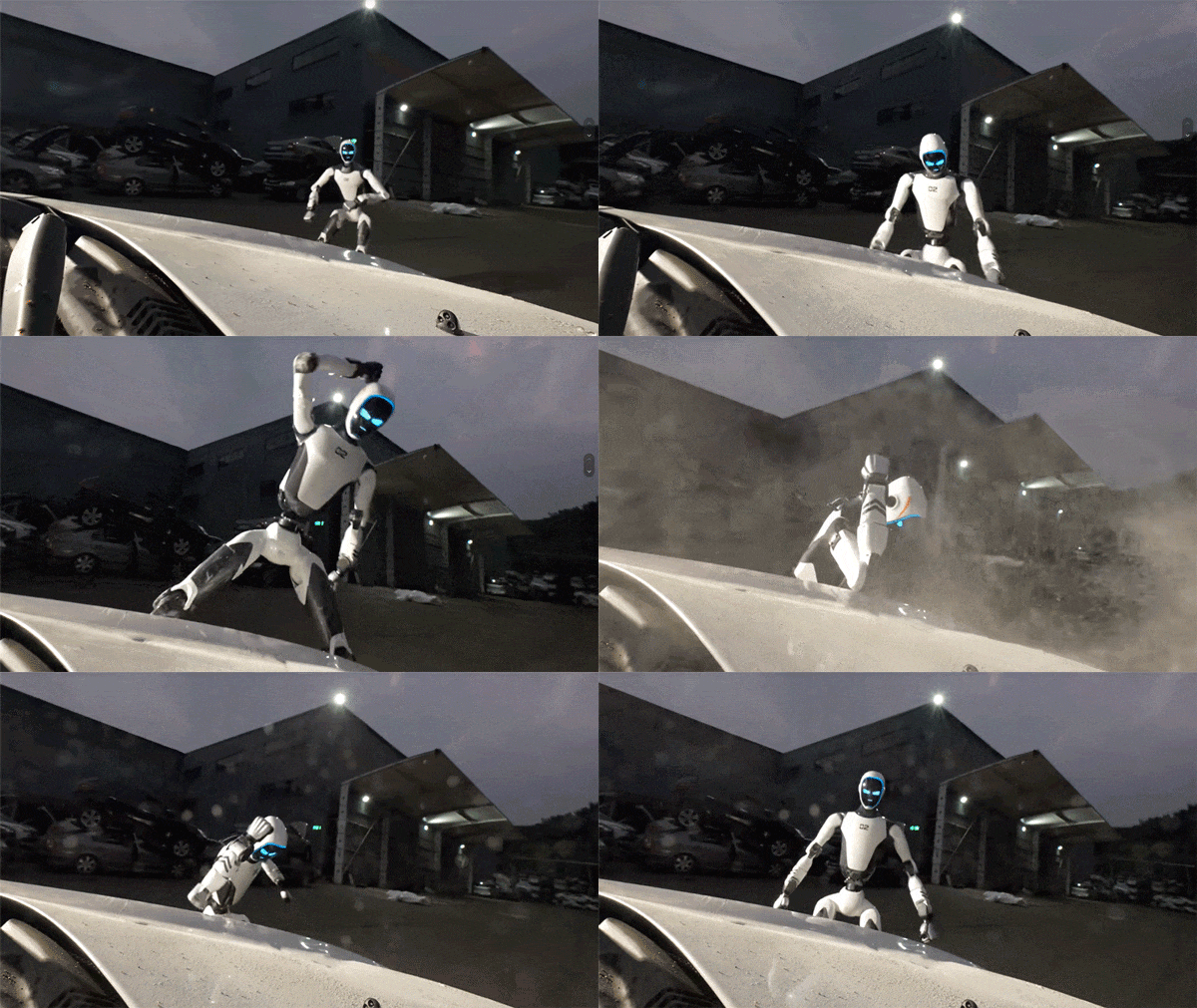
▲On October 21, Yushu released the new robot “H2-X Kung Fu Legend Guardian”
In terms of the brain, Wang Xingxing said that in addition to continuing to promote cooperation with large domestic and foreign model companies, Yushu is also simultaneously advancing its own physical AI system. Currently, Yushu is developing a model system called “Physical AI Robot Self-Evolution V1”.
Wang Xingxing explained the reason why Yushu developed this system. In his view, the stronger the basic model, the stronger the robot’s self-evolution capability. As more data is used for training, the scale effect of self-evolution will gradually become apparent.
When more robots are actually deployed, more real data will be brought, further promoting model iteration. Through this cycle, robots can continuously accumulate and expand their skills, eventually forming a large-scale skills ecosystem.
However, working hard to make up for the shortcomings of the “brain” is only part of Yushu’s next step. Yushu not only wants to strengthen its “brain” capabilities, but its greater ambition is to allow more robot innovations to occur on Yushu’s platform to build a stronger ecosystem.
03. Build an ecosystem and compete for platform-type “chain owners”
For a long time, Yushu has established a strong hardware entrance through self-developed motors, reducers, controllers, laser radar and motion control algorithms, becoming an important “chain master” in the industrial chain.
However, in terms of development tools, software services, data supply and application implementation, Yushu’s hardware advantages have not yet automatically translated into equally strong platform influence. In other words, Yushu is still some distance away from becoming a dominant player in a comprehensive sense.
To allow more teams to continue developing their own robots, Yushu needs to expand into software, data and applications. It not only provides easy-to-use machines, but also makes it easier for developers to make products on these machines and get orders.
To this end, Yushu began to take the initiative to build a larger ecosystem and officially launched the “Yuchuang Plan” to compete for more entrepreneurs. At the same time, it also announced that it will hold a World Physics AI Competition, with plans to invest tens of millions of yuan in prizes every year and open to global teams and individuals.
The so-called “Yu Chuang Plan” refers to the Yu Shu Plan targeting established companies or teams with clear entrepreneurial directions to recruit entrepreneurs in the fields of robot ontology and core components, embodied intelligent algorithms, data and simulation platforms, industry applications and solutions.
Wang Xingxing proposed that in the next five years, Yushu hopes to incubate more than 200 high-quality ecological enterprises through this plan. He said that support will be provided to relevant companies in terms of industrial capital, robot platforms, development tools, engineering mass production and application scenarios.
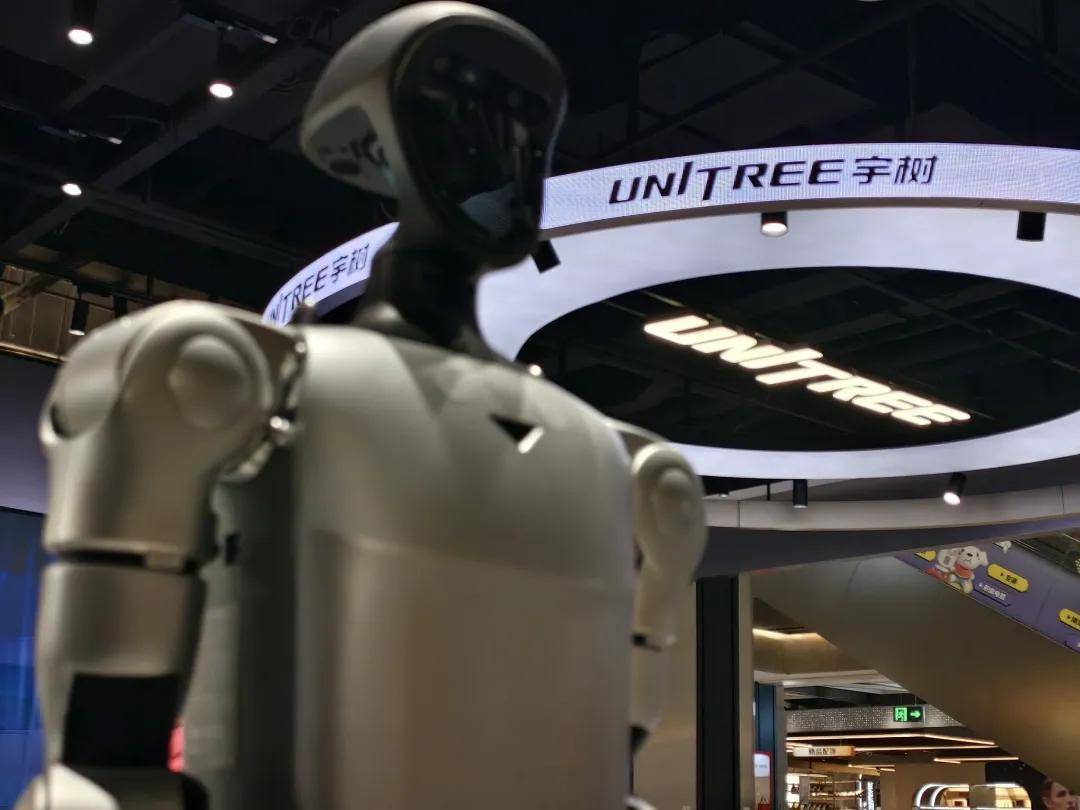
Previously, Yushu has open sourced UnifoLM-WMA, VLA and many types of real machine data. Now, Yushu’s competition and Yuchuang plan will further attract external teams to its platform, allowing more developers to develop around Yushu robots.
Chen Yue, a senior embodied intelligence practitioner, told Caijingtianxia that Yushu’s move is competitive and in the right direction, but its competitiveness currently belongs to “potential platform capabilities” and is not a proven platform barrier.
“The strategic intention is very clear, but it is difficult to say whether barriers will eventually be formed. The key still depends on rules, interfaces, data and real business orders.” Chen Yue said.
On the road of “robot company building platform”, the competitor that Yushu cannot avoid is Zhiyuan Robot.
Previously, Zhiyuan’s AIMA platform clearly proposed to connect the robot body, development tools, scene applications and global developers; Lingqu OS tried to cover everything from hardware to underlying services, intelligent applications and development tool chains.
Not only that, Zhiyuan also announced the “Yuan Sheng” ecological plan in June 2026, planning to invest 2 billion yuan in the next five years and also lay out data co-creation, robot leasing, industrial partners and application ecology.
In contrast, Yushu’s “Uchuang Plan” has only recently clearly brought “platformization” to the forefront as a strategic move.
From stand-alone competition to ecological competition, Yushu and Zhiyuan have different focuses, representing two different expansion paths.
Zhiyuan’s advantage lies in its more complete platform design and more concentrated industrial collaboration. It attempts to focus on building data infrastructure, organize collection, labeling, training and deployment by itself, and then provide data capabilities to the outside world as part of the ecosystem.
Yushu’s advantages lie in its wide access to hardware and open ecosystem. It hopes to first let more developers use its robots, and then precipitate standards and data from the use network.
In the end, who will win will not only depend on the sales volume or model parameters of the robot, but also on who can connect equipment, data, developers and real orders into a business closed loop that continues to grow.
For Yushu, after selling the robot, how to get more people to do business around it is a test of its platform capabilities.
(Lin Feng and Chen Yue are pseudonyms)
Related Reading
- Can AI actors beat real stars? Hollywood actors are having a complete falling out2026-10-27
- iPhone Duo Teardown: The best way to repair a foldable iPhone is to not tear off the film2026-10-27
- Original propaganda AI costs reduction, don’t forget people are still in the workshop2026-10-27
- Original overseas “red fruits”, harvesting the world?2026-10-27
- AI fake ads in the subway are collectively bullying humans2026-10-26