Audi moved a “rescue” from Chery
16萬
01. After serving for 2 years, he left Chery
奧迪The veteran returns to Audi after 6 years.
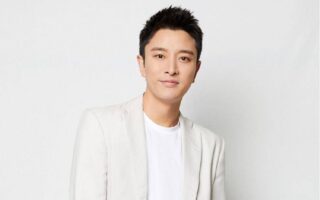
On October 22, Audi officially announced that Zhang Jun will serve as President of Audi China from November 1, replacing Luo Yinghan. At the same time, Rolf Michl, the current head of Audi Sport GmbH, will serve as Audi China’s chief operating officer (COO), and the two will jointly form the streamlined Audi China management board.
Zhang Jun is Audi’s first Chinese president since it entered China nearly 40 years ago. As the top person in charge of Audi in China, he reports directly to Audi’s global CEO.
Before going to Audi, Zhang Jun worked for many multinational car companies such as Nissan, Audi China, Stellantis Group, and Chery.
Public information shows that from 2025 to 2026, Zhang Jun served as deputy general manager and general manager of the Chery brand overseas business unit at Chery International. His LinkedIn profile shows that he once promoted the Chery, Omoda and Jaecoo brands to enter the European market, and participated in the establishment of Chery’s European regional headquarters in Barcelona, Spain.

In April this year, Chery officially opened a new R&D center in Spain and simultaneously launched the Spanish Research Institute to focus on the development of cutting-edge intelligent and electrification technologies. As Chery’s first overseas regional operation center, it will integrate operations, compliance, supply chain, finance and public affairs functions and become the core hub of the group’s European business. At that time, Chery selected Zhang Jun to be the person in charge of this business.
Audi invited Zhang Jun back, perhaps because he has experience in both foreign-funded luxury brands and overseas brands of his own brands.
Chery International employee He Lingling’s first reaction after learning about Zhang Jun’s new move was that his departure was not sudden. Chery has undergone intensive adjustments during this period, and the entry and exit of core executives are normal. If they leave so quickly, they should have already negotiated.
In her impression, Zhang Jun focused on results during meetings, held people to account, repeatedly asked employees when problems would be solved, and did not listen to explanations. His style is practical, hard-core, logical, and a bit cold, which is how many people feel.
As for what he left behind at Chery, He Lingling thinks it may be that he took some systematic things a step forward, such as the unification of brand tone. As the person in charge of the brand, Zhang Jun focuses more on achieving actual sales and launch targets in each region, and he pays close attention to this part. Another thing that impressed her deeply was the special safety challenge that ran from the beginning of the year to the end. This was promoted at the group level, but Zhang Jun held it tight.
02. Return to the “old club” as president
For Audi, this coaching change can be regarded as Zhang Jun’s return to his “old club” as president, a jump in status within a familiar system.
From 2018 to 2020, Zhang Jun held a senior management position in Audi China and is no stranger to Audi’s business system. During this period, he assisted in the establishment of SAIC Audi’s sales organization and participated in multiple strategic projects of FAW Audi. He was familiar with the operational logic of the two joint ventures in the north and south.
Many people in the industry believe that a Chinese leader who understands not only the operation of luxury brands but also the style of local car companies in China may accelerate the implementation of Audi’s electrification and intelligence strategy in China.
But what Zhang Jun took over was not an easy position. Audi was in a critical period of sales, profits, and electrification transformation.
Luo Yinghan, the former president of Audi China, has a financial background. His core strategy is to “not pursue short-term sales” and stabilize the price system to ensure profits. He has stated in public on many occasions that “we are deeply involved in the Chinese market and are not limited to the pursuit of short-term growth.” But this strategy didn’t really work.
In the first half of 2026, Audi delivered 232,200 vehicles in China, a year-on-year decrease of 19.2%. The profit contributed by the Chinese business shrank from 279 million euros in the same period of 2025 to 73 million euros, a drop of up to 74%. In the third quarter, the Audi brand delivered 314,900 vehicles globally, a year-on-year decrease of 19.7%. Audi China did not release separate data. Wilson Terminal showed that its sales in China were approximately 94,600 vehicles, a year-on-year decrease that expanded to 24.5%.
At the end of September, the Volkswagen Group’s financial director issued a stern profit warning to Audi. The German magazine “Manager” subsequently reported that Audi’s internal sales in China are predicted to be only slightly more than 420,000 vehicles in 2026, which is about 30% less than in 2025 and will be the lowest level since 2012.
Competition in China’s new energy vehicle market is fierce.Audi A6L, Q5L, A4L and other fuel models have repeatedly dropped in price, but it is still difficult to restore sales.
In September this year, “No BBA model has a retail sales of more than 10,000 yuan” became a hot search topic. Domestic insurance volume data show that in September, the retail sales of mainstream models such as BMW 3 Series, 5 Series, X5, Mercedes-Benz E-Class, GLC, C-Class, Audi A6L, Q5L, and A3 did not exceed 10,000. Audi’s highest-selling model, the A6L, only has a monthly retail sales of just over 8,000 units. In the same period last year, the retail sales of these models all exceeded 10,000.
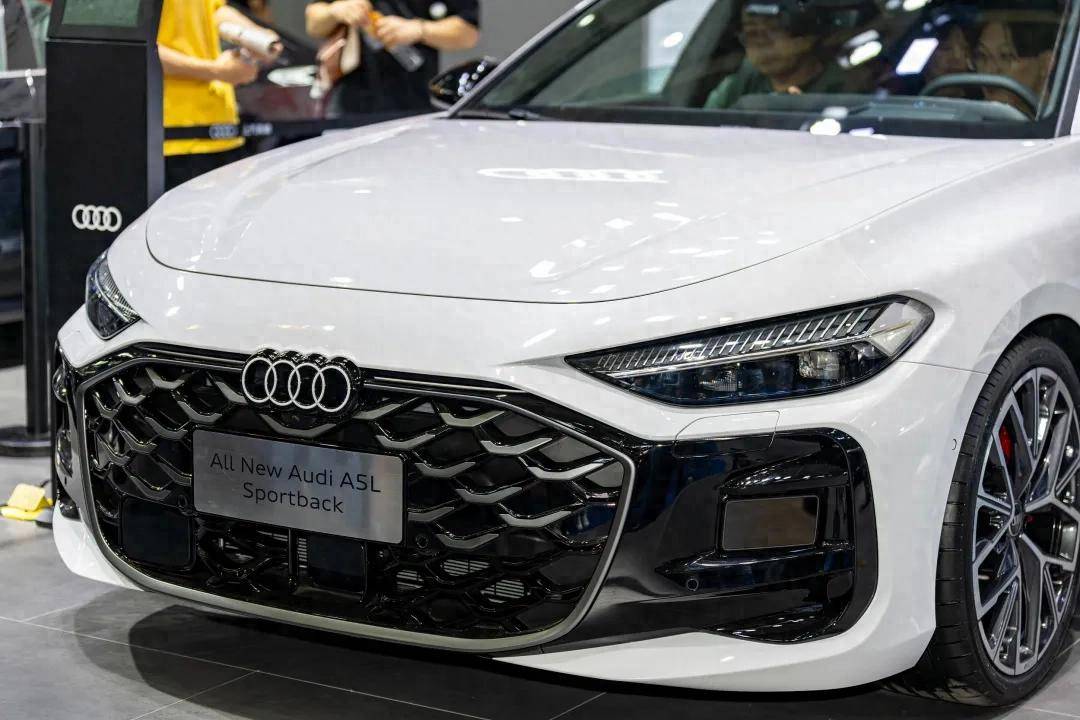
In terms of electrification, Audi has taken a road of sub-branding: taking out the “AUDI” letter brand without the four-ring logo to focus on pure electric vehicles, trying to distinguish traditional fuel vehicle users from new energy early adopters. But the trends of both cars are not optimistic. The first model, the E5 Sportback, briefly reached 2,630 units in March 2026 due to significant terminal price cuts, and then quickly fell back, leaving only about 300 units in September. The second medium-to-large pure electric SUV E7X has a faster pace. In the second month of its launch, sales surged to more than 4,000 units in June, and then continued to decline, with sales in September reaching 1,503 units.
(He Lingling is a pseudonym in this article)
Return to the homepage to see more car information
Related Reading
- Original: Liang Wenfeng still rents a house in Beijing after attracting 150 billion yuan in half a year2026-10-27
- The market value of the six luxury goods giants has shrunk by nearly 2 trillion since the beginning of the year, with LVMH losing the most blood.2026-10-27
- Original “Nothing to film” Jia Nailiang sold 570 million yuan in a single day, but the company behind him suffered a huge loss of 3.7 billion yuan in five years2026-10-27
- Original bit system is eating up our time crazily2026-10-27
- EDonkey, can you cross the river by touching a motorcycle?2026-10-26