“Huang Renxun is not only the founder of a company, but also a strategy maker, a promoter of technical routes, a maintainer of important customer relationships, and the chief commentator, salesman, and financial guru of the entire AI industry.”
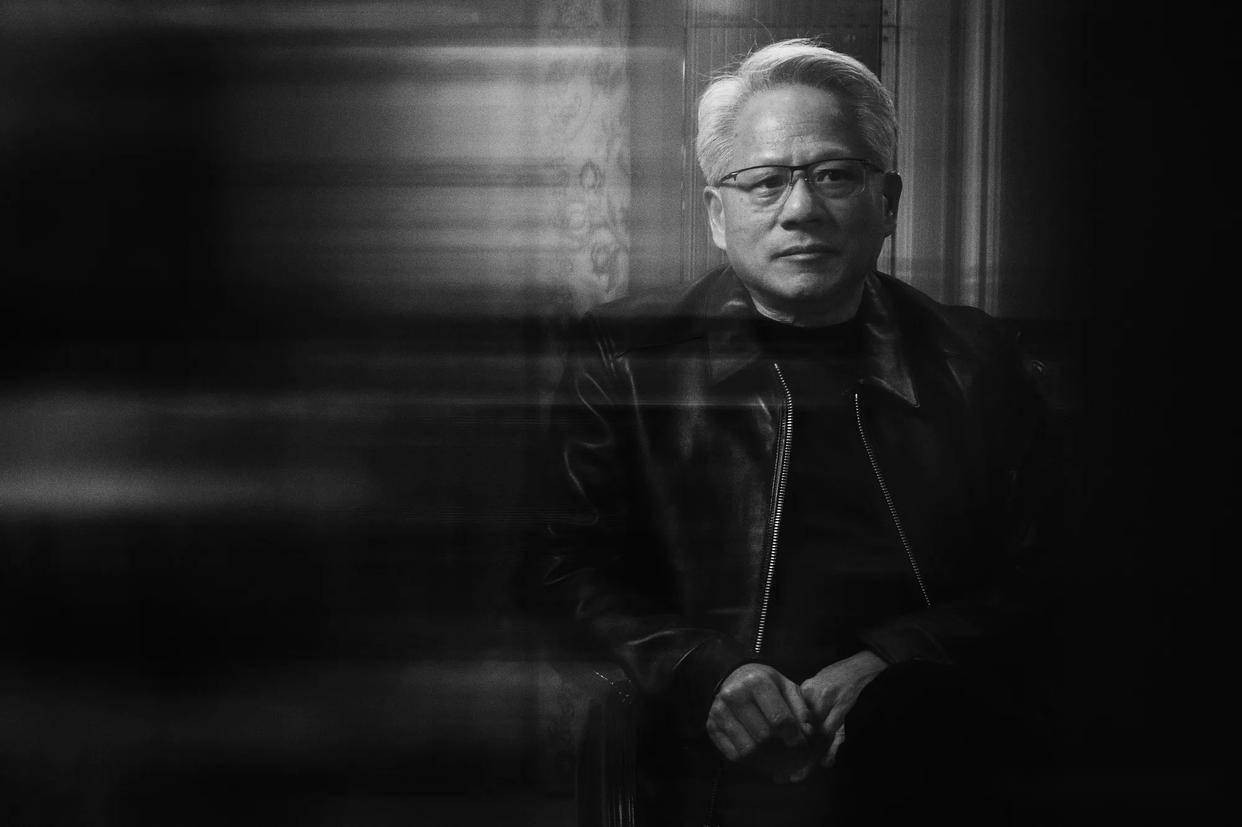
Text/Ba Jiuling
Five days later is Nvidia’s earnings day. As usual, in addition to reading out the opening remarks, Huang Jen-Hsun will answer almost all questions from analysts on the other end of the phone alone.
Nineteen days later is the American GTC conference in Washington. As usual, Huang will step from the other side of the phone into the spotlight, wearing his iconic black leather jacket, and personally introduce Nvidia’s latest technologies and products to the global technology community. To this day, many people still remember the duck robot at the Berlin GTC.
These familiar scenes that have lasted for many years may never appear again.
After waiting all day and night, at 21:49 Beijing time on November 12, Huang Renxun announced his resignation as CEO and director of Nvidia. NVIDIA issued a brief statement on its official website, using 414 words to bring an end to the 33 years that Jen-Hsun Huang founded and ran the company.
He is the longest-serving CEO in Silicon Valley history, and now he is the record holder.
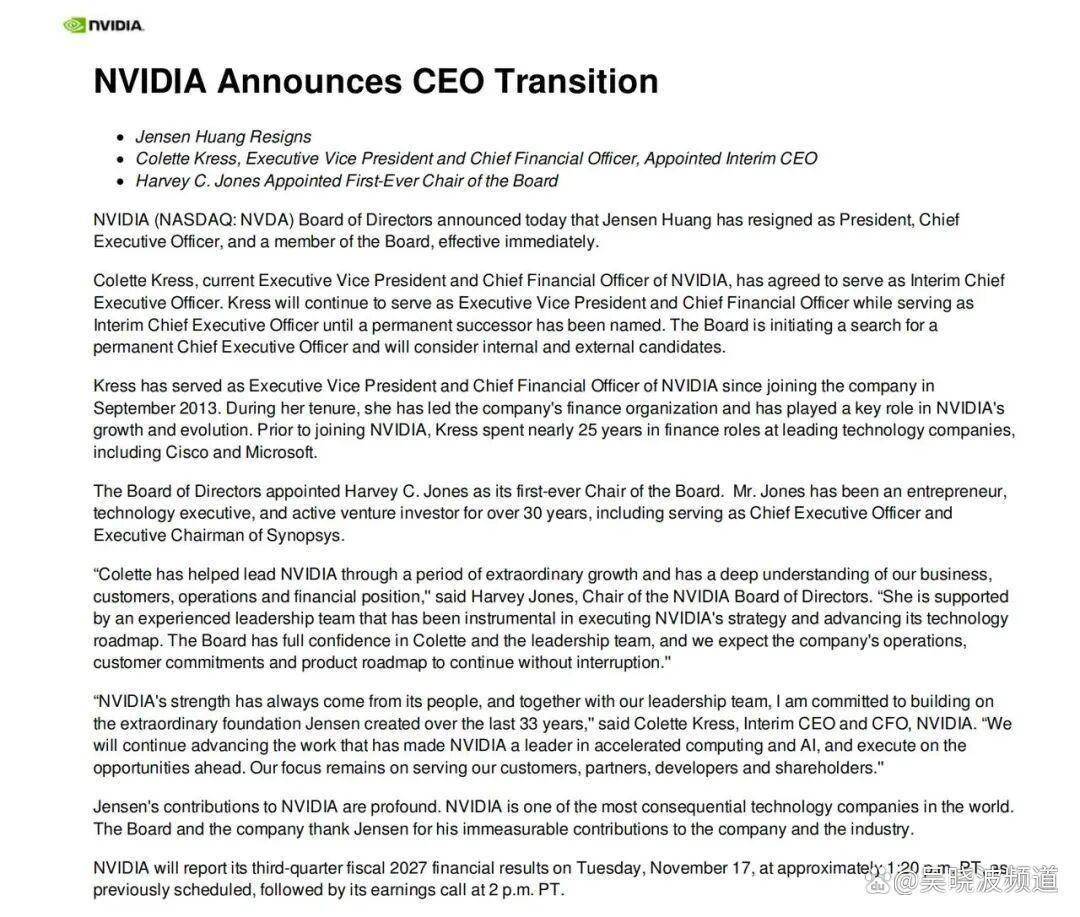
NVIDIA statement on November 12
He will be replaced by CFO Colette Kress, who will take over as interim CEO.
This arrangement is not surprising.
Kress joined Nvidia in 2013 and has been in charge of Nvidia’s financial affairs for the past 13 years. To investors, she is one of Nvidia’s best-known executives besides Jensen Huang.
Historical experience shows that for a technology giant that suddenly loses its soul, letting the financial chief temporarily take the helm can help stabilize the expectations of investors, customers and employees. Although almost everyone knows that this is nothing more than a stopgap measure.
But what is sad is that in this announcement announcing the immediate resignation of the founder and CEO who has been in charge of the company for 33 years, Nvidia’s official thank you to Huang Renxun only contains 35 English words.
The board of directors thanked him for his outstanding contributions to the company and the industry, but spent more space expressing confidence in his successor, reassuring investors, and emphasizing that “Nvidia’s strength has always stemmed from its employees.”
However, for many people, the 63-year-old Jensen Huang and his iconic leather jacket are synonymous with Nvidia.
Is Nvidia still Nvidia without Jensen Huang?Who can finally take over the world’s most important AI chip company? Can a business empire that was built by its founder and has revolved around him for a long time continue to maintain its original speed after losing its core people? What are Jen-Hsun Huang’s next plans?
醜聞
Ironically, it was not the bursting of the artificial intelligence bubble that crushed Huang Jen-Hsun and forced him to leave the house, but the absurd scandals that followed.
There are currently three bloody stories that have happened to Huang Renxun.
On November 9, Jen-Hsun Huang admitted to having an extramarital affair and having an inappropriate relationship with a Chinese-American woman. Just three days later, the media once again revealed that he was also having an extramarital affair with Kimberly Powell, the company’s vice president of health care business, who was his subordinate and had a family of his own.
Just after Huang Renxun announced his resignation, Reuters reported that according to two people familiar with the matter, Nvidia CEO Huang Renxun, who was forced to step down, also had a close relationship with another employee of the company.
The attitude of Nvidia’s board of directors took a sharp turn in just a few days following the revelations.
When the first rumor first leaked out, the board of directors still expressed trust in Huang Jen-Hsun and the management team; by the time the second scandal came to light, the board of directors had already held an emergency meeting and began to discuss whether to remove him from his position.
As the crisis escalated, shareholders filed lawsuits, Congress launched inquiries, and the board of directors hired an outside law firm to conduct an independent investigation. In fact, before the final results were announced, on the prediction platform Polymarket, the probability that Huang Renxun would leave or be dismissed before the end of the year had already climbed to 78%.
The capital market is also in turmoil. Many international investment banks have downgraded Nvidia’s stock ratings. Bernstein, a well-known research institution, directly cut the target price from US$400 to US$200.
One analyst echoed what many investors are saying: “Our gut tells us we may not fully understand this yet; but we’ve had enough and prefer to sit on the sidelines.”
An article in The Economist was even more sharply worded. Huang Jen-Hsun’s scandal was not one scandal, but many scandals intertwined. In the face of scandals, it is always difficult for investors to see the situation clearly, and bad news often leads to more bad news.
This crisis is expected to rank among the most costly corporate crises in history, and Wall Street has already tasted the risk of Russian dolls: US stocks are betting on AI, AI is betting on NVIDIA, and NVIDIA is betting on Huang Renxun alone.
On the day that Huang Renxun’s resignation was announced, Nvidia’s stock price closed down 4.34%, and its market value evaporated by US$182 billion (approximately 1.21 trillion yuan).
Prior to this, Nvidia’s stock price had fallen by 6.92% in three trading days, and its market value had shrunk by approximately US$311 billion, falling below the US$4 trillion mark, falling behind Apple and Microsoft, and falling to third place in the world.
At the same time, NVIDIA’s shock has begun to affect related industry chains, with the first being the Asian stock market. Asia is the core part of NVIDIA’s industry chain, and it is also the most core place for global AI market apart from US stocks.
As one analyst put it: “Huang Renxun’s resignation is a watershed moment for Nvidia. Given the entire artificial intelligence industry’s heavy reliance on Nvidia chips, Huang Renxun’s departure brings uncertainty far beyond the company itself.”
權力
In 1993, Huang Renxun and two other engineers founded Nvidia in a restaurant. He led the company through a critical moment on the verge of failure and stabilized military morale. More than ten years ago, when most people were not aware that GPUs could play a huge role in the field of AI, Huang Renxun continued to invest in the software ecosystem and related research and development.
This long-term bet ultimately changed the company’s fortunes, and today Nvidia has become the infrastructure for artificial intelligence. In May of this year, Nvidia’s market value reached US$5.7 trillion. In terms of GDP, its size ranks third in the world, second only to the United States and China.
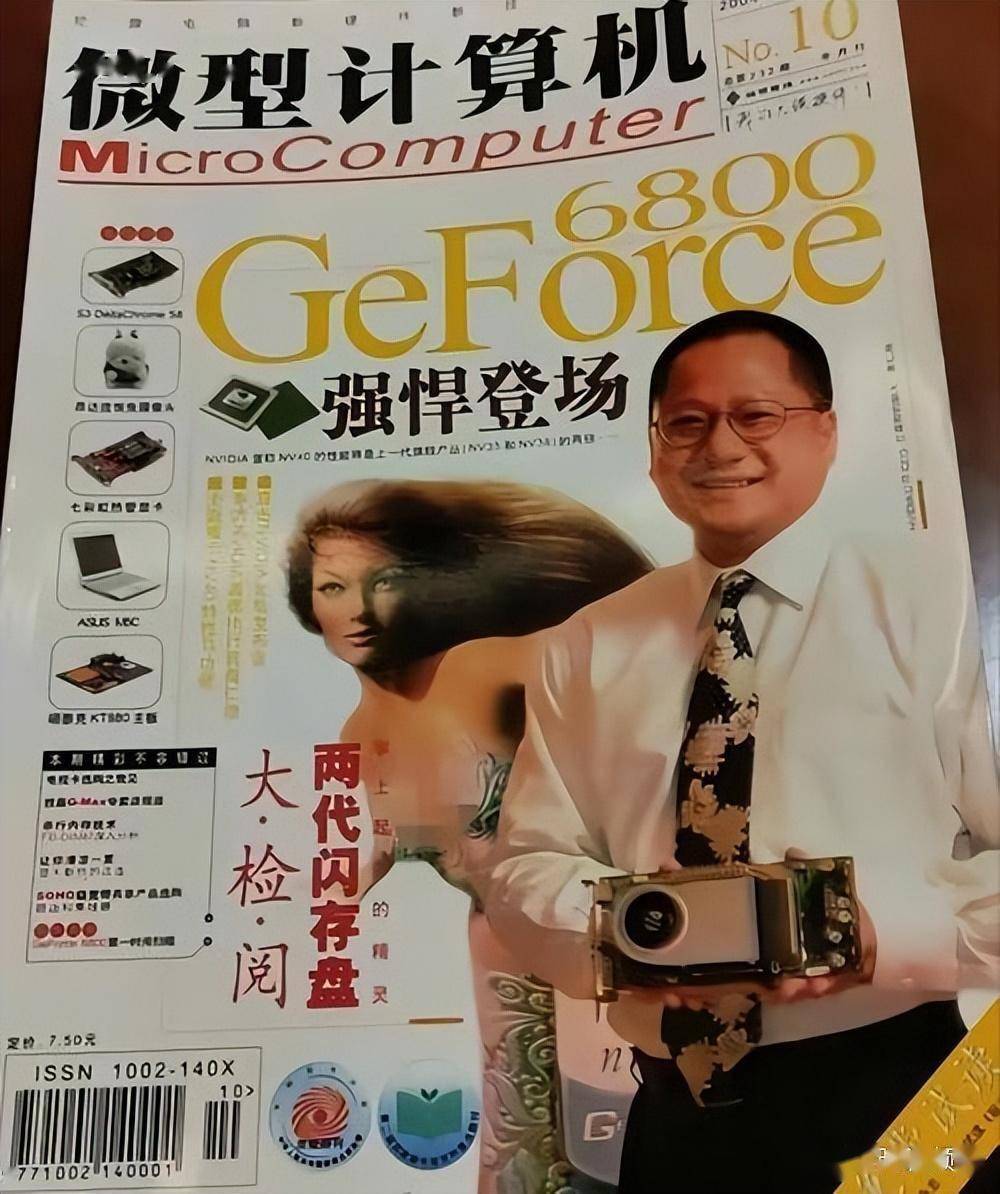
Issue 232 of “Microcomputer” published in October 2004, the cover character is Huang Renxun, source: Internet
Huang Renxun compared the AI industry chain to a “five-layer cake”, from bottom to top: energy, chips, infrastructure, models and applications. In addition to producing AI core GPU chips, Nvidia also controls other layers of the cake through capital operations.
As of July this year, Nvidia’s total investment was approximately US$99 billion, investing in data center service providers such as OpenAI, Anthropic, SpaceX, and CoreWeave. It adopts a circular transaction investment method. Companies spend huge sums of money to purchase chips from NVIDIA, and NVIDIA then invests part of its revenue back to these customers to maintain continued chip procurement needs.
Fortune magazine describes Nvidia as the “central bank” of the AI industry, providing financial support to the industry.
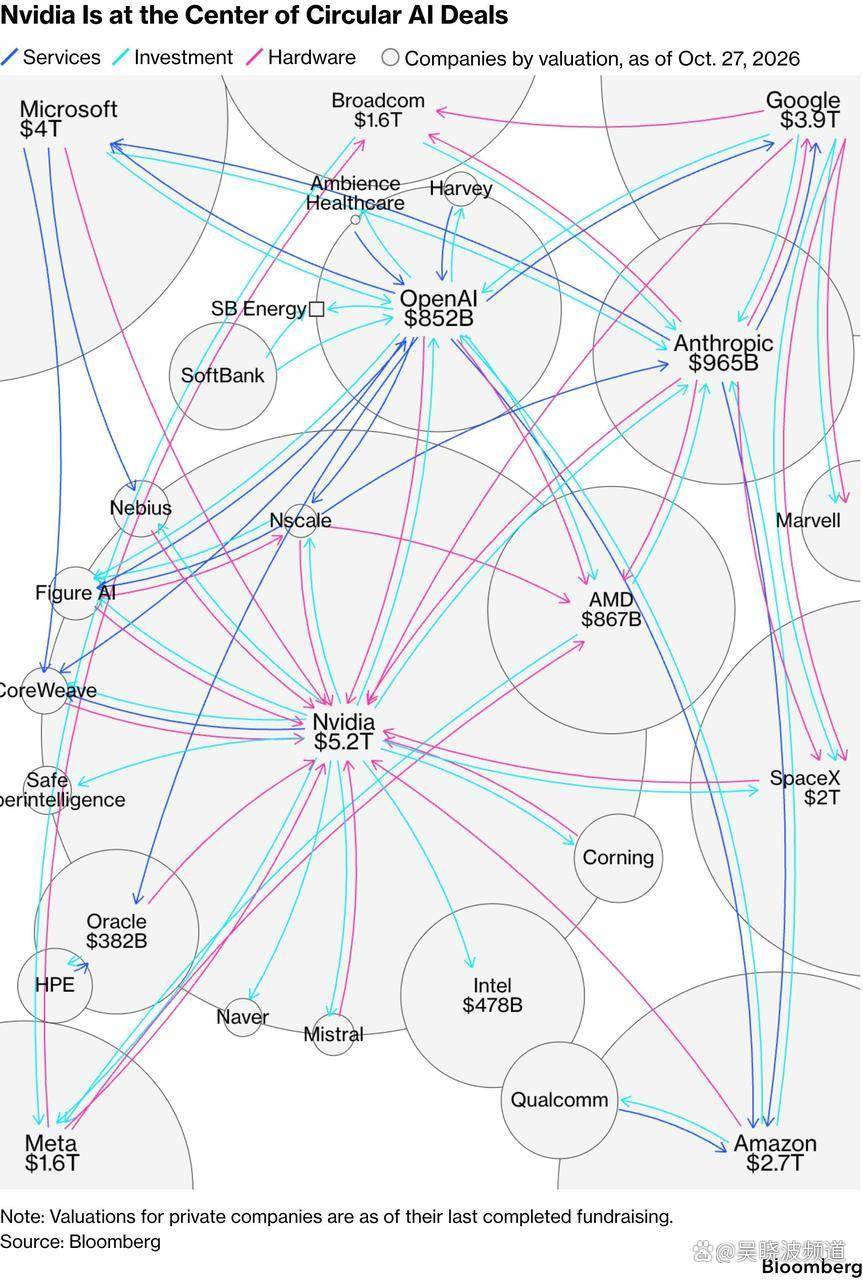
Nvidia is at the center of the AI trading cycle
Huang Renxun is not only the founder of a company, but also a strategy maker, a promoter of technical routes, a maintainer of important customer relationships, and the chief commentator, salesman, and financial guru of the entire AI industry.
His influence far exceeds that of an ordinary CEO, and he is an indispensable key pillar in a trillion-dollar AI building.This may explain why many people, including Musk, tend to downplay the controversy and defend Huang Renxun.
Epic CEO Sweeney supports Huang Renxun, saying that if Nvidia fires him, it will be comparable to Apple’s firing of Steve Jobs. Hedge fund tycoon Bill Ackman posted on X: “No matter how powerful people are, they will make mistakes. We should support him and his family and move on.”
Venture capitalist Sean Maguire believes that “if we want to maintain the United States’ leading position in the field of AI, Huang is irreplaceable,” and Musk agrees. A Wall Street analyst bluntly said that forcing Huang Renxun away would be a mistake for everyone.
A preview of a 2025 financial report from Quartr, with the title “Everyone is staring at Jen-Hsun Huang”, highlighting his special status
But judging from the shareholding structure, Huang Renxun does not have absolute control.
He holds about 3.6% of Nvidia’s shares. The company adopts a common stock one-vote system and does not set up special voting rights. According to information disclosed by the company, Nvidia’s board of directors has 11 members. Huang Renxun is the only non-independent director, and the remaining 10 are independent directors.
However, some Nvidia directors have worked with Huang for more than two decades. Some directors have been involved in the company since its inception and have long-term cooperation with Huang Renxun, establishing a trusting relationship.
A recent investigation by the Wall Street Journal pointed out that Nvidia does not have a formal chairman, and Huang Renxun has been exercising the power of chairman, participating in formulating board meeting agendas, deciding what information to provide to directors, and presiding over board meetings.
The article criticized the existence of a governance vacuum in Nvidia: “The chip giant has neither a chairman nor a succession plan, and has previously denied Huang Renxun’s extramarital affair. The above highlights that Nvidia’s board of directors acts in accordance with CEO Huang Renxun’s way of doing everything.”
Because Nvidia originally did not have a chairman, before Huang Renxun stepped down, there was a view in the market that according to the proposals of some supporters, the safest plan for the board of directors might be to turn Huang Renxun into chairman. This arrangement can avoid the drastic step of directly firing him, complete the replacement of the CEO simultaneously, and retain his experience in the company.
However, the personnel plan that accompanied Huang Renxun’s resignation as CEO was that the board of directors appointed Harvey C. Jones as the first chairman of the board of directors in Nvidia’s history.
Together with Jen-Hsun Huang, he joined the NVIDIA board of directors in 1993. He has degrees from Georgetown University and MIT and more than thirty years of experience in entrepreneurship, technology executives and venture capital.
There are very few photos of Harvey Jones, this image comes from media reports when he purchased a property in 2024
This structural adjustment may also be the company’s response to market doubts.
繼任者
Interim CEO Colette Kress, who was also appointed as interim CEO, has transformed the chipmaker’s GPUs from a niche product for video game consoles into one of the world’s most sought-after products, but she is clearly the opposite of Jen-Hsun Huang, people familiar with her say. “She is known for avoiding the spotlight and guarding her comments.”。
The board’s statement read:
“Colette has led NVIDIA through a period of extraordinary growth, and she has a deep understanding of our business, customers, operations and financials…She has an experienced leadership team that has played a critical role in executing NVIDIA’s strategy and advancing the technology roadmap. The board has full confidence in Colette and the leadership team, and we look forward to continued smooth progress with the company’s operations, customer commitments and product roadmap.”
As a transitional role in the company’s special period, she may need to do her homework to appease frightened and doubtful investors and prove to the outside world that Nvidia in the post-Huang Renxun era is still capable of maintaining growth momentum.
However, according to media reports, Nvidia’s current interim CEO is not the leader of the company’s major decisions, nor is he responsible for formulating the company’s major decision-making agenda.
Signs of difficulty appear to have emerged.
In Huang Renxun’s era, major decisions, agendas, and resource allocation were basically driven by him. Now, no one can take over the power in a logical manner and smoothly exercise the corresponding powers. Huang Jen-Hsun’s management style has always been one of Nvidia’s most distinctive organizational features.
Unlike many large technology companies that have hierarchical management positions, he likes to have a flat management with a large number of senior executives reporting directly to him. He once said that the number of executives reporting to him once exceeded 50. He does not have a strong second-in-command in the traditional sense who is responsible for coordinating all operations.
This management method has obvious advantages. Reducing the intermediate levels helps to transmit information quickly, and also allows Huang Renxun to understand changes in chip research and development, software ecology, customer needs and supply chain at the same time. For a company in the midst of rapid technological competition, this management approach can prevent different departments from working in silos.
Huang Renxun himself has said that he does not believe in succession planning in the traditional sense. He prefers to continue to transfer knowledge, experience and judgment to the team through daily work, so as to form a group of people within the company who can take on more responsibilities.
As a result, everything at NVIDIA has long revolved around Huang Renxun’s judgment. NVIDIA is equal to Jen-Hsun Huang. Therefore, when the backbone of a company leaves, you can imagine the difficulties that successors face.
The tasks it needs to deal with are not only how to maintain existing orders, but also how to deal with next-generation product development, changes in customer capital expenditures, geopolitical games, and the catching up of competitors such as AMD.
The most important point is that Huang Renxun’s long-term industrial relationships and personal influence are difficult for others to surpass. It may take a long time for the new CEO to reshape Nvidia’s management system that has been in operation for many years to establish his authority.
A long list of potential successors has been floated.
The one with the highest internal voice is Ian Buck, who leads the construction of NVIDIA’s most important software ecosystem. Huang Renxun’s daughter Huang Minshan is also included in the discussion. She only joined NVIDIA in 2020 and currently serves as senior director of physical AI product and technology marketing. She received a lot of bets on the prediction platform, but the possibility of family succession was underestimated by most analysts.
On the external list, Tim Cook is seen as a suitable candidate. This manager who just stepped down as Apple CEO and became executive chairman is best at stabilizing the company’s fundamentals after the legendary founder leaves. He is proficient in global supply chain and capital management, and is good at communicating with various politicians. Trump joined in the fun and said that the only replacement candidate is Apple’s Cook.
In addition, Su Zifeng of AMD, the head of Intel and Broadcom, has also entered the possible list.
Although the final successor has not yet been determined, what is certain is that Nvidia will face an extremely complicated power transfer.
家庭
“I was unfaithful to my wife. My actions hurt her and our children. There is no excuse for what I did. I am deeply sorry.” Huang Jenxun said in the apology letter.
In Huang Renxun’s public image, family has always occupied an important position.
He and his wife, Lori Huang, met at Oregon State University. The two were both engineering students at the time and later moved to Silicon Valley to work together. Around the time Jen-Hsun Huang founded Nvidia in 1993, Lori gave up her career as an engineer and took on the responsibility of taking care of her children and supporting her family. For more than 40 years since then, she has accompanied Huang Renxun through the entire process of the company from start-up to global giant.
In past public interviews, Huang Renxun has expressed his gratitude to his wife more than once. He once said that Lori believed in him from a young age and always supported him even when he lacked confidence in his future. The two have attended many industry events and charity events together, but compared to Huang Renxun, who often stands at the center of the stage, his wife has always kept a low profile. Most of his classic and iconic black leather jackets were selected and purchased by his wife for him.
The media estimates that if Lori Huang chooses to divorce, she may receive a fortune of US$75 billion to US$77.5 billion.
Jen-Hsun Huang and his wife Lori Mills
Huang Renxun runs two “homes”.
A “family” is NVIDIA, which he founded with his own hands. Just a week ago, he was the patriarch at the center of the AI wave and the chip geopolitical vortex, but his sudden departure meant the end of the AI computing power era led by him, and Nvidia had to enter a new stage.
The other “family” is the family he has been with for many years. This marriage is at a crossroads, and it is still unknown whether it can continue to be maintained. Huang Jenxun wrote in his apology letter: “I hope that our family can slowly get over the pain, and I also hope that as time goes by, I can regain your trust.”
For the 63-year-old man, there are still many possibilities ahead. He can start a business again; he can also choose to lie dormant and wait for the opportunity to return home, just like Jobs returned to Apple; he can also join other technology companies; or he can return to his family and make up for his mistakes.
I just don’t know if the iconic black leather jacket will appear next time Huang Renxun stands in the spotlight.
Author|Ma Leilei
主編|何夢飛
Related Reading
- “Bring the boss back”, after Huang Renxun resigned, Nvidia employees couldn’t sit still for the first time2026-11-15
- At the age of 29, she became the core figure of Bit Group AI2026-11-15
- Byte’s 2029 and Tencent’s “Half People”2026-11-15
- Jen-Hsun Huang is out of class, and there is no permanent master in Silicon Valley2026-11-14
- Can a digital person be a CEO? Robin Li talks about organizational changes in the AI era again2026-11-14