Author丨Chen Yang
Editor丨Siqi, Ziyue
Image source丨AI generated
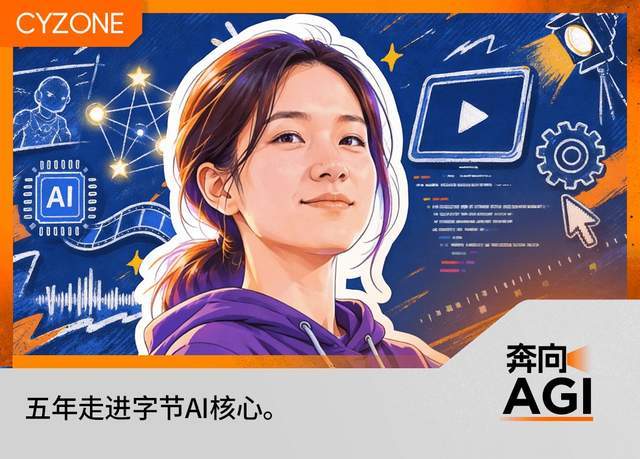
A 29-year-old female researcher from the ByteDance AI team is walking to the center of the stage.
Her name is Zeng Yan, born in 1997, and joined ByteDance as a school admissions student in 2021. In just five years, she grew from an algorithm engineer to the core R&D leader of the Seedance video model. In March 2026, it was revealed that she had been promoted two levels in a row to Byte 4-2.
At the end of October, Zhou Chang, the core person in charge of Byte Seed, was revealed to have left his job to start a business, with the direction of Physical AI. Although Byte had previously denied Zhou Chang’s resignation, media later revealed that in the second half of this year, Zhou Chang’s management scope had shrunk, and part of the work was gradually assumed by Zeng Yan. She has also recently recruited more R&D personnel in the language model direction.
By the end of 2025, Byte is developing a new generation video generation model, Seedance 2.0. Faced with different opinions within the team on the scale of training, Zeng Yan insisted on challenging a model with at least 200 billion parameters, and finally won management support.
A few months later, Seedance 2.0 was released, attracting widespread attention in the field of global AI video generation and becoming one of the important products for Byte AI commercialization.
From enrolling students in an ordinary school to promoting the research and development of Byte core AI models, what is so special about this young female researcher?
Five years into the core of Byte AI
Zeng Yan studied at Xi’an Jiaotong University as an undergraduate, and then went to the University of Montreal in Canada to study for a master’s degree in computer-related majors. In September 2021, at the age of 24, she joined ByteDance AI Lab as a school admissions student and became an algorithm engineer.
At that time, ChatGPT had not yet been released, and global technology companies had not yet launched the subsequent large-model arms race. Byte’s AI technology mainly serves businesses such as recommendation algorithms and content understanding, and basic model research is still in the accumulation stage.
However, Zeng Yan, who has just joined the company, has already produced her own research results.
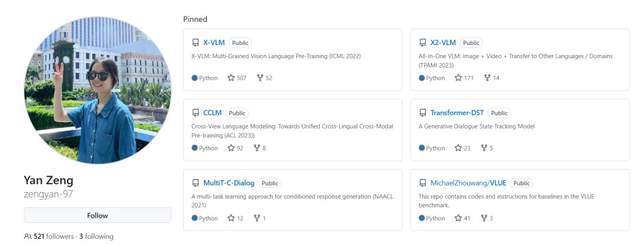
In November 2021, only two months after joining the company, she published the X-VLM paper as the first author, studying how to make AI more accurately understand the relationship between images and text. To put it simply, when people give AI a picture and tell it “the little girl in red is riding a bicycle”, the model must not only understand the entire picture, but also accurately find the characters, actions and objects corresponding to the text.
This research was later accepted by the 2022 International Machine Learning Conference ICML. Since then, Zeng Yan has continued to conduct research in the fields of visual language pre-training and multi-modal understanding, and participated in the development of models such as CCLM and Lynx, gradually moving from image and text understanding to more complex multi-modal large models.
In 2023, ByteDance established Seed, a large model research team, and Zeng Yan’s team also moved in.
Byte, which has a huge content ecosystem such as Douyin, Jianying, and TikTok, has begun to increase investment in research and development in the field of video generation. Zeng Yan’s research direction then extended to video generation.
In 2024, the PixelDance paper she published as the first author was accepted by CVPR, a top computer vision conference.
At that time, AI video generation generally faced a problem: the picture could be made beautiful, but once the characters performed complex movements, problems such as motion distortion, body deformation, and subject inconsistency were prone to occur. PixelDance attempts to use conditional constraints such as first and last frames to allow the model to maintain the consistency of characters and scenes when generating complex movements.
This research later became one of the important technological accumulations in the development of Seedance. In the same year, Zeng Yan’s job title changed from algorithm engineer to algorithm researcher, and her work gradually shifted from research prototypes to user-oriented video generation models.
In June 2025, Byte released Seedance 1.0, and Zeng Yan became an important person in charge of the R&D team.
By March 2026, Zeng Yan was promoted from 3-2 to 4-2, completing two rank jumps within one year, corresponding to L7 in Byte’s new rank system.
In Byte’s huge technical talent system, 4-2 is already a very high rank. According to industry media estimates, the total annual salary of technical talents at this level, including basic salary, year-end bonus and equity incentives, may reach more than 5 million yuan.
Unlike many AI star scientists introduced from outside, Zeng Yan was trained by Byte itself as a school recruit. The next model training decision she participated in made more people pay attention to this young researcher.
At a dinner party, she won a large model with 200 billion parameters
At the end of 2025, at a dinner party held by the Byte Seed team, Zeng Yan proposed a bold idea.
At that time, the Seedance team was discussing training solutions for the next generation model. Zeng Yan expressed to the person in charge that she hopes to try to train a larger-scale model with at least 200B parameters, which is 200 billion.
There was disagreement within the team. Video generation model training is expensive, and the larger the parameter scale, the more computing power and data required. Some people think that directly challenging 200B or even 300B is too aggressive, and it is more prudent to train the 100B model first.
Zeng Yan hopes to get it right in one step. It happened that a Byte executive attended the dinner, and after learning about her idea, he expressed that he could coordinate some training resources. Subsequently, at Seed’s internal formal review meeting, Wu Yonghui and Zhou Chang discussed and finally supported her plan.
In February 2026, Seedance 2.0 was officially released.

The new model adopts a multi-modal audio and video joint generation architecture, which can receive different forms of input such as text, pictures, audio and video, and generate video content including complex actions, multi-shot switching and audio and video synchronization effects.
Feng Ji, the producer of “Black Myth: Wukong”, once publicly called it “the most powerful video generation model on the planet.” Seedance has also begun to compete head-on with Google Veo, OpenAI Sora, Kuaishou Keling and other products.
Byte has content products such as Douyin, Jianying, Jimeng, Hongguo Short Drama, etc., and also provides model services to enterprises through the Volcano Engine. As the demand for video generation models increases in fields such as AI short dramas, advertising videos, and film and television pre-production, Seedance has gradually become an important commercial product for Byte’s AI business.
According to media reports on November 3, Seedance’s overseas revenue has accounted for 50%, and its overseas revenue has increased nearly five times in the past six months. Based on Token consumption and revenue contribution, Tencent has ranked among the top three domestic customers of Seedance, and Station B ranks among the top ten.
In addition to Internet companies, Seedance is also entering real industries such as manufacturing, automobiles, education, and medical care, and the number of related customers accounts for more than a quarter.
From domestic content creation tools to overseas markets and corporate production scenarios, Seedance’s business landscape is expanding. The technology Zeng Yan participated in promoting has gradually become an important commercial asset for Byte’s AI business.
The person in charge of AI at major companies is getting younger and younger
In the Chinese AI circle in 2026, a group of post-90s and even post-95s researchers are entering core R&D positions in major Internet companies.
Yao Shunyu of Tencent is one of the most watched figures.
Yao Shunyu graduated from the Yao Class of Tsinghua University and then studied for a PhD at Princeton University. He worked on AI Agent-related research at OpenAI. The research results such as ReAct that he participated in proposed have broad influence in the field of intelligent agents.
In September 2025, Yao Shunyu joined Tencent from OpenAI. In December of the same year, he became the chief AI scientist, reporting directly to Tencent President Liu Chiping and responsible for the research and development work related to the Hunyuan large model.
In April 2026, Tencent Hunyuan released the Hy3 Preview model, with a total parameter count of 295B and an activation parameter of 21B. It became the first model report card handed over by Hunyuan Reconstruction after Yao Shunyu joined.
In July, Tencent further merged the Hunyuan Language Model Department and the Multi-modal Model Department to establish the Basic Model Department, under the unified responsibility of Yao Shunyu. The management scope covers language models, images, videos, 3D generation and other directions. Hy3 series models have also gradually entered Tencent products such as CodeBuddy, Yuanbao, and ima.
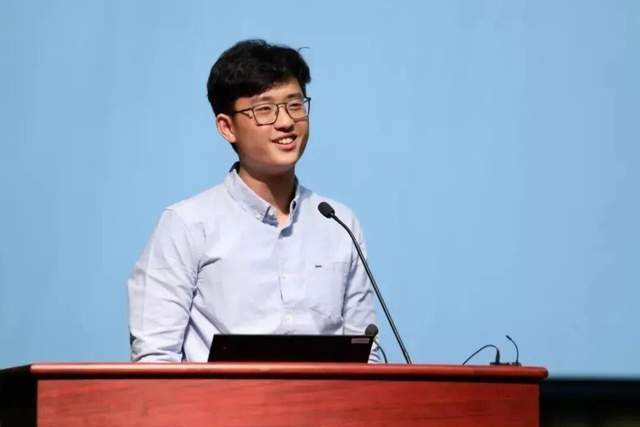
In October 2026, when relevant leaders of Guangdong Province went to Tencent’s headquarters for investigation, Yao Shunyu sat next to Ma Huateng. The relevant pictures triggered discussions in the technology circle.
A similar story also happened to Ali.
Liu Dayiheng, born in 1993, graduated from Sichuan University with a Ph.D., and his research focuses on natural language processing and machine learning. When he graduated in 2021, he was selected into Huawei’s “Genius Youth Program”, but ultimately chose to join Alibaba.
After joining Alibaba, Liu Dayiheng participated in the model development of Tongyi Qianwen for a long time and gradually became a core researcher of the Qwen project.
劉大一恆
In September 2026, Liu Dayiheng appeared at the Yunqi Conference as the leader of the Token Foundry Qwen LLM project of Alibaba’s ATH business group, and officially moved into a front-line management position in the research and development of Qianwen’s large model.
In Xiaomi, Luo Fuli, who was born in 1995, also received attention.
She graduated from Beijing Normal University with a bachelor’s degree and studied at Peking University with a master’s degree. She worked on large model research at Alibaba Damo Academy, and later joined Magic Square Quantification and DeepSeek, participating in the development of models such as DeepSeek-V2.
In November 2025, Luo Fuli officially joined Xiaomi as the head of the MiMo large model team.
On September 22, 2026, Xiaomi released and open sourced the MiMo-V2.6 series of models. The Pro version scored approximately 46 points on the open source weighted model list of the Artificial Analysis Comprehensive Intelligence Index, ranking first at the time.
On the same day, Xiaomi released an internal promotion list, and Luo Fuli was promoted to level 22. According to people close to Xiaomi, this is the highest level in Xiaomi’s current ranking system.
……
From Byte’s Zeng Yan, to Tencent’s Yao Shunyu, Alibaba’s Liu Dayiheng, and Xiaomi’s Luo Fuli, a group of young researchers in their thirties are becoming key figures in AI research and development at China’s major Internet companies.
In order to compete for these talents, in addition to offering high salaries, major companies are also constantly giving them greater R&D authority.
After Yao Shunyu joined Tencent, he was responsible for the research and development of Hunyuan basic model; Luo Fuli took the helm of MiMo at Xiaomi; Zeng Yan recruited students from a school and grew up to become the core person in charge of Seedance.
Related Reading
- “Bring the boss back”, after Huang Renxun resigned, Nvidia employees couldn’t sit still for the first time2026-11-15
- Byte’s 2029 and Tencent’s “Half People”2026-11-15
- Jen-Hsun Huang is out of class, and there is no permanent master in Silicon Valley2026-11-14
- Can a digital person be a CEO? Robin Li talks about organizational changes in the AI era again2026-11-14
- Huang Renxun resigns with “double standards”, Musk: Welcome to Tesla2026-11-14