Text | Krypton Research Press
On November 12, Nvidia submitted an 8-K document to the U.S. Securities and Exchange Commission.
A tenure that lasted for 33 years ended in a few pages.
Documents disclosed that the board of directors had accepted Huang Renxun’s resignation as president, CEO and director the day before, effective immediately. Colette Kress, who has served as chief financial officer for 13 years, became interim CEO, and 73-year-old Harvey Jones was appointed chairman.
At the end of the document, the person who signed it was Kress.
For the first time since Nvidia was founded, it has a chairman, and for the first time it is looking for a CEO other than Huang Renxun. The man in a black leather jacket introducing the next generation of chips at a press conference no longer makes the final decisions on behalf of the company.
The company has previously launched an independent investigation, but this resignation announcement did not explain the specific reasons, nor did it disclose the conclusions of the investigation. A full narrative on why Huang left will have to wait for more facts.
Now, the succession has begun.
Silicon Valley is familiar with scenes like this. Some people were ignored by the managers they hired, some were asked to resign by their most trusted investors, and some were just kicked out by the board of directors, but came back a few days later to reorganize the board of directors.
The founder’s credit is usually not disputed. What is really controversial is whether this credit can allow him to continue to be in power.
Steve Jobs, the person you invited turned against you.
In February 1985, Jobs celebrated his 30th birthday at the St. Francis Hotel in San Francisco.
He wore a black dress as Ella Fitzgerald sang Happy Birthday to him, and members of the San Francisco Symphony later took over. John Sculley was also present and stood up to toast him, praising his technical vision.
This CEO was personally invited by Steve Jobs.
Two years ago, Sculley was an executive at PepsiCo. In order to persuade him to leave, Jobs asked him the famous multiple-choice question: continue to sell sugar water, or change the world together.
In 1983, Sculley accepted the invitation to become Apple CEO. Jobs served as chairman and led the Macintosh business.
The relationship seemed to have a good division of labor: Jobs was responsible for making the products amazing, and Sculley was responsible for making Apple a better company.
But when the Macintosh failed to sell, the division of labor was not so clear.
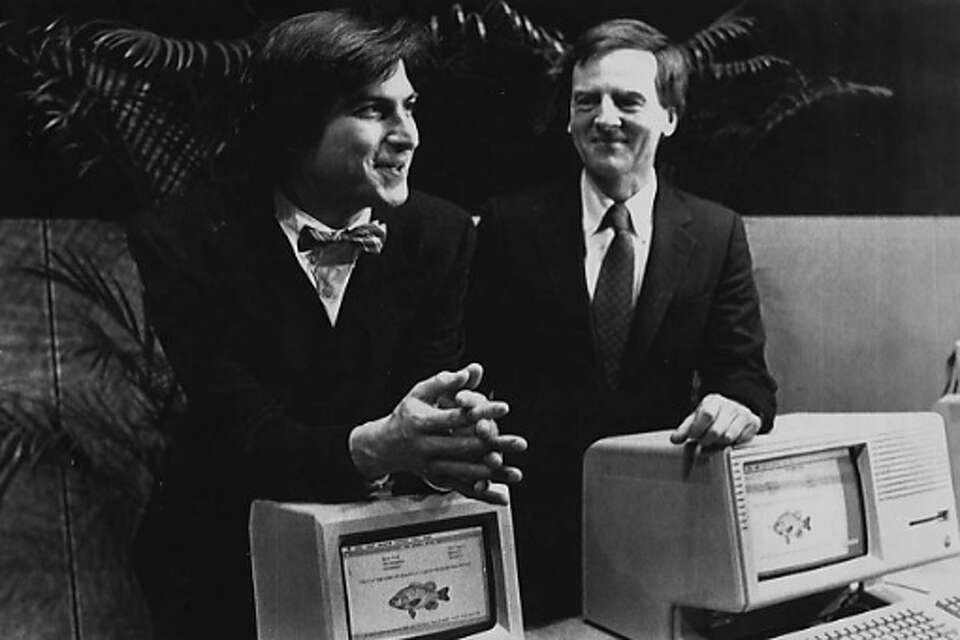
Jobs (left) and Sculley demonstrate the Macintosh computer in 1984.
In January 1984, the Macintosh was launched. The graphical interface and mouse brought a new user experience, but did not eliminate the obstacles caused by price, memory and lack of software. After the initial wave of enthusiasts bought in, sales began to slow down.
Macintosh team member Andy Herzfeld later recalled that the marketing department had expected to sell more than 75,000 units per month during the 1984 holiday season, but actually did not even reach 20,000 units. In December of the same year, it was still the Apple II that supported about 70% of Apple’s revenue.
The product represents the future, and another product line pays the immediate bills. This is the commercial background of the dispute between the two.
Sculley recalled many years later that Jobs wanted to reduce the price of the Macintosh, but he valued the profits brought by the Apple II more. The debate quickly transcended products and budgets and turned into denials of leadership.
Jobs originally hired someone to manage Apple, but when this person started to manage himself, he couldn’t accept it.
Jeffrey Kane wrote in “Steve Jobs in Exile” published in 2026 that Jay Elliott, Apple’s head of human resources, arranged for the two to talk to Jobs’ office. It was raining outside the window, and the mediation inside the house quickly turned into an argument. Sculley accused Jobs of disrupting management order; Jobs said he regretted asking him to be CEO.
By the end, Jobs was crying.
In April, Sculley received support from the board of directors and was preparing to take away Jobs’ management of the Macintosh business.
Jobs decided to drive Sculley away first.
The opportunity seemed to be at hand: Sculley planned to travel to China in May. Jobs began lobbying executives, planning to push for reorganization while he was gone. He even told his plan to Jean-Louis Gacy, an executive from Apple’s French operations who Sculley was considering taking over the Macintosh.
Gacy broke the news to Scully.
China trip canceled. On May 24, Sculley had a showdown with Jobs at an executive meeting. Jobs failed to gain enough support to reverse the situation, and the board’s previous choices remained unchanged.
By the end of May, Jobs lost the actual operating rights. In September, he resigned as chairman and left Apple.
At the age of 30, Jobs lost his position in the company he founded.
Later stories make it easy for people to feel sorry for Jobs back then. NeXT, Pixar, returning to Apple, then to iMac, iPod and iPhone, it seems that every step proves how serious the mistake the 1985 board of directors made.
But there is a history that is not suitable for a heroic narrative: Apple did not collapse immediately after Jobs left.
In the first few years of Sculley’s leadership of the company, the Macintosh gained a foothold in the desktop publishing market, and Apple ushered in a period of good development. His abilities in channels, marketing and operations management have really helped the company.
In the 1990s, the Windows ecosystem grew, and Apple once again fell into product and competition dilemmas. In 1993, Sculley lost his position as CEO. Since then, Spindler and Amelio have taken over successively, but they have not been able to get Apple out of trouble.
The turnaround came with a new operating system that Apple desperately needed.
At the end of 1996, Apple announced its acquisition of NeXT, and Jobs returned as an advisor. In 1997, he became interim CEO. What allowed him to re-enter the center of power was the technology accumulated by NeXT and the problems that Apple could not solve on its own.
It took twelve years from losing the right to operate the company to taking the helm again.
In these twelve years, Jobs experienced product failure, team separation and re-starting a business, while Apple tried several managers. Both sides paid a price before they sat together again.
The board of directors can certainly replace the founder. The hard thing is that after the change, someone still has to know where the company should go.
Investors fall out faster than anyone else
On June 20, 2017, Kalanick was waiting for two visitors in a Chicago hotel who were not part of the recruitment plan.
Benchmark partners Matt Kohler and Peter Fenton brought a letter, backed by five major investment institutions, titled “Driving Uber Forward.”
One of the demands: Kalanick resigns as CEO that day.
He had come to interview executive candidates. Uber urgently needs to replenish its management team, but first it needs to replace the person responsible for hiring.
This has been an extremely difficult period in Kalanick’s life.
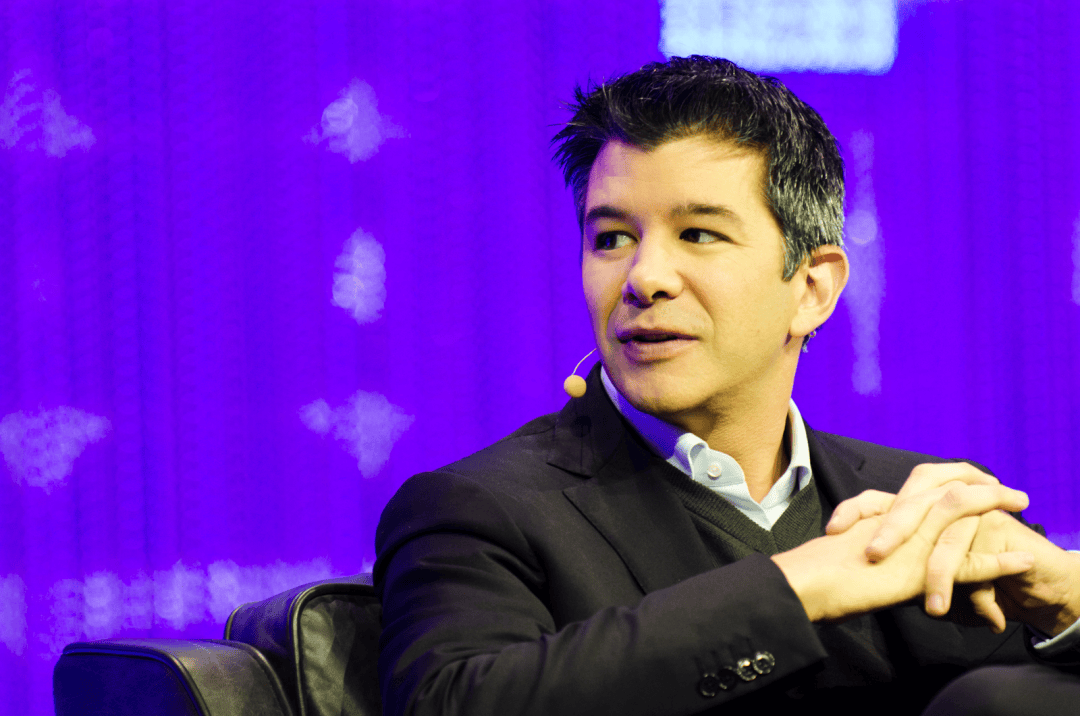
In December 2013, Kalanick attended the LeWeb conference in Paris.
A month ago, his parents were involved in a boating accident, in which his mother died and his father was injured. On June 13, he announced a temporary leave. In a letter to employees, he admitted that if the company wants to move towards “Uber 2.0”, he also needs to become “Travis 2.0”.
He hasn’t finished his vacation yet, and his term as CEO is about to end.
Uber’s crisis has been going on for months: employee accusations of sexual harassment and internal management, regulatory disputes, self-driving technology lawsuits with Waymo, and a succession of executive departures are all consuming the company.
Kalanick’s aggressiveness was once well suited to Uber’s expansion.
When entering a city, you have to compete for drivers, passengers and funds at the same time, and you also have to face the taxi industry and regulatory authorities. Kalanick has a habit of rushing in first, building scale, and then dealing with resistance. Venture capital has fueled this expansion, and Benchmark is an important one.
As Uber has grown into a company valued at tens of billions of dollars, the consequences of the same management style have grown. Disputes will affect market access, internal problems will take away talents, and continued disputes will make it difficult for companies to establish stable business expectations.
Investors began to demand replacements.
According to a New York Times reconstruction of the hotel negotiations, Kalanick initially refused to accept it. He contacted director Arianna Huffington for advice. Huffington suggested that he take the letter’s request seriously.
After hours of debate, Kalanick agreed to resign. He said in the statement that he accepted the investors’ request in the hope that Uber could refocus on its business and avoid another battle.
He still holds shares and retains a seat on the board. The once overlapping identities of founder, shareholder and CEO began to separate from this day.
Interestingly, after Kalanick left office, Benchmark’s Bill Gurley publicly affirmed his historical contribution.
This compliment does not hinder the decision to make substitutions.
In the judgment of investors, Kalanick can continue to be the person who changed the travel industry, but others need to be responsible for the next stage of Uber. For Kalanick, what he is striving for is an opportunity for self-adjustment; for the shareholders pushing for his departure, adjustment already means replacing himself.
Uber’s expansion method was not formed overnight, and capital has also shared in the benefits it has brought. When the price was concentrated, the founders and investors finally had irreconcilable differences on how to end the situation.
Subsequently, Dara Khosrowshahi took over as CEO. Uber went public in 2019, and Kalanick resigned from the board of directors at the end of the same year.
He found another company. In 2018, Kalanick invested in and took over City Storage Systems, whose businesses include CloudKitchens. This time, he turned his attention to shared kitchens.
Uber didn’t stage the story of waiting for its founder to return.
But if the same investors push for a coaching change, if they switch to another company, the results may be completely different.
Neumann, vote yourself out
On September 24, 2019, the WeWork board of directors voted to replace the CEO.
According to Reuters, citing people familiar with the matter, Adam Neumann also cast a vote in support of his departure. The core force pushing him to leave was his previous most important supporter – Masayoshi Son.
WeWork was born in New York, but it has fully interpreted the Silicon Valley-style entrepreneurial narrative.
Neumann talks about community, connection, and ways of working, and even writes raising human consciousness into the company’s mission. Desks and conference rooms are put into a larger story: people come here and can have a different kind of life.
This story is not without product foundation. The beautiful space, flexible lease terms, and ready-made office services have indeed saved many customers from the trouble of finding housing, decorating, and managing offices.
However, WeWork has to bear the cost of the flexibility that customers gain.
It leases properties from landlords on a long-term basis and then rents them to members on shorter terms. The workstation can be vacant, but the rent must continue to be paid; when opening a new location, renovation and operating expenses will be incurred before stable income.
The 2019 prospectus documents made this mismatch quite clear: The average initial term of U.S. property leases is approximately 15 years; as of the end of June that year, signed leases corresponded to future minimum lease payment obligations of approximately US$47.2 billion. These payments are spread over a number of years, but require continued operations of the company to cover them.
SoftBank’s previous investment had pushed WeWork’s valuation to $47 billion. After entering the public market, investors began to ask how this business makes money.
The boundaries of interests between Neumann and the company cannot withstand the same scrutiny.
Listing documents disclosed that in order to obtain “We” related trademark rights, the company had issued partnership interests worth approximately US$5.9 million to WE Holdings, which Neumann participated in management. It is equivalent to the company paying consideration for its own brand to another company related to the founder.
The deal was later withdrawn, but it left a governance question: When founders are involved on both sides of the deal, who controls the company’s interests?
Valuation expectations were subsequently lowered, once to about US$10 billion, and the IPO plan was blocked.
For WeWork, going public is more than just a fortune-setting exercise. In the prospectus document, a credit arrangement of up to US$6 billion is also linked to conditions such as the completion of the IPO. If the listing fails, it will also affect other financing arrangements.
Neumann’s special voting rights showed their limits at this time.
He can have a big advantage in shareholder votes, but he can’t ask outside investors to continue to pay at the original valuation. The more a company needs new capital, the more likely it is that the person who decides whether to provide it will influence whether or not to stay.
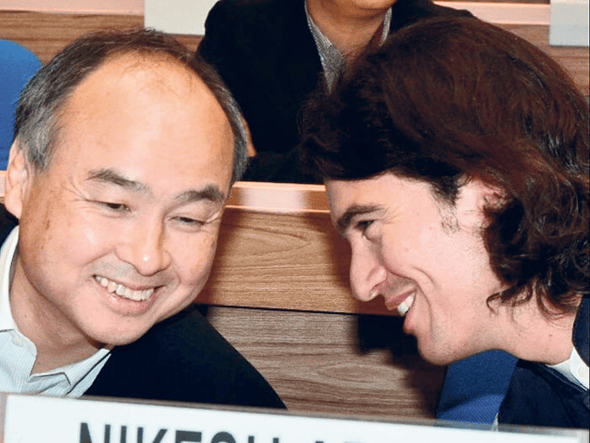
Masayoshi Son (left) talks with Neumann.
Son had supported Neumann’s expansion. After the IPO was blocked, SoftBank needed to face book losses and decide whether to continue the rescue.
Eventually, Neumann resigned as CEO, became non-executive chairman, and gave up majority voting control. In his departure statement, he acknowledged that the focus around him had distracted the company.
An entrepreneur who is particularly good at attracting attention will eventually need to reduce it by walking away.
However, Neumann’s departure did not make WeWork’s accounts easier to settle. In the following years, the company encountered the epidemic and changes in office needs. In November 2023, WeWork applied for bankruptcy protection; in June 2024, it completed its reorganization and exited the bankruptcy process.
SoftBank gained greater control and shouldered the costs of cleaning up the situation. Leases, vacancies and cash burn all need to be re-addressed.
Winning a personnel battle and getting the company out of business difficulties are two separate things that the board of directors needs to accomplish.
Ultraman’s visitor pass
On November 17, 2023, Ultraman entered a Google Meet meeting.
According to the timeline disclosed by Brockman afterwards, the night before, OpenAI chief scientist Ilya Sutskvy asked him to have a phone call at noon on Friday. After entering the meeting, Altman discovered that all the directors except Brockman were there.
Sutskvi informed him that he had been relieved of his duties as CEO, and the news was quickly announced.
On the same day, OpenAI issued an announcement, giving the reason: Altman failed to always remain candid when communicating with the board of directors, which affected the board of directors’ performance of its duties.
Just a dozen days ago, he stood on the stage of OpenAI’s first developer conference to introduce new products. ChatGPT thrust him into the center of the global tech industry without providing him with a single vote that would prevent his removal.
At that time, OpenAI’s commercial operations were still controlled by a nonprofit board of directors. The introduction of capital has not changed this arrangement, and the board of directors has the power to appoint and remove the CEO.
Directors have the authority to make this decision. The question is who will keep the company going after the decision is made.
On November 19, Altman returned to the OpenAI office and hung up a visitor’s pass.
“GUEST 04.”
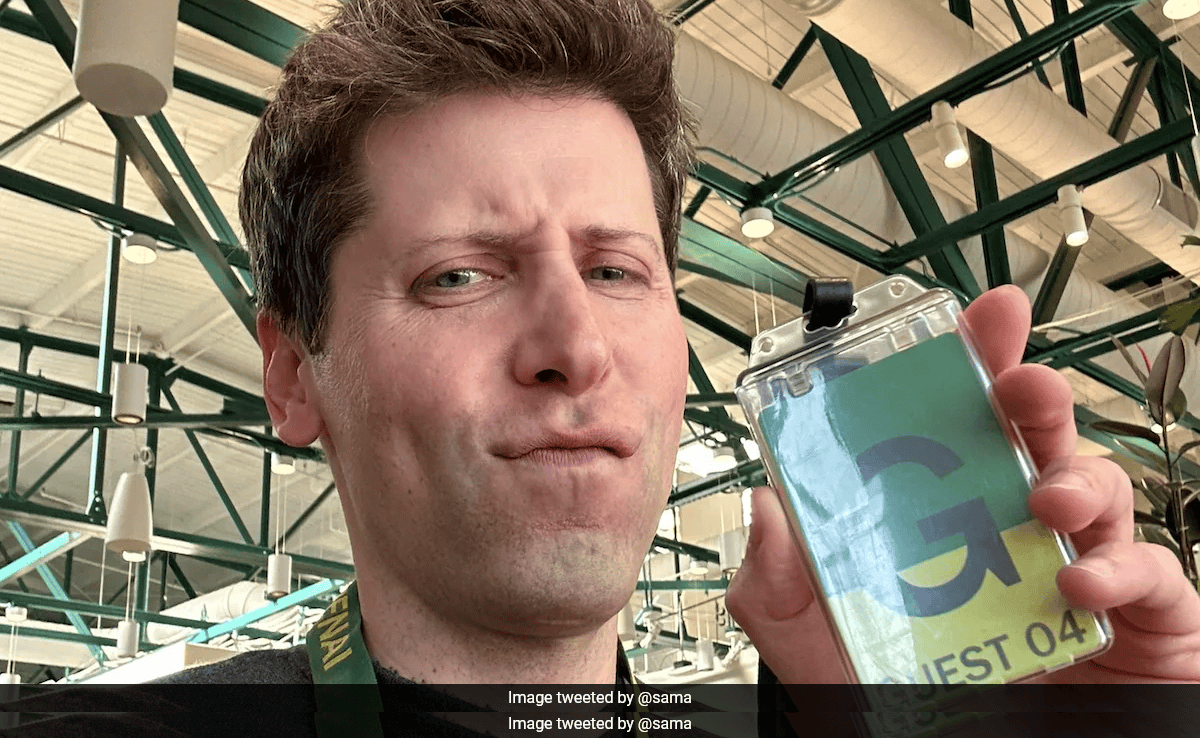
On November 19, 2023, Altman posted a photo wearing an OpenAI visitor pass.
He posted the photo to the social platform with the caption saying that this was the first and last time he would wear this thing. The CEO, who was still managing the company two days ago, wanted to come in as a guest to discuss whether he would stay or leave.
This time, he has no shortage of supporters.
Brockman has announced his resignation. Microsoft expressed its willingness to accommodate Altman and his team. On November 20, more than 700 employees signed a petition calling on the board of directors to resign and reinstate Altman. The employees said in the letter that if their demands cannot be met, they may leave OpenAI and join a new team at Microsoft.
Among the signers was Sutskvi. He publicly expressed regret for participating in the board action and hoped to help reunite the company.
The situation has fundamentally changed here.
The board of directors can appoint and remove the CEO, but it cannot require engineers and researchers to stay. Microsoft’s willingness to accept has given the collective resignations a realistic place to go.
Once a large number of core employees leave, research, development and delivery will be affected. Even if the board retains its position, it may lose a team capable of executing its decisions.
This reversal cannot simply be explained by the founder’s personal charisma winning. Employees’ judgment of the company, their career choices, product prospects, and Microsoft’s business interests were all concentrated behind Altman at this moment.
On November 21, local time in the United States, OpenAI announced that it had reached an in-principle agreement on the return of Ultraman and would reorganize its board of directors. On November 29, the company officially announced his return as CEO.
There were only four days between being ousted and reaching a return agreement.
In March 2024, OpenAI released a summary of the review it commissioned, attributing the cause of the turmoil to the breakdown of trust between the original board of directors and Altman, saying that the original board of directors did not expect that the removal would plunge the company into such serious turmoil.
This post-mortem just pointed out the problem that the board failed to deal with at the time: It was prepared to remove one person from his position, but was not prepared to deal with the impact of this decision on the entire organization.
In 1985, Jobs failed to win enough support and lost his management rights. Ultraman in 2023 still has enough support to change the outcome after being deposed.
The title of CEO can be taken away in a meeting. Who the team continues to follow depends on what happens outside the meeting room.
After Huang Renxun, who will make the final decision?
What Huang Renxun left to his successor is another kind of problem.
He has led Nvidia for 33 years. The company has experienced setbacks in its early graphics chip route and has gradually established general computing capabilities outside of the gaming market.
In 2006, NVIDIA announced the CUDA architecture, opening up the parallel computing capabilities of GPUs to science and research. In 2012, the AlexNet breakthrough demonstrated the value of GPUs in deep learning. Going forward, the rise of large models has made the software, tools and developer ecosystem accumulated over many years an important competitive advantage for NVIDIA.
These achievements have also continued to increase Huang Renxun’s weight in the organization.
When a person has led a company through several technology transitions, it is easier to gain resources and patience the next time he proposes a direction that has not yet been proven by the market. The team is judging both the project and the person proposing the project.
This kind of trust is difficult to hand over directly to the next CEO along with the CEO position.
Huang Renxun’s management style further deepens this point. In a 2024 Stripe interview, he said that Nvidia has 60 leadership team members reporting directly to him. He emphasizes reducing layers, sharing information, and devoting his time to solving problems and developing new ideas.
This arrangement shortens the information transmission path and also places high demands on the people at the center.
Succession therefore involves two things happening simultaneously: finding a CEO and rearranging decisions that have long been the responsibility of Huang himself.
Kress has joined NVIDIA in 2013 and has participated in the company’s transformation into an AI infrastructure provider. Long-term financial responsibility means that she is familiar with inputs, customers, operations and capital arrangements. There is no basis for asserting that Nvidia will become conservative based on her financial background alone.
Colette Kress.
The practical problem she needs to face is how to complete this handover with the existing technical team, and how to convince customers and employees that someone is still responsible for key decisions.
What Jen-Hsun Huang left behind is not an empty space. Product routes, R&D teams, software ecosystems and customer relationships are all established by a large number of employees. The company has the basis to continue executing its established plans.
NVIDIA’s board of directors emphasized in the announcement that operations, customer commitments and product routes will continue to advance; at the same time, the company will look for a formal CEO from both internal and external sources.
The delivery before us is just the first test.
The harder moment will occur the next time there is disagreement: a new direction has no clear revenue yet, a mature business is still profitable, the R&D team wants to continue investing, and the operating team wants to see returns. Where exactly is the company putting its resources and how long is it willing to wait?
Huang Renxun once promoted such a choice by relying on his professional judgment and long-term accumulated prestige. The successor needs to establish his or her own judgment and the organization needs to accept that these choices can be made by another set of collaborative methods in the future.
The successor will also need to revise the judgment left by Huang Renxun when necessary. Continuing a successful path requires different support than deciding when to leave it. Management and boards need to prepare for the latter scenario.
The specific method to be adopted still has to be decided by Nvidia. But a practical task is already ahead of us: handing over the questions people are used to asking Jen-Hsun Huang to an organization that can consistently answer them.
It is easy for the outside world to see that the speaker of the press conference has been changed, and the respondent of the financial report call has been changed. Deeper changes occur internally: who can veto a project, who can buy time for a long-term investment, and whose words are accepted when disagreements arise.
The stories of Jobs, Kalanick, Neumann, and Altman all ended here. Behind the position, there are specific people, funds and business; when these supports change, the founder’s power will also change.
As for the reasons for Huang Renxun’s departure, we should still wait for more facts. For Nvidia, the next operation cannot wait for a complete historical conclusion.
Chips must continue to be developed, customers must continue to serve, and someone still needs to make a judgment on the next technical direction.
The 8-K filing on November 12 did not answer the question of who can take over the trust that Jen-Hsun Huang has accumulated over the past 33 years.
Related Reading
- “Bring the boss back”, after Huang Renxun resigned, Nvidia employees couldn’t sit still for the first time2026-11-15
- At the age of 29, she became the core figure of Bit Group AI2026-11-15
- Byte’s 2029 and Tencent’s “Half People”2026-11-15
- Can a digital person be a CEO? Robin Li talks about organizational changes in the AI era again2026-11-14
- Huang Renxun resigns with “double standards”, Musk: Welcome to Tesla2026-11-14