Jiemian News Intern Reporter | Zhu Qinghua
Elon Musk’s SpaceX’s Starship successfully recovered the spacecraft during the same orbital launch mission for the first time.
At 16:47 U.S. Central Time on November 13 (6:47 Beijing time on November 14), the Starship lifted off from Launch Pad 2 of the Starship Base in Texas.
This is the 15th test flight of the Starship series and the first orbital-class spacecraft recovery attempt combining the V3 version of the Starship spacecraft with a super-heavy booster.
Starship is the largest and most powerful launch vehicle in the world to date.It is equipped with multiple “Raptor” engines, with a total height of about 120 meters and a diameter of about 9 meters.
The rocket adopts a two-stage configuration, with the first stage being a super-heavy booster (Superheavy), responsible for providing the main thrust during the take-off phase; the second level is the starship spacecraft (Starship), responsible for placing payloads into orbit and performing subsequent missions. After the two stages are separated, the booster needs to return to the launch site to be captured by the robotic arm, while the spacecraft continues to accelerate into orbit, completes payload deployment, and then returns to Earth independently.
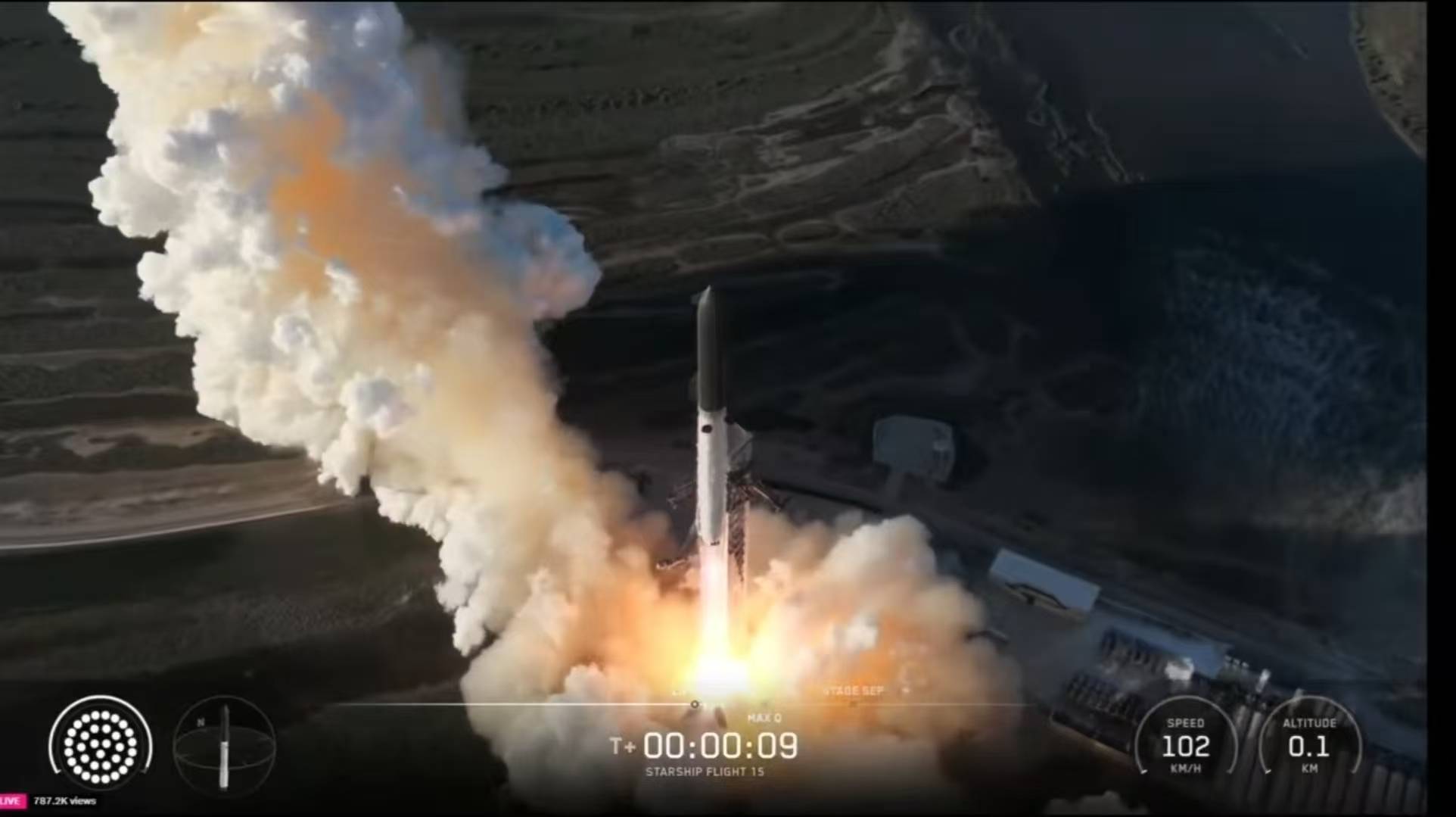
This test flight resulted in a “milestone and regret” answer sheet:The recovery of the first-stage booster failed, but the second-stage spacecraft successfully achieved mankind’s first orbital-level tower capture.
About six and a half minutes after liftoff, the first-stage super-heavy booster B22 triggered an automatic abort on its way back, and then turned to a predetermined maritime area in the Gulf of Mexico, eventually splashing down and bursting into flames.
SpaceX spokesman Dan Huot said that the guidance, navigation and control system (GNC) itself was working as expected, but the system found that the booster was not in a predetermined position for continued capture and automatically aborted the recovery. The team is still investigating as to why the booster deviated from its desired position.
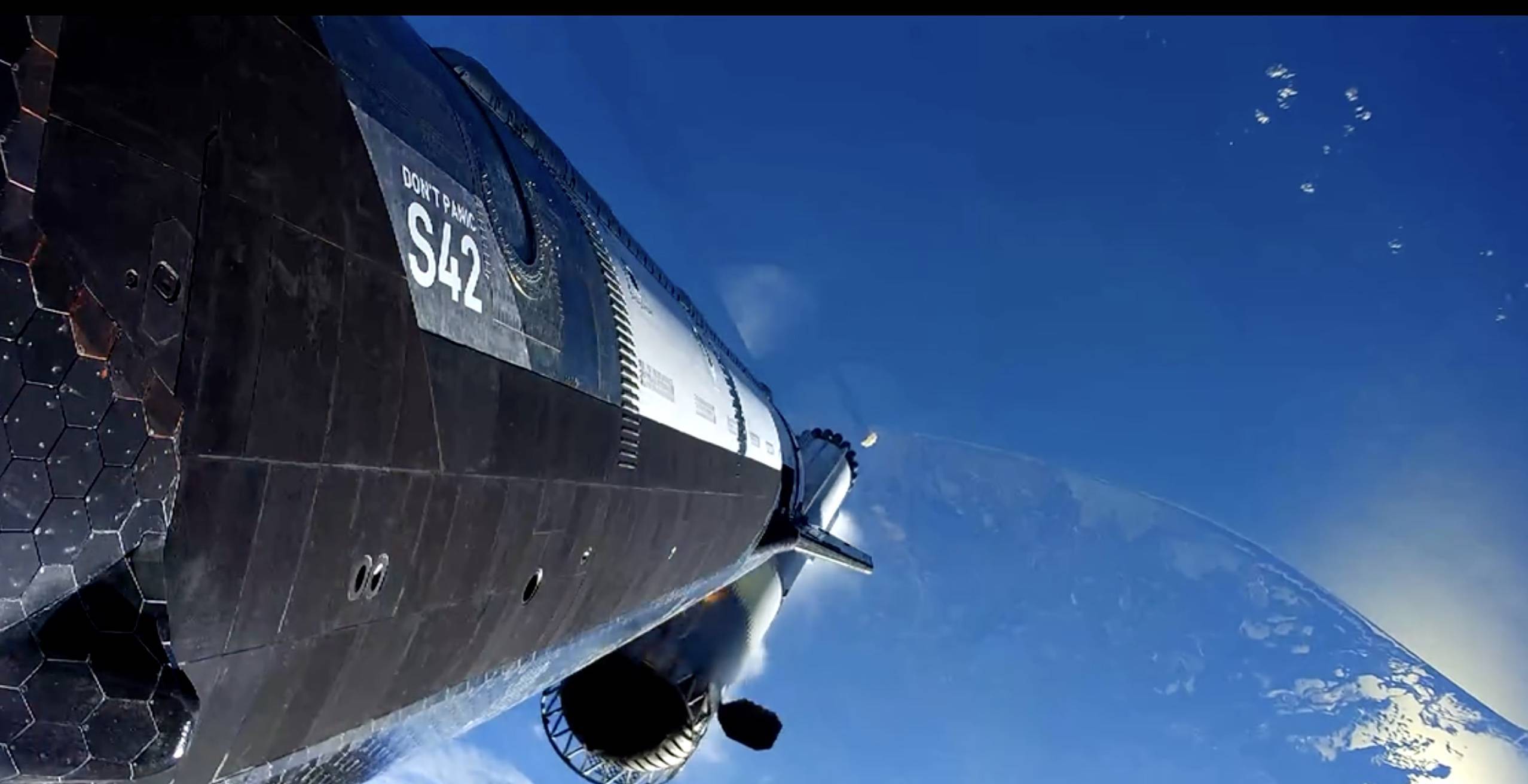
The second-stage Starship spacecraft S42, which separated from the booster, continued to fly and was then ignited into orbit. About 1 hour and 17 minutes after liftoff, 26 third-generation Starlink V3 satellites were successfully released. The spacecraft entered a low-Earth orbit of about 275 kilometers and flew about 14 times around the earth. The entire mission lasted more than 22 hours.
At around 5:19 on November 15th, Beijing time, about 22 hours and 32 minutes after launch, S42 completed deorbiting, re-entering the atmosphere and final landing maneuver, and finally returned to Starport, Texas, where it was captured by the two robotic arms of the launch tower.
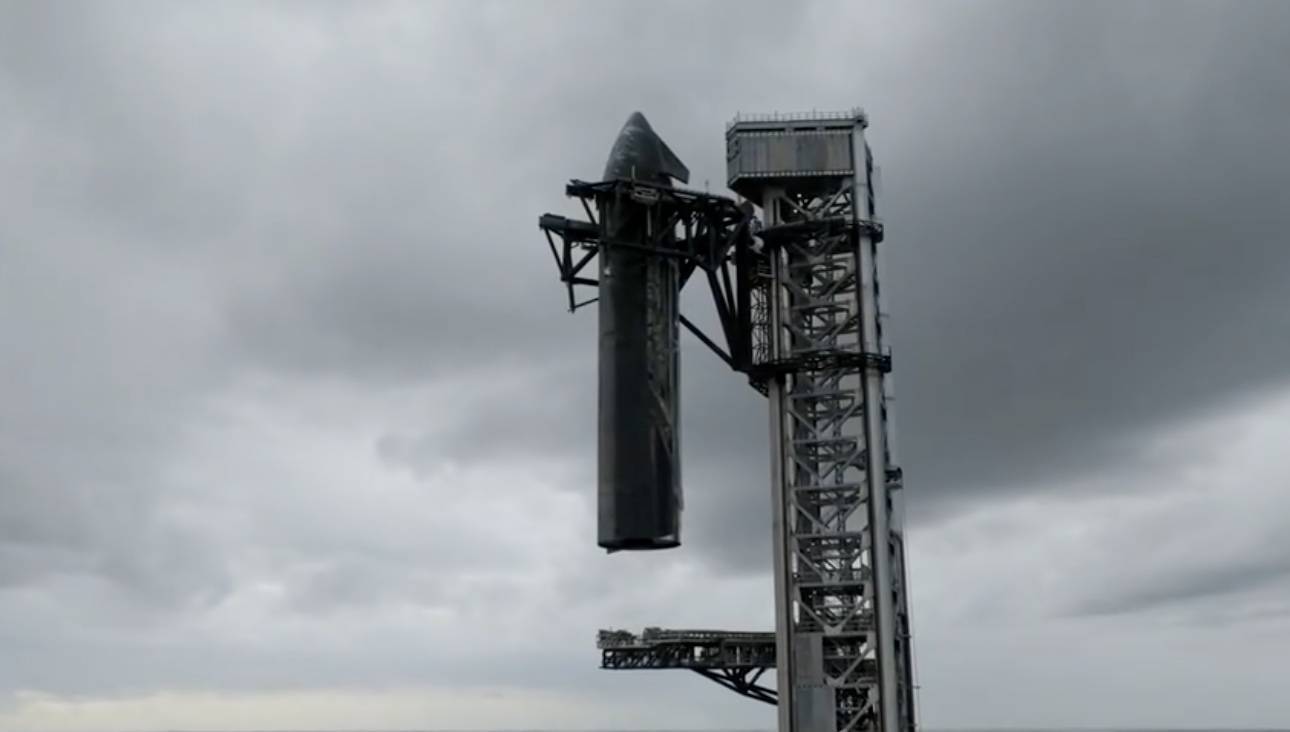
This is the first time SpaceX has successfully captured a Starship spacecraft returning from Earth orbit. Previously, SpaceX has successfully captured the super-heavy booster three times, but has yet to recover the tower of the upper-stage spacecraft.
This recovery marks a key step towards complete and rapid reuse of the starship.
Previously, most partially reusable rockets only recovered the first-stage booster, and the upper stage was still a disposable consumable.
For example, SpaceX Falcon 9 has achieved partial hardware reuse through first-stage booster and fairing recovery, but its second stage is still disposable hardware and needs to be reinvested for each launch.
In the space launch cost structure, rocket bodies and engines account for the vast majority of manufacturing costs. Only by recycling and reusing both stages can we further reduce the hardware that needs to be remanufactured for each mission, transform the rocket from a disposable consumable into a reusable transportation asset, and truly achieve low-cost access to space.
SpaceX hopes that the Starship will no longer be a rocket that is partially scrapped after completing its mission, but a system that can repeatedly perform transportation tasks between the ground and orbit. This mission is a key node to verify this business logic.
Reuse is already showing real results in the financial cost of the Falcon range. SpaceX disclosed in documents submitted to the U.S. Securities and Exchange Commission (SEC) that in 2025, due to the increased reuse of the Falcon series rockets, depreciation expenses will be reduced by approximately US$240 million, driving aerospace business operating costs to decrease by US$189 million year-on-year, a decrease of 12.2%.
Starship is trying to advance this model to two levels of complete reuse. Yan Jia, vice president and secretary to the board of directors of Jianyuan Technology, said in a previous interview with Jiemian News: “The starship has been aiming for complete reuse of two stages, hundreds of tons of transportation, and higher launch frequency from the beginning.”
In the European public offering prospectus document submitted by SpaceX in June 2026, complete and rapid reuse is regarded as the key to reducing launch costs and increasing launch frequency of starships. It is expected that Starship will eventually be able to reduce the unit cost of orbiting by 99% or more compared with the historical average calculated by NASA.
Compared with booster capture, spacecraft recovery faces more complex technical tests.
Although the booster must also complete return, deceleration and powered landing, the spacecraft must return from low-Earth orbit and experience a high-speed reentry of nearly 7.8 kilometers per second. When the spacecraft interacts with the atmosphere, the surface will be subjected to severe aerodynamic heating and loads. It must rely on the insulation tiles covering the hull surface to protect the structure while continuously controlling the attitude and flight trajectory.
After entering the atmosphere, the spacecraft must complete a series of precise flight maneuvers: first use atmospheric resistance to decelerate in an approximately horizontal attitude, then flip to a vertical attitude when approaching the ground, re-ignite the engine to implement landing deceleration, and finally enter the capture range of the launch tower’s robotic arm.
In order to evaluate whether the spacecraft can re-enter safely, SpaceX arranged an on-orbit inspection of the thermal protection system during this mission. Three of the 26 V3 satellites are equipped with camera equipment for photographing the starship’s thermal protection system.
Heriot said that the team combined data from ground tracking cameras and satellite cameras to confirm that the spacecraft’s heat shield was in suitable condition for reentry and return to the launch site.
The successful return of the spacecraft not only verifies the starship’s reentry and landing capabilities, but also relates to its ability to undertake larger-scale and higher-frequency satellite deployment missions in the future. For SpaceX, this capability has a clear application scenario: the continued expansion of the Starlink network.
According to satellite capacity data released by SpaceX, a single V3 satellite is expected to increase network capacity by approximately 1Tbps, and the new capacity of 26 satellites is equivalent to approximately 10 Falcon 9 Starlink launches.
The complete design goal of the Starship is to launch approximately 60 V3 satellites at one time. This jump in transport capacity directly determines the efficiency of Starlink network expansion and the speed of commercial realization.
Related Reading
- Some electric bicycles are stuck in 3C certification, and consumers face obstacles in getting licenses.2026-11-15
- Nowadays, variety shows are full of NPD mothers. What is NPD?2026-11-15
- Remember to put on some clothes when you go out! Two waves of cold air hit one after another, with the local drop exceeding 12℃2026-11-15
- U.S. shipping will return to normal on the evening of the 15th, and the nationwide suspension will last for 5 hours.2026-11-15
- The snow holiday is coming, and many places have officially announced it!2026-11-14