Recently, a dermal filler called Elravie Re2O (hereinafter referred to as “Re2O”) has caused controversy.
Re2O is an important medical and aesthetic injection product of South Korean biotechnology company L&C BIO, which is the abbreviation of “return to your 20s”. In November 2024, Re2O was launched in South Korea. The company claims that it can dilute fine lines, tighten pores, and lay the foundation for the regeneration of the patient’s own cells. A single injection costs about 3,000 to 4,000 yuan.
The reason why Re2O caused controversy is that the core raw material of this product comes from the skin tissue of deceased donors, which is called “corpse skin needle” by netizens. Because of this, the product has been controversial since its launch.
To understand how Re2O works, we must first understand the causes of aging.
L&C BIO describes aging on the company’s official website as not only collagen is reduced with age, but the entire scaffold that supports it, the ECM (extracellular matrix), collapses together. When elastin breaks down, GAGs (glycosaminoglycans) are depleted, and the dermal density becomes thinner, it’s called “aging.”
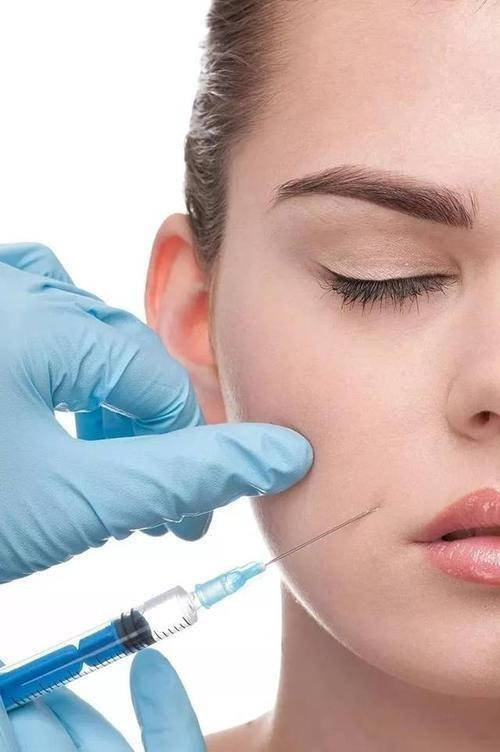
Re2O achieves the purpose of anti-aging by supplementing ECM. According to the L&C BIO official website, by injecting human acellular dermal matrix (hADM) into the dermis layer, the skin environment will be fundamentally improved through a three-step process, including immediate support, fibroblast activation, and long-term remodeling.
ADM can be understood as the decellularized version of ECM. Liu Yi, director of the Department of Burn, Plastic Surgery and Wound Repair Surgery at the Second Hospital of Lanzhou University, previously wrote an article in the Chinese Journal of Aesthetic Plastic Surgery explaining that ADM uses decellularization technology to remove chemically antigenic cell components in allogeneic or xenogeneic dermis, while retaining the collagen components and three-dimensional structure in the ECM, making it an ideal dermal substitute.
Originally used as a new scaffold material, micronized ADM has been used in areas such as facial rejuvenation and soft tissue filling. However, in addition to being questioned about its long-term safety and effectiveness, Re2O, whose raw material is derived from deceased skin tissue, also faces social and ethical challenges.
On September 14, a Times Weekly reporter searched on the e-commerce platform and found that Re2O collagen products were on sale in multiple stores, with prices ranging from 1,100 yuan to 2,800 yuan. According to the product introduction of the store, this product has been approved by the Korean Food and Drug Administration and certified by the US FDA for raw materials. The main ingredients are 89% collagen, 3% elastin, 0.4% polymer hyaluronic acid, and 7.6% other ECM ingredients.
However, on September 21, the reporter searched for Re2O related products on the e-commerce platform and found that there were no related products and the product was no longer for sale in the same store.
Why choose the deceased skin?
There are not many products whose main ingredients are extracted from the bodies of deceased donors for medical and aesthetic purposes, especially skin tissue which is extremely scarce. Most of the skin tissue extracted in domestic clinical settings is used in serious medical scenarios, and the source is pig, cow and other animal skin tissue.
Why did Re2O, known as the “corpse skin needle”, choose to decellularize the deceased’s skin tissue?
Boyang Wang, founder of Singapore’s longevity fund Immortal Dragons, who has long been concerned about cell gene therapy, xenotransplantation and other fields, told a reporter from Times Weekly that on the one hand, the company hopes to take a faster regulatory path. In South Korea, human-sourced tissue is managed according to the “Human Tissue Safety Management Act” and does not require product-level clinical trials; animal-sourced tissue is treated as a medical device and requires clinical trials.
On the other hand, due to immune considerations, animal tissues such as pigs and cows contain carbohydrate antigens (α-gal) that are not found in humans, and humans are born with corresponding antibodies. Decellularization can reduce the risk but is difficult to completely eliminate. Human collagen is consistent with the human body, and the risk of immune rejection is lower.
In addition, Boyang Wang believes that this choice also has an impact on the company’s stock capacity. L&C Bio’s main business was originally human tissue processing, and behind it was the supply chain of the American tissue bank.
However, different processes of decellularizing human skin tissue and processing them into tiny particles for injection have different levels of maturity.
Boyang Wang told a reporter from Time Weekly that the current ADM technology is very mature. AlloDerm (an acellular dermal matrix product) in the United States has been using this technology since the mid-1990s and is mainly used for burns, breast reconstruction, hernia repair, and gum surgery.
However, the technology of grinding it into particles for injection may not be mature. The United States had Cymetra (micronized ADM) around 2000, which was mainly used for lips and vocal cords; making it into “skin needles” is a new use that L&C BIO only started after launching Re2O in 2024.
According to China News Weekly, Re2O’s early clinical studies only lasted 20 weeks, the sample size was small, and the participants were all researchers who developed the product.
Xue Ke, leader of the Department of Plastic Surgery at Gongli Hospital in Pudong New Area, Shanghai, said in an interview with the media that the skin tissue of the deceased donor belongs to “allogeneic skin” and that “allogeneic skin” is used to make injectable fillers. There is a relative lack of clinical data in this area. After the injection is completed, long-term observation and follow-up for at least 5 to 10 years are required to test its actual effect.
Boyang Wang said that in China, human-derived acellular dermal matrix should be classified as a Class III medical device, and its use is similar to the serious medical applications that have been used in the United States.
Many domestic companies have deployed ECM
As the current cutting-edge track in the field of regenerative medical aesthetic materials, ECM is considered to have great development prospects. There are also many domestic medical aesthetics and medical device companies deploying in this track.
For example, Meibai Biotech, a regenerative medicine company that focuses on the research and development and industrialization of cell-engineered human extracellular matrix, Qichacha shows that the company completed tens of millions of yuan in Series A++ financing in April 2025.
In September this year, the A-share listed pharmaceutical company Huadong Pharmaceutical (000963.SZ) signed a strategic cooperation agreement with Meibai Biotechnology to reach an exclusive strategic cooperation on the ECM collagen MB007 product in the Chinese market. As a result, Huadong Medicine has completed its layout of the ECM collagen track.
The raw material products of Meibai Biotech include cell-engineered human extracellular matrix, which is produced from entirely human sources. But unlike Re2O, the source of raw materials for Meibai Bio is not from the human body.
Boyang Wang told a reporter from Times Weekly that the raw material of Meibai Bio-related products is human iPS cells, which are ECM secreted by induced pluripotent stem cells cultured in vitro and do not come from the human body.
“In our opinion, it is different from Re2O’s deceased donor skin acellular matrix in terms of ethics and long-term risks. The raw material preparation method of Meibo Biotech reduces the ethical risks of donors and the long-term latent infection risks of human tissues.” Boyang Wang said.
In addition, domestic ECM upstream related companies include Baiyiyuan Biotechnology, which chooses the animal-derived technology path.
Boyang Wang divides the domestic ECM track into three technical routes. The first is animal-derived ECM, which takes pig, cow and other tissues and decellularizes them to retain the natural matrix structure. This line is the most mature on the serious medical side. There are many Class III medical device registration certificates for membrane-shaped products such as wound repair, burns, dura mater repair, and oral repair.
The second is to produce ECM through human cell culture, using human cells to synthesize matrix materials in vitro, which avoids donor sources and ethical issues. The main varieties are currently in the clinical stage. The third is recombinant collagen, which is a single component in ECM rather than a complete matrix. However, due to controllable fermentation production and clear review precedents, several Class III injection certificates have been issued. It is also the area with the most intensive layout of cosmetics and raw materials.
However, as of now, no injectable ECM has obtained a Class III medical device registration certificate in China. “In other words, ECM is already a mature category in the serious medical field, but in the medical and aesthetic injection field it is still an early market with zero approval and everything in progress.” Boyang Wang said.
Related Reading
- Original: 4 teachers guard 9 primary school students, they can’t just calculate economic accounts2026-09-25
- The first provincial capital in the north is not “strong” enough?2026-09-25
- At more than 71 yuan per kilogram, beef prices have risen to a new high in more than two years2026-09-25
- How much passenger traffic does high-speed rail take away from airplanes? 10%2026-09-25
- The pit of the 10 trillion world copper king is deeper than Evergrande2026-09-24