Every reporter | Cheng Xiaoling Every editor | Liu Yanmei
At the critical stage of Henan’s “leveraging its strengths to offset its weaknesses and achieving an all-round rise”, Zhengzhou, the provincial capital, is being given new important responsibilities.
“A strong provincial capital will make the whole province strong, and a prosperous provincial capital will make the whole province prosper.” On September 11, at the Zhengzhou Municipal Leadership Meeting, Henan provincial level proposed that Zhengzhou should “increase its primacy, create new advantages, and enhance its radiation power.”
The just-concluded 13th Zhengzhou Party Congress included this statement in the Party Congress report and included it in the city’s overall goals for the next five years.
Combing the public information, this is the first time in many years that Henan has once again clearly proposed the strategy of “strengthening the provincial capital”. Placed in the coordinates of the first year of the “15th Five-Year Plan”, its signal significance is self-evident.
Behind this is real-life pressure. In 2025, Zhengzhou’s GDP ranks first among the northern provincial capitals, but its economic primacy is only 22.9%, ranking 18th among the 27 provincial capitals in the country and in the “lower half”. Compared with surrounding provincial capitals, Wuhan 35.3%, Changsha 28.5%, and Hefei 26.8% are all significantly higher than Zhengzhou.
Not only that, in the past two years, Zhengzhou’s first place has declined slightly, and its economic growth rate has also lagged behind that of the entire province. The radiating and driving role of the provincial capital has not yet been fully demonstrated.
There is an increasingly clear consensus that as a major economic province, the further Henan moves forward, the more it needs high-energy central cities to take the lead and drive the overall situation. Especially at a time when competition among central cities is intensifying and the quality of surrounding provincial capitals is accelerating, Zhengzhou has become an inevitable choice to reshape its competitive advantages.
強省會
Judging from public reports, the above two meetings both placed “increasing primacy” in an important position.
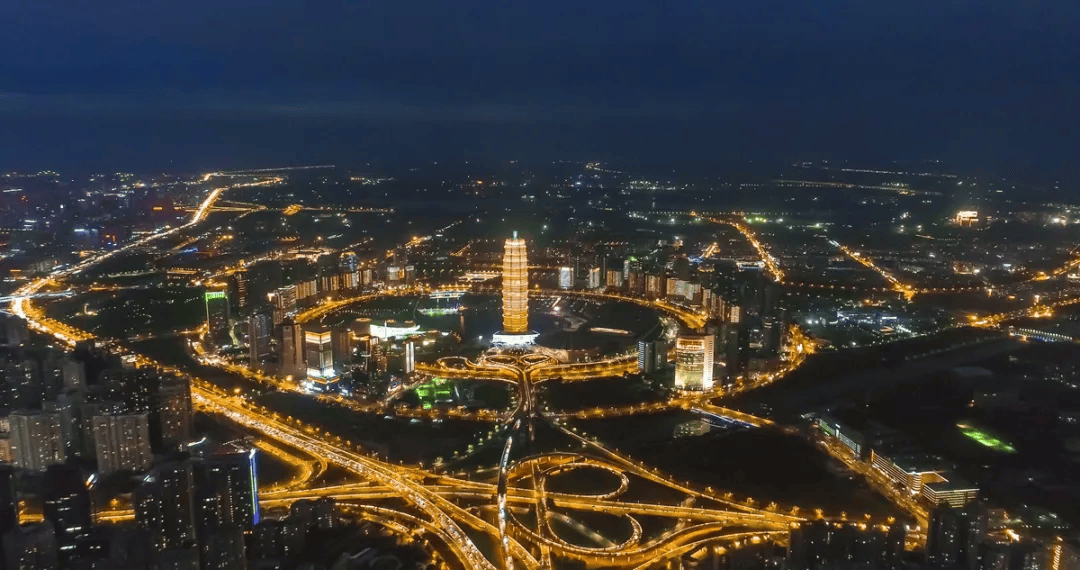
This is not the first time Henan has made a request for Zhengzhou’s first place. In fact, as early as 2000, the provincial level of Henan clearly stated that “to enhance Zhengzhou’s primacy in the province and enhance its economic strength and radiating ability”, and emphasized that Zhengzhou’s “primary task at that time was to expand the scale of the city”, becoming one of the earliest provinces in the country to implement the strategy of “strengthening the provincial capital”.
Zhengzhou has thus ushered in a key node in urban development. At that time, Henan was building Zhengdong New District with a high starting point and large-scale efforts, which was regarded by the outside world as a sign of the official launch of the strategy of “strengthening the provincial capital”. Since then, “combination boxing” has been implemented intensively——
In 2003, Zhengdong New District broke ground, and in the same year, the construction of the Central Plains urban agglomeration centered on Zhengzhou was officially included in the provincial development strategy;
In 2005, Zheng-Bian integration was put on the agenda and became the first regional integrated development strategy in Henan Province;
In 2010, Foxconn invested and built a factory in Zhengzhou, driving the rapid rise of industry and foreign trade in Zhengzhou and even Henan province;
In 2016, Zhengzhou stood out among many candidate cities and was selected as one of the two central cities in central China. The city’s energy level and positioning have been significantly improved…
To put it simply, in the past 20 years or so, through preferential policies, platform construction and the introduction of leading projects, industries and human resources have accelerated the concentration of Zhengzhou, and its economic volume has been rapidly expanded.
Data shows that from 2000 to 2025, Zhengzhou’s GDP increased from 72.84 billion yuan to 1,524.46 billion yuan, an increase of nearly 20 times. In 2018, Zhengzhou’s GDP exceeded one trillion yuan and its permanent population exceeded 10 million, making it one of the rare “double-thousand-person cities” in the country.
However, there is still a big gap between “becoming bigger” and “becoming stronger”.
For example, in terms of economic size, Zhengzhou currently ranks first among provincial capitals in the north, but its economic primacy is still at a low level among provincial capitals across the country.
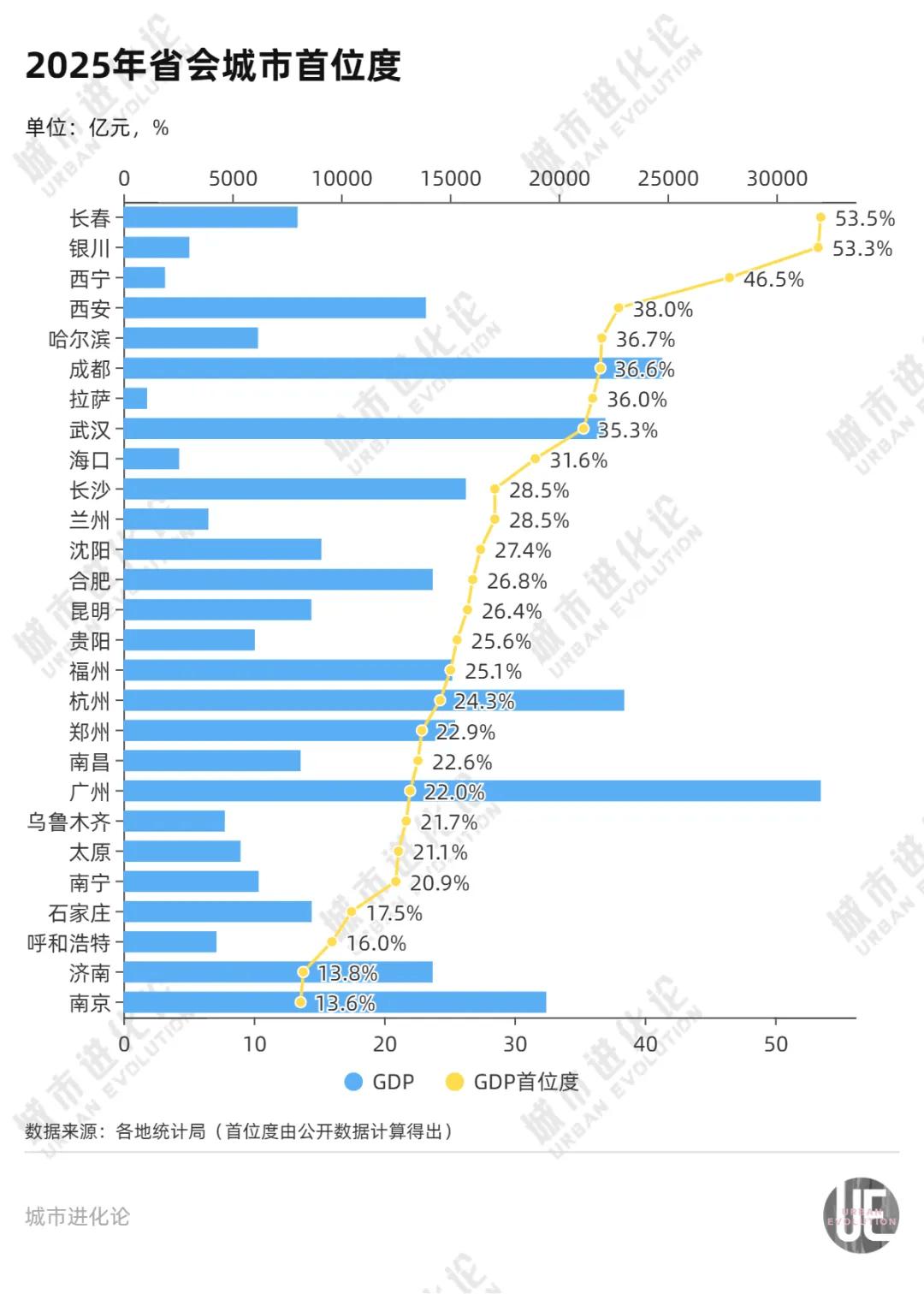
In 2025, Zhengzhou’s GDP will account for 22.9% of Henan Province, ranking only 18th among the 27 provincial capital cities in the country. Looking at several sister cities in central China, Wuhan 35.3%, Changsha 28.5%, and Hefei 26.8% are all far ahead of Zhengzhou.
Compared with Henan’s strength as the sixth largest economic province in the country and the largest in central China, this obviously does not match well.
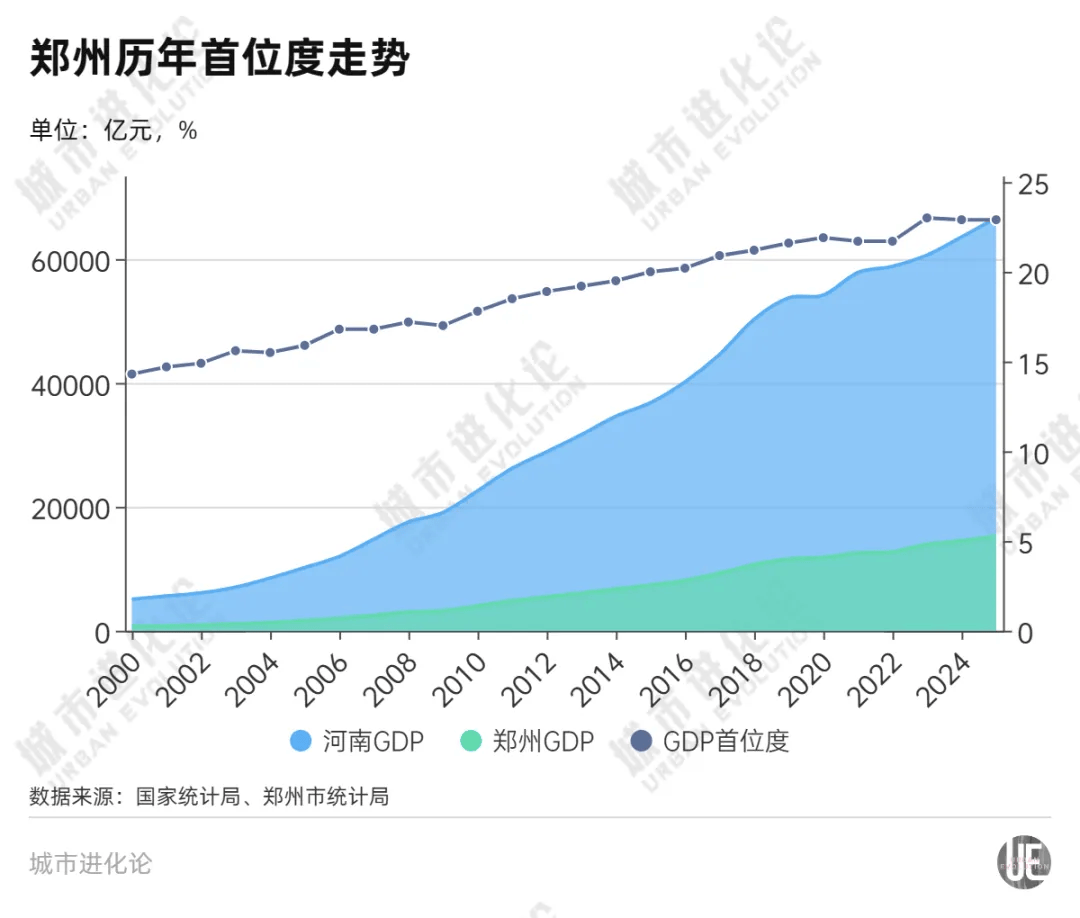
Another heavy pressure comes from within Zhengzhou. Judging from the trend of its economic primacy in recent years, the upward curve that has been maintained for many years has seen rare fluctuations in the past two years – it has steadily increased from 14.3% since 2000, and once rose to 23% in 2023. However, it fell slightly in the next two years, and was around 22.9% in 2024 and 2025.
“Sichuan is making every effort to strengthen Chengdu, and the Chengdu-Chongqing twin-city economic circle has been elevated to a national strategy; Anhui, with Hefei as the fulcrum, strives for a place in the integration of the Yangtze River Delta…” Analysis by local media further revealed the current sense of urgency in “strengthening the provincial capital”:
For the central and western provinces with limited resources and advantages, if the provincial capital is not strong, the province lacks a strategic fulcrum to participate in national competition; if the provincial capital is not prosperous, factors will easily be siphoned off by surrounding developed areas.
新優勢
So, how can Zhengzhou become stronger?
According to the goals set in the local “15th Five-Year Plan” outline: GDP will strive to reach 2 trillion yuan by 2030, with an average annual growth rate of more than 5%. At the same time, high-tech industries account for about 40% of the industries above designated size.
From a local perspective, the underlying support for strengthening the provincial capital and improving its primacy comes from “creating new advantages.” Where do new advantages come from?
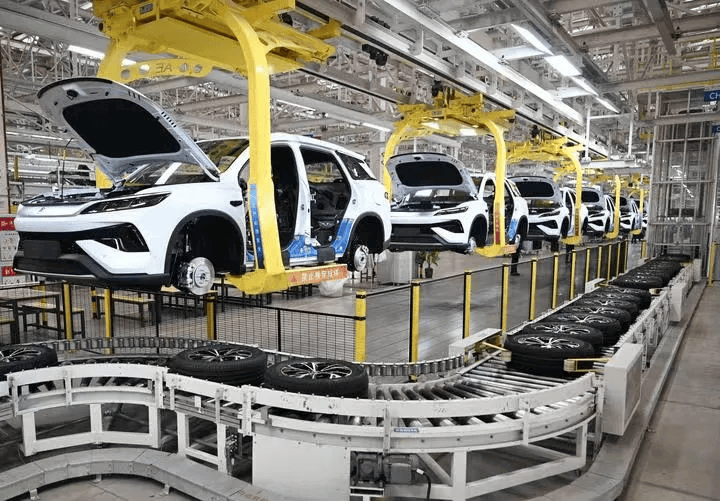
As urban competition bids farewell to the old model of “struggle for resources and manpower”, technological innovation has become the key to breaking through. This is also a lesson that Zhengzhou urgently needs to learn.
Local scholars have previously analyzed that compared with other “strong provincial capitals”, Zhengzhou’s scientific and technological innovation capabilities need to be improved, and there are relatively few high-level universities. Zhengzhou “has to jump up and narrow the gap” in terms of talents and scientific and technological innovation.
Local officials also admitted after sorting out the distribution of key enterprises in the city: among traditional advantageous industries, key enterprises are mainly concentrated in the upstream primary processing links of the industrial chain, with low industrial added value; strategic emerging industries and future industries are mainly concentrated in the downstream application links of the industrial chain, and the upper and middle links with high technological content are relatively weak.
Behind this, “high technology” is the key determining factor.
Hu Yu, deputy secretary-general of the Henan Business Economics Association and associate professor of Zhengzhou Institute of Engineering and Technology, also pointed out that in the layout of the country’s central cities, Zhengzhou has clear and unique coordinates. It is the “crossroads” of China’s geography, the center of the “meter”-shaped high-speed rail network, and an important node of the Sky Silk Road… But these do not necessarily lead to high-quality development. The high-quality development of cities depends on the coordinated progress of “people, technology and institutions”.
From the perspective of “technology” elements, Zhengzhou’s input and output intensity has increased in recent years, and its R&D investment intensity has increased from 2.45% in 2021 to 3% in 2025. However, “the speed has not kept pace with other national central cities” and its ranking is relatively low. Looking at surrounding cities, Wuhan’s R&D investment intensity in 2025 will reach 4.17%, Hefei 4.11%, and Changsha 3.36%.
Aiming at “innovative development”, the 13th Zhengzhou Party Congress held recently has clearly stated requirements, including building a strong high-energy innovation carrier platform, accelerating the integrated development of education, science and technology talents, continuing to strengthen the status of corporate innovation entities, in-depth implementation of the “artificial intelligence +” action, and fully stimulating innovation and creativity.
When it comes to industries specifically, we clearly insist on developing new productive forces in accordance with local conditions, renovating and upgrading traditional industries, gathering and strengthening emerging industries, proactively laying out future industries, expanding capacity and improving the quality of modern service industries, etc.
The market has already taken the lead——
On September 4, China’s first intelligent cutting and grinding factory with an annual output of 400,000 carats was put into operation in Zhengzhou, effectively filling the gap in the field of intelligent processing of cultivated diamonds in the midstream of my country;
On September 15, my country’s independently developed largest-diameter shield machine “China Railway No. 1662” rolled off the production line in the Zhengzhou Economic and Technological Development Zone, consolidating Henan’s leading strength in the equipment manufacturing segment;
On the same day, the Dawn 8000 major application results conference in the meteorological field was held at the core node of the Zhengzhou National Supercomputing Internet, deepening the exploration of using domestic supercomputers to carry out world-leading research…
It is easy to see from the recent launch of major projects that technological innovation is reshaping Zhengzhou’s industrial landscape.
輻射力
Henan’s provincial level reiterated “strengthening the provincial capital” and named “improving its primacy”, which obviously concerns not only Zhengzhou itself.
Looking across the country, the competition for strong provincial capitals has escalated from a “single city competition” to a “city cluster competition”, with major economic provinces such as Zhejiang and Guangdong moving toward a “Tale of Two Cities” or even a multi-center model. What Zhengzhou faces is not only the issue of “whether its own primacy is high enough”, but also the issue of “enhancing its radiation power”.
From the perspective of Henan Province, Zhengzhou’s economic growth has lagged behind that of the entire province since last year, which once caused concerns about its leading power.
In 2025, Zhengzhou’s GDP growth rate is 5.4%, 0.2 percentage points lower than the growth rate of Henan Province. In the first half of this year, Zhengzhou’s growth rate of 4.8% was still 0.2 percentage points lower than the provincial average. During the same period, among the 18 cities in the province, 12 cities outperformed the provincial level in growth.
The accelerating pace of sister cities in the province will undoubtedly put forward higher requirements for Zhengzhou, which is slightly lagging behind. It must not only keep up quickly, but also further “clench its fingers into a fist” and become a source of power that radiates and drives the entire province.
Zhengzhou metropolitan area is the core focus. As the 10th approved national-level metropolitan area in the country, the Zhengzhou metropolitan area takes Zhengzhou City as the core and radiates to drive the coordinated development of surrounding cities and counties (cities, districts) within a one-hour commuting circle, including Zhengzhou City. Feng City, Xuchang City, Xinxiang City Municipal District, Xinxiang County, Huojia County and Yuanyang County, Jiaozuo City Municipal District, Xiuwu County, Wen County and Wuzhi County, Luoyang City Yanshi District, Pingdingshan City Jiaxian County, Luohe City Linying County, etc.
As the core of Henan’s development, the Zhengzhou metropolitan area accounts for 15.6% of the province’s area, and gathers nearly 30% of the province’s population and nearly 40% of its total economic output. On this basis, Zhengzhou’s “15th Five-Year Plan” outline clearly states that by 2030, the GDP of the metropolitan area will account for about 50% of the province’s total.
What deserves more attention than the numbers is how Zhengzhou, as the main engine, can drive cities in the circle while developing itself.
Just in early September, the Henan Provincial Development and Reform Commission held a 2026 Zhengzhou metropolitan area construction work scheduling meeting and pointed out that the construction of Zhengzhou metropolitan area still has shortcomings such as the central city’s weak radiating and driving ability, the low degree of industrial synergy, the existence of congestion points in infrastructure connectivity, and the insufficient co-construction and sharing of public services.
This meeting focused on clear arrangements for clearing up inter-city traffic congestion, improving the quality and efficiency of industrial synergy, and developing new productivity in accordance with local conditions. Among them, in the industrial field, cities are required to adhere to misaligned layouts and functional complementarity, promote a reasonable division of labor in key links of the industrial chain, and “name” to accelerate the construction of key industrial belts such as Zhengkai Automobile, Xugang Precision Manufacturing, Zhengluo Advanced Materials, Zhengxin High Technology, Zhengjiao Intelligent Manufacturing, and Zhengluo Modern Food.
According to local media analysis, this means that Zhengzhou’s industry is not a “one-way siphon”, but a “chain radiation” – R&D in Zhengzhou, manufacturing in the surrounding areas; headquarter in Zhengzhou, with supporting facilities in the surrounding areas.
Specifically, if Zhengzhou becomes stronger, Kaifeng’s auto parts industry can follow suit; if Zhengzhou becomes stronger, Xuchang’s precision manufacturing can find more orders; if Zhengzhou becomes stronger, Xinxiang’s battery industry can connect to a larger supply chain… “Strengthening the provincial capital” will drive collaboration among metropolitan areas and reshape the province’s new regional development pattern.
Related Reading
- Original: 4 teachers guard 9 primary school students, they can’t just calculate economic accounts2026-09-25
- At more than 71 yuan per kilogram, beef prices have risen to a new high in more than two years2026-09-25
- How much passenger traffic does high-speed rail take away from airplanes? 10%2026-09-25
- The pit of the 10 trillion world copper king is deeper than Evergrande2026-09-24
- From the start of a business to sailing overseas, the “two-way rush” between China Minsheng Bank and specialized new enterprises2026-09-24