The plummeting population of new students has been transmitted to the lower grades of primary schools, but the “involution” of basic education has not been alleviated by the decrease in the number of students. In terms of teachers and funding allocation, the idea of large classes is still the same. Issues such as “small classes, large classes”, allocation of funds based on head count, etc., need to be solved urgently.
Written by Ren Dagang
In 2016, the number of newborns in mainland China reached the second peak since the reform and opening up, at 18.83 million. It has been falling since then.
After falling below 10 million in 2022, it has never risen above 10 million. It stopped at 7.92 million last year. In the first half of 2026, 3.275 million couples were registered. It is expected that the number of newborns may continue to decline in the future.
Compared with the period of rapid economic growth 10 years ago, more than half of the number of newborns has declined, which has a very negative economic and social impact on consumption, investment, production, education, population structure, family structure, elderly care, etc.
Take education alone, the huge impact has already been seen.
In 2020, there were 291,700 kindergartens in mainland China, which dropped to 253,300 five years later in 2024; and the number of primary schools dropped from 157,979 to 136,332.
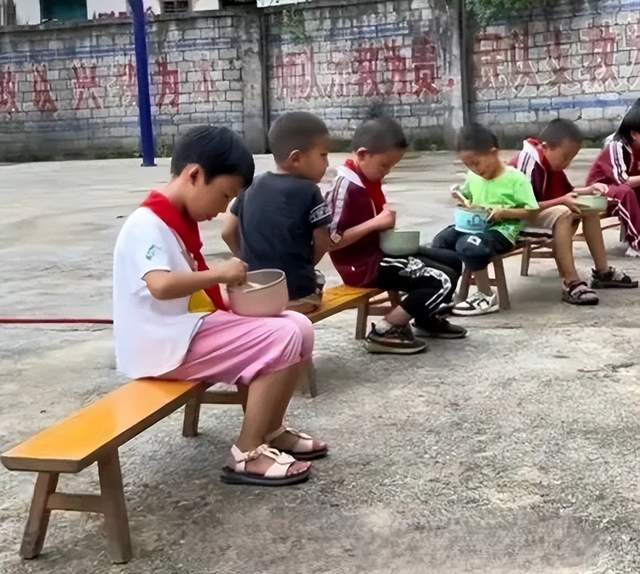
A more concrete scenario is as follows:During the school season this fall, a video of “only one student in the first grade” at the Dongliu Village teaching site (Dongliu Primary School) in Guanyang County, Guilin City, Guangxi became a hot search topic. The image of a 6-year-old boy sitting alone in an empty classroom and listening to class has attracted widespread attention among netizens.
According to reports, Dongliu Primary School has four teachers on duty for all subjects. When school starts this fall, there will be only one first-year student, three second-year students, and five third-year students, for a total of only nine students in the school.
01
The decline in the number of kindergartens and primary schools cannot be attributed solely to the collapse in the number of births in recent years.
Since the start of the urbanization process in mainland China, the urbanization rate has increased from less than 20% to about 67%. A large number of rural people have left the countryside and entered the city to work and live.It has also driven a large number of school-age people to study in cities, causing rural schools to shrink rapidly.
According to statistics, in 1978, there were 949,300 primary schools in mainland China. After more than 40 years of continuous cancellations, mergers, and “dismantling and merging schools,” by 2024, only 136,300 will remain, including 65,000 rural primary schools. From 2018 to 2023, the number of students enrolled in urban primary schools increased by 33.5%, while the number of students enrolled in rural primary schools decreased by 31%.
Behind the two sets of data is that, on the one hand, the vast majority of rural primary schools have no students, or, like Dongliu Primary School, only have a few students, and the schools are closed at any time; on the other hand, after the original rural population enters the city, school-age children often enter schools with large scale and large class sizes.
Calculating the “economic calculation”, it is quite cost-effective to merge small schools. For example, a class of 15 students requires a set of educational resources; doubling the number to 30 students requires the same set of educational resources; expanding the class to 50 students requires almost the same set of educational resources.
From an economic rational point of view, not merging three classes of 15 students into one class of 45 students is simply a “waste of educational resources.”
Faced with hundreds of millions of people moving into cities, the corresponding number of students has also doubled. When many city governments consider whether to increase the number of schools and whether to control class sizes, the most important factor to consider is the calculation of “economic accounts.”
The result of the consideration is to expand primary schools and expand class sizes to achieve the purpose of controlling school running costs and “saving national resources.”
02
Today, as the pace of urbanization slows down, the growth in the rural school-age population that continues to move into cities has also slowed down.
At this time, when the overall birth population plummets, if the city government continues to calculate the “economic accounts” as it did in the past, the city government can actually significantly save education expenditures and reduce the cost of running schools. For example, the wave of closures has already happened in kindergartens, is happening in elementary schools, and will soon spread to middle schools, high schools, and universities.
Closing a school means “saving” a lot of financial expenses.
So can the account be calculated like this? Definitely not.
First of all, the proportion of education expenditures in the government’s entire financial expenditures is basically constant and is protected by law.
China’s “Education Law” stipulates that “the state has established a system based mainly on financial appropriations and supplemented by other channels for raising education funds, gradually increasing investment in education, and ensuring a stable source of education funds for state-run schools.” “The proportion of national financial education expenditures in the gross national product should gradually increase with the development of the national economy and the growth of fiscal revenue.”
Secondly, in the family planning propaganda in the past, a very impressive statement was that after the population size decreases, everyone can enjoy more resources, including of course educational resources.
如今,The population has really come down, and people certainly have reason to demand more of the promised resources, including educational resources.
In other words, relatively speaking, based on the current approximately 8 million newborns per year, even without fulfilling the legal requirement of “gradually increasing investment in education,” the relative educational resources they enjoy should be three times that of approximately 25.5 million in 1987, the peak period of the first wave of newborn births since the reform and opening up, and twice that of 18.83 million in 2016, during the peak of the second wave of newborn births.
So, is today’s education ready to enjoy educational resources that are twice as good as those in 2016?
Apparently not.
First of all, the concept has not changed.
Over the past many years, a large-scale school-running model has been formed. In 1978, the average number of students in primary schools and junior high schools was 154 and 442 in junior high schools; by 2000, the number of students in primary and junior high schools was 264 and 602 respectively; in 2020, the number of students in primary and junior high schools was 679 and 931 respectively; by 2024, the number of students in primary and junior high schools was 777 and 1,034 respectively.
Given that rural schools have been significantly reduced, this reflects the growing size of urban schools. According to statistics, the number of students in large primary schools with a single campus exceeds 4,000, and the number of students in multi-campus/group primary schools exceeds 8,000; in middle schools, the number of students in middle and high schools with multiple campuses exceeds 10,000.
It’s hard to imagine that in this kind of school, the principal knows almost every front-line teacher and how many of them know their names. How difficult it is for front-line teachers to meet the principal. Not to mention, how many students can the school leaders have contact with and how many percent of students can they listen to.
The assembly line school running model can significantly reduce the cost of running schools. It is very suitable for manufacturing standardized components and quickly finding standard answers, but it is short of personalized development and training.
Judging from the growth momentum of the number of students enrolled in a single school in the past one or two decades,It is difficult to reverse this factory-like assembly line school running model in terms of concepts and actions in the short term.
Secondly, the exponentially increasing educational resources must be stacked on the new generation of students. The most feasible way is to teach in small classes to “expand” the cost of education.
However, the current status quo is polarized and unsatisfactory.
On the one hand, Guangxi Dongliu Primary School mentioned above is a “passive” small class teaching in rural areas. Most areas have achieved “smaller class sizes”, but those who have truly completed systematic changes in classrooms, curriculum, and evaluation are in the minority. A large number of rural schools have “small class sizes and unchanged classes.”
On the other hand, some developed areas, such as Shanghai and Nanjing, saw the prospect of “passive” small-class teaching in the future and carried out small-class teaching pilots in advance. Since then, Jiangsu, Zhejiang, Heilongjiang and other provinces and Changsha, Quanzhou and other places have launched special projects to shift from simply controlling the number of students to integrating reforms in staffing, funding, curriculum, and evaluation.But overall, it is still a high-quality pilot project with insufficient motivation for advancement.
The plummeting population of new students has been transmitted to the lower grades of primary schools, but the “involution” of basic education has not been alleviated by the decrease in the number of students. In terms of teachers and funding allocation, the idea of large classes is still the same. Issues such as “small classes, large classes”, allocation of funds based on head count, etc., need to be solved urgently.
03
The above-mentioned demand and practice for small-class teaching is still a passive demand and passive practice, driven by the decrease in the number of students. In the era of artificial intelligence, small class teaching is a real social need and should become an active choice.
In recent years, industrial robots are rapidly replacing assembly line workers/engineers, and artificial intelligence is replacing blue and white-collar jobs that require primary and intermediate intelligence. However, China’s education basically matches the needs of assembly line workers/engineers and blue and white-collar workers in the industrialization era. The shrinking demand side will inevitably force corresponding adjustments in educational concepts and content.
What does work look like in the era of artificial intelligence?
The work of solving basic necessities, food, housing, and transportation will gradually be transferred to artificial intelligence; there will be fewer and fewer standardized and step-by-step tasks, and a large number of jobs require personalized and innovative thinking. Interest has become a key factor in career success; there are fewer and fewer stable jobs, and lifelong learning has changed from an idea to a practical need…
Large-class teaching and large-scale school management are obviously more suitable for the inherent requirements of standardization and programming in the industrialization era. Compared with the above-mentioned work requirements in the artificial intelligence era, they appear out of place.
The plummeting number of school-age children would have been a bad thing.
Related Reading
- The first provincial capital in the north is not “strong” enough?2026-09-25
- At more than 71 yuan per kilogram, beef prices have risen to a new high in more than two years2026-09-25
- How much passenger traffic does high-speed rail take away from airplanes? 10%2026-09-25
- The pit of the 10 trillion world copper king is deeper than Evergrande2026-09-24
- From the start of a business to sailing overseas, the “two-way rush” between China Minsheng Bank and specialized new enterprises2026-09-24