Imports outperform exports, and the door is opening wider and wider.
Text | Huashang Taolue Huaxin
On October 14, the General Administration of Customs announced that imports increased by 22.3% in the first three quarters, 5.9 percentage points faster than exports. On November 10, the ninth CIIE concluded. 162 countries, regions and international organizations participated. The intended transaction volume in one year was US$85.45 billion, a record high.
The world is queuing up to sell goods to China!
[Import overtake]
China’s exports are so strong that China is the world’s largest seller. This is the world’s basic impression of China. This is indeed the case.
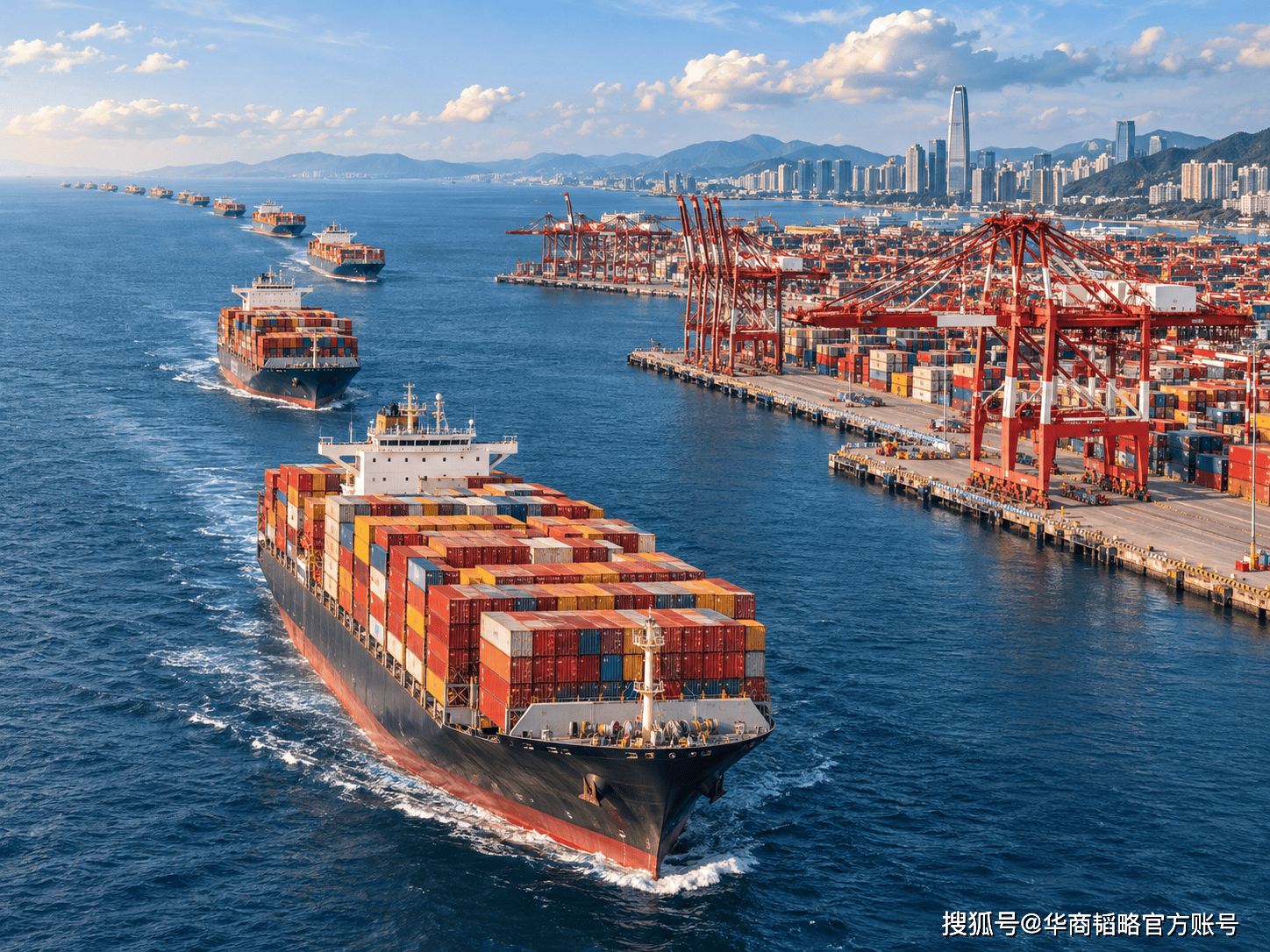
But another fact is often ignored by the world. China’s imports are also fierce, and they are rushing to the world’s largest buyers.
In the first three quarters, China’s imports were 16.74 trillion yuan, an increase of 22.3%; exports were 23.2 trillion yuan, an increase of 16.4%. The growth rate of imports is 5.9 percentage points ahead of exports. Since March, the growth rate has exceeded 20% for seven consecutive months. In the same period last year, imports fell by 0.2%. Calculate it—
About 3 trillion yuan more stuff was bought in a year.
Behind the big numbers, there are a series of new highs. In September, monthly imports reached 2.13 trillion yuan, reaching 2 trillion yuan for the first time; imports in the first half of the year were 10.74 trillion yuan, exceeding 10 trillion yuan for the first time in history.
Moreover, the overall import and export growth rate is accelerating quarter by quarter, getting faster and faster: 15.3% in the first quarter, 18.3% in the second quarter, and 22.3% in the third quarter; imports and exports in a single month in September were 5.16 trillion yuan, exceeding 5 trillion yuan for the first time, an increase of 27.5%. The General Administration of Customs said that this kind of growth rate ranks among the top among major economies. The conclusion is:
“Foreign trade is more balanced and coordinated.”
What did you buy? The data of the General Administration of Customs mainly consists of three pieces.
First piece, the good stuff to put in your shopping cart. Wang Jun, deputy director of the General Administration of Customs, said that residents’ consumer demand is changing from “have it” to “is it good or not”. In the first three quarters, Malaysian fresh durian imports increased by 3.3 times, Faroe Islands salmon increased by 41.4%, Italian olive oil increased by 28.6%, and French perfume increased by 28.5%.
The second piece is stuffed with key parts from the factory. Imports of storage components increased by 1.5 times, integrated circuits increased by 56.6%, and aircraft parts increased by 17.6%. China’s advanced manufacturing is getting bigger and bigger, and its appetite for global high-end intermediate products is also growing. For this type of products, imports and exports are tied together to increase: industrial robots, electronic components, computer parts, and electrical equipment. The total import and export in the first three quarters exceeded 10 trillion yuan, an increase of 58.9%. They alone drove the overall import and export growth by 11.3 percentage points.
The third piece is the raw materials that feed the industry. The import of iron, aluminum, nickel and other metal ores exceeded 1.2 billion tons, and the import of oil and gas exceeded 400 million tons.
Consumption, manufacturing, resources, the three lines go up together,The reason behind this is the same: China’s economy is on the rise, and the market of 1.4 billion people is on the rise. China’s ultra-large-scale market effect is playing out even more on the global economic stage.
The most intuitive thing about soybeans: China alone accounts for about 60% of the world’s total soybean imports.
[Global Accounting]
Every order from a buyer is an income for the seller.
Behind the continued surge in China’s imports is the fact that countries around the world are sharing the dividends of growth, and that countries and regions that maintain a friendly economic and trade environment with China are becoming the winners of the world’s economic and trade.
Brazil, one of the winners, exported US$58.3 billion to China in the first half of this year, a record high for the same period in history. Data from the Brazil-China Chamber of Commerce shows that 69.5% of Brazil’s soybean exports went to China; 68.6% of its iron ore, 54% of its crude oil, and 53% of its beef also went to China.
Last year, the trade volume between Brazil and China reached US$171 billion, more than twice the trade volume between Brazil and the United States.
South Korea is also a dividend sharer of China’s import growth. In August, South Korea’s exports were US$98.25 billion, of which exports to China were US$24.1 billion, a year-on-year increase of 119.3%, accounting for about a quarter. The core of the growth came from semiconductors and general machinery. On the one hand, China’s imports of storage components increased by 1.5 times in the first three quarters, and on the other hand, South Korea’s exports to China more than doubled in August. The two accounts are exactly in line. In other words, this piece of cake is mainly eaten by South Korea.
Africa is also a big winner in doing business with China.
Starting from May 1, 2026, China will fully implement zero-tariff measures with 53 African countries that have diplomatic relations with China. South African apples are the first imported product in the country after the implementation of this measure. Data two months later showed that in May and June, China imported 193.8 billion yuan from Africa, an increase of 23.5%; avocado imports increased by 1.3 times, and apples increased by 89.6%.
Stretching the line: China’s imports and exports to Africa were 87.38 billion yuan in 2000, and reached 2.49 trillion yuan in 2025, an increase of 27.5 times; in the first five months of this year, imports and exports to Africa were 1.14 trillion yuan, exceeding one trillion yuan for the first time in the same period in history. Before the implementation of zero tariffs in May, China’s imports from Africa had increased for the ninth consecutive month.
Throughout the first three quarters, China contributed more than 70% of the increase in foreign trade, achieving growth in trade with more than 180 countries and regions around the world. Among them, imports and exports to ASEAN were 6.84 trillion yuan, an increase of 22.7%; to the EU 4.78 trillion yuan, an increase of 8.4%; to the United States 3.18 trillion yuan, an increase of 4.1%; to free trade partners 19.55 trillion yuan, an increase of 30%.
Another big change is that in the past, China’s imports and exports were mainly in coastal provinces and cities. Now, thanks to the China-Europe Railway Express and the New Western Land-Sea Corridor, the central and western regions are indeed experiencing rapid growth in imports and exports.
In the first three quarters, the import and export of the central region increased by 20.5%, and that of the western region increased by 25.7%. Among them, Guangxi’s imports increased by 22.9%, and metal ores, soybeans, copper materials, and fruits were all increasing rapidly.
China’s orders are being written into the economic growth curves of many countries.
【Opportunities of the world】
Today, overseas media, especially Western media, are increasingly keen to put China’s foreign trade in one sentence: exporting production capacity to the world. This sentence misses half the truth and misrepresents the entire situation.
China’s foreign trade has always been two-way. For a period of time, China’s exports exceeded imports, but now imports are accelerating to catch up with exports, and the two-way balance is accelerating. Generally speaking, China is providing huge development opportunities for global enterprises, including the economies of various countries in the world, from three aspects.
First, China is becoming the world’s largest open market.
The ninth CIIE, which closed on November 10, is the most intuitive window: 162 countries, regions and international organizations participated, 4,142 companies participated in the exhibition, and the exhibition area exceeded 440,000 square meters for the first time, including 370,000 square meters for corporate exhibitions; there were more than 300 Fortune 500 companies and industry leaders, more than 2,000 new exhibitors, and 485 exhibits were the world’s first show, the first show in Asia or the first show in China.
The one-year intended transaction volume was US$85.45 billion, an increase of 2.3% over the previous session.
At the CIIE, the buyer team also grew: 51 trading groups, more than 700 trading sub-groups, and more than 470,000 registered visitors; 80 supporting activities and 62 centralized signing activities were held during the expo, and more than 400 cooperation intentions were reached. The five core data of the number of exhibitors, exhibition area, number of Fortune 500 companies, number of debut products, and transaction volume set new records at the same time.
Among them, after the debut of Canadian ice cider, more than 100 customers expressed purchasing intentions; the sales of Sri Lankan black tea increased 10 times year-on-year; the online sales of British butter biscuits during the exhibition were three times that of normal days; the Kenyan coffee brand was on site and sat down with more than 40 purchasers.
Second, China is providing innovation and development support for global companies and the world economy.
First of all, more than half of China’s total export value is intermediate products. These products eventually enter the production lines of other countries and become other countries’ products and contribute to other countries’ growth. The General Administration of Customs calls it the “stabilizing anchor” of the global supply chain.
There is another more important data, which is that China’s exports themselves are the achievements of other countries’ companies in China and are also development opportunities for other countries. In the first three quarters, China’s foreign-invested enterprises imported and exported 11.69 trillion yuan, an increase of 19%. If we open up China’s export ledger, a large part of the highest added value still comes from foreign-funded enterprises.
in other words,What the world sees as the so-called China being the world’s largest seller is largely the result of the development of foreign-funded enterprises in China and the sharing of China’s opportunities by other countries.
Third, China’s door is still opening wider and wider.
Starting from December 2024, 33 African least developed countries will enjoy zero tariffs on 100% of tax items; starting from May 1 this year, zero tariffs will be extended to all 53 African countries that have diplomatic relations with China. China has become the first major economy in the world to achieve unilateral and full coverage of zero tariffs with all African countries that have diplomatic relations with China. The free booth area for the least developed countries at this CIIE has increased by 17%.
In the first three quarters, China’s imports and exports to more than 120 countries and regions have achieved two-way growth. Among the partners that have signed free trade agreements, more than 70% have achieved two-way growth.
The door is opening wider and wider, and the opportunities for global companies are also growing.
Another set of small data that best illustrates China’s opportunities is that the ninth CIIE has just concluded, and booths for the tenth CIIE have been booked: 143 companies and institutions have signed contracts in advance, with an exhibition area of more than 100,000 square meters.
Xie Weibo, president of Danone Asia Pacific and CEO of China, said that Danone will definitely come again on the 10th anniversary of the CIIE, when its R&D center will be in operation for one year and its entry into the Chinese market will be 40 years.
Companies around the world make reservations a year in advance to share in China’s growth.
【Reference】
[1] General Administration of Customs: State Council Information Office’s press conference on import and export situations in the first three quarters of 2026
[2] General Administration of Customs: State Council Information Office’s press conference on import and export situations in the first half of 2026
[3] China International Import Expo Bureau: Closing data of the 9th CIIE
[4] Brazil-China Chamber of Commerce (CEBC): Brazil-China trade statistics in the first half of 2026
[5] South Korea’s Ministry of Trade, Industry and Energy: Export data for August 2026
——END——
Welcome to follow [Chinese Business Tao Lue], get to know the famous figures, and read the legend of Tao Lue.
All rights reserved. Private reproduction is prohibited.
Related Reading
- Ni Runfeng, the “King of Color TV”, passed away. From a workshop technician to the head of a state-owned enterprise, his ups and downs in half a life defined an era of home appliances.2026-11-12
- Original “Fearless” Wang Jianlin regains control of Wanda Business Management, and his net worth has evaporated by 200 billion in ten years2026-11-12
- Original: The middle-class people are crazy about grabbing Archaeopteryx in Sam2026-11-12
- There is no more double 11 in the world, leaving businesses miserable2026-11-11
- Zhong Xuegao is resurrected, has the “old score” been overturned?2026-11-11