Reporters of Every Journal|Cai Ding Yan Yinchan Editors of Every Journal|Li Yubing
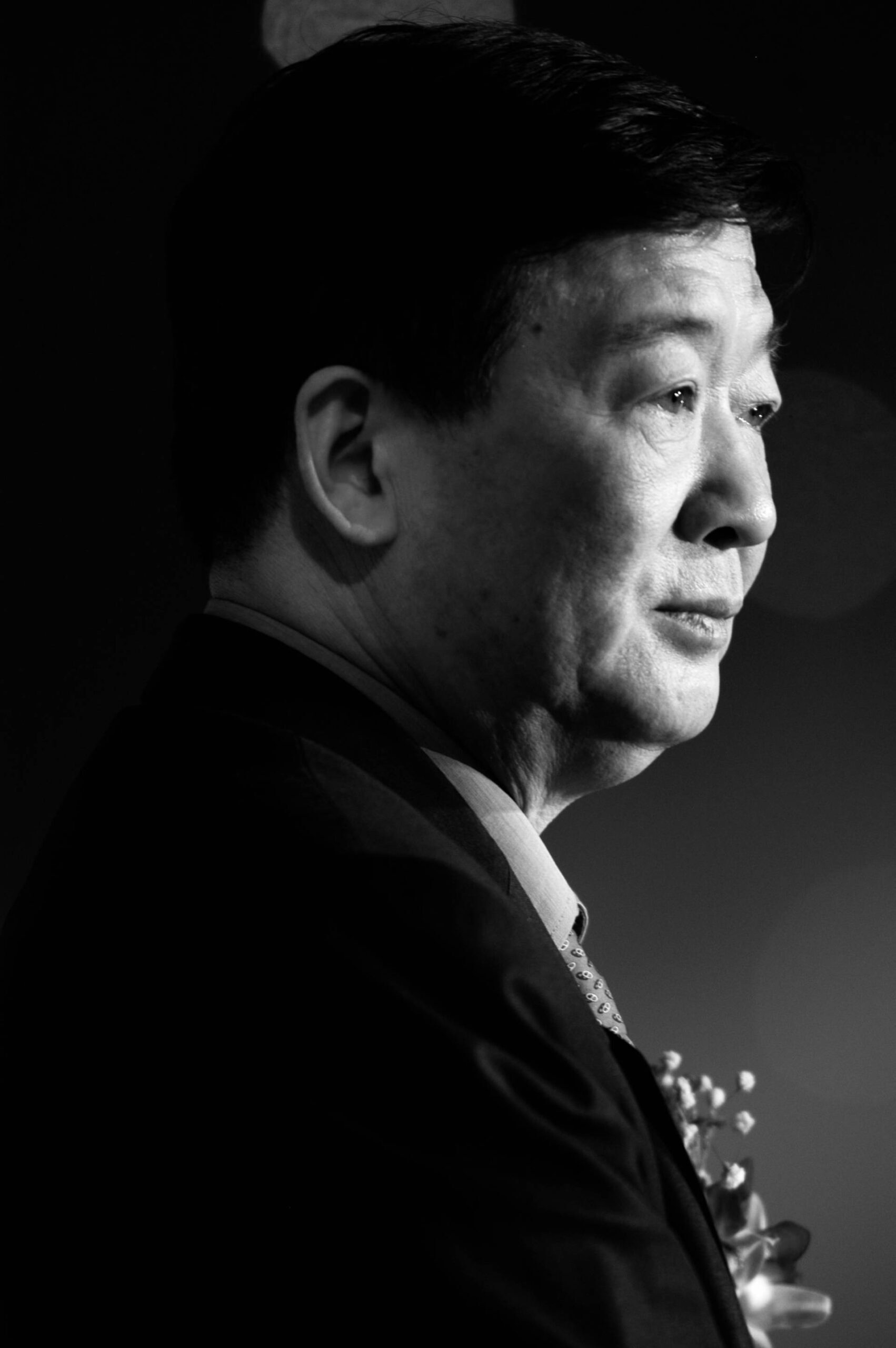
On the evening of November 11, a reporter from “Daily Economic News” learned exclusively from multiple channels that Ni Runfeng, the former chairman and general manager of Sichuan Changhong Electric Co., Ltd. (hereinafter referred to as Sichuan Changhong, SH600839), died on November 11, 2026 at the Mianyang Central Hospital in Sichuan Province due to ineffective rescue efforts. He was 82 years old.
Ni Runfeng was born in 1944. He served as an alternate member of the 15th Central Committee of the Communist Party of China, a member of the Standing Committee of the 10th National Committee of the Chinese People’s Political Consultative Conference, and a consultant to the Sichuan Provincial People’s Government. In 1985, he became the director of the state-owned Changhong Machinery Factory; in 2004, he resigned as the chairman of Sichuan Changhong. In his nearly two decades as head of the company, he led Changhong from a military-industrial enterprise in the mountains of southwest China to a home appliance giant with national influence. He also experienced the company’s most glorious and heaviest years.
In the business history after China’s reform and opening up, Ni Runfeng is also a name that cannot be ignored. With his decisive “military-to-civilian” strategy and highly impactful “price war”, he pushed the originally superior color TV to thousands of households, breaking the long-term monopoly of foreign brands on the domestic consumer electronics market and laying the industrial foundation for the rise of China’s national home appliance brands. Later in his career, he was under operating pressure due to two strategic setbacks of “accumulating color tubes” and “overseas credit sales”. However, as a pioneer of China’s first generation of home appliance entrepreneurs, his historical coordinates are still clear.
He has passed away, but his ups and downs in business career have turned into a heavy draft of the times in the transformation process of China’s manufacturing industry.
From a military factory deep in the mountains to the “King of Color TV”: 41-year-old was ordered to face danger, and the army was converted into civilians to find a civilian path
Ni Runfeng’s life bears a strong imprint of the times.
He was born in Rongcheng, Shandong and graduated from Dalian Institute of Technology (now Dalian University of Technology) in 1967, majoring in mechanical manufacturing. At that time, it was during the country’s “third-line construction” period, and he was assigned to the state-owned Changhong Machinery Factory in Mianyang, Sichuan, a confidential factory responsible for manufacturing airborne radars.
In this factory, Ni Runfeng started as a workshop technician at the lowest level, and successively served as workshop director and deputy director of the design institute. Years of experience at the grassroots level have given him a thorough understanding of production processes and technology transfer, and he has also accumulated solid front-line management experience.
In May 1985, 41-year-old Ni Runfeng officially became the director of Changhong Machinery Factory. At the beginning of taking office, the country was vigorously promoting the “military-to-civilian” transformation of the defense industry. With his in-depth understanding of the front lines of the industry, he keenly realized that color TVs had great potential demand among Chinese families at that time, but they were a scarce product in the market.
Against all odds, he established a development direction for Changhong with consumer electronics as its breakthrough point, and introduced from Japan the automatic color TV production line with the largest single-shift production scale and the highest degree of automation in the country at that time. When most of his peers were still hesitating whether large-screen color TVs could meet the consumption levels of Chinese families, he decisively decided to mass-produce them and quickly seized the market opportunity.
In order to quickly expand the market, Ni Runfeng chose the most direct strategy – price war. In 1989, Changhong took the lead in slashing prices across the country, breaking the sales ice in the color TV market. In 1994, Sichuan Changhong was listed on the Shanghai Stock Exchange and became an iconic blue chip stock in the early days of China’s capital market, winning sufficient capital for industrial expansion. In March 1996, he once again launched a major price cut for color TVs that shocked the country, with a reduction of 8% to 18%.
This pragmatic strategy of “lowering costs through large-scale production and seizing market share at low prices” has eliminated backward production capacity in the industry, squeezed out a large number of small factories with weak technology, and also broken the absolute monopoly of foreign brands on the Chinese color TV market. In its heyday, Changhong’s share of the domestic color TV market was as high as 35%, and Ni Runfeng was called the “King of Color TVs” in the industry.
Price war establishes dominance: 35% market share defeats foreign brands, but also bears the burden of manufacturers being eliminated and workers being laid off
Price is the sharpest weapon in Ni Runfeng’s hands, and it is also the biggest controversy surrounding him.
In 2001, after his comeback, Ni Runfeng accepted an exclusive interview with “Sichuan Daily”. In that conversation, he called the three price wars the “three major battles” that established Changhong’s hegemony. He was especially fond of the battle to defeat foreign color TVs in 1996. At that time, foreign brands threatened to defeat Changhong within a few years. In the end, the “bazooka” failed to knock down the “Red Sun”, and the “King of Painting” did not dare to claim the title of king again.
Faced with the question that “price wars dilute industry profits and turn milk into water,” he gave an uncompromising answer: “The essence of a market economy is competition, and price competition is the basic means of competition. In the era of planned economy, if there is no price war, what will be the consequences? The beneficiaries of the price war are millions of consumers. As long as they support it and I can expand the market, the price war will continue.”
It was also in this conversation that he left behind another side that few people know. When talking about the first price cut against domestic counterparts in 1989, Ni Runfeng’s expression became solemn and his tone was low: “It was tragic and tragic, and I still feel uneasy.” He explained that the price war directly led to the demise of more than 20 color TV companies, and tens of thousands of workers were laid off across the country as a result – “I heard that they are still living a miserable life.” When saying these words, this entrepreneur, who is known for his toughness, showed remorse and regret in his expression.
One general succeeds and ten thousand bones wither. Shopping malls are like battlefields, and Changhong’s dominance was paved by the withdrawal of many competitors. And the person who leads all this is not indifferent to this. This complex emotion accidentally revealed in the interview may be the most suitable way to understand Ni Runfeng: he is a staunch marketist and believes in the survival of the fittest; but when faced with the specific life behind “the fittest”, he cannot be completely relieved. Perhaps this is the most typical spiritual background of entrepreneurs of his generation.
The CPT game failed: Frustrated at high position, faced “big company disease” after comeback
In 1997, Changhong reached the top.
At its peak, the seeds of crisis had already been planted. Changhong’s long-term focus on a single category, without producing color tubes or chips, has left Changhong with almost no control over the upstream of the color TV industry chain. Ni Runfeng is obviously aware of this weakness. In 1998, he led a supply chain battle surrounding color picture tubes (CRTs): he spent huge sums of money trying to buy out the production capacity of several major domestic picture tube factories, cut off the supply of core components to competitors, and locked down the war from the source.
However, business competition is more complex than expected. Due to the secret breach of contract by some upstream suppliers and the severe impact on market prices of smuggled color tubes in coastal areas, this battle known as the “monopoly color tube” did not meet expectations, but instead put Changhong under heavy inventory and financial pressure.
In May 2000, Ni Runfeng resigned from his position as general manager of Changhong Group and Changhong Co., Ltd., but still retained his position as chairman and retired to the second line. About eight months later, he returned to take charge of the faltering company as chief executive officer (CEO). His comeback was extremely low-key, and he did not even show up in front of reporters from all over the country. In the first half of 2001, Changhong’s earnings per share dropped from 1.01 yuan in 1998 to only 0.01 yuan.
In the above-mentioned interview, Ni Runfeng faced the performance gap calmly and said he was “sorry”. However, he believed that “troughs should be viewed dialectically. After rapid development, adjustments must be made, and the highs are too cold. The lows are unavoidable, the lows are not low, and the lows are not scary.”
In his opinion, Changhong’s “big company disease” was already very prominent at that time. “Changhong is only a small and medium-sized enterprise in the world, but it is intoxicated by the aura of being the first in China and the fourth in the world. It does not have the skills of a big company but has the airs of a big company.” He admitted that he was responsible for this, and admitted that one of the crux of the problem was the systemic shortcomings of the disconnect between the decision-making and management levels.
Introspection at the bottom: Managing enterprises from the perspective of “Three Kingdoms” and “Red Mansions”, and recognizing that people are the foundation
When a company is in good times, all decisions can be interpreted as successful; but when the downturn comes, old accounts will be retold. As Changhong’s performance declines, the strategic choices that once supported its rapid expansion have begun to be viewed in a different light by the outside world – what was considered a focused and steady approach in the past is now being questioned as a missed opportunity.
Ni Runfeng has been controversial for two major strategies. The first is the “one-child policy”, which refers to Changhong’s refusal to diversify before 1997, not touching computers and mobile phones, and concentrating all resources to expand the color TV category; the second is the “base policy”, which refers to its progressive strategy of “first ‘king’ Sichuan, then ‘king’ Southwest, and then ‘king’ China” in market expansion, and not rushing to expand overseas. These two decisions brought it an astonishing expansion rate in the 1990s, but after entering the new millennium, they were widely criticized as strategic failures.
Regarding this change of comments, he did not shy away from saying that he was “disgusted”. “In order to grow bigger and stronger, it is better to have fewer children and better nurturing than to have more children and raise more children. If Changhong had borrowed money to finance computer and mobile phone projects, it would have been finished long ago. Market demand is a norm, and it is not too late to go now. We cannot use today’s standards to judge the choices made at that time.”
In fact, whether it is “The Only Son” or “The Base”, they all point to the same source: his understanding of the relationship between “people” and “systems”.
It is well known to the outside world that Ni Runfeng was familiar with “The Romance of the Three Kingdoms” and “A Dream of Red Mansions”, and there is a saying that “Ni Runfeng relied on these two books to govern Changhong.” In the above-mentioned interview, he did not mince words about this. Zhuge Liang had to do everything personally, and the consequence was that “there are no generals in Sichuan.” From this, he talked about Changhong’s most urgent need to recruit talents; the Jia family had a great cause, flourished but declined, and learned a painful lesson. He used this to warn his employees to be prepared for danger in times of peace.
“Changhong’s biggest enemy is himself, and the only one who can defeat Changhong is himself.” This is the judgment he repeatedly stated in that interview. He also admitted three mistakes of the company: the rapid expansion of scale and the failure of basic management to keep up; the slow development and investment of subsequent products; and the failure to establish a modern enterprise system early. But he retained his position on the popular view that “systems are omnipotent”: “The system is not omnipotent, and in an atmosphere where the system is not followed, its effect may be zero. The system is made by people and needs to be followed by people. People come first.”
This passage is a key to understanding Changhong. It explains why Changhong rose rapidly in the hands of China’s first generation of entrepreneurs. In an era when the market economy was in its infancy and the modern enterprise system was far from perfect, personal judgment, courage and prestige were the scarcest resources.
Handing over the baton at the age of 60, the reform pioneer remains in Mianyang
No matter how the outside world re-evaluates the “base area”, the lessons of internationalization must be made up after all.
Entering the 21st century, in order to break through the growth bottleneck of the domestic market, Ni Runfeng turned his attention overseas, trying to open up new growth space through overseas expansion. In 2001, Changhong launched large-scale home appliance export cooperation with the American APEX company. This radical strategy of using the credit sales model in exchange for market share has indeed made Changhong’s export volume top the domestic peers in the short term.
But behind the rapid expansion, there are extremely high financial risks. The hidden danger of APEX’s long-term default on huge payment for goods finally broke out in 2004. As a result, Changhong was forced to set aside huge provisions for bad debts, resulting in a huge loss of more than 3 billion yuan in the company’s financial statements that year. Coupled with the previous CPT battle, the two strategic setbacks became the heaviest lessons for Ni Runfeng in the later period of taking charge of Changhong, and they also objectively accelerated the handover of management.
In July 2004, along with the financial shock and strategic adjustments within the company, 60-year-old Ni Runfeng resigned from his position as chairman, director and president of Sichuan Changhong due to age reasons. He no longer held leadership positions in Changhong Group and joint-stock companies, and handed over the management of the company to Zhao Yong.
In the above-mentioned interview, when asked about the time of his retirement, he gave an answer of “cannot be reported in the newspaper” and authorized the reporter to tell readers: “When Changhong is steadily climbing and new profit points are formed, that is the day Ni Runfeng retires and returns home.”
After leaving Changhong, where he had served for more than thirty years, Ni Runfeng was hired as a consultant to the Sichuan Provincial People’s Government. On December 18, 2018, the Party Central Committee and the State Council awarded Comrade Ni Runfeng the title of Reform Pioneer and the Reform Pioneer Medal. Ni Runfeng was rated as an innovator in the enterprise’s “military-to-civilian” practice. On June 28, 2021, Ni Runfeng was awarded the title of “National Outstanding Communist Party Member” by the Central Committee of the Communist Party of China.
For more than 20 years after his retirement, he has been living a low-key and peaceful later life in Mianyang. In the face of various external comments about his merits and demerits, he has always maintained silence and restraint, and has not publicly expressed his opinions on the changes in the home appliance industry.
He once defined the most glorious era of an industry, and also used his own setbacks to remind those who came after him: Scale is not a moat, and personal authority cannot replace the system. These experiences and lessons have long transcended Changhong itself and have become indelible marks in the history of Chinese business.
Related Reading
- World, line up to sell goods to China!2026-11-12
- Original “Fearless” Wang Jianlin regains control of Wanda Business Management, and his net worth has evaporated by 200 billion in ten years2026-11-12
- Original: The middle-class people are crazy about grabbing Archaeopteryx in Sam2026-11-12
- There is no more double 11 in the world, leaving businesses miserable2026-11-11
- Zhong Xuegao is resurrected, has the “old score” been overturned?2026-11-11