圖片 | Sweet potato robot
Just on September 17, Digua Robot officially announced that it had completed a US$400 million Series C financing, led by Mirae Asset and followed by Meituan Venture Capital. This is the third amount of money this company has received in half a year. It received US$120 million in March, US$150 million in April, and US$400 million in September, totaling US$670 million in half a year.
Wang Huai of Linear Capital has high expectations for Digua: “Every move of the robot needs to be driven by computing power. Under this circumstance, Digua is very likely to become the NVIDIA in the embodied field.”
Not everyone may agree with this, but sweet potatoes are indeed entering the real shipping list of more and more robots.
Digua owns the robotics business spun off from Horizon, the first prototype customer of Cobos, and more than 400 existing customers. The figures simultaneously disclosed in the financing official announcement are: the cumulative shipment of Rising Sun series chips has exceeded 8 million pieces, and the flagship platform S600 has won more than 20 customers, including Youbixuan, Taishizhihang, Qianxun Intelligent, Independent Variable Robot, and Beijing Humanoid Robot Innovation Center.
Most projects have reached mass production level shipments. Cloud Whale’s sweeping machine, Shadow Stone’s panoramic drone, and Vita Dynamics’ robot dog all have different product forms, but are equipped with chips from the same company.
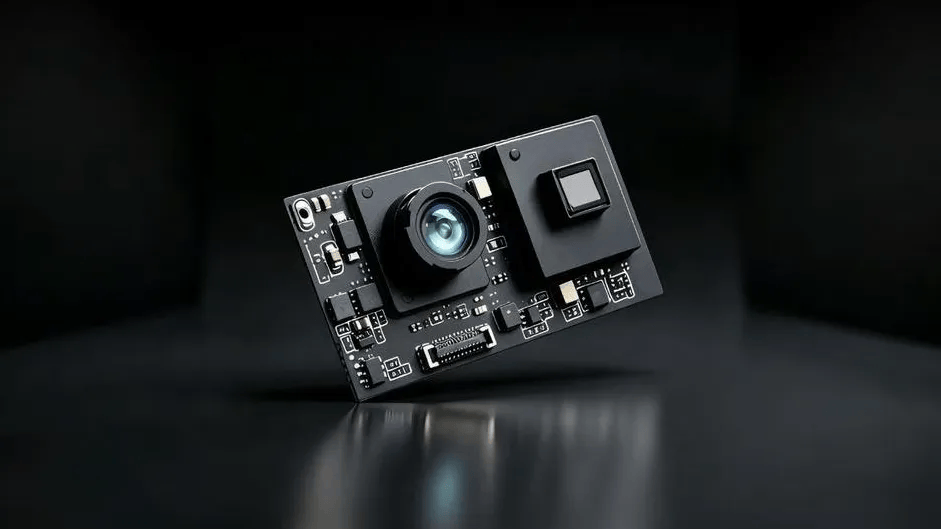
“What to do if you don’t do it first”
Wang Cong’s determination did not come out of thin air.
In 2015, he was studying for a Ph.D. at Wright State University in the United States. He dropped out of school to start a business. He started in someone else’s garage with a few Chinese friends. He returned to China and worked in “natural language processing + finance” for three years. It turned out that the customers were all financial institutions, and AI accounted for a very low proportion in the system. “What we are selling is not AI, but gadgets that rely on relationships to maintain relationships.”
After his review, he said one sentence: No matter whether you choose an industry or a business model, you must think clearly about the nature of the business from the beginning.
He joined Horizon in 2018, and later caught up with the pain of cutting down the AIoT department from 400 people to more than 30 people. At the beginning of 2020, he left a message to his boss Yu Kai on WeChat, taking over this robot business that no one wanted, and spinning it off into Digua in early 2024.
When the “Chinese Entrepreneur” reporter saw him, he was wearing a dark brown leather jacket, and it was hard not to think of Huang Renxun. He himself was confident in his words: “In this (chip) industry, what are you going to do if you don’t want to be number one?”
In terms of playing style, he avoided the frontal battlefield. When interviewed by Sohu Technology, he gave a positioning answer. Digua’s choice was “not to do the main body, but to compete with Wintel.” When it came to competitive strategy, it was “Nvidia is going to be ultra-high-end, and Digua will break through the sub-high-end first.” Starting from the acquisition of Ecovacs in 2021, we have been building sweepers, drones, and robot dogs all the way. When embodied intelligence becomes popular, shovels are already at the door in advance.
Investors have given high praise to Wang Cong himself. Wang Xiao from Jiuhe Venture Capital said: “He speaks more straightforwardly, has very good execution ability, and is decisive. He says one thing is one thing and responds quickly, giving people the feeling that things can be done in three clicks, five divided by two.” Wang Cong describes himself as: “I am actually a big i person, but in front of customers, I can switch to a big e person.”
The rhythm of financing is also a projection of this personality. In a previous interview with Jiuhe Venture Capital, he revealed that in recent rounds, each round lasted an average of only two months. “Since the beginning of the B round, I have met with fifty or sixty investors and rejected at least twenty or thirty.” His troubles have long been not about looking for money, but how to say no gracefully.
“Accumulating computing power is the simplest thing”
Sweet potato does not make the body.
In an interview with Blue Whale Finance in 2025, Wang Cong said the words that have been quoted countless times: “Sweet potatoes do everything but not the body.”
He also doesn’t save face for his peers. After the S600 was released at DDC2025, someone asked him if adding TOPS could solve the problem. His answer was just one sentence: “Building computing power is actually the simplest thing.” In his opinion, the current domestic mainstream computing power level is only enough for the VLA algorithm to run to about 10 Hz. “This is considered ‘basically usable’, but there is still a gap to be truly ‘easy to use’ in the scenario.”
The S600 is based on this judgment. At the press conference, Wang Cong gave a decoration analogy: the car-sized chip is like a finalized “four-bedroom house”, where the camera will be installed and what work it will do. However, the robot body has not even been finalized, and it is not clear whether the camera should be installed on the wrist or waist. “The current robot chip can only define a ‘large flat’ first. If the customer wants to change it to four or five bedrooms, they need to leave enough freedom.”
However, he has always been a little in awe of the computing power itself. At the media communication meeting before WAIC, he said: “No one knows how much computing power should be used.”
All humanoid robot companies are rushing to be the “next Tesla”, but Digua has taken a step back. Why?
Ontology is an asset-heavy, low-margin, narrative-strong business. Chips are standard products and a shipment-by-ship business, and there is no window for convergence in the technical roadmap. The latter live significantly longer, and this year’s financing market is also verifying this.
At the Bund Conference in early September, he put the current level of embodied intelligence even more harshly.
The main solution now is the generalization of a single scenario, a single task or even a single terminal, which is “essentially very similar to the previous generation of special aircraft.” He then added: “We haven’t seen a cross-task model yet, that is, the same model can not only do ‘catch’ well, but also do other things. Now it is basically to change a task and train another model.”
Customers are grinded out
During WAIC, Wang Cong raised Digua’s positioning to another level: “Our core is an ecological company, not just selling chips, but also making friends with industry partners.”
Making friends is not a formality. Wang Cong mentioned that the real needs of many customers will not emerge until two or three months of joint debugging. After the chip is installed into the mass-produced robot, whether the model runs well, whether the perception and control can cooperate, and whether the hardware is stable or not, all have to be worked with the customer. A pitfall that a customer stepped on becomes a tool after being solved, and subsequent people will not have to pay tuition again.
Regarding ecology, the person in front of the stage is co-founder Hu Chunxu. At DDC2025, he said something that has been quoted repeatedly in the industry: “Lowering the threshold for innovation is the greatest romance of technology. By packaging complex computing power, algorithms, and tools into simple ‘building blocks,’ we hope to help developers ‘solve 99% of the sweat’ and let them focus on the ‘1% of inspiration.'”
This style of play even extends to teams that have not yet established a company.
Among the 8 million pieces, there is a batch of orders from Shi Mulang, who was born in 2004. The young man told Z Potentials that Langji Smart, the company he founded, makes outdoor mini pickup trucks. The company had not been registered two years ago and there were no products in hand.
This year, his product has completed research and development, overseas crowdfunding and Pre-A round financing, and has entered the delivery stage. It took two years to complete this journey, relying on Digua’s universal computing platform, hardware selection, computing power adaptation, and tool chains, which can be used immediately.
There are many people like him on the Digua platform. The official caliber is more than 500 small and medium-sized makers, more than 500 colleges and universities, and more than 100,000 developers in more than 20 countries.
Based on this, Digua launched the “DGP Gravity Plan”. There are no membership fees and no equity requirements. Makers who have not yet launched a product can also apply. The aforementioned Shi Mulang is one of the beneficiaries. For large customers, Digua has roped in foundry giants such as Luxshare Precision and Huaqin Technology to provide mass production-level controller solutions and spread them all the way to the entire supply chain.
Three days before the official announcement of the C round, Digua also signed a strategic cooperation with Jiji Vision to bring the open source embodied model GigaBrain-0.7 to the S600. Wang Cong’s statement at the ceremony was to “open up a complete link between model development, terminal-side deployment, ontology execution and commercial implementation.”
The mountain that cannot be avoided
NVIDIA is hard to avoid.
If you take a walk around the domestic robot exhibitions this year, you will find that many of the humanoid robots on the booths have NVIDIA Orin in their chests. Otherwise, it is X86 plus independent GPU, but the cost is that the power consumption and cost cannot be reduced. Wang Cong pointed out the weakness of this solution during WAIC: the edge end of the robot is extremely sensitive to power consumption and cost, and the cloud-based approach cannot be directly transferred to the main body.
Capital moves faster than customers. Prosperity7, a subsidiary of Saudi Aramco, participated in the B round, and Korea Mirae Asset led the C round. Both sides were betting on the same thing: no matter which company’s robot finally escapes, the chip must go from here. Meituan Venture Capital’s investment in the company is another matter. It has brought Sweet Potato into real scenarios such as delivery robots and unmanned delivery vehicles, and Meituan itself is the party A.
Sweet potato has quite a few cards in his hand. The bottom layer is the Rising Sun series, which has shipped 8 million pieces. In the middle is the S600 and the one-stop development platform, which is connected to hundreds of Ontology customers and hundreds of thousands of developers. The chips, tool chains, and customer delivery records are all available.
The real test lies elsewhere. The algorithm team of an Ontology company has been in the NVIDIA ecosystem for several years, and their debugging habits and historical code are all tied to it. Changing platforms is not about changing suppliers, but overturning the engineering accumulation of the past few years. How many customers have actually moved their mass production projects over?
Of course, what capital really cares about is input-output. Whether the S600 is mass-produced as scheduled, how many Hz the customer’s model runs on the device, whether the developer ecosystem can produce popular applications, and whether the joint debugging manpower and ecological subsidies invested in this are worthwhile. Its current more realistic challenge is to allow more customers to complete a “migration experiment” under the inertia of NVIDIA’s ecosystem, and use this experiment to prove that its tool chain is useful enough.
Whether the financing speed and shipment scale can be further transformed into ecological barriers is the key to the next stage of Digua Robot, and the market will give the answer in its own way.
Follow Investors, ⭐, and you will receive the latest updates as soon as possible
Related Reading
- Customized screens for domestic mobile phones have begun to roll back to Samsung. . .2026-09-19
- Why are there so many Chaoshan bosses in China’s technology industry?2026-09-19
- Beanbao mobile phone stepped on the brakes first2026-09-19
- Original CFO’s words are underestimated, Lenovo soared by 79 billion in three days2026-09-19
- AI isn’t coming to destroy humanity, but experts say the real security threats are here2026-09-18