Produced by Radar Finance Written by Zhou Hui Edited by Meng Shuai
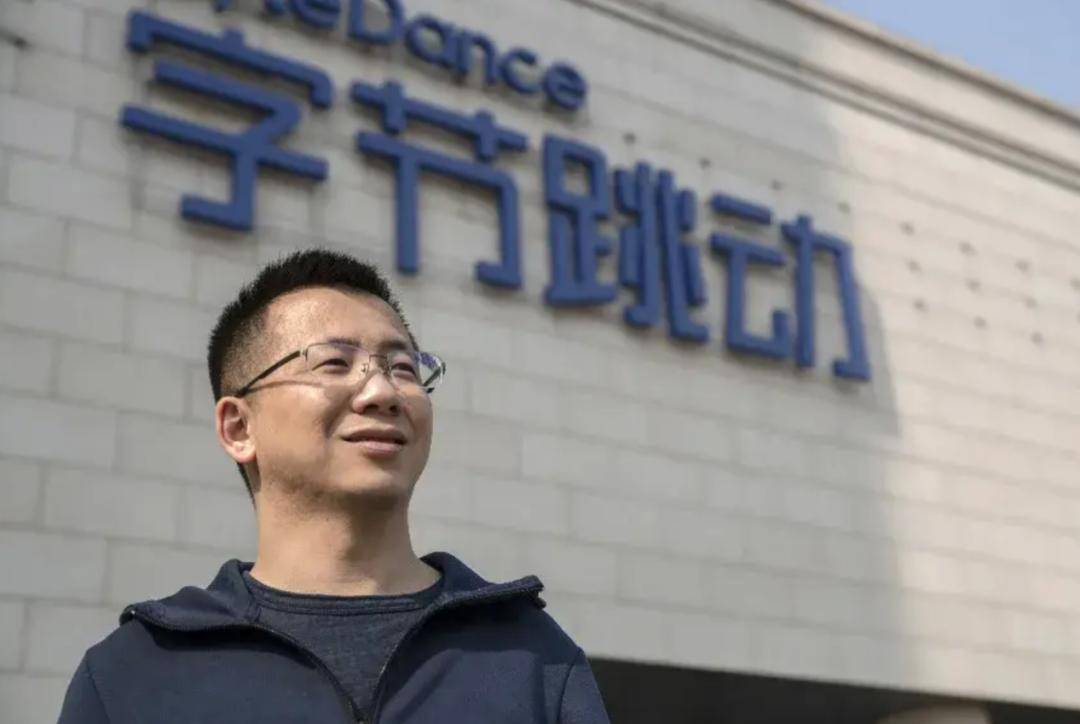
Asia’s rich list has “changed”! On September 16, according to the Bloomberg Billionaires Index, 43-year-old ByteDance founder Zhang Yiming replaced Indian tycoon Gautam Adani and became the new richest man in Asia.
Data shows that Zhang Yiming’s current net worth has exceeded US$105 billion (equivalent to over RMB 700 billion). Compared with the US$13 billion recorded when Bloomberg first tracked it in March 2019, his wealth has increased approximately seven times in seven years.
The skyrocketing wealth of Zhang Yiming is inseparable from ByteDance, which he founded. According to the technology media “The Information”, in the first half of 2026, ByteDance achieved revenue of US$120 billion, a year-on-year increase of approximately 30%, of which over 30% was contributed by overseas revenue mainly from TikTok.
However, due to increased AI spending, ByteDance is under significant pressure on the profit side. Net profit in the first half of the year fell by single digits year-on-year to US$20 billion.
In fact, in order to win the AI arms race, ByteDance has made frequent moves. In addition to recently finalizing a syndicated loan of up to US$29.6 billion, it is also actively recruiting AI talents.
The “Agent Reset the Workplace – AI Talent Flow Report” released by the Maimai Talent Think Tank on September 16 shows that ByteDance ranks first in both the number of new AI positions and the net inflow of AI talents.
It is worth mentioning that ByteDance has recently sown a new “wealth seed.” According to Reuters, ByteDance’s AI pharmaceutical business Anew Labs, which was spun off from the group, completed a US$290 million round of financing. After the financing is completed, Anew Labs’ valuation will reach tens of billions in RMB.
“Taking every step right”, Zhang Yiming aspires to be the richest man in Asia
On September 16, according to the Bloomberg Billionaires Index, the 43-year-old ByteDance founder Zhang Yiming’s net worth exceeded US$105 billion, surpassing Indian tycoon Gautam Adani and becoming Asia’s richest man for the first time.
As early as June this year, Zhang Yiming’s net worth reached US$92.8 billion, ranking him the second richest man in Asia. Being ranked as Asia’s richest man this time means that Zhang Yiming’s wealth has once again increased significantly in just a few months.
Public information shows that Zhang Yiming was born in Longyan, Fujian in 1983. He studied microelectronics at Nankai University in 2001 and later changed his major to software engineering.
In Zhang Yiming’s view, “Your behavior and your output must change quickly, and computers are the fastest.”
After graduating from college, Zhang Yiming formed a team of three people and developed an IAM collaborative office system for enterprises. Because coworking had not yet formed a large enough market in China at that time, Zhang Yiming’s first entrepreneurial venture ultimately failed.
After 2006, Zhang Yiming successively joined Kuxun, Microsoft and other companies. But Zhang Yiming was not content with being a “worker”. His original intention of joining Microsoft was just to learn how large companies coordinate and manage engineers.
In September 2008, at the second invitation of fellow Wang Xing, Zhang Yiming joined Fanfou, known as the “originator” of Chinese Weibo, as a technical partner. He was mainly responsible for Fanfou’s search, news distribution and hot word mining.
The following year, Zhang Yiming co-founded Jiujiufang with Kuxun investor Wang Qiong. By 2011, Jiujiufang had become the No. 1 mobile real estate application.
However, Zhang Yiming was not satisfied with this. Facing the surging mobile Internet era, he officially founded ByteDance in 2012. From then on, Zhang Yiming’s fate began to turn crazily.
In August 2012, Toutiao was launched. It uses personalized recommendation engine technology to recommend content based on user interests, location and other dimensions.
By August 2016, the 4th anniversary of Toutiao’s launch, its user base had exceeded 550 million, with daily active users reaching 60 million.
A month later, Zhang Yiming copied Toutiao’s model and officially launched the short video platform Douyin. With a series of star apps such as Toutiao and Douyin, ByteDance has become a catalyst for Zhang Yiming’s wealth.
In March 2019, Bloomberg began tracking Zhang Yiming’s wealth. At that time, his net worth was only US$13 billion. But today, more than seven years later, Zhang Yiming has become the richest man in Asia, and his personal wealth has increased by about 7 times compared with the original amount.
Some analysts believe that Zhang Yiming’s surge in wealth is due to the popularity of Douyin and TikTok at home and abroad, as well as ByteDance’s layout in the AI field, including the popular AI chat robot Doubao and the video generation model Seedance.
Nowadays, Zhang Yiming’s wealth as Asia’s richest man further illustrates that the new wealth created by the AI boom is beginning to exceed the huge wealth accumulated in traditional industries.
Omdia chief analyst Su Lianjie also pointed out: “Every step he took was right. He stuck to the original direction and continued to increase investment in AI.”
Net profit of 20 billion in the first half of the year, Byte’s profit declines
As the biggest contributor to Zhang Yiming’s rise to Asia’s richest man, ByteDance once again demonstrated its strong ability to “attract money” in the first half of the year.
According to the technology media “The Information” citing three people familiar with the matter, ByteDance’s revenue in the first half of this year was approximately US$120 billion, a year-on-year increase of approximately 30%, slightly higher than the revenue of US technology giant Meta during the same period.
Although domestic Douyin is still ByteDance’s largest source of revenue, the revenue weight of its overseas business is rising. In the first half of the year, overseas revenue, mainly from TikTok, accounted for more than 30% of the company’s total revenue.
In fact, as early as 2025, ByteDance’s overseas business revenue proportion has increased from 25% in 2024 to more than 30%. For the whole year of 2025, ByteDance’s overseas business revenue will increase by nearly 50%, far exceeding the domestic revenue growth of approximately 20%.
Among them, TikTok Shop is the main driving force for the increase in Byte’s overseas revenue share, with a year-on-year GMV growth rate of nearly 70% in 2025.
However, ByteDance’s profits have failed to keep pace with revenue growth. According to media reports, affected by increased investment in the field of artificial intelligence and other factors, ByteDance’s net profit in the first half of the year was approximately US$20 billion, a single-digit decrease from the same period last year.
At the same time, the company’s net profit margin has gradually declined from 26% in 2023 to approximately 16.7% in the first half of 2026.
Although ByteDance has not yet responded to the above-mentioned operating data, its increased investment in AI is traceable.
In May of this year, Bloomberg reported that people familiar with the matter revealed that ByteDance is discussing increasing capital expenditures in 2026 to up to US$70 billion, which is equivalent to more than double its total last year, and will be used to expand its data centers and other AI infrastructure.
Other reports indicate that if the economic and business environment remains good, ByteDance’s investment in the AI field may further increase to US$100 billion next year.
Not long ago, ByteDance basically finalized a syndicated loan of up to US$29.6 billion (equivalent to about 198.6 billion yuan).
Reuters stated that AI development is an important reason why this financing received bank support, but the existing materials do not disclose how much of the loan will be invested in AI.
In addition, in order to fight the AI arms race, ByteDance also spends a lot of money to win talents. In April this year, there were rumors that former DeepSeek core researcher Guo Daya had officially joined ByteDance, with an annual salary of 100 million yuan.
It is reported that Guo Daya will be responsible for the Seed team that develops Byte’s large model. She is one of the persons in charge of the agent (intelligent) direction, with a rank of L8.
Although Li Liang, vice president of Douyin Group, issued a statement that day denying the news, saying that he had not recently recruited any employees with an annual salary of nearly 100 million yuan. However, The Paper confirmed from multiple sources that Guo Daya has indeed joined ByteDance.
According to the “Agent Reset the Workplace – AI Talent Flow Report” recently released by the Maimai High-Recruitment Talent Think Tank, from January to July 2026, the number of new AI jobs in the new economic industry on the Maimai platform increased by 789.47% year-on-year. AI is rapidly evolving from a “cutting-edge technology” to a “basic capability” in the workplace.
Among them, ByteDance continues to lead the battle for AI talents – whether it is the number of new AI jobs or the net inflow of AI talents, ByteDance ranks first on the list.
Sowing “new seeds” of wealth, AI pharmaceutical business completes first round of financing
In addition to “money-attracting tools” such as Douyin and TikTok, ByteDance has recently sown a new “wealth seed.”
On September 16, IT House quoted Reuters as saying that people familiar with the matter revealed that Anew Labs, the AI pharmaceutical business split from Byte, completed a round of financing of US$290 million.
It is reported that the lineup of investors in this round of financing is very “luxurious”, including leading investment institutions such as Sequoia China, IDG Capital, Hillhouse Venture Capital, Wuyuan Capital, Gaorong Venture Capital, Primavera Venture Capital, and many pharmaceutical industry groups including China Biopharmaceuticals participated as strategic investors.
After the completion of this round of financing, Anew Labs’ valuation will reach US$1.5 billion, equivalent to over 10 billion yuan in RMB. ByteDance retains 56% of its shares and maintains its controlling position.
Tianyancha shows that the affiliated company of Anew Labs is Shanghai Xinsheng Tantu Technology Co., Ltd. (referred to as “Xinsheng Tantu”). The company was established in July this year and its legal representative is Liu Kai.
As a pharmaceutical company spun off from ByteDance’s AI pharmaceutical business line, Xinsheng Tantu is responsible for the mission from basic model research to industrialization. Its core team consists of 50 AI4S (AI for Science) algorithm talents and senior pharmaceutical field experts.
In June 2026, after the business was spun off from ByteDance and operated independently, the core team moved into the new entity as a whole.
According to China Business News, some industry insiders pointed out that the reason why Byte made this business line independent is because AI drug discovery follows different industry logic and management methods from the group’s core business.
Pharmaceutical research and development follows the “Double Ten Law” – it takes ten years, invests one billion US dollars, and the verification cycle is in years; while the Internet business is good at rapid iteration. When the two rhythms coexist within the same organization, problems such as misaligned incentives and out-of-focus evaluations will gradually emerge. Independent operation makes it easier to connect with industrial capital and attract medical talents.
According to iiMedia Research, with technological breakthroughs and upgrading of industry needs, AI pharmaceuticals have gradually grown from a cutting-edge medical exploration direction to a core growth track in the global pharmaceutical industry, and the industry market size has also continued to expand at a rapid pace.
In 2021, the global AI pharmaceutical market will be only US$790 million, and will exceed the US$1 billion mark in 2022. Since then, it has skyrocketed. By 2025, the industry market size has reached US$2.41 billion, and it is expected to approach the US$3 billion mark in 2026.
At the policy level, the AI pharmaceutical industry has also received national and local support. On May 15 this year, the newly revised “Implementation Regulations of the Drug Administration Law” (hereinafter referred to as the “Implementation Measures”) were officially implemented.
The “Implementation Measures” provide a six-year protection period for experimental data of innovative drugs and original drugs. During the data protection period, if other applicants rely on protected data to apply for drug marketing authorization without the consent of the holder, the State Food and Drug Administration will not accept the application or grant permission.
In addition, the “Fifteenth Five-Year Plan for the Development of Strategic Emerging Industries in Shanghai” previously issued by the General Office of the Shanghai Municipal People’s Government also mentioned that “strengthening AI models to assist in predicting clinical success rates” and “promoting the application of AI technology in target mining, molecule generation, drug efficacy simulation and other aspects.”
At present, Xinsheng Tantu has achieved certain results in the field of AI pharmaceuticals. The company’s official website shows that it operates multiple platforms related to biomolecule structure prediction and design, antibody design optimization, and drug discovery. Its research and development pipeline includes the world’s first small molecule inhibitor that can simultaneously target all three dimer types of the IL-17 family.
Up to now, Xinsheng Tantu’s publicly disclosed product portfolio includes AnewFold, AnewSampling, AnewOmni, AnewDesign and AnewMind, as well as a proprietary drug development pipeline targeting IL17, IL4R and other targets.
Related Reading
- An era ends and Chinese culture takes over Huayi2026-09-19
- How much of China’s economic growth this year comes from exports?2026-09-19
- A Chinese barbecue restaurant that Koreans are chasing for food may be going on the market2026-09-19
- Warren Buffett steps down as Berkshire Hathaway chair. His son will replace him.2026-09-18
- The good days of making money for new tea suppliers are over2026-09-18