Introduction: A company with a market value of more than 4 trillion US dollars suddenly found that it may not be able to find a person who can replace the founder.
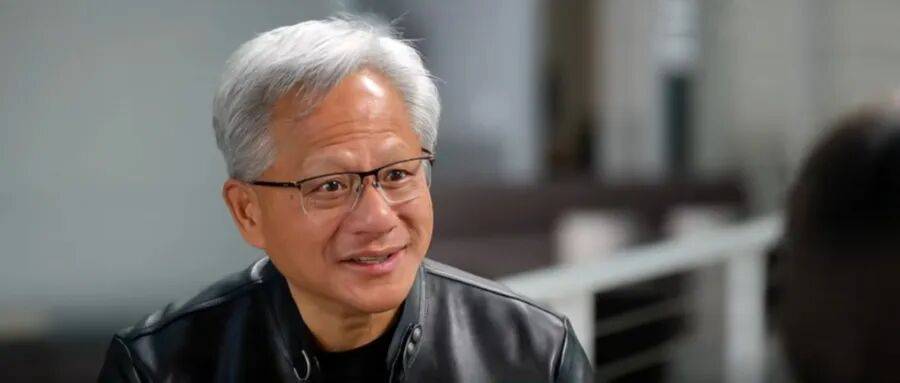
Nvidia’s management is facing a question that has rarely been seriously discussed before: If Jensen Huang no longer serves as CEO, who can take over the world’s most important AI chip company?
Only three days after Huang Renxun’s apology letter was issued, his second extramarital relationship was revealed.
On November 11, the New York Times reported, citing five people who had worked at Nvidia, that the relationship was with Kimberly Powell, the company’s vice president of healthcare who reported directly to him.
According to two people who have worked at Nvidia, Huang, 63, and Powell, 48, were photographed having an intimate act at a hotel in San Jose, California, during an Nvidia conference in March.
NVIDIA’s board of directors learned of the relationship between Huang Jenxun and Powell during the investigation of Huang Le.
There is also news that Nvidia’s board of directors is preparing to hold a meeting as soon as today to decide whether CEO Huang Renxun will stay or leave.
As of press time, Nvidia has not officially announced Huang Renxun’s departure, nor has it announced his successor arrangements.
But this turmoil has brought to the forefront a problem that has long been covered up: Nvidia is a company with tens of thousands of employees and masters the core technology of global AI infrastructure, but it does not have a clear CEO successor at the public level.
01 Nvidia’s flattening is becoming a succession problem
In 1993, Huang Renxun co-founded Nvidia with two other engineers.
For the next 33 years, he served as the company’s president and CEO. From the initial graphics processor, to the CUDA computing platform, to today’s AI data center, NVIDIA’s several key business transformations are closely related to Huang Renxun’s strategic judgment.
But Huang Renxun’s influence on the company goes beyond formulating product direction.
Huang Renxun once said that there are more than 60 senior executives reporting directly to him, most of whom are from the engineering field and involve different technical directions such as memory, network, graphics processor and central processing unit.
This kind of management structure is not common among large technology companies.
Usually, a large enterprise will set up a relatively clear management hierarchy, with the CEO managing a small number of core executives, and then business leaders managing different departments.
NVIDIA has adopted a flatter management model. A large number of technical leaders report directly to Huang, allowing him to simultaneously grasp the technical progress of different product lines and coordinate between architecture, R&D and commercialization.
This model has obvious advantages.
AI chips are not an isolated hardware product. From GPU architecture, network interconnection, storage systems, to CUDA software ecosystem and complete data center solutions, NVIDIA needs to integrate a large number of technical links into the same product system.
When the heads of different departments report directly to the CEO, the decision-making chain can be shortened, and cross-department coordination can more easily focus on the same product direction.
But there is a flip side to this way of organizing.
When one person’s scope of management is too large and a large number of key decisions revolve around this person, it will be difficult for the company to naturally form a second person in charge who can fully take over.
This is exactly the dilemma Nvidia is currently facing.
Currently, Nvidia has no publicly announced successor arrangements, and there is no obvious executive echelon that can seamlessly succeed Huang.
This does not mean that there must not be a confidential succession plan within Nvidia, but at least judging from public information, the company has not established a second-in-command system that is widely recognized by the market.
For a company that has grown into a core provider of global AI infrastructure, this uncertainty is difficult to ignore.
02 Who might succeed Huang Jen-Hsun?
If Huang Renxun really leaves, the market will first turn its attention to Nvidia’s existing management team.
Currently, several executives and founders with different backgrounds may play a role in the succession arrangement.
Number one: Colette Kress, the person most familiar with Nvidia’s finance and capital markets.
Colette Kress is executive vice president and chief financial officer of Nvidia.
She joined Nvidia in 2013 and had nearly 25 years of financial experience in large technology companies. She served as senior vice president and CFO at Cisco and was responsible for the financial work of the server and tools business at Microsoft.
At NVIDIA, she has long been responsible for financial strategy, budgeting, capital allocation and financial disclosure.
Kress is not an unfamiliar name to investors.
She often appears alongside Huang on Nvidia’s earnings calls. The company’s revenue growth, gross profit margin changes, data center business performance and future performance guidance all require her to explain to Wall Street.
If Huang Renxun suddenly leaves, Kress’s advantage is that she is familiar with the company’s financial system, operating data and investor communication mechanism.
During the short-term transition period, she may become an important person to maintain the company’s operational stability.
But CEO and CFO are not the same jobs.
NVIDIA’s most important competitive advantage is not just its financial management capabilities, but its long-term judgment on GPU architecture, software ecosystem, product iteration and AI industry trends.
Kress’s professional resume is mainly in the financial field. Axios cited analysts’ views that she may not be Huang Renxun’s natural successor in terms of technological innovation and product strategy.
Therefore, Kress is more easily understood as a transitional candidate who can maintain financial and capital market stability, rather than a CEO who has been proven to fully take over Nvidia’s technology strategy.
Second place: Ian Buck, technical leader who has long been involved in CUDA and AI computing products.
If Kress represents NVIDIA’s financial system, then Ian Buck represents the important technical strength of the company’s AI computing products and software ecosystem.
According to Nvidia’s official information, Ian Buck joined the company in 2004 and currently serves as vice president of ultra-large-scale and high-performance computing, responsible for ultra-large-scale AI product-related work.
He has long been involved in the development of GPU general computing and is one of the inventors of CUDA.
CUDA is one of NVIDIA’s most important software ecosystems. It expanded the GPU from a traditional graphics processor to a general computing platform, laying an important foundation for the subsequent development of AI training and inference business.
Buck is currently responsible for hardware and software products for ultra-large-scale AI customers, which requires cooperation with Microsoft, Google, Amazon, Meta, OpenAI and other companies.
This makes him not only familiar with NVIDIA’s underlying technology, but also long-term participation in the commercialization process of AI computing products.
Business Insider reported in November that Buck was listed as a potential long-term successor to watch.
The logic is that compared to Kress, who is mainly responsible for financial management, Buck has a deeper engineering background and is closer to Nvidia’s core product system.
Third place: Chris Malachowsky, the co-founder who best understands the underlying technology of NVIDIA.
Malachowsky was also a co-founder of NVIDIA in 1993 and currently serves as a Founder & NVIDIA Fellow.
According to Nvidia’s official information, he is a member of the company’s executive team and senior technical manager with more than 40 years of industry experience.
At NVIDIA, he was involved in managing the company’s core technologies and was responsible for IT, operations, product engineering and other areas. Previously, he was responsible for the company’s research organization, supporting future technology development.
This gives him an advantage that other professional managers may not have: He has participated in the entire process of Nvidia’s growth from a start-up to a global computing platform company.
Nvidia’s competitiveness today largely comes from its continued investment in technology lines.
From graphics processors to general-purpose GPU computing to AI training and inference platforms, companies need to maintain the consistency of their technology routes over the long term.
In this case, a co-founder who truly understands the company’s technical history, product architecture, and R&D organization is of special value.
However, Malachowsky’s current public identity is as a co-founder and NVIDIA Fellow, rather than the CEO responsible for the company’s daily operations.
It remains to be seen whether he is willing to take on a wider range of operational responsibilities and whether he has the willingness to coordinate global operations, customer relationships and capital markets.
Fourth place: Nick Parker, the new executive responsible for the global business system.
Another candidate to watch is Nick Parker.
In August 2026, Nick Parker joined NVIDIA as executive vice president of global field operations.
Prior to this, he had worked at Microsoft for 26 years, serving as executive vice president and chief commercial officer of Microsoft’s Worldwide Sales & Solutions organization, responsible for enterprise, small and medium-sized enterprises and consumer businesses, and also responsible for industry and partner sales.
His strengths lie in global business operations, customer relationships and partner systems.
Nvidia is no longer just a company selling chips to customers. It requires long-term cooperation with cloud computing companies such as Microsoft, Amazon, and Google, as well as coordination with server manufacturers, network equipment manufacturers, and data center operators.
These jobs overlap with Parker’s previous career experience at Microsoft.
But a practical problem is that he has only been in Nvidia for a short time.
From August to November 2026, Parker has not yet experienced a complete NVIDIA product cycle, and there is no public evidence that he has assumed the company’s overall strategic decision-making responsibility.
Therefore, he has experience in global business operations, but whether he can become Nvidia’s top manager still needs more time to observe.
In addition, Nvidia also has senior executives such as Debora Shoquist, who is responsible for operations, and Tim Teter, who is responsible for legal affairs.
They respectively control important aspects such as supply chain, manufacturing operations and legal compliance, but the existing public resumes are not enough to indicate that any one of them can independently take over all the responsibilities assumed by Huang Renxun.
It can be seen from these candidates that Nvidia does not lack experienced managers.
What is really missing is a clear successor who can coordinate technology, business, capital markets and global industrial relations at the same time.
03 Nvidia’s real problem
Looking for a new CEO does not mean finding someone who can copy Huang Renxun.
This is also the biggest difference between NVIDIA and ordinary corporate CEO replacement.
Over the past decade, NVIDIA has gradually transformed from a GPU manufacturer to an AI computing platform provider.
Huang Jen-Hsun’s role has also changed accordingly.
He is not only responsible for the company’s product line, but also undertakes a large amount of external communication work.
When global cloud computing companies discuss the construction of AI infrastructure, Huang Renxun is an important participant in business negotiations; when the market questions whether AI capital expenditures are too high, he often becomes the core figure explaining the development logic of the AI industry.
His public statement can even affect market expectations of the entire AI industry chain.
The media previously reported that Huang Renxun holds about 3.6% of Nvidia’s shares, but does not have special voting rights similar to the founders of some technology companies.
This means that from the corporate governance structure, Nvidia’s board of directors has the power to decide on the appointment and removal of the CEO.
The question is whether the board can find someone who can both keep the company afloat and stabilize the confidence of customers and investors.
Nvidia’s 2026 annual shareholder meeting documents show that the company adopts an independent lead director system instead of setting up a chairman position.
Stephen Neal, independent lead director, is responsible for assisting the board of directors in overseeing management, coordinating independent board meetings, and handling important governance matters.
He once served as CEO of the law firm Cooley and has been engaged in corporate governance and legal affairs for a long time.
However, board supervision and company operation are two different responsibilities. According to NVIDIA’s statement in the shareholders’ meeting document, the CEO assumes the company’s main operational leadership and strategic direction responsibilities, while the independent chief director is responsible for promoting the board of directors’ independent supervision of management.
Therefore, even if the board of directors is able to complete its investigation into Huang, it does not mean that it has resolved the company’s operational succession issue.
If Huang Renxun leaves, the board of directors may need to arrange an interim management structure first and then gradually determine a long-term CEO.
One possible path is for existing executives to assume operational responsibilities, while technical leaders maintain the continuity of product strategy.
Another path is to introduce external professional managers to be responsible for the company’s daily operations and organizational governance, but retain the decision-making space of the existing technical team.
Both approaches have their costs.
The internal successor is familiar with the company, but may lack the cross-business coordination capabilities of Huang Renxun; the external CEO has large-scale enterprise management experience, but needs time to understand Nvidia’s complex technical system and customer ecosystem.
Especially at a stage when competition in the AI industry is still fierce, it is difficult for Nvidia to withstand long-term management friction.
04 What will NVIDIA lose by losing Jen-Hsun Huang?
From an operational perspective, Nvidia is not a small company that relies entirely on its CEO.
The annual report for fiscal year 2026 shows that Nvidia has approximately 42,000 employees, of which approximately 31,000 are engaged in research and development.
This means that the company has established a large team of engineers, R&D organizations and business systems.
Even if the CEO changes, chip research and development, product delivery and supply chain management will not automatically stop.
However, the organizational size of the enterprise cannot completely offset the key person risk.
The most special thing about NVIDIA is that its technical roadmap, product strategy and market narrative are highly focused on Huang Renxun.
For example, the long-term development of the CUDA ecosystem, the iteration of the GPU architecture, the layout of network interconnection technology, and the transformation from a single chip to a complete AI computing system require continuous coordination by the company’s senior management.
This type of strategy is not something that can simply be done separately by different departments.
More importantly, Huang Renxun has special influence in the global AI industry.
Over the past few years, Nvidia’s cooperation with large cloud service providers has continued to expand. Customers not only need to purchase GPUs, but also build long-term infrastructure investment plans around the computing platform.
Jensen Huang is both the head of product suppliers and an important driver of these partnerships.
If he leaves, Nvidia will need to prove it can still maintain relationships with core customers and continue to push its product pipeline.
This is why the market’s attention to NVIDIA’s succession issue may exceed the impact of CEO replacements in general technology companies.
For investors, what really needs to be watched is not whose name appears first in succession rumors, but whether Nvidia can establish a management system that no longer relies too much on a single person.
If Huang Renxun continues to serve as CEO, the board of directors still needs to strengthen supervision of management and clarify the second person in charge and emergency succession mechanism.
If he eventually leaves, the company needs to clarify the decision-making mechanism for the interim CEO, long-term successor, and technology strategy as soon as possible.
These three things may be more important than which executive is appointed.
Nvidia has spent 33 years transforming itself from a graphics chip company into one of the most important infrastructure companies in the AI era.
Jen-Hsun Huang is a central driver of this process.
But what a truly mature technology company ultimately needs to prove is not how irreplaceable the founder is, but that the company can still move forward according to its own strategy after the founder leaves.
For Nvidia, the real question raised by this storm may not be who can become the next Jen-Hsun Huang.
Related Reading
- Nvidia live updates: Jensen Huang ousted, CFO Colette Kress to serve as interim CEO2026-11-13
- Are mangoes not afraid of red fruits?2026-11-12
- Samsung’s roll-screen mobile phone is exposed, creating a new form ahead of Huawei and Apple, and folding screens are expected to be eliminated2026-11-12
- Musk’s favorite car is going to be discontinued.2026-11-12
- Ancient surveillance is popular! The “real shot” of Wu Song’s tiger fight leaked out, and the AI operation is almost making netizens confused2026-11-12