127 billion yuan, Zhou Qunfei once again took the position of the richest woman in China.
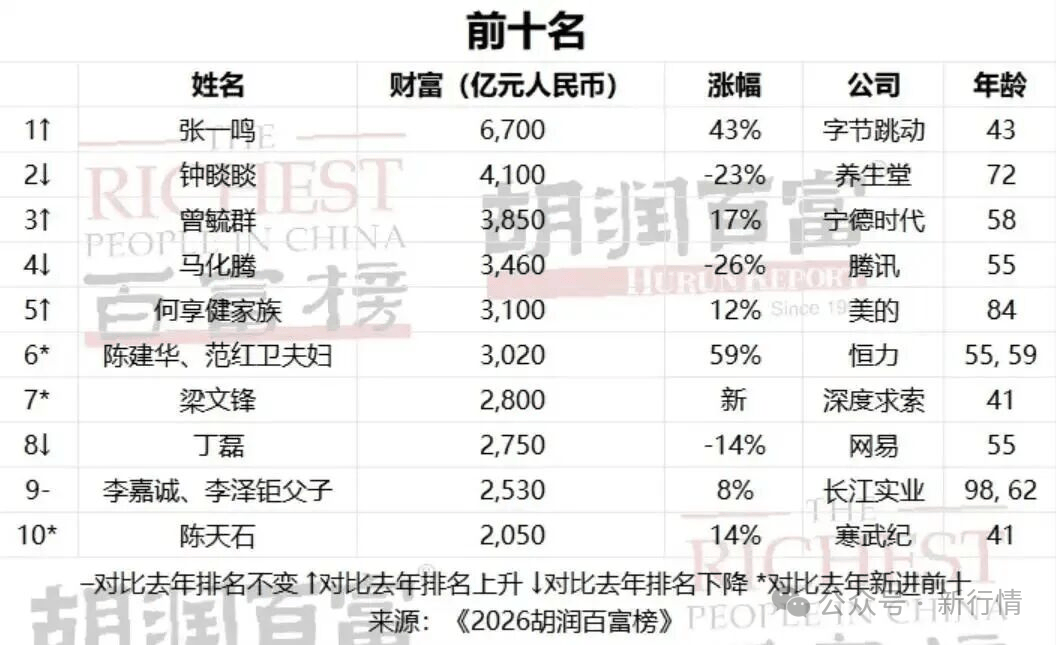
The “2026 Hurun Rich List” released on October 27 shows that Zhou Qunfei and her husband鄭俊龍Their total wealth reached 128 billion yuan, ranking 33rd on the list. Among them, Zhou Qunfei’s personal wealth is 127 billion yuan, surpassing Zhong Huijuan, China’s richest woman last year.

The news came a bit subtle.
Two days ago, she took charge of藍思科技Just released its third quarter results. In the first three quarters of this year, the company’s revenue was 47.902 billion yuan, a year-on-year decrease of 10.74%; the net profit attributable to the parent company was 1.420 billion yuan, a year-on-year decrease of 50.06%. After deducting non-recurring gains and losses, net profit dropped by more than 60%.
The stock price also failed to hold up.From September 1 to October 27, Lens Technology A shares fell by approximately 28.7%, while Hong Kong stocks fell by more than 40%.
The wealth list uses valuations as of September 1. By the time the list is officially announced, the market has already undergone considerable changes. The title of the richest woman and the declining stock price fell on Zhou Qunfei at the same time.
This is not the first time she has experienced such ups and downs.
In 2015, Lens Technology was listed on the GEM, and Zhou Qunfei became the richest woman in China for the first time. Since then, the company has experienced declining performance, falling stock prices, and a new round of growth. She has always been an inescapable figure in the Apple industry chain, but she has always been unable to escape the ups and downs of the consumer electronics industry.
Earlier this year, Zhou Qunfei also appeared at the state banquet at the Great Hall of the People as a Chinese manufacturing entrepreneur. This woman, who worked in a factory in Shenzhen in her early years, has entered an important social scene in the global technology industry.
But the identity of the entrepreneur has changed, and the problems in the factory have not become smaller. Whether the customer’s new products sell well, when the expanded production capacity will be used, and how long it will take to recover the money invested still determine the situation of Lens Technology.

A piece of glass makes a big business
Zhou Qunfei’s entrepreneurial story is often condensed into a few labels. From a poor family, he dropped out of school to work, started with 20,000 Hong Kong dollars, and later received an order from Apple.
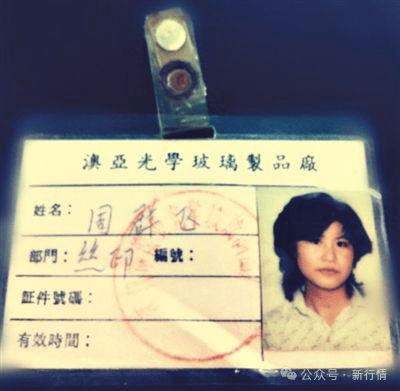
These are very popular, but it is easy for people to ignore the time she spent in the glass industry.
Zhou Qunfei was born in Xiangxiang, Hunan in 1970. His mother died young and his father’s eyesight was severely damaged due to an accident. Family conditions forced her to leave school very early and go south to Guangdong to make a living, and later entered the optical glass processing industry.
She has done the most basic work in the workshop, is familiar with silk screen printing, cutting, polishing and other processes, and has gradually come into contact with production management.Glass seems to be a simple product, but when it is actually made, problems may arise in every aspect including size, surface treatment, and printing accuracy.
These experiences later became the capital for her business.
In 1993, 23-year-old Zhou Qunfei and his family rented a three-bedroom farmer’s house in Shenzhen to undertake the watch glass processing business. There was not much money, limited space, and production and life were crowded together, which was a common sight in small workshops in the Pearl River Delta at that time.
The real change in the business came when mobile phone manufacturers began to look for more wear-resistant window materials.
At that time, mobile phones commonly used acrylic panels, which were prone to scratches. Zhou Qunfei was already familiar with the processing of watch glass, so he tried to apply this process to mobile phones. As the glass area becomes larger, product requirements also change, and issues such as thickness, light transmittance, and impact resistance need to be re-solved.
This attempt allowed her to enter a market far larger than watches.
In 2003, Lens Technology was established. As the mobile phone business developed, the company gradually received more brand orders, established cooperation with Apple from 2006 to 2007, and passed supplier certification.
Since then, the success of the iPhone has brought Lexus into a period of rapid expansion.
For customers like Apple, finding a supplier that can make qualified samples is not enough. There is a clear timetable for the launch of new products, and shipments may reach tens of millions of units. Suppliers need to stabilize the process in a short period of time, increase the yield rate, and deliver the products on time.
The experience Zhou Qunfei accumulated in the workshop has become more useful.
Lens’ revenue has grown along with the smartphone market. In 2009, the company’s revenue was 890 million yuan, and in 2015 it reached 17.2 billion yuan. Also in this year, Lens was listed on the GEM, and Zhou Qunfei became the richest woman in China for the first time.
Apple changed the scale of her fortune, but she had been working on her craft for more than a decade before Apple came along.
Customers are getting bigger and bigger, and factories are getting heavier.
Lens Technology didn’t stop at glass covers.
Metal, ceramic and other structural parts, functional modules, and complete machine assembly have gradually entered its business scope. When a customer brings a product, Lens hopes to take on more of the manufacturing steps.
This expansion is easy to understand. Now that customers’ trust has been gained, adding products and processes is more fundamental than re-establishing a supply relationship. For customers, it can also reduce some communication and coordination costs.
As we do more and more things, the connection between the company and its customers will naturally become closer. But correspondingly, more and more equipment, factories and personnel need to be invested.
Zhou Qunfei once proposed the “hotel theory”, which states that you cannot wait for guests to come before building a hotel. You must build it in advance and provide good enough services to win guests.
This fits well with the way the consumer electronics industry operates. Large customers will not wait for suppliers to slowly build factories. When orders have been confirmed before purchasing equipment and training workers, they may not be able to catch up with product launches.
Preparing in advance is Lens’s advantage in taking orders, but it is also the risk it has to bear.
After a factory is opened, equipment depreciation, personnel and management expenses will not disappear simultaneously due to reduced orders. When the market grows, large-scale production capacity can help companies seize share; when demand is insufficient, pressure will be placed on the production lines that were originally prepared.
The relationship between Lens and Apple has always been accompanied by this duality.
In 2023, the company’s sales to Apple will account for 57.83% of total revenue. Apple’s global sales provide it with huge orders and make its performance more susceptible to customer product cycles.
In recent years, Lens has continued to expand into other mobile phone brands in an attempt to diversify risks. But the longer the customer list does not mean that the operating fluctuations will become smaller. When consumers are reluctant to switch to mobile phones, multiple brands may be affected at the same time.
In the first half of this year, Lens’s smartphone and computer-related business revenue was 22.382 billion yuan, a year-on-year decrease of 17.67%, still accounting for 77.54% of total revenue.
The company explained that the increase in memory chip prices has pushed up the cost of the entire machine, affecting terminal demand. Changes in the pace of customer new product releases have also caused disruptions to the business.
Lens does not produce memory chips, but it still has to bear the consequences of rising chip prices. The cost of the entire equipment is high, and consumers delay purchasing, and the impact will eventually be passed on to structural parts, modules and assembly manufacturers.
This is also the part that is easily covered up by the title “Queen of Fruit Chains”. Lens has its own technology and experience in the manufacturing process, but product pricing, release pace and market demand are not determined by it.
Zhou Qunfei’s ability to enter the Great Hall of the People and appear on the same occasion as the world’s top technology entrepreneurs illustrates the industrial weight of her and Lens. But this weight is not enough for the company to avoid industry cycles.
Net profit halved, Apple cannot be blamed only
Lens’s performance this year also has some details that are easily overlooked.
In the first half of the year, although revenue related to smartphone and computer business declined, gross profit margin increased by 2.99 percentage points year-on-year to 16.17%.The company adjusted its product and customer structure and added some high value-added products, which produced certain results.
Therefore, the decline in profits cannot simply be understood as Lens’s products becoming less and less profitable.
Problems also arise with exchange rates and fees.
In the first three quarters, the company’s exchange gains and losses changed from a gain of 115 million yuan in the same period last year to a loss of 654 million yuan, a change of 769 million yuan. During the same period, administrative expenses were 2.279 billion yuan, a year-on-year increase of 8.35%.
Revenue has shrunk, exchange losses have increased, and some expenses are still rising. When several factors are combined, the profit decline is significantly greater than the revenue decline.
In the first three quarters, LensNet profit attributable to parent companyThe proportion of revenue is already less than 3%. For a manufacturing company with tens of billions of yuan in revenue and continued expansion, such profit margins are not generous.
And the expansion continues.
During the same period, the company paid 7.681 billion yuan in cash for the purchase and construction of long-term assets, a year-on-year increase of approximately 18%; the ending inventory was 9.360 billion yuan, an increase of 35.02% from the beginning of the year. Short-term borrowings increased to 1.824 billion yuan, long-term borrowings increased to 8.317 billion yuan, and the net cash inflow from operating activities decreased by 19.35% year-on-year.
Lens explained that the increase in inventory is related to stocking up during the peak sales season, and the increase in borrowings is used for operating turnover and investment in new projects.
Based on these data alone, it cannot be concluded that the company is in financial crisis. But when revenue falls, inventories, borrowings and long-term investments increase at the same time, which means that the operating room is being tested.
The market is not only concerned about how much money is lost in the current quarter, but also how much money will be spent next and when the money will be earned back.
Zhou Qunfei’s personal net worth of hundreds of billions does not directly help this. The Fortune List counts the valuation of assets such as equity, but companies use real cash to purchase raw materials, pay wages, and build factories. The two cannot be mixed.
New business has not yet taken over the burden
Lens has been looking for businesses other than mobile phones for many years.
Cars were one of the earlier ones. The company has developed its layout around the needs of in-vehicle displays and smart cockpits, and has gradually entered the supply chains of many car companies. In recent years, robots, AI servers, advanced packaging and other directions have also been included in the business landscape.
These businesses have a certain connection with Lens’ original capabilities. Cars need displays and interactive interfaces, robots need precision parts and assembly, and servers need structural parts, cabinets and cooling systems. There is room for manufacturing companies to enter.
However, being connected to the business and making money from the business are still two different things.
In the first half of this year, Lens smart car and cockpit business revenue was 3.372 billion yuan, a year-on-year increase of 6.56%; smart head display and smart wearable business revenue was 1.777 billion yuan, a year-on-year increase of 7.95%.
They have maintained growth, but the scale and growth rate are not enough to make up for the gap left by the decline in mobile phone and computer businesses.
The revenue of other smart terminal segments, including embodied intelligence and other businesses, increased by 46.92% year-on-year, which seems faster. However, the revenue in the first half of the year was 534 million yuan, accounting for only 1.85% of the total revenue. It will also take longer to significantly change the company’s revenue mix.
New investments are also on the way.
On October 16, Lens announced its intention to acquire 59.78% of PMG’s equity for US$25 million. Zhejiang Yuanshi, controlled by the latter, is engaged in the AI server cabinet and structural parts business and has NVIDIA-related supplier certification. Lens is also exploring potential cooperation with Intel on TGV glass substrate advanced packaging technology.
These layouts provide new possibilities, but currently certification, cooperation and production expansion cannot be directly converted into future profits.
Especially for the AI server business, even if market demand is growing rapidly, Lens still has to go through processes such as customer introduction, mass production ramp-up, and cost control. Entering the supply chain is just the beginning of business.
Companies also need to pay attention to whether the new business will repeat the original way of doing business. If it is still necessary to invest a large amount of production capacity in advance around a few large customers, then the pressure between investment and return may not be alleviated if the industry changes.
Compared with the statement of “de-Appleization”, Lens’s more practical task is to make new investments bring enough profits and cash, not just a longer customer list.
Zhou Qunfei is 56 years old. It has been 33 years since she started her business in a farmer’s house in Shenzhen. She has experienced technical difficulties, customer turnover, and has seen her net worth rise and fall dramatically with stock prices.
Now, the company has larger factories, more businesses and dual listing platforms, and the problems she has to deal with are more complex. In the early years, once a product was made and a customer was negotiated, it was possible for the workshop to gain a firm foothold; now, the progress made in several new projects is not enough to turn around the performance of a company with tens of billions of yuan in revenue.
Related Reading
- Humanoid robots are about to produce big results!2026-10-29
- Touchscreen MacBook Pro hands-on experience: It will shine as it becomes lighter and stronger. Why is it worth 110,000?2026-10-29
- So weird! The drone carrying a coffin up the mountain shocked the entire Internet. How will AI change the funeral industry?2026-10-29
- Original Muses, do you still need a pair of AI glasses?2026-10-29
- Hongguo shakes Tencent Games? True stories of 5 players2026-10-28