On October 29, local time, Spain’s independent administrative agency for the technical investigation of railway, maritime and civil aviation accidents and incidents published the first report on the high-speed rail accident in Toledo Province on its website. The report estimated that the speed of the rear-end Spanish National Railways train and the stopped Iljo train was between 160 and 200 kilometers per hour. However, the specific data has yet to be reviewed on the on-board recorder on the train.
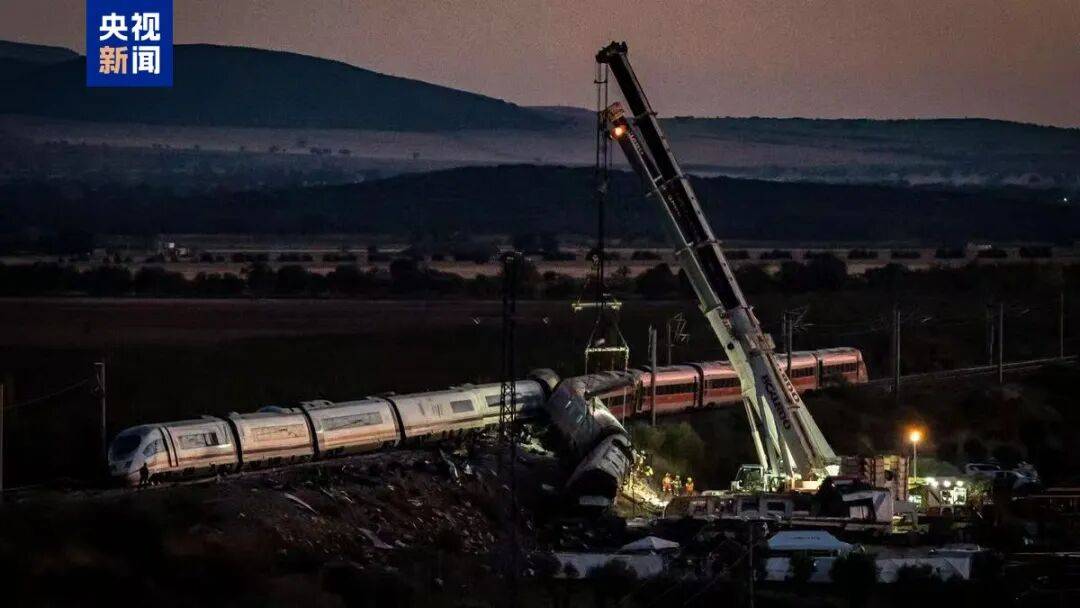
According to the report, the No. 8 carriage of the Spanish National Railway Company was embedded in the No. 1 carriage of the Iljo train, causing the two carriages to overturn and sink to the bottom of the embankment. The two carriages were the most seriously damaged in the accident. In addition, Car No. 3 of the train owned by Renfa España, which is the third car from the bottom according to the direction of travel, was punctured by track debris deformed by the collision. Except for the first two carriages (No. 7 and 8), all the other carriages of the Ilyo Company train derailed, and the three rear carriages all fell into the embankment.
The report states that investigators gathered information about the situation that was exacerbated by a failure in the railway signaling system, which began at 8:31 a.m. In this case, the train began running without the intervention of the signaling system, the report said. In order to deal with this situation, the control center and the train driver had to communicate by phone. And if the necessary mitigation barriers are not activated, this series of failures, instructions and actions will eventually lead to a collision. The report also noted that the investigation is in its early stages and that subsequent steps will include “an analysis of the causes and circumstances leading up to the accident.”
Next, the investigation agency will investigate all factors, including environmental factors and procedural factors. The investigation agency said: “These issues must be analyzed in depth, while reviewing environmental and procedural factors that may mitigate or exacerbate potential failures, and analyzing the signaling system failures that ultimately led to the accident.” The investigation agency also emphasized that it is too early to determine the exact cause of this accident.
On the 28th local time, two trains collided on the high-speed railway between the Spanish capital Madrid and the southern Andalucia autonomous region. The incident occurred near Toledo, south of Madrid. According to the latest statistics released after the regular meeting of the Spanish Comprehensive Emergency Coordination Center, 69 people have been killed in the accident. Currently, 50 injured people are still receiving inpatient treatment in major hospitals.
▌來
Related Reading
- Canada releases first national security strategy in more than 20 years2026-10-30
- figure2026-10-30
- A high-speed train collision in Spain killed 68 people. Putin called Musk a genius. “Zhang Chaoyang’s English Lesson” express global hot topics2026-10-30
- Archives show Kherson region expected to carry out humanitarian operations once a month2026-10-29
- The Fed remains on hold as scheduled, and Warsh announces a reduction in the number of interest rate decisions starting next year2026-10-29