On October 28, Eastern Time, the U.S. Federal Reserve concluded its two-day monetary policy meeting and announced that the target range for the federal funds rate would remain unchanged at 3.75% to 4%. This decision is in line with the market’s previous broad expectations.
The Federal Open Market Committee made this decision by a vote of 10:2. Among them, Federal Reserve Governor Lisa Cook and Cleveland Fed President Beth Hammack advocated continuing to raise interest rates by 25 basis points in their votes.
Cook was previously viewed as a centrist;Supports the Fed’s wait-and-see approach and refuses to significantly cut interest rates due to pressure from President Trump. To a certain extent, this marks that the differences within the Federal Reserve over “whether to continue to raise interest rates” have become public, and the power of the hawkish camp has significantly increased.
The Fed said in a statement that inflation remains elevated and that accumulating more information will help the committee determine appropriate monetary policy to ensure inflation returns to its 2% target. While uncertainty, including the geopolitical situation in the Middle East, remains high, U.S. domestic spending remains resilient, with productivity growth and capital investment strong. New jobs have kept pace with labor supply, and the unemployment rate has changed very little.
Due to the recent increase in inflationary pressure, the Federal Reserve announced a 25 basis point interest rate hike on September 16, which was the first time the Federal Reserve raised interest rates since the end of July 2023.
However, the effect of the policy has not yet been fully transmitted to the real economy. The U.S. consumer price index rose by 3.7% year-on-year in September, higher than the 3.4% in August. on the other hand,Domestic consumer spending in the United States remains strong, productivity growth is impressive, capital investment is solid, the job market has also remained stable, and the unemployment rate has not increased significantly, providing a buffer for the suspension of interest rate increases.
Previously, the market generally believed that keeping interest rates unchanged in October may be a more appropriate result from a risk-reward perspective. Major financial institutions such as Goldman Sachs, JPMorgan Chase, Morgan Stanley, Barclays, Deutsche Bank, UBS and HSBC all expect the Federal Reserve to raise interest rates by 25 basis points in December.
According to the latest data from CME’s “Fed Watch”, the probability that the Federal Reserve will keep interest rates unchanged in December is 21.6%, and the probability of raising interest rates by 25 basis points is 78.4%. The probability that the Federal Reserve will keep interest rates unchanged until January next year is 7.2%, the probability of a cumulative interest rate hike of 25 basis points is 40.6%, and the probability of a cumulative 50 basis point interest rate hike is 52.2%.
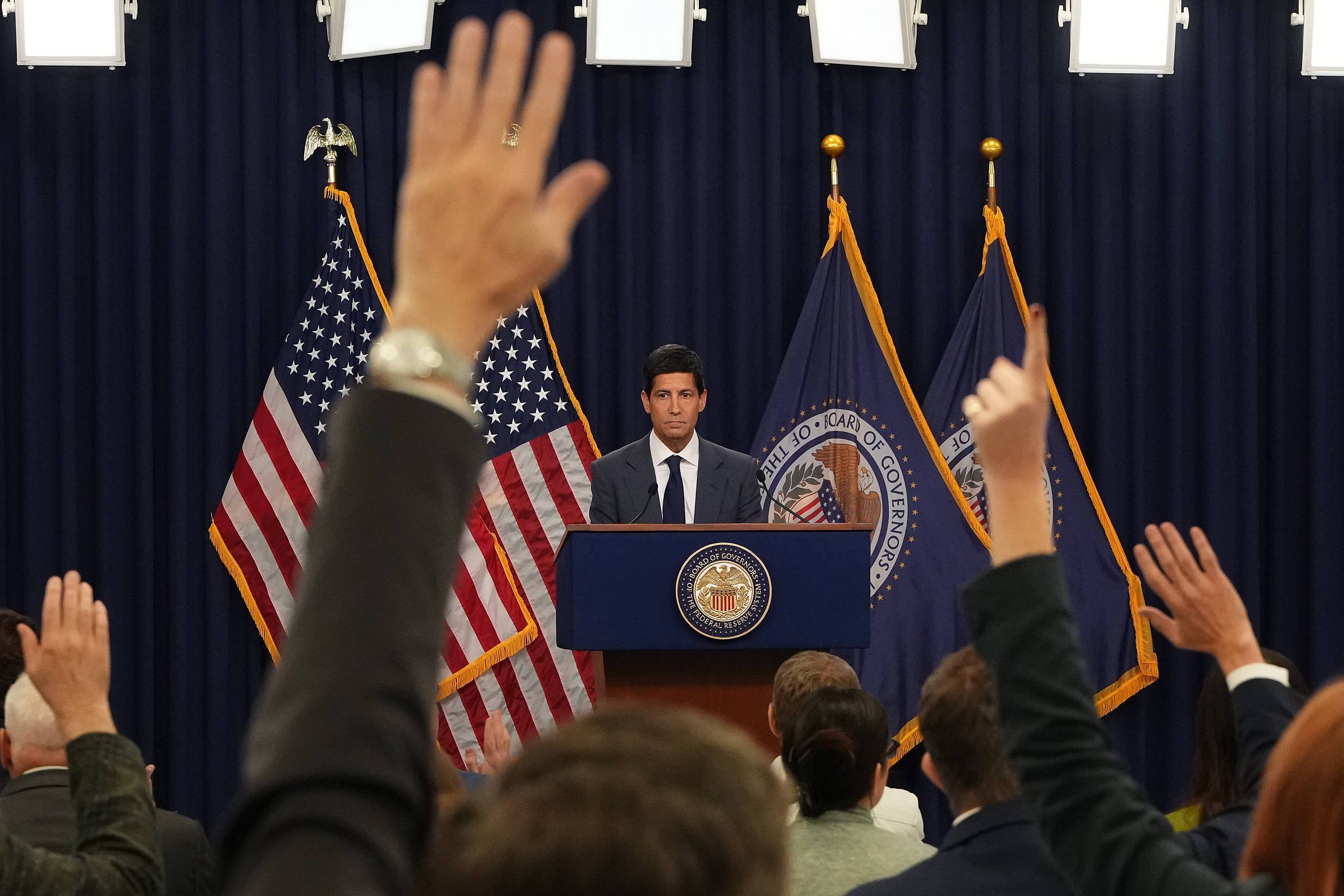
Federal Reserve Chairman Warsh said at a press conference that afternoon that since the interest rate hike in September, the financial and credit conditions of some companies and households have tightened, but the overall financial conditions have not reached a tense level, which will help stabilize prices. He also said that no one mentioned the upcoming congressional midterm elections at this monetary policy meeting.
He also announced a major system adjustment. It is expected that 6 policy-making meetings will be held in 2028, two of which will not vote on interest rates.Only for in-depth discussion of long-term structural economic issues。
Previously, the Fed’s regular schedule was to hold eight FOMC meetings throughout the year, with each meeting accompanied by an interest rate vote. Latest adjustmentsIt will reshape the Fed’s policy communication rhythm and market expectation guidance logic.
Warsh also sidestepped the question of whether current interest rates are adequate. He said: “There is a general consensus among all parties that the actions we have taken previously have begun to show certain results.” But he also added that no clear conclusion has yet been reached as to whether further interest rate increases are needed in the future.
Related Reading
- Archives show Kherson region expected to carry out humanitarian operations once a month2026-10-29
- New rules will be implemented from November 1: In classrooms, priority should be given to the left side of student seats as the main lighting surface.2026-10-29
- Spanish high-speed train collision kills 68, prompts three days of national mourning2026-10-29
- Four investigations Democrats could launch if they win control of Congress2026-10-29
- Democrats have a big early voting lead, but another trend may matter more2026-10-29