文|老魚兒
編輯|楊旭然
October 23, 2026, is destined to be a node worth remembering in the Chinese film and television industry.
On this day, “Sanxingdui: Days of Future Past,” China’s first full-length AI full-length theater film to obtain a public release license from the National Film Administration, officially landed in theaters across the country. In the 100-minute hyper-realistic image, all the characters are original digital images, and no real actors appear.
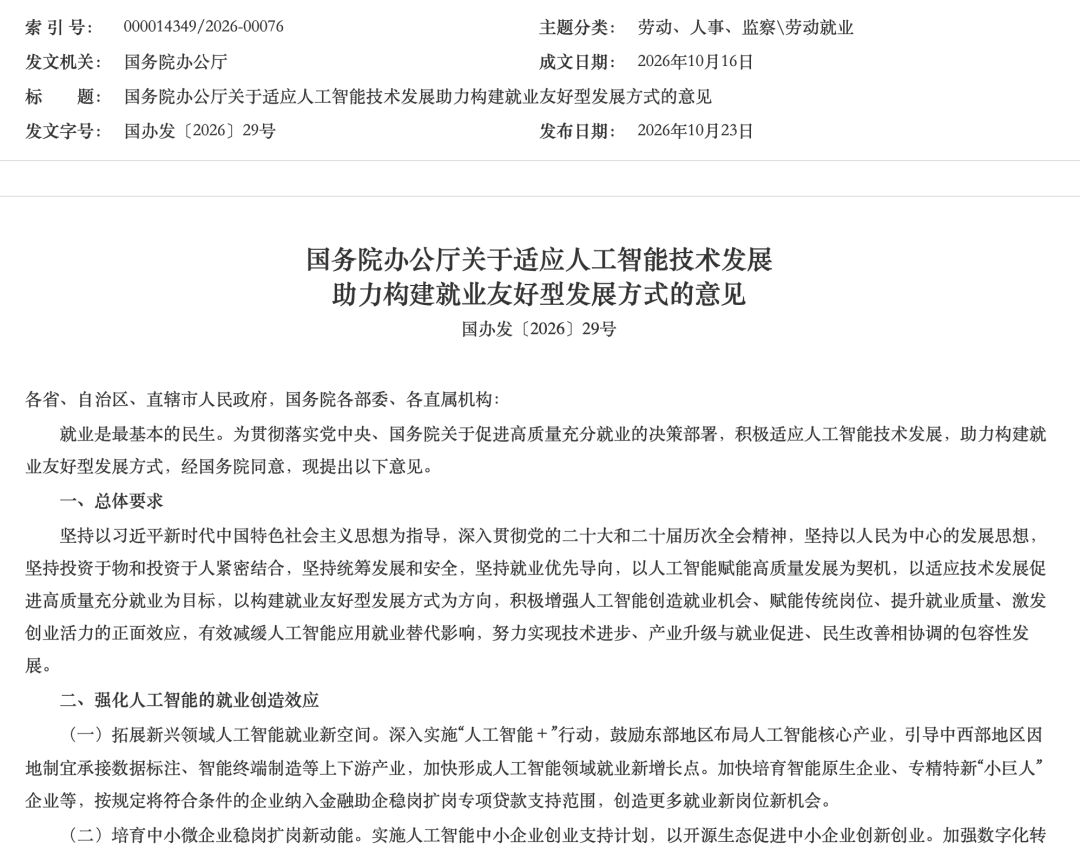
Also on this day, the “Opinions on Adapting to the Development of Artificial Intelligence Technology to Help Build an Employment-Friendly Development Model” issued by the General Office of the State Council was released, which clearly stated that it is necessary to “effectively slow down the employment substitution impact of artificial intelligence applications” and “carefully grasp the scope, intensity, and pace of artificial intelligence applications in labor-intensive industries, and minimize the impact on employees.”
On the one hand, AI has officially obtained the “ID card” in the theater market, and the virtual characters created by generative AI have rushed from the small screen of short videos and short dramas into the core position of traditional film and television; on the other hand, top-level design has begun to sound the alarm for AI to replace employment.
Caught between the two, the actor industry, which has millions of practitioners, is undergoing a brutal reshuffle, and AI is drawing a clear line of killing for this industry.
Above this line is complex performance art that relies on life experience, emotional levels and improvisational expression; below this line is standardized performance labor that can be dismantled, described and repeated.
The vast majority of grassroots performing arts practitioners stand below this line and bear the most direct impact of the technological wave.
This article is an in-depth and valuable article from the content team of “WAVE”. You are welcome to pay attention to it on multiple platforms.

寒意
Even the stars at the top of the pyramid feel the chill in the film and television industry.
In July 2026, Golden Bell Award winner Zhao Youting admitted in an interview with People magazine that he only received 10 script invitations in the first half of the year. At the peak of his career, he received far more scripts in a month.
The same anxiety also happened to Jia Nailiang. In June 2026, he faced netizens’ question “why he keeps bringing goods but not filming” in the live broadcast room, and bluntly said “nothing to film”. This professional actor who has won the Huading Award described himself in an embarrassing situation: “I am not qualified to play an elder, and I am not qualified to play an idol.” The opportunities for directors to come to him are getting less and less.
There is also a famous scene of celebrities collectively “job hunting”, which took place at the Weibo Movie Night in June 2026. Celebrities such as Dong Zijian, Liu Haoran, Cheng Xiao, etc. are not more concerned about winning awards and walking on the red carpet. Instead, they frequently express their goodwill to the directors and producers on the scene and “look forward to more work.”
If top actors still have the right to be exposed in the spotlight and can fight for opportunities for themselves, then the extras who are in the middle and lower levels of the industry do not even have a chance to speak out.
The most tragic changes occurred in Hengdian. In the first quarter of this year, the number of productions of short plays in Hengdian dropped by three-quarters year-on-year. The vacancy rate of studios, which were once hard to find, is close to 80%.
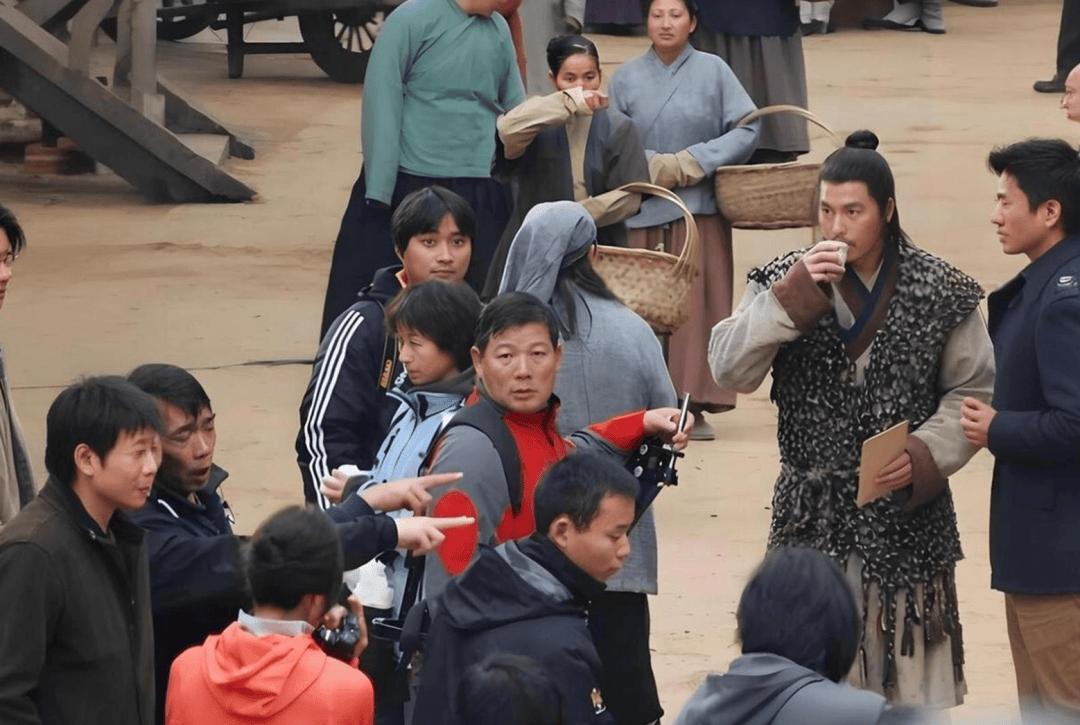
In the heyday of 2025, extras would line up in front of the Actors Guild before dawn, and there were endless announcements; by 2026, the entrance to the guild was often empty. Official data shows that the total number of “Hengdiao” registered in Hengdian exceeds 150,000, but only 700 to 800 effective announcements for ordinary group performances are released every day.
China News Weekly reported in August that more than 60% of grassroots actors had almost zero income after the Spring Festival. Some people switched to food delivery, some returned to their hometowns, and some set up stalls on the streets of Hengdian to sell snacks.
What deserves more attention is that the situation in the short drama industry, which was still popular two years ago, has also taken a turn for the worse.
Previously, the daily salary of top short drama actors could reach 50,000 to 100,000 yuan, and the daily salary of middle- and middle-waist actors could also be stable at 1,500 to 2,000 yuan. But in 2026, the daily salary of top actors has dropped directly to around 10,000 yuan; the daily salary of middle- and waist-level actors has been cut to 500 to 800 yuan. The industry is shrinking far faster than imagined. A leading short drama company signed more than 200 actors in 2025, but by 2026, more than 100 actors had been terminated, and most of the remaining actors were semi-unemployed.
While real actors continue to leave the stage, AI actors are striding onto the center of the stage.
In March 2026, Yaoke Media, which has produced leading live-action dramas such as “An Jia” and “Nine Purple Purple”, suddenly officially announced the signing of two AI digital artists Qin Lingyue and Lin Xiyan, and simultaneously launched the AI drama “Qinling Bronze Strange Stories”. These two digital artists not only have their own film and television works, but also opened social accounts such as Douyin and Xiaohongshu to update their daily routine and receive business cooperation like real artists.
Later, many companies such as Yuxiao Media followed up and signed AI actors.Digital artists began to enter the film and television production system in batches.
The number of AI short dramas in China has shown explosive growth. Data released by the China Network Audiovisual Association shows that in the first quarter of 2026, about 128,000 micro-short dramas were launched across the industry, of which 122,000 AI micro-short dramas were launched, accounting for more than 95%.
碾壓
AI can almost take over the short drama industry in just one year. The biggest factor is undoubtedly the cost.
Previously, the production model of traditional live-action short dramas has long been mature: the cost of a single production is generally 500,000 to 1 million yuan, and the crew is usually equipped with 40 to 50 people. The entire cycle from casting, setting up, filming to post-production takes about two to three months.
The maturity of technology directly breaks down the cost of short dramas. The lowest-end assembly line AI short dramas in the industry cost 3,000 to 5,000 yuan and require a team of 3 people to produce 80 episodes in 5 days. The cost of high-quality AI short dramas is mostly between 100,000 and 200,000 yuan, with a production cycle of 7 to 14 days and a team of only 3 to 8 people.
The producer of “Zhan Xiantai Live AI Version”, which became popular at the beginning of this year, gave clear figures by CEO Xiong Binghui of Kemeng Intelligence: a 12-person team, a 30-day production cycle, and a computing power cost of 100,000 yuan. The overall production cost is only a quarter of that of a live-action short drama of the same size. If hidden costs such as actor schedule coordination, venue rental, reshoots and reshoots are included, the cost advantage of AI is even greater.
Behind the plummeting cost is that the technology has crossed a key usability threshold.
From the end of 2025 to the beginning of 2026, mainstream video generation models will collectively make breakthroughs in character consistency, lip synchronization, and shot scheduling. Especially in fantasy, apocalypse, era and other strong fantasy themes, the output can be stabilized, and the picture quality has reached the level of “short drama usable”.
When technology is no longer an obstacle, capital and platforms will naturally vote with their feet and turn to more efficient and lower-cost production methods.
Behind the fact that it can be easily crushed by AI, the “fragile background” of the live-action short drama itself is also a real problem. Since the rise of short plays, they have been criticized for clichéd plots, facial makeup in performances, and functional characters.
It can even be said that the role functions of the characters in most short dramas are almost fixed: the villain is responsible for arrogantly slapping someone in the face, the subordinates are responsible for nodding in agreement, the elders are responsible for urging marriage and pressure, and passers-by are responsible for exclaiming and booing. They don’t need complex inner dramas or richly layered emotions. They just need to stand in a designated position, say designated lines, and complete a reversal or a laugh point.
What these short plays actually output is to alienate performance into a mechanical and repetitive performance labor. In the logic of AI, such labor can be clearly broken down into three modules: movements, expressions, and lines, which can be described in a standardized manner and repeated infinitely. “Can be standardized and described” is exactly what generative AI is best at.
When the entire value of a character is to say three lines and make an angry expression, then there is almost no difference between using AI to generate the character and using real people to play it, but it can save more than 90% of the cost for the producer.
In this case, replacement is almost inevitable.
空間
Therefore, if we want to resist the invasion of AI, practitioners must still start with actors’ self-cultivation. Complex performances above the killing line are still the exclusive domain of humans.
Today’s AI can accurately complete basic emotions such as frowning, crying, laughing, and anger, and can perform standard actions such as walking, turning, and fighting according to instructions.
But it is difficult to reproduce the layers of complex emotions, let alone capture the various subtleties in impromptu reactions. Just like it cannot accurately recognize the inner turmoil behind Shu Rou’s calm expression after learning that her husband has remarried, it cannot reproduce Xu Fu’s emotional outburst after witnessing the death of his friend. These are the real barriers to being an actor as a profession.
This logic holds true in any industry. The killing line drawn by AI always targets standardized and repetitive labor, not the profession itself.
For example, the translation industry. Before the popularization of generative AI, text translation of ordinary business letters, product manuals, and daily information was the main source of income for a large number of junior translators. Nowadays, the accuracy of AI translation of standardized texts has exceeded 95%, the cost per thousand words is less than one-tenth of manual labor, and the delivery efficiency is dozens of times higher.
The “2026 China Translation Industry Development Report” released by the Translators Association of China shows that AI has a significant substitution effect on junior translators. But at the same time, the report also pointed out that more than 40% of companies in need of mid- to high-level translation talents still account for more than 40%.“High-level talents are even more scarce because of their irreplaceability.”
Another example is the customer service industry. Gartner research data shows that by 2026, conversational AI can help call centers reduce labor costs by approximately US$80 billion. For standardized entry-level customer service positions such as order inquiries, password resets, and business consultations, the replacement rate has reached 85% to 90%.
But at the same time, human customer service personnel who handle high-end complaints, complex disputes, and customized needs have not only not decreased, but have become more important—they need to solve problems that AI cannot solve and handle more complex user emotions.
While technology is eliminating low-end labor, it is also raising the threshold for higher-end occupations. In a sense, while AI is grabbing jobs, it is also screening people.
Related Reading
- Hongguo shakes Tencent Games? True stories of 5 players2026-10-28
- Reduced from 600 people to 48 people? Lao Ganma uses AI to pick chili peppers that are so hot that they hire workers2026-10-28
- The middle class went crazy for the 2,000-piece “fabric belt”2026-10-28
- Instead of bean bags, it’s better to make an elderly machine first.2026-10-28
- Original Wang Xingxing admitted his mistakes twice, Yushu soared by 110 billion2026-10-28