邱 林
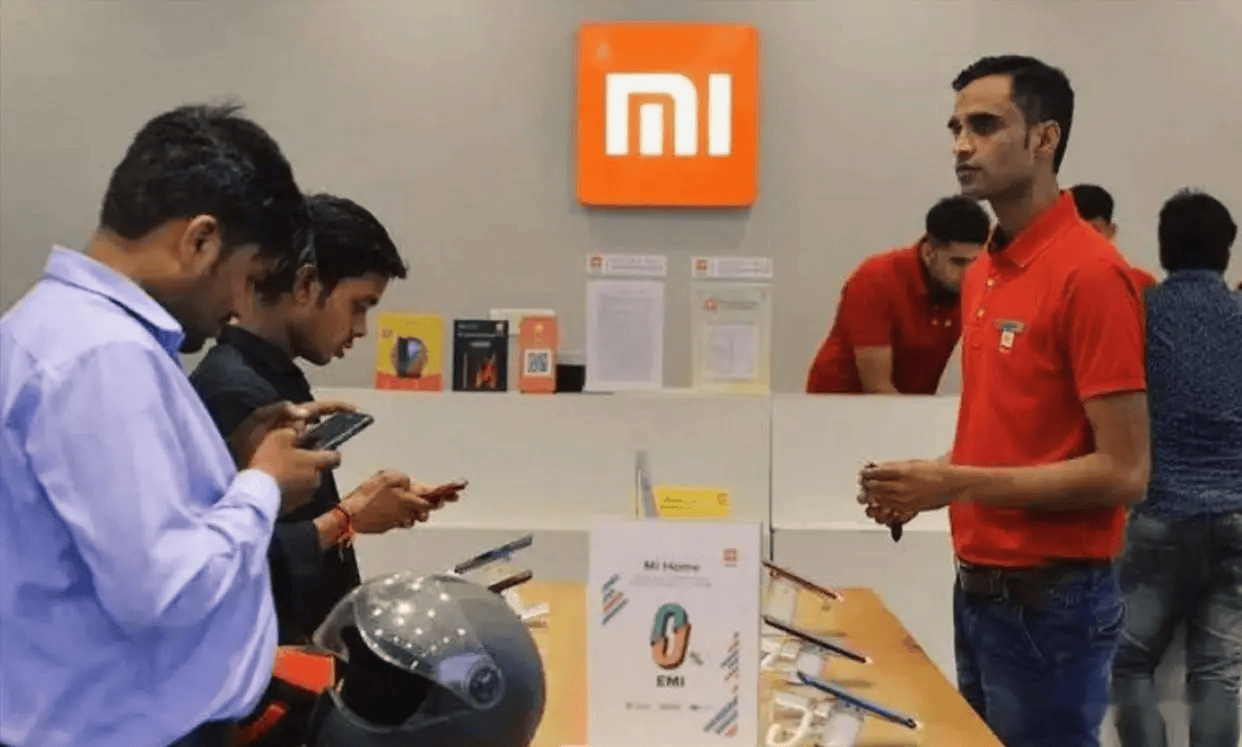
Amid the wave of global trade, Xiaomi has chosen to stick to the Indian market. However, life was not easy for them as India continued to cause trouble for them. In recent years, Xiaomi’s story in India has gone beyond the scope of a single company. It is like a mirror, reflecting the background of India’s business environment: the slogans are loud when attracting investment, the rules change repeatedly after the implementation, the supervision during operation has no boundaries, and it is difficult to take away the funds when leaving the market.
According to news from Observer.com on October 7, Xiaomi has encountered new troubles in India recently. According to a Reuters report from New Delhi, India’s Serious Fraud Investigation Office (SFIO) recommended a more comprehensive investigation into Xiaomi’s business in India, ranging from taxation to foreign investment approval, beneficial ownership, capital flows, and the relationship between Xiaomi and local e-commerce platforms and dealers.
It is reported that India has listed about 21 areas of investigation on Xiaomi, with the core focus on three major areas: First, funding and equity. Verify capital flows, beneficial ownership, changes in control rights, and compliance with foreign investment approval rules that will be tightened after 2020; second, financial authenticity. Test financial statements and audit reports for material misstatements, and current and former directors and financial directors may be summoned; the third is the e-commerce cooperation model. Investigate whether Xiaomi’s cooperation with Amazon and other platforms is suspected of being an exclusive arrangement and violating India’s foreign investment policy.
In fact, this is not the first time such a thing has happened. In 2022, Indian law enforcement authorities froze approximately 55.5 billion rupees (approximately 4.8 billion yuan) of assets of Xiaomi India on suspicion of illegal remittances abroad. Although four years have passed since the incident, the money has not yet been unfrozen. Someone did some math and found that this 4.8 billion yuan is equivalent to more than 56% of Xiaomi’s global net profit in 2022.
If India’s investigation of Xiaomi is upgraded and confirmed, the loss may not only be the previous 4.8 billion yuan, but may also face the risk of executive accountability, business restrictions and even market ban. A deeper analysis shows that the core of this matter is not just about money, but also about the fact that through foreign investment review, tax verification and other means, India requires Chinese-funded companies to replace key positions with Indians, outsource manufacturing operations, and introduce Indian equity. In essence, it wants to squeeze Xiaomi out step by step.
China’s Vivo is an example. In order to defend the Indian market, Vivo was forced to accept regulatory requirements, sell a substantial amount of its controlling stake, introduce local Indian capital and local management, and gradually transfer core operating authority to the local team. Enterprises that were once controlled by domestic headquarters have gradually turned into joint ventures led by local Indians. The headquarters has always been unable to obtain substantial profits and has been completely reduced to “working for the Indian market.”
Xiaomi’s revenue and shipments in India have declined due to capital freezes and regulatory pressures, with revenue in 2025 falling by more than 40% from the high point three years ago. The market share has dropped from the first place to about fourth place, and some data show that it has fallen out of the top five. From first to fifth place, this is not a failure in a certain quarter, but a strangulation caused by legal uncertainty, frozen funds, and investigative pressure.
Looking back, since India issued the “FDI News Notice No. 3” in 2020 and significantly tightened foreign investment policies, it has had a full-chain, structural and sustained impact on Xiaomi’s business in India, directly changing its living environment in the Indian market. The subsequent supporting “Made in India” Production-Linked Incentive Scheme (PLI), local holding requirements and other rules have further raised the operating threshold for Chinese-funded enterprises, and the policy implementation for Chinese-funded enterprises is obviously different from that of European, American, Japanese and Korean enterprises.
Some analysts believe that behind this is India’s industrial strategy of “attracting foreign investment and educating locals”. In July 2026, India launched a second round of mobile phone manufacturing support plan (approximately 625 billion rupees), requiring local brands to hold more than 51% of the shares. Xiaomi has been pushed to the forefront, and the timing is intriguing. Vivo has been forced to reorganize into a joint venture company controlled by India with 51% in July 2026. Xiaomi is one of the few Chinese-funded companies that is still holding on.
Obviously, India’s foreign investment policy has brought all originally normal business arrangements, such as exclusive e-commerce cooperation and dealer systems, into the scope of compliance review. This means that the price wars, channel wars, and marketing wars fought by Chinese companies investing in India in the Indian market will not be able to bypass the regulatory barrier.
Related Reading
- The circle of AI bloggers is being crowded by “China Theater and Nortel”2026-10-08
- The US version of DeepSeek has been submitted2026-10-08
- Under the deep ice of Antarctica, waiting for a letter from the universe –2026-10-07
- The sudden emergence of Chinese-language groups has brought countless old games to light again.2026-10-07
- Original Terminator comes true! 1500℃ molten steel, robots line up for “cremation”2026-10-07