Just now,The phone in Stockholm that rings on time every year is about to be dialed again!
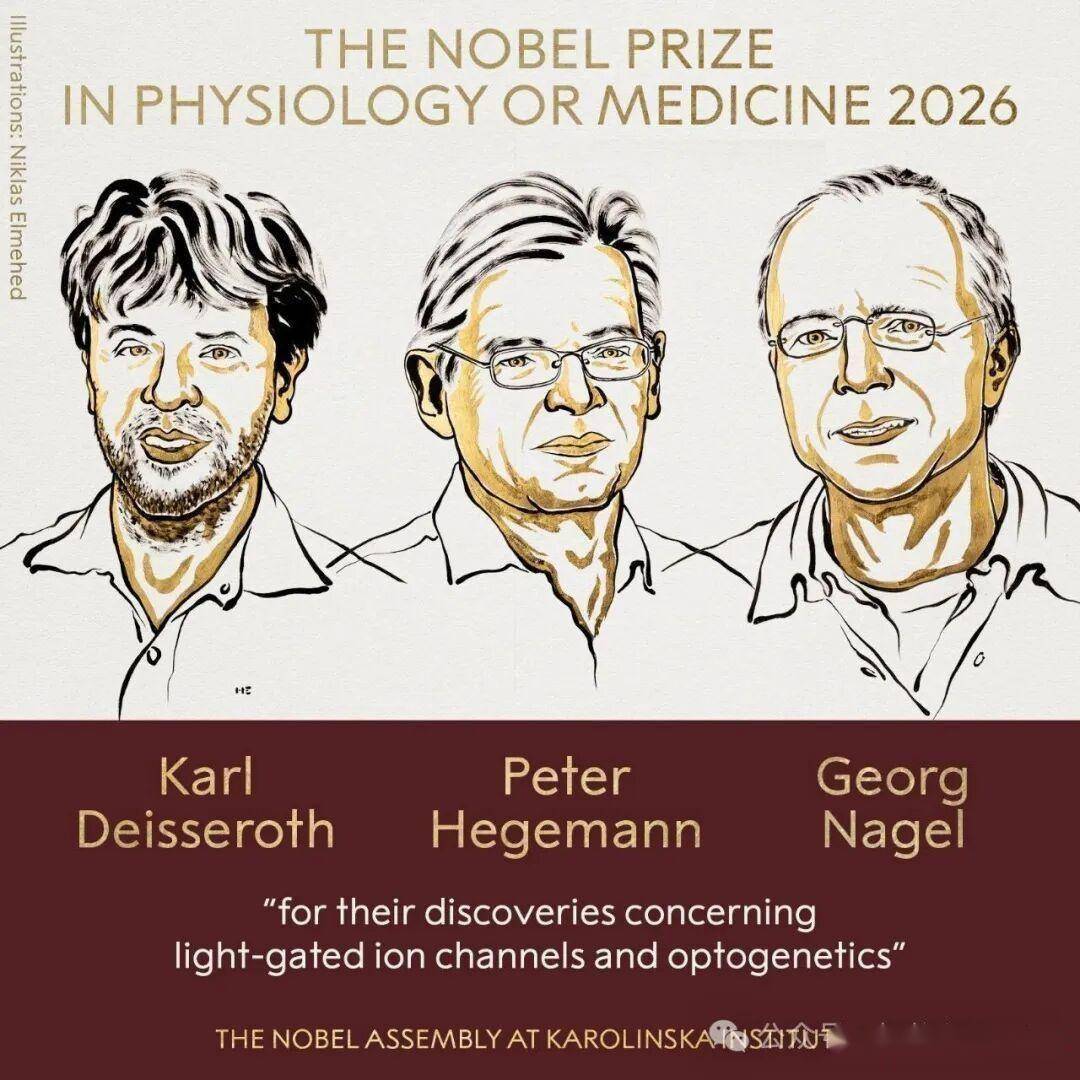
2026The Nobel Prize in Physiology or Medicine is awarded to three scholars:
Karl Deisseroth (USA), Peter Hegemann (Germany), and Georg Nagel (Germany) “for their discoveries in light-gated ion channels and optogenetics.”
Using optogenetics, three researchers uncovered neural circuits that govern specific memories, emotions, and behaviors that are associated with neurological and psychiatric disorders. In clinical medicine, researchers are using this approach to try toRestore vision to people with visual impairments, andProvides a deeper understanding of the characteristics of psychiatric and neurological disorders such as depression, anxiety, schizophrenia, Alzheimer’s disease and Parkinson’s disease.
As a result, optogenetics fundamentally changes our understanding of the brain, helping to solve one of humanity’s great mysteries:How the brain works.
Among the three,Karl Deisseroth isAmerican neurologist, professor of psychiatry and behavioral sciences at Stanford University;Peter Hegemann andGeorg Nagel is from Germany;Professor at the Department of Biophysics, Humboldt University Berlin, Germany, with whomProfessor at the University of WürzburgGeorg NagelThe light-sensitive channel protein developed created a new field of optogenetics and won the 2020 Shaw Prize.
Obviously, light + genetics + brain have become the key directions of this year’s Nobel Prize in Physiology or Medicine.
Optogenetics changes human understanding of the brain
Understanding how the brain forms memories, emotions and behavior has long been a dream of medical academics.
And the ability to activate specific types of nerve cells in the brain fundamentally changes our understanding of this amazing organ.
The adult brain has approximately 90 billion nerve cells.Each nerve cell forms thousands of connections with other nerve cells.
In many cases, pathways from one nerve cell extend to completely different areas of the brain, and nerve cells that control completely different physiological functions may be closely intertwined.
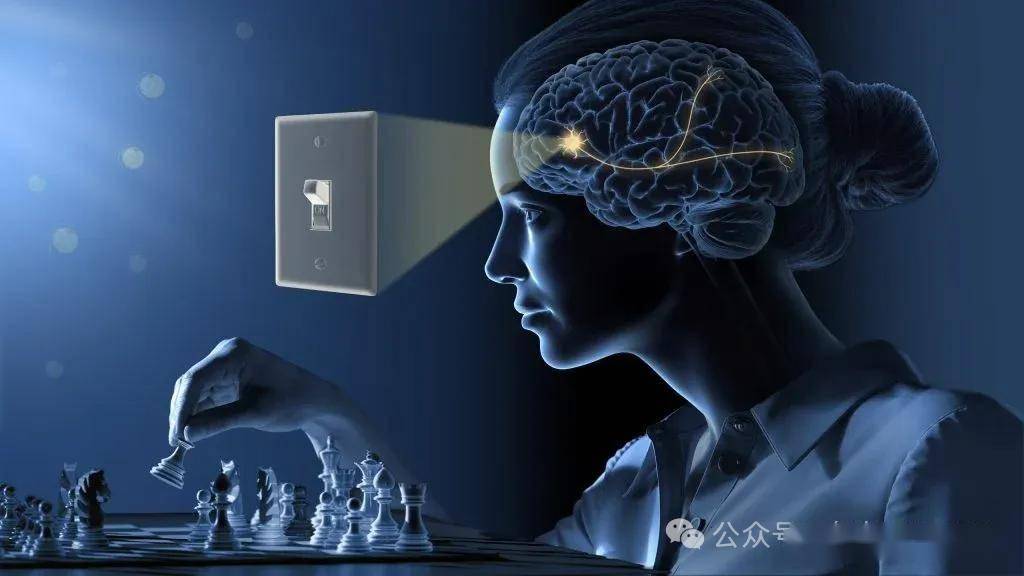
“To me, my brain is the most elusive of machines—it’s always buzzing, soaring, soaring, roaring, swooping, and mired again. Why? What’s this passion all about?”
這是British female writerVirginia Woolf (Virginia Woolf) a passage written in 1932.
Many people share her fascination with the brain.
This organ weighs only about 1.3 kilograms.How can it hold childhood memories, daydreams and creativity? How can it be the source of joy, love and jealousy? How does it control the rhythm of heartbeat, breathing and sleep cycles?
Researchers have been trying to unravel this biological mystery since ancient times.
In the 20th century, humans successfully identified which areas of the brain control various physiological functions, providing valuable insights. However, the methods at the time were relatively crude and could not prove that a specific type of nerve cell directly caused a certain feeling or behavior.
The resulting image of the brain was like a blurry photo, with many details missing.
Francis Crick (1962 Nobel Prize winner) was among those who dreamed of having more precise tools to explore the brain’s incredibly complex networks of nerve cells.
Decades after his groundbreaking discovery of the double helix structure of DNA in 1953, he began to study the mechanism of human consciousness and envisioned a method to activate individual nerve cells in the living brain, that is, to quickly transmit signals in nerve cells.
To match this speed, he thought using light might be ideal. If molecular biologists could somehow manipulate nerve cells and make them respond to light, they might be able to control neural activity.
However, Crick admitted that while his idea sounded fanciful, it might not be impossible.
But his curiosity and foreseeing the future seem to be coming true.
In the early 1990s, Peter Hagermann of the Max Planck Institute for Biochemistry in Germany asked a simple question: How does the single-celled alga Chlamydomonas respond so quickly to light?
衣藻(Chlamydomonas) is known for its phototaxis. When the researchers stirred the green algae into a petri dish, the liquid turned a pale green. If they then illuminated the side of the petri dish, the green color shifted in the direction of the light source as the tiny algae swam toward it.
The algae sense light through the eyespot, a tiny orange spot on the surface of the cell that contains retinal, a molecule that captures light.
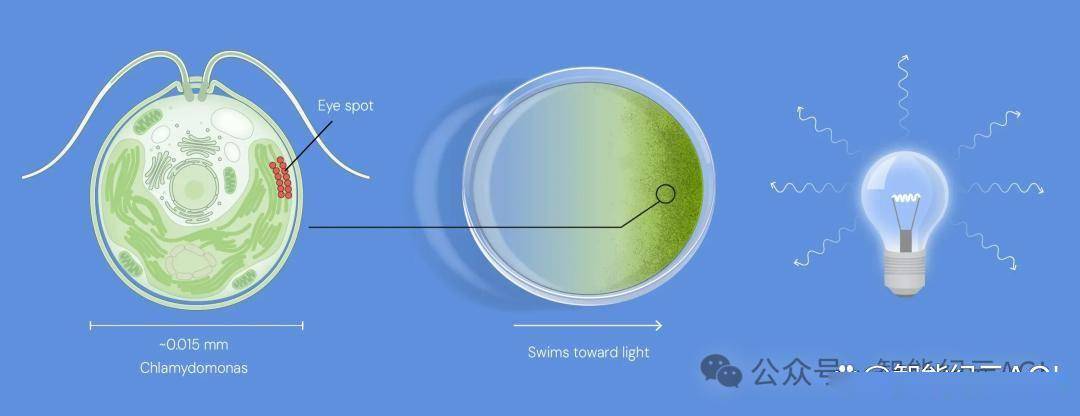
Hagermann studied the eyespots of algae. He used microelectrodes to measure ChlamydomonasThe electrical signal produced when the eye spot is illuminated. The algae react with surprising speed. Just half a millisecond after the light reaches the eye point, an electrical pulse is generated.
The reaction was surprisingly rapid compared with other biological systems known to researchers at the time.
For example, light hitting the human eye triggers a complex series of chemical reactions involving many different steps. The last protein in this chain of reactions, a protein ion channel, creates an opening on the cell surface through which charged ions can flow, producing an electrical signal. The whole process takes at least 10 milliseconds.
那麼,衣藻Why is the reaction speed to light more than twenty times faster than our human eyes?
Hagermann could only think of one explanation for this ultra-fast response: ChlamydomonasThe light reaction process in mustMuch simpler than meets the eye.
In the early 1990s, he proposed a hypothesis,That is, a single protein complex can both capture light and act as an ion channel.
However, his proposal was met with skepticism. At the time, researchers already knew of many different types of ion channels, but none of them responded independently to light.
To test his hypothesis, Hagermann tried to isolate衣藻的Photosensitive protein. However, this is easier said than done, and when the proteins in algae eyespots are removed from their natural environment, they become unstable and easily damaged, making research difficult.
Around the turn of the millennium, after years of frustration, the research team made a remarkable discovery: Japanese researchers had mapped Chlamydomonas’ DNA and published the genetic code for thousands of genes.
Among them, Hagerman’s group found two genes with significant similarities to known light-harvesting protein genes. Do these two genes code for the proteins they are looking for?
To answer this question, Hagermann contacted his colleague Georg Nagel at the Max Planck Institute for Biophysics in Frankfurt, hoping to continue this research and take the next step in exploring the brain.
Nagel fulfilled his mission and used frog egg cells to study proteins.
After he obtained the two genes of Chlamydomonas, he injected their copies into different batches of frog eggs. The eggs then began to produce large amounts of the two unknown proteins, which eventually appeared on the cell membrane on the surface of the egg cells.
Nagel was able to study their function and soon discovered that Hagerman’s hypothesis proposed a decade earlier was correct: These newly discovered proteins were ion channels that opened when exposed to light.
These proteins are named channelrhodopsin-1 and channelrhodopsin-2, respectively.
Among them, the second protein was extremely useful and paved the way for optogenetics.
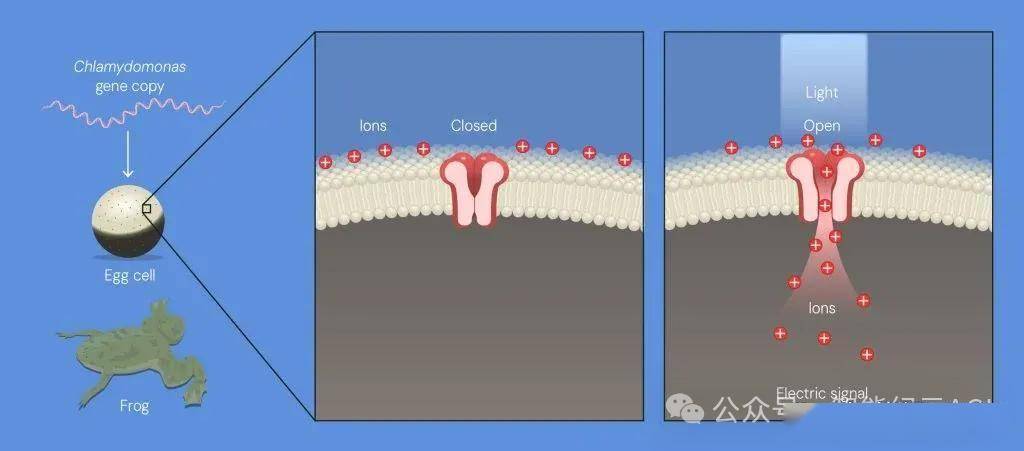
As in Hegermann’s experiments, Nagel’s characterization of channelrhodopsin-2 showed that it responds to light pulses unusually strongly and rapidly: Within 0.2 milliseconds, a channel opens on the surface of the frog egg cell, through which positively charged ions then flow, producing an electrical signal.
Hagermann and Nagel realized they had made a revolutionary discovery. They introduced the rhodopsin-2 gene into human embryonic kidney cells and hamster kidney cells for testing.
It turned out that these cells were light-sensitive: they produced electrical signals when exposed to light.
In 2003, Hagermann and Nagel published the results of their experiment. They propose that channelrhodopsin-2 could serve as a powerful tool for using light to generate electrical pulses within cells.
Since then, a young scientist at Stanford University has taken up the baton.
In the 1990s,Carl DeserosWhen he began studying medicine, he considered becoming a neurosurgeon, but part of his training was completed in a psychiatric clinic. There, he was deeply moved by the suffering of his patients and their desire for help.
At the same time, he began to wonder, why do different people’s brains work so differently? Why do people with depression find it difficult to feel happy? What causes paranoia in autism or schizophrenia?
While pursuing his medical degree, he also earned a PhD in neuroscience.
In the laboratory, he worked with thin slices of brain tissue and studied them in petri dishes, making some important discoveries. But he realized that in order to understand the diseases he encountered clinically, he needed to study the function of nerve cells in living brains. If he wanted to find better treatments for patients, he would need a deeper understanding of the brain.
隨後,Carl DeserosHe formed his own research team and began searching for a protein that could trigger electrical impulses in nerve cells.
They tested many candidate proteins and whenCarl DeserosAfter hearing that rhodopsin-2 had been discovered, he wrote to Georg Nagel to ask if the DNA encoding the protein could be obtained.
When the DNA is deliveredCarl DeserosAfter the laboratory, heThe gene encoding channelrhodopsin-2 was introduced into nerve cells cultured in a dish, making the nerve cells sensitive to light.
The researchers then used blue light to trigger rapid neural signals.
When the team illuminated these nerve cells with blue light, the cells responded immediately. Blue light induces a nerve signal that can be transmitted to other nerve cells.
2005,Carl DeserosThe research team published this landmark technological discovery.
但Carl Deseros alsoUnderstand that there is still a long way to go before he can control the activity of nerve cells in living animals.
隨後,Carl DeserosSeveral collaborations began, including with Peter Hagermann and Georg Nagel.
He also shared his findings with other researchers, who also realized the discovery’s potential. With the experimental team’s efforts, they quickly discovered more proteins that can turn nerve cells on and off, and these proteins are activated by light of different wavelengths.
In 2006, this new method was named optogenetics.
一年後,Carl DeserosSuccessfully activated nerve cells in the brains of living mice (Figure 5). His research team introduced the channelrhodopsin-2 gene into specific nerve cell types in the motor cortex, the area of the brain that controls movement.
They then inserted a thin optical fiber into the brain through a small hole in the skull and illuminated these nerve cells with the fiber. This allowed them to control the movement of the mice’s whiskers.
同年,Carl DeserosWorking with other researchers, they used optogenetics to wake sleeping mice in a controlled manner. The research team introduced channelrhodopsin-2 into a type of nerve cell they had recently discovered.
The researchers suspect that the nerve cells control arousal in mice.
When they shined light on these nerve cells, the mice woke up, confirming their hypothesis.
Another famous early research result in optogenetics was published in 2012.
Carl DeserosWorking with Susumu Tonegawa (winner of the 1987 Nobel Prize in Immunology), he successfully activated memory traces – specific neural pathway patterns produced when memories are formed.
The researchers observed brain activity in mice during a fearful state and recorded which nerve cells appeared to be involved in forming memories of the experience. Later, when they reactivated these nerve cells, the mice showed signs of fear, even though they were not in danger at the time.
This is the first time researchers have been able to pinpoint the nerve cells required for a specific memory.
Now, thanks to optogenetics, researchers can now discover precisely which nerve cells in complex nerve tracts control different brain functions.
When researchers study more complex behaviors, such as how mice care for their young, they find that individual components of a behavior can be controlled by different neural circuits. For example, one circuit controls how mice gather their pups into a nest, and another regulates how they groom their pups.
Optogenetics can also be used to map nervous systems and cellular functions beyond the brain.
Carl DeserosHeart rhythm has been shown to affect our mood; if the heart is forced to work harder, it can heighten feelings of anxiety. Other researchers have also discovered specific cells in the gut,These cells may explain why some people would rather eat sugar than sweeteners, just to name a few of the many examples.
“Optogenetics offers us an opportunity to map the brain, something we could only dream of in the past,” said the head of the Nobel Prize Committee in Physiology or MedicinePer Svenningsson說道。
Hopes that knowledge gained using optogenetics would lead to new medical treatments are starting to come true. The approach has led to a deeper understanding of the characteristics of psychiatric and neurological disorders such as depression, anxiety, schizophrenia, Alzheimer’s disease and Parkinson’s disease.
Researchers have also taken the first steps toward applying optogenetics to medical applications. In ongoing clinical trials, they are trying to help restore vision to patients who are blind due to retinitis pigmentosa, a disease that destroys the rods and cones in the eye.
When they implanted a protein similar to channelrhodopsin into the retina of a blind man, the patient regained some vision. After wearing special light-emitting glasses, the patient was able to identify and grasp objects on the table.
There are also hopes that optogenetics will improve cochlear implants.
Currently, these implants use electricity to stimulate the auditory nerve. If optogenetics could be used instead, the implant might be able to activate the auditory nerve more precisely.
Nobel Prize in Physiology or Medicine
Looking back at the Nobel Prize in Physiology or Medicine, we have to start in 1901.
That year, the first Nobel Prize in Physiology or Medicine was awarded to Emil von Behring, the German scientist who discovered the diphtheria antitoxin.
Since then, this award has been awarded for more than 100 years.
But it doesn’t happen every year.
The First World War blew out the lights in European laboratories for four years, 1915, 1916, 1917, 1918.
In 1921 and 1925, no candidate work reached the threshold of “the greatest benefit to mankind” in Nobel’s will. It would be better not to issue it than to make up for it.
In 1940, 1941, and 1942, the Second World War silenced the Nobel Prize for another three years.
Combined, from 1901 to 2024, the Physiology or Medicine Prize was awarded only 115 times.
Of these 115 times, 40 times were given to one person only, 36 times were shared by two people, and 39 times were shared by three people.
Cumulatively, a total of 229 people have won this trophy.
The first young face to appear on the list was Canadian Frederick G. Banting in 1923.
He was only 31 years old when he won the award for “the discovery of insulin” and is still the youngest winner of this award.
Going back in time, in 1929, Hans von Euler-Chelpin won the Nobel Prize in Chemistry.
He probably would not have imagined that 41 years later, his son Ulf von Euler would win the Nobel Prize in Physiology or Medicine in 1970.
In 1947, the first female winner of the Physiology or Medicine Prize was Gerty Cori, who received the award on the same stage as her husband Carl Cori.
This is the first couple to win the Nobel Prize in Physiology or Medicine.
Also in 1947, after Gerty Cori, female winners began to appear on the list one by one: Rosalyn Yalow in 1977, Barbara McClintock in 1983, Rita Levi-Montalcini in 1986, Gertrude B. Elion in 1988, Christiane Nüsslein-Volhard in 1995, Linda B. Buck in 2004, and Linda B. Buck in 2008. Françoise Barré-Sinoussi, Class of 2009 Elizabeth H. Blackburn and Carol W. Greider, Class of 2014 May-Britt Moser,Tu Youyou in 2015,and Katalin Karikó in 2023.
13 women, spanning 76 years.
Among them, Barbara McClintock was the sole recipient of the 1983 award. She took all the honors alone because the transposon she discovered in corn was the loneliest and strongest cornerstone of genetics in that era.
In 1966, another name was entered into the record books.
American scientist Peyton Rous won the award for “the discovery of tumor-inducing viruses”. At the age of 87, he is still the oldest recipient of this award.
From the age of 31 to 87, there was more than half a century of scientific life in between.
The Nobel Prize never rewards young people only, nor does it reward those who have experienced qualifications.
In 1969, Jan Tinbergen won the Nobel Prize in Economics, and his brother Nikolaas Tinbergen won the Nobel Prize in Physiology or Medicine in 1973. The two brothers each occupied a field.
In 1974, the Nobel Prize Committee added a rule to its charter: in principle, the prize will only be awarded to living people, unless the winner dies after the announcement is made.
The only exception to this rule came in 2011.
Ralph Steinman, one of the winners of the Physiology or Medicine Prize that year, died just three days before the committee announced the prize.
After the committee found out about this, they went through the charter and finally decided that the award should still be awarded to him – because at the moment the announcement was made, they did not know that he had left.
Another piece of trivia:As of 2024, no one has won the Physiology or Medicine Prize twice.
Now, time has come to nearly ten years.
In 2015, Tu Youyou won the award for discovering a new treatment for malaria, which was shared by William C. Campbell and Satoshi Omura for discovering a new treatment for roundworm parasite infection.
In 2016, Yoshinori Ohsumi won a unique award for discovering the mechanism of autophagy.
In 2017, Jeffrey C. Hall, Michael Rosbash, and Michael W. Young received the award for their discovery of the molecular mechanisms that regulate circadian rhythms.
In 2018, James P. Allison and Tasuku Honjo were awarded the prize for their discovery of cancer therapies that inhibit negative immune regulation.
In 2019, William G. Kaelin Jr, Peter J. Ratcliffe, and Gregg L. Semenza were awarded the prize for their discovery of how cells sense and adapt to the availability of oxygen.
In 2020, Harvey J. Alter, Michael Houghton, and Charles M. Rice were awarded the prize for their discovery of the hepatitis C virus.
In 2021, David Julius and Ardem Patapoutian won the prize for their discovery of receptors for temperature and touch.
In 2022, it was the aforementioned Svante Pääbo who won the sole prize for his research on the ancient human genome.
In 2023, Katalin Karikó and Drew Weissman won the award for their discovery of nucleoside modifications and the development of effective mRNA vaccines.
In 2024, Victor Ambros and Gary Ruvkun were awarded the prize for their discovery of microRNAs and their role in post-transcriptional gene regulation.
In October 2025, the annual Nobel Prize in Physiology or Medicine will be announced. American scientists Mary E. Brunkow, Fred Ramsdell and Japanese scientist Shimon Sakaguchi won the award for their “discoveries in the field of peripheral immune tolerance.”
The single bonus that year was 11 million Swedish krona, the same as in 2024, equivalent to approximately RMB 8.34526 million, and was divided equally among three people.
From 1901 to 2025, 124 years, 229 people, a growing list.
This phone call every October to a laboratory, an office, or a family having dinner in Stockholm has such a history behind it.
With the addition of last year’s three new winners, the list has grown even further.
This year, it has one more row.
Carl Deseros, born in 1971. He received his PhD from Stanford University in the United States in 1998 and his MD in 2000. Professor DH Chen, Professor of Bioengineering and Psychiatry and Behavioral Sciences at the Howard Hughes Medical Institute and Stanford University.
Peter Hagermann, born in 1954. In 1984, he received his PhD from the Max Planck Institute of Biochemistry in Martinsried, Germany. He is currently Hertie Senior Professor of Neuroscience at Humboldt University Berlin, Germany. His prize-winning discoveries all came from the Max Planck Institute for Biochemistry in Martinsider, Germany.
Related Reading
- An AI movie without actors won the Dragon Award first2026-10-06
- This National Day, the first batch of robot employees have taken up their posts2026-10-06
- 31-year-old Luo Fuli was promoted, and Lei Jun bought her2026-10-06
- Indian media: The so-called Made in India by Apple is just the final tightening of the screws!2026-10-05