01. Overcharging and battery replacement, Geely and NIO have both.
On the eve of the National Day travel peak, Geely and NIO, two giants in the field of automobile travel, announced a major cooperation in the “charging and swapping business.”
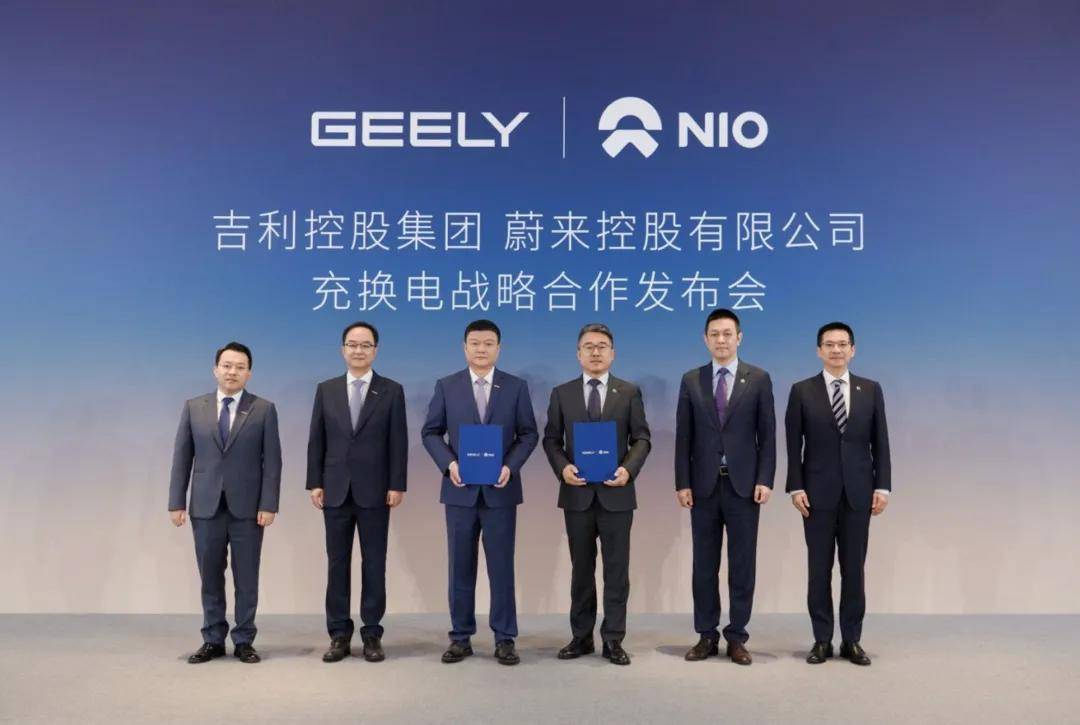
On September 28, NIO Holdings Co., Ltd. (hereinafter referred to as NIO) and Zhejiang Geely Holding Group Co., Ltd. (hereinafter referred to as Geely) reached a strategic cooperation in the field of charging and swapping. The cooperation is not limited to a single level, but is based on capital, technology, and operations.
In terms of capital, Geely used its 100% stake in Yiyi Internet (Geely’s power swap network for B-end operating vehicles), plus 640 million yuan in cash, to acquire a 30% stake in NIO Energy, the main company under NIO that operates power swap and charging businesses. In turn, NIO also invested in Geely’s smart charging platform Haohan Energy, acquiring a 10% stake. Through equity binding, a community of interests is formed.
In terms of technology, just like the diversification of mobile phone charging interfaces in the early days, car charging has been plagued by problems such as inconsistent battery packs and inconsistent technologies for many years. Geely and NIO will jointly build unified C-end battery swapping technologies and standards. Geely will also develop C-end battery swapping models, with NIO Energy providing services. This breaks down brand barriers and promotes industry unification of battery swap standards.
In terms of operations, Yiyi Internet’s vehicle battery swap business will be merged into NIO Energy, with NIO Energy responsible for subsequent operations to help improve the operational efficiency of Yiyi Internet’s vehicle business.
The partnership between Geely and NIO is no accident. As early as November 2023, Geely signed a power swap strategic cooperation agreement with NIO, making Geely the second car company to reach a power swap cooperation with NIO. But at that time it was just a framework agreement with no substantive action. It is not until today that the cooperation between the two parties has truly come to fruition with capital as the link.
There are several noteworthy points in the newly launched cooperation. According to multiple media reports, Geely’s 30% stake in NIO Energy is not locked in, but is linked to operational milestones. If the relevant operating performance does not meet expectations, the equity may be reduced from 30% to no less than 20%. At the same time, Geely also has the option to raise the stakes. It can spend another 640 million yuan in cash to increase its shareholding to 34% within two years after the delivery, or before NIO Energy’s new round of financing is completed. At that time, NIO China’s equity stake in NIO Energy will be reduced to 60%.
This is equivalent to, if the cooperation effect is not good, Geely will reduce its holdings in NIO Energy; if the cooperation effect is good, Geely will increase its holdings, and NIO Energy will get more cash and more room for display.
In addition, many NIO users are worried that this cooperation will affect subsequent battery replacement services. In this regard, NIO has made it clear that Geely’s operating battery swap business adopts an independent battery swap system and will not interfere with the battery swap experience of existing C-end users.
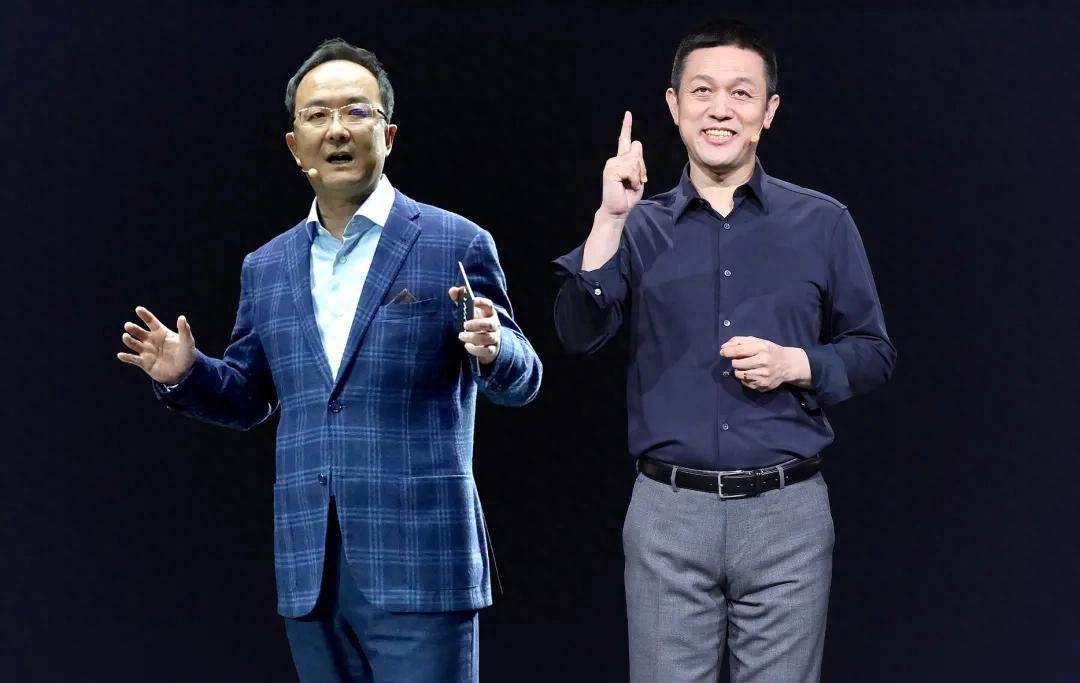
At the launch of this cooperation, NIO founder, chairman and CEO Li Bin, NIO co-founder and president Qin Lihong, Geely Holding Group CEO An Conghui, Geely Automobile Group CEO Gan Jiayue and other senior executives were all present, which is enough to show the importance both parties attach to this cooperation.
Their statements at the scene pointed to one thing in common: the cooperation is aimed at solving users’ anxiety about energy replenishment. Li Bin said: “We hope that through such cooperation, we can inspire the development paradigm of China’s automobile industry. What should be the new development paradigm in the era of high-quality growth? It should be open collaboration and win-win cooperation. Only in this way can everyone really make some money, and the time is almost up.” An Conghui also emphasized that the energy supplement network is a public infrastructure for the whole society, which should be co-constructed, shared and interconnected, so that users can become the biggest beneficiaries.
Having said that, tapping the huge commercial value of the new infrastructure of battery swapping stations is the ultimate goal of the cooperation between the two parties. For this reason, Geely and Weilai have already made plans.
In 2017, Geely Yiyi Internet was established. Its positioning is very clear, that is, to provide battery swap services for operating vehicles (online ride-hailing, taxis, operating fleets). In 2025, Geely will integrate the charging business of brands such as Galaxy, Lynk & Co, Jikrypton, and Lotus to form today’s Haohan Energy.
It is not difficult to see that Geely is betting on both ends, not only entering the power swap network, but also expanding the scale of overcharging. Five days ago, on September 23, Geely Automobile just released a new generation of AI energy replenishment technology – “Geely Smart Charge”. According to data released by Geely, the peak power of a new generation smart charger reaches 2.2 megawatts, and AI is introduced into battery temperature control, charging strategies and battery maintenance. Its AI temperature control system can predict battery temperature rise in advance and control the battery temperature during charging. At the same time, it takes into account charging speed and battery health through technologies such as battery life prediction and lithium-ion pulse repair.
While releasing smart charging technology, Geely also announced its ambitions: by the end of 2027, it plans to build more than 22,000 charging stations and 100,000 charging guns, including more than 15,000 smart charging stations and more than 50,000 smart charging guns, and take the lead in realizing “county-county connectivity” across the country. These figures are far behind the current situation. At present, Haohan Energy has deployed more than 2,500 charging stations and 12,000 charging guns, covering 232 cities across the country, including more than 1,500 ultra-fast charging stations and more than 7,000 fast charging guns.
NIO is not idle either. Before Geely invested in the company, NIO Energy had received a 1.5 billion yuan investment from Wuhan Guangchuang Fund in 2024, and in 2025 it was reported that it would receive a strategic investment of up to 2.5 billion yuan from CATL.
In March this year, Li Bin revealed when participating in CCTV’s “Dialogue·Innovation in China” program that “each NIO power swap station can now generate at least 1,000 yuan in gross profit a day.” Under such a huge commercial temptation, NIO did not hesitate to spend heavily. As of September 27, NIO had invested more than 20 billion yuan in charging and swapping technology and infrastructure, built 9,433 charging and swapping stations across the country, and provided charging and swapping services for a total of more than 220 million times.
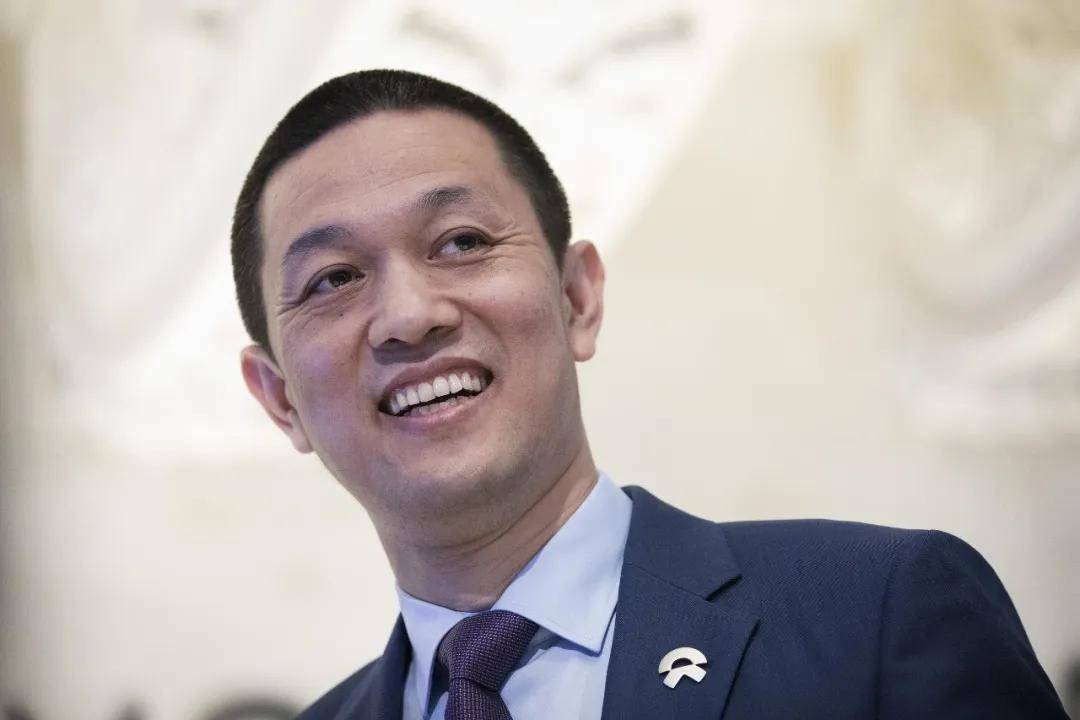
▲Li Bin, founder, chairman and CEO of Weilai
After this cooperation with Geely, Weilai invested in Geely’s Haohan Energy, changing from a money collector to a money provider. The essence is to use capital in exchange for Geely’s charging and swapping network. “Last year, our power swap station had an electricity demand of about 2.5 billion kWh. In the future, Geely’s operating vehicles will join the power swap network. In 2030, the annual power demand of NIO’s power swap network will exceed 10 billion kWh.” Li Bin added at the scene.
On the morning of September 28, after the two parties announced the news of cooperation, Geely’s stock price rose at the opening. The closing stock price rose to HK$16.17, an increase of 3.65%, and the market value was HK$174.4 billion. NIO’s stock price rose to HK$28.94 during the session, an increase of more than 3%, and its latest market value was HK$70.4 billion. Compared with Geely Auto’s HK$168.2 billion and NIO’s HK$69.5 billion on September 25, today’s combined market value increased by HK$7.1 billion.
02. Will Geely’s Ji Krypton become cheaper?
The more new energy vehicles are sold, the more prominent the anxiety about energy replenishment becomes.
According to data from the China Passenger Vehicle Market Information Joint Conference (hereinafter referred to as the Passenger Car Association), in August 2026, the new energy passenger vehicle market retailed 1.005 million units; in the first eight months, the new energy passenger vehicle market cumulatively retailed 6.674 million units, and the penetration rate of new energy vehicles has exceeded 65%.
But problems have also arisen: battery life anxiety has not been completely resolved, and long-standing and difficult problems such as charging queues and high-speed recharging have become more prominent as the base of car owners has increased.
In addition, according to data from the National Charging Facilities Monitoring Service Platform, as of the end of August 2026, the total number of electric vehicle charging infrastructure (guns) in my country was 24.223 million, a year-on-year increase of 39.6%. However, there are only 5.16 million public charging facilities (guns), accounting for only 20%. In other words, 80% of charging piles are private charging piles, and public piles that can truly solve the problem of “going out to replenish energy” are far from enough.
This structural contradiction has become the core pain point of the current energy replenishment track. In the next stage, the competition among car companies will not only focus on battery life and price, but also the energy replenishment experience will become a new watershed.
Today, on the key track of energy replenishment efficiency, the industry has extended two clear paths: one is dominated by BYD and Geely, which are vigorously deploying supercharging piles, and the other is dominated by NIO and CATL, which are advancing the battery swap business.
Ningde era’s “chocolate battery swap” approach is completely different from NIO’s – it takes the standardized battery pack route, and car companies adapt to develop models. Currently, China FAW, Changan Automobile, BAIC Group, etc. are all its cooperative customers. As of the end of June 2026, Ningde Times has built 2,000 power swap stations, and plans to exceed 3,000 by the end of the year.
The cooperation between Geely and NIO is striving to improve the efficiency of energy replenishment. Cui Dongshu, secretary-general of the Passenger Transport Association, told Caijingtianxia that cooperation between the two parties is a win-win situation. NIO Energy can introduce Geely vehicle traffic, improve the utilization rate of battery swap stations, turn battery swapping from a single brand asset into industry infrastructure, and improve NIO’s profitability.
For NIO, NIO Energy is one step closer to profitability.
The break-even line previously given by Li Bin was an average of 60 orders per day for a single station. At present, the Shanghai power swap station is basically close to the profit level, with total service orders approaching 10,000 in a single day. He once gave a prediction that if there are 5 million cars in the future, 20 billion kilowatt hours of electricity will be generated a year. “This will be a big business.”
“Relying on the power swap network, an operating vehicle can save up to 90 minutes a day. If the 90 minutes of energy replenishment time are converted into operating income, the income is expected to increase by 15% to 20%.” Qin Lihong said. He also pointed out that battery swapping stations essentially overcome the problem of vehicle residual value loss caused by different lifespans of vehicles and batteries. Over the life cycle of a vehicle, up to 40% of costs can be saved.
To this end, NIO Energy can continue to promote the expansion of battery swap stations in the future, and plans to complete the construction of a total of 10,000 battery swap stations by 2030.
For Geely, since it already has the trump card of overcharging, why should it spend money to buy shares in exchange for electricity?
Cui Dongshu pointed out that Geely’s layout of battery swapping and overcharging at the same time is a rational scenario layering, not a strategic decentralization. Overcharging is for mass household and staked users; battery swapping service is for high-end and high-frequency operating vehicles. The user scenarios of the two routes are staggered. The light asset layout is used to exchange electricity through equity participation, while the heavy asset investment is overcharged. This is a risk hedging under the uncertainty of the industry.
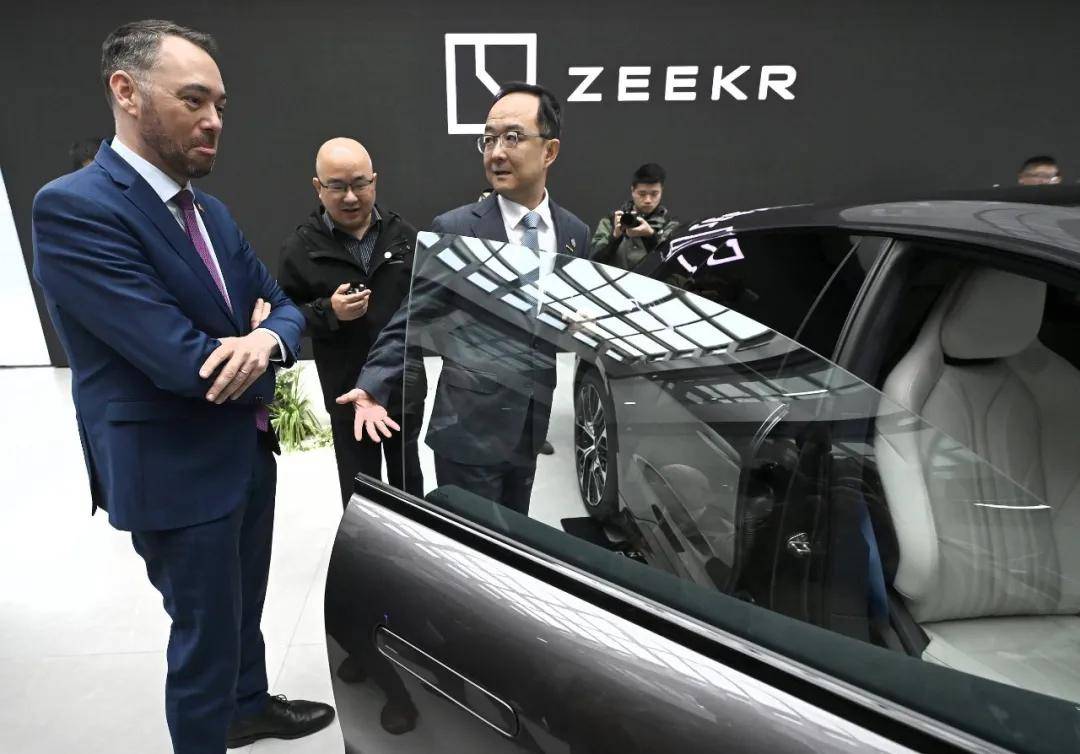
▲An Conghui, CEO of Geely Holding Group, is introducing Jikrypton Automobile
Geely has long seen through this. Geely has actually already made plans in the field of battery swapping: its subsidiary Yiyi Internet has built more than 470 battery swap stations, and Caocao Travel has a customized fleet of more than 42,000 vehicles as of the end of June 2026, of which the two main models, Caocao 60 and Maple Leaf 80V, are battery swap models.
If you want to expand the power swap system, the time and capital costs required are very high. Therefore, Geely’s investment in battery swapping is essentially the last piece of the puzzle to complete the operation scenario: overcharging for the C side, battery swapping for the B side, and walking on two legs. Gan Jiayue’s statement at the cooperation site was very straightforward: To expand the scale, heavy assets and large investments are needed, and “the only way to reduce risks and expand scale faster is to join forces.”
In addition, Geely’s high-end models may also benefit from this.
With the BaaS (battery rental service) solution, users do not need to buy batteries when buying a car. Through battery rental, users can buy a large six-seater high-end SUV for less than 300,000 yuan. Taking the ES8 as an example, the entire series is equipped with a 102kWh battery as standard, and the off-road price of the BaaS solution is 108,000 yuan cheaper. The five-seat executive luxury version has a buyout price of 382,800 yuan, and the purchase price under the BaaS plan is 274,800 yuan. The six-seat executive luxury version has a buyout price of 406,800 yuan, and the purchase price under the BaaS plan is 298,800 yuan.
Cui Dongshu’s judgment on Geely’s energy replenishment strategy points out a key logic: Geely does not need to spend heavily to build its own power swap network, but relies on a mature system to implement the BaaS solution for extremely high-end models.
He pointed out that BaaS is not an accidental product, but a conditional business model, supported by a high-density site network, battery bank asset pool, and standardized battery packs. In the high-end market, BaaS can effectively lower the threshold for car purchase, but this model cannot be fully replicated. Users in the sinking market have low acceptance of long-term monthly rentals. As a mainstream popular brand, Lynk & Co is not suitable for promoting BaaS. Only the high-end series of Ji Krypton has the conditions to try to implement it.
All in all, the cooperation between Geely and NIO essentially forms a new joint force on the energy replenishment track, but at the same time, they will definitely compete head-on with BYD and CATL in the fields of overcharging and battery swapping. For users, this kind of competition is undoubtedly a good thing, and it is the car owners who ultimately benefit.
Related Reading
- OpenAI scraps release of its latest AI model over safety concerns2026-09-29
- At 31 years old and 2 years old, Luo Fuli has reached the full level, and she will become a partner if she goes up further!2026-09-29
- Apple, whose new machine has been questioned, is bidding farewell to its “faith pricing power”2026-09-29
- Original After the central media set the tone, the “old enemies” formed a group to fight back against Luo Yonghao2026-09-29
- Nvidia unveils record $150 billion stock buyback plan2026-09-29