Power Plant | Escape from “Ning Wang”
145
At the end of 2021, the total market value of CATL was close to 1.6 trillion yuan. In the first cycle of sharp price increases for lithium battery raw materials, CATL relied on its huge production capacity, leading technology and the resulting downstream bargaining power. It was called the “Ning King” and was in the limelight for a while.
At that time, in order to seize the scarce production capacity of CATL, supply chain leaders and even CEOs of some car companies often visited the company’s headquarters, Ningde, Fujian, and had to spend heavily to lock in CATL’s production lines or build joint venture factories.
The cost of batteries even accounted for about 60% of the cost of new energy vehicles. Zeng Qinghong, chairman of GAC, asked himself at the World Power Battery Conference in 2022: “Am I not working for CATL now?” Whether the price of upstream lithium battery raw materials is in an upward cycle or downstream car companies are engaged in price wars, CATL’s net profits are almost never affected.
Starting from 2021, CATL’s annual net profits are: 15.931 billion yuan, 30.729 billion yuan, 44.121 billion yuan, 50.745 billion yuan and 72.201 billion yuan respectively. In the first half of this year, CATL’s net profit was 43.284 billion yuan, while the total net profit of 15 mainstream listed automobile companies was only 21 billion yuan, less than half of CATL.
The money that car companies have worked hard to sell cars flows to CATL, but CATL’s net profits are distributed as dividends to major shareholders. Starting from 2022, CATL will distribute annual dividends of 7.748 billion yuan, 22.06 billion yuan, 25.372 billion yuan, and 36.1 billion yuan. Another 6.18 billion yuan was allocated in the first half of this year. Zeng Yuqun, chairman of CATL, is the single actual controller, holding a total of 22.04% of the company’s shares.
To be more precise, new energy vehicle companies are working for the shareholders of Zeng Yuqun and CATL – the hard-earned money earned in an industry with an overall profit margin as low as 1.5% is “gifted” to the shareholders of CATL as dividends. It is normal behavior for companies to pay dividends in the CATL era, but starting from this year, car companies no longer hesitate to “change their lifestyle.”
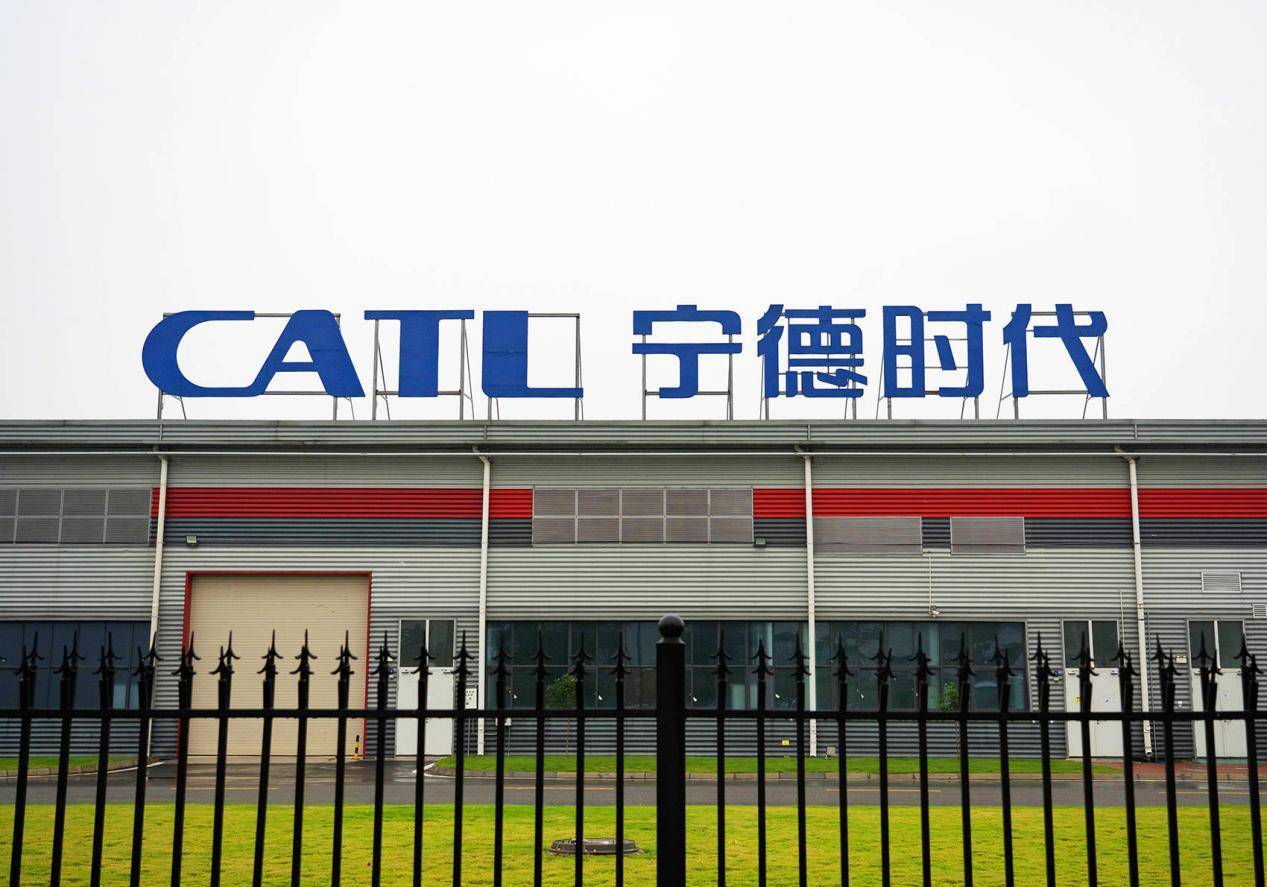

From the only one to one
理想汽車Considered a staunch ally of the Ningde era. In November 2023, Li Auto’s first pure electric model MEGA was unveiled at the Guangzhou Auto Show. It used CATL’s latest 4C Kirin battery for the first time (later upgraded to 5C). This technical cooperation originated from a comprehensive strategic cooperation agreement signed by the two parties in April of that year.
In fact, Li Auto has always used CATL as its sole battery supplier. In June last year, CATL’s headquarters held a special event to mark the roll-off ceremony of the one millionth Li Auto exclusive battery pack. In September last year, the two parties also signed a five-year comprehensive strategic cooperation agreement. But in June this year, the new理想L8, has become an ideal self-developed battery pack.
Compared with self-research on chips, Li Auto’s self-research on batteries is more radical. In October last year, Li Auto upgraded its eight-year partnership with Sunwanda Power. The two parties established a joint venture, Shandong Li Auto Battery Co., Ltd., to mainly undertake the industrialization of Li Auto’s self-developed batteries.
The purpose of this cooperation was confirmed at Li Auto’s performance conference call in March this year: Starting from this year, all Li Auto models will adopt a dual-battery route—Li Auto’s self-developed batteries and CATL batteries. The identity of CATL has changed from the only to “one”, which means that Li Auto has entered a transition period of self-developed battery switching.
In September this year, just one year after signing a new strategic cooperation agreement with CATL, Li Auto began to fully promote the installation of self-developed batteries: starting from September 7, the new generation of MEGA single-locked users switched to Li Auto’s self-developed 5C batteries; Li Auto’s self-developed 5C batteries were launched on September 16理想i9The first batch will still use CATL batteries, but they will be fully switched after production ramps up; the i6 launched in the fourth quarter of this year will no longer have a CATL version. On September 4, Li Auto became the second largest shareholder of Sunwanda Power, a subsidiary of Sunwanda, at a cost of 2.65 billion yuan.
Leapmotor is another car company that has made a radical switch. On Leapmotor Technology Day on September 16, Leapmotor announced that its battery cell production line was officially put into production, which means that Leapmotor’s battery self-research has extended from CTP (Cell to Pack) to the core of the power battery cell.
Song Yining, head of Leappo’s battery product line, mentioned that the production capacity of this production line can meet the supporting needs of approximately 500,000 to 600,000 vehicles, and due to the standardized design, these cells will not be limited to a single model of Leapmo, but will be installed on different models. If we follow Leapmotor’s sales target of one million vehicles this year, it means that half of the supporting power batteries are self-sufficient.
For Leapmotor, which has an average bicycle selling price of only about 110,000 yuan (calculated based on its 2026 financial report) and aims to sell one million units annually, cost reduction and supply chain stability are two core goals. Therefore, Leapmotor has built 18 parts factories of its own. Leapao’s first battery cell production line was built jointly with China New Aviation Industry Corporation. However, in September this year, Leapao established Lingzhen New Energy as a sole proprietorship. It plans to complete the battery cell production line in 2027 and realize vehicle loading in 2028.
The initial investment in building a battery cell factory is high and the ramp-up cost is high. “But based on the sales volume of Leapmotor, in the long run, self-research has 10% room for cost reduction compared to outsourcing.” Song Yining said. Leapau’s self-research and production of batteries has actually started in 2021. Leapau has built its first battery factory through Lingxiao Energy Technology and launched CTC battery chassis integration technology in 2022.
On the other hand, Leapmotor can firmly control the production of core components in its own hands. Song Yining mentioned that upstream battery cell factories have to meet the different needs of customers, so they need to frequently switch production lines, but this can easily cause fluctuations in supply for the downstream. Leapmotor has extended its self-research and production of battery cells. Based on the standardization of battery cells, it can achieve optimal efficiency and cost without switching production lines.
Xpeng Motors is a new car-making force that broke away from the CATL era relatively early, and has successively invested in China Innovation Airlines, Honeycomb Energy and Sunwanda. On the Xpeng G9L, which was launched on September 17, Xpeng Motors applied a new battery integrated manufacturing technology, One-Stop Battery, which can reduce battery pack components by 25% and reduce production costs by 15%.
“Starting from this year, we will all do our own batteries.” He Xiaopeng, chairman and CEO of Xpeng Motors, also revealed the progress of Xpeng Motors’ self-developed batteries in an interview after the G9L was launched. However, Xpeng Motors will not be involved in battery cells – they are still mainly supplied by three invested companies. Xpeng Motors mainly focuses on the Pack technology of battery packs, battery management systems and thermal management.
Since the beginning of this year, in terms of new power brands such as Li Auto, Xiaomi Auto, and Wenjie, CATL has changed from “the only” to “one” and lost its exclusive supplier status. NIO’s main brand NIO is one of the few new energy vehicle products that still insists on solely supplying batteries to CATL. Brands, Firefly and Ledo have already introduced suppliers such as China Airlines, BYD and Xinwangda. However, NIO is still one of the staunchest partners of CATL. Ledo L80 and L90 are the only models in the SUV range of 200,000-300,000 yuan that use CATL batteries in their entire series.
Despite facing continued diversion, CATL still holds the top spot in the domestic power battery market share. In the first half of this year, CATL’s installed vehicle share in the domestic passenger car market reached 46.7%, and its full-caliber power battery installed vehicle share was 46.04%, which is higher than last year’s 43.42%.
Profitability or technological convergence?
The self-research of mainstream fuel vehicle companies mainly focuses on engines, which is also the direct reason for the performance differences of different fuel vehicles. However, gearboxes and chassis mainly come from supply chain cooperative research and development or direct outsourcing. Just like engines for fuel vehicles, power batteries are the most expensive and core components of new energy vehicles.
Generally speaking, power batteries account for between 30% and 40% of the total vehicle cost of new energy vehicles, depending on model pricing and battery capacity.
Leapmotor is a reference sample for the impact of self-research of core components on profitability. Leapmotor’s self-developed and self-produced parts have been involved in automotive air-conditioning, seats and other fields, with a total of 18 parts factories.
In the first half of this year, Leapmotor’s revenue was 38.1 billion yuan, with a net profit of 200 million yuan. The net profit margin was less than 1%, which was basically the same as last year. However, Leapmotor’s net profit growth in the first half of this year was much higher than revenue, which means that Leapmotor’s cost reduction has been effective.
Zhu Jiangming, chairman of Leapmotor, has mentioned in many interviews that there are two main criteria for Leapmotor’s decision to self-research a certain component. One is whether the technology is mature, such as intelligent driving. Leapmotor previously relied on external procurement and limited investment in self-research. However, during the technology convergence period before the launch of L3, Leapmotor will rapidly expand the scale of its intelligent driving R&D team starting in 2024. The second is that the revenue from self-research can cover the cost. This is true for Leapmotor’s self-developed seats, air conditioners and lights.
According to Leapmotor’s calculation model, self-developed cells and batteries have 10% room for cost reduction compared with external procurement. So, under ideal circumstances, Leapmotor’s vehicle cost is expected to drop by 2.8%, and the gross profit margin of the vehicle will increase by about 2.4 percentage points, which is very attractive to Leapmotor, whose net profit margin is less than 1%.
A person who has been engaged in battery procurement at Tesla believes that the overall price increase of upstream raw materials for lithium batteries and the implementation of battery consumption tax are the main driving forces for car companies to turn to self-research of battery cells and batteries. In addition, before all-solid-state batteries can be commercialized, the technologies of ternary lithium and lithium iron phosphate batteries have also reached a convergence period.
Since July last year, the price of battery-grade lithium carbonate has continued to soar from 75,000 yuan per ton. In May this year, it reached the peak of this round of price increases, which was 200,000 yuan per ton. Although it continued to fall back to 130,000 yuan per ton, it was still nearly double the low point last year. In addition, the prices of electrolyte (the core component is lithium hexafluorophosphate), copper foil and cathode materials have also increased across the board. Driven by upstream price increases, the price of battery cells by major battery manufacturers has increased by about 17% in the past nine months.
Tianqi Lithium’s Anju factory in Suining, Sichuan
The rising costs are eventually transmitted to downstream vehicle manufacturing. Thalys turned from profit to loss in the first half of this year. Chairman Zhang Xinghai made a calculation: the increase in the price of memory chips and battery raw materials has led to an increase in the industry’s average bicycle manufacturing cost of 15,000 to 20,000 yuan, and the gross profit margin has decreased by 5.6 percentage points compared with the same period last year. NIO CFO Qu Yu also mentioned that the cost of a bicycle increased by 14,000 yuan in the second quarter of this year compared with the end of last year, and may reach a maximum of 17,000 yuan by the end of this year.
In addition, the battery consumption tax has been implemented. From September 1 this year, the relevant departments will resume levying a 2% consumption tax on lithium batteries, and it will double to 4% on September 1 next year. Battery manufacturers directly pass the tax to downstream, which means that the purchase cost of a 60-degree battery will increase by about 430 yuan from September 1 this year, and will double to 860 yuan starting from September next year.
An opportunity is the reconciliation between Xinwanda and Geely. On December 25 last year, Weirui Electric Vehicle Technology Co., Ltd., a subsidiary of Geely, filed a lawsuit with the Ningbo Intermediate Court, claiming 2.314 billion yuan from Sunwanda Power. The cause is that some power battery cells delivered by Sunwanda Power between June 2021 and December 2023 had quality problems, resulting in abnormal battery pack performance and losses.
The lawsuit eventually ended with the two parties settling two months later, with the settlement amount reduced to 608 million yuan, and each party bearing the cost of replacing the battery according to their liability. The longer-term significance of this dispute is to promote Sunwanda to comprehensively upgrade its quality system, introduce online CT inspection technology, and achieve 100% full inspection of battery cells.
This year, Xiaomi’s newly released Longjia battery is used in the Pengcheng series of extended-range models, and the cooperation partner is Sunwoda. In September, as one of the most reliable partners in CATL, Li Auto became a shareholder of Sunwanda Power. However, at the Xiaomi Technology Day and the launch of the Pengcheng series in July this year, Xiaomi did not mention a word about its partner Sunwanda, which was in sharp contrast to the previous frequent mentions of CATL. After the recall, the Jikrypton 001 involved in the dispute with Sunwanda was also replaced with a battery from the CATL.
This is enough to show that CATL still has a gap that second-tier battery manufacturers cannot cross for the time being. However, in the face of the concerns about “de-Ning King” caused by the downstream supplier diversification strategy and the in-depth self-research into the battery link 2, CATL will not turn a blind eye.
“Offense” and “Defense” in the Ningde Era
On September 17, a report written by Nielsen IQ, a consumer research and retail monitoring company, was released in due course. The core research of this report is that “power batteries have become a key decision-making factor for consumers to choose and purchase cars.” It mentioned that “for car companies, batteries not only determine the safety and experience of the vehicle, but also directly affect the conversion of sales.”
A conclusion extracted from this report – “Forty percent of Chinese respondents said they would not choose CATL” was directly posted on Weibo’s hot search. This conclusion is supported by multiple survey data: for Chinese consumers, the weight of power batteries in car purchase decisions has increased to 13.8%; 40% of Chinese consumers are concerned about battery safety, and 37% are concerned about battery life; in China In the Chinese market, CATL’s mindshare (never mentioned first without prompting) is as high as 40.9%; CATL’s BSI (premium capability based on user choice) is as high as 6.0, three times that of BYD batteries; 37.1% of Chinese consumers bluntly stated that if their favorite model did not use CATL batteries, they would give up buying this car.
At the end of the report, Nielsen IQ disclosed the time frame and sample size of the study. This was a quantitative study conducted from April 17 to June 11 this year, using an online questionnaire. The number of valid samples recovered from Chinese consumers was 3,035.
CATL took more measures to try to reverse the direction of public opinion. On September 18, the official Weibo accounts of CATL and NIO simultaneously released photos of CATL Chairman Zeng Yuqun and NIO Chairman Li Bin meeting during the German International Automobile and Smart Mobility Expo. The two parties even published the same copy, claiming that “the two parties will have in-depth exchanges on the next phase of strategy, and the two parties will further expand cooperation.”
This is a “retreat” official news, and it is also the only content released by CATL’s official Weibo this year about Zeng Yuqun and the founder of the new energy vehicle company discussing the expansion of cooperation.
On September 22, Chen Zhen, a well-known car reviewer, posted a video of his visit to the CATL factory on his Weibo. The editing record of this Weibo post shows that the publisher successively added hot topics such as “40% of Chinese respondents said they would not choose CATL if it was not CATL”, “CATL quality”, “de-CATLization argument” and other hot topics in two edits. The traces of human intervention are obvious.
On the same day, “China Industry and Information Technology News”, which belongs to the News and Publicity Center of the Ministry of Industry and Information Technology, took severe measures in an article to criticize the phenomenon of extending the layout of car companies upstream and packaging it as “de-Ningdeization”, which is not in line with the current development trend of China’s new energy vehicles, as well as the behavior of many car companies. “Battery self-research” is not true self-research, because batteries are not yet standard parts for new energy vehicles and have relatively high technical barriers; at the same time, they also criticize that low-price competition is being transmitted to the upstream of the industrial chain, which in turn leads to low-price-oriented procurement and easy neglect of safety and reliability.
Whether it is the reaction of the capital market or the data disclosed in CATL’s financial report, it highlights CATL’s urgency to prove itself.
After peaking on May 7 this year, CATL’s share price fell by 37.4% by the close of trading on September 24, and its market value was reduced by approximately 800 billion yuan. Among them, the stage of rapid retracement was from August 25 to September 24 this year, when the stock price fell by more than 20% cumulatively, with no sign of rebound.
CATL’s operating fundamentals have not changed significantly. After experiencing a complete cycle of skyrocketing, falling, and rising raw material prices, CATL has become more and more like a sophisticated money-making machine. In the first half of this year, it is not easy for CATL to maintain a nearly 42% increase in net profit when its comprehensive gross profit margin has reached a new low in the past three years and its domestic market share has not exceeded 50%.
What deserves CATL’s vigilance is that with both the domestic passenger car market and the new energy vehicle market declining this year, the inventory exceeds 130 billion yuan – the highest inventory level since 2021. Combined with the self-research of batteries by car companies and the diversion of second-tier manufacturers, it may have a negative impact on CATL’s profits.
However, CATL’s business structure has been significantly optimized in the past few years. In the first half of this year, CATL’s energy storage business revenue reached 53.26 billion yuan, becoming a real second growth curve, accounting for 20% of revenue.
Return to the homepage to see more car information
Related Reading
- The west “breaks zero”, and the competition for the word “rice” in inland provincial capitals begins2026-09-29
- Original Luo Yonghao makes enemies everywhere, Zheng Gang resorts to “tax evasion” killer weapon2026-09-29
- Li Bin pledged part of Weilai’s most valuable wealth to Geely2026-09-29
- Original: Parents chatted about physics at the dinner table and raised a 29-year-old billionaire2026-09-29
- ‘Is it really worth it to keep going on?’ Economic pain hits America’s farm belt.2026-09-28