Beijing is currently at the peak of the damage caused by the third generation larvae of the American white moth. Recently, many citizens have discovered caterpillars on trees and on the ground. White mesh curtains are still hung on many trees on the roadside, and some leaves have been chewed down to their skeletons.
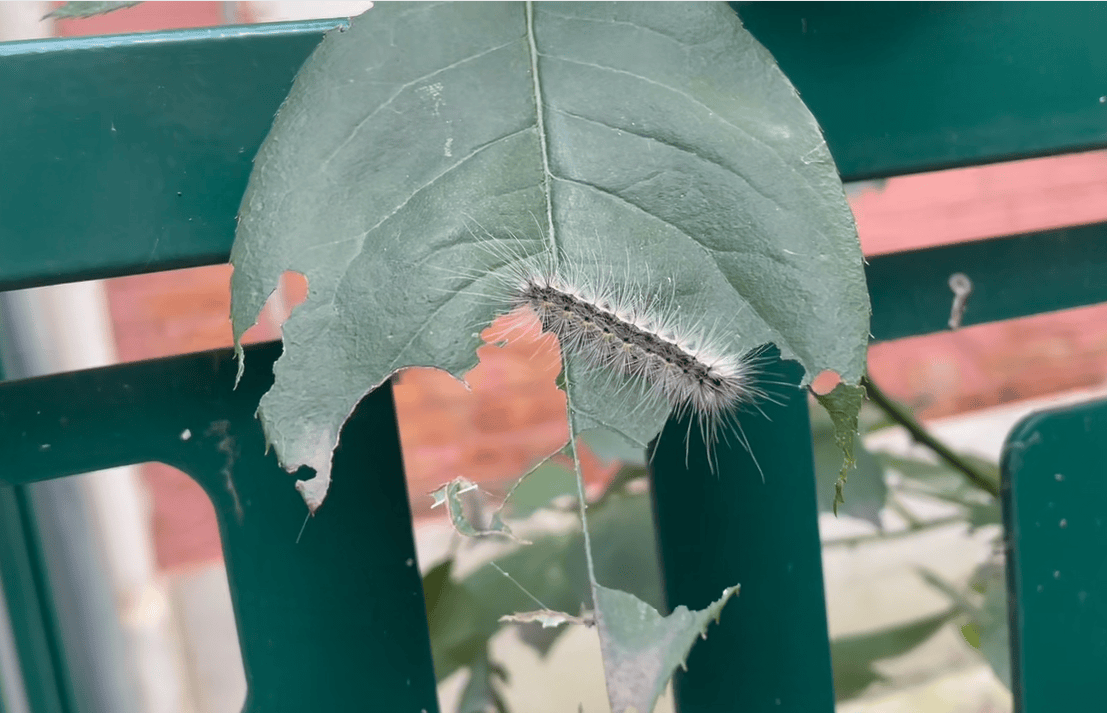
Why is the “presence” of the American white moth particularly strong this year? Does it bite humans? Can it spread disease? What should ordinary citizens do if they find bugs?
Why are there so many white moths in the United States this year?
Zhou Xingmiao, a professor at the College of Plant Science and Technology of Huazhong Agricultural University, said that the American white moth can have three generations in Beijing a year. From the overwintering pupa to a moth, eggs are laid and the larvae hatch, and then to pupae and adults, this is one generation. If the first two generations are not controlled well, the population will be particularly large in autumn.
Zhou Xingmiao said that strong fecundity is the first reason. Each female moth can lay 800 to 2,000 eggs, so when we see this type of caterpillars, they usually appear in clusters.
In addition, in terms of climate, the winters have not been too cold in recent years. The low temperatures that could have killed some overwintering pupae have become less severe. With more pupae surviving, more adults will emerge next spring, and the starting point for reproduction will be higher. Rainfall in the north has also increased in recent years, and plants are growing well, providing ample “food” for bugs. On the other hand, the American white moth is an invasive pest, and there are few types and numbers of natural enemy insects in my country that can suppress it. In addition, urban greening cannot be prevented and controlled by pesticides every year like farmland. Several factors come together to cause a large outbreak in a short period of time in autumn.
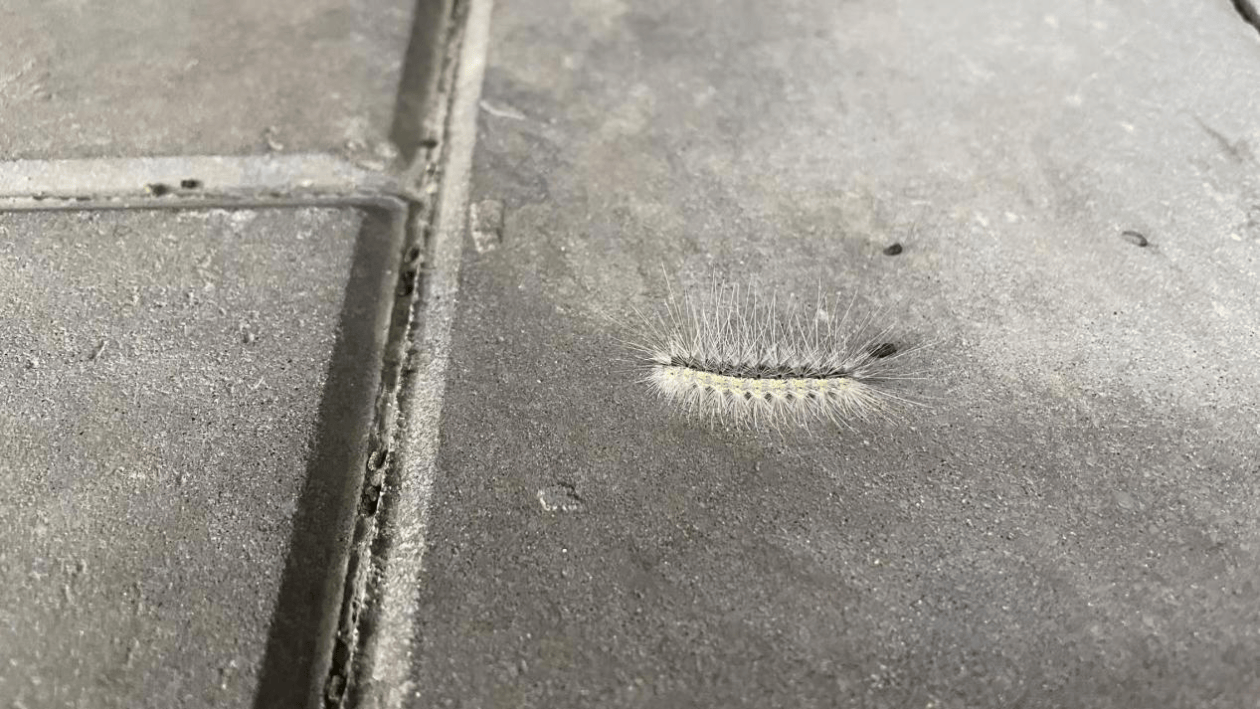
Will it bite people and spread diseases?
Zhou Xingmiao said that from the perspective of ecological impact, the American white moth will directly eat the leaves of green belts and forest trees, causing serious ecological impacts. But it won’t bite people or spread diseases, so don’t worry too much. It should be noted that there are fine hairs on the surface of its larvae. During the activity, as well as the dander shed during maturity, molting, and pupation, it may cause skin allergies in some people.
What to do if you find out?
Zhou Xingmiao suggested that if only a few trees are found, the screen can be cut off manually. The larvae are concentrated in a mesh structure, wrapping the branches and leaves inside to feed. It is easier to dispose of them if they are destroyed together. If the number is very large, chemical control is needed. Commonly used pharmaceuticals in China include benzobenzuron, emamectin, beta-cypermethrin, etc.
In addition to chemical prevention and control, physical trapping can also be used – during the peak period when moths occur in large numbers, use black light to lure moths, or use sex pheromones to trap and reduce the amount of eggs laid by adult moths. Natural enemy insects can also be released. At present, biological control methods such as rodent wasps, Bt preparations, and Beauveria bassiana are commonly used in China.
For ordinary citizens, if they find obvious net curtains or a large number of larvae in public areas of the community or on trees along the street, they can report it to the city management department of the community or street, or call the 12345 citizen hotline to report the insect situation, which will be handled by a professional management team. If you only find sporadic larvae on your balcony, in front of and behind your house, just pinch them with paper and flush them into the sewer without using additional chemicals.
How to “treat pests with insects”?
For the American white moth, there is currently an efficient biological “agent” – Zhou’s wasp. Zhao Li, director of the Insect Museum in West China and a senior bioengineer in Chengdu, said that the wasp is a parasitic wasp. The adults are very small, usually only a little over 1 mm in length, about the same size as a sesame seed, but they are the nemesis of lepidopteran pests. “Its biggest feature is that it has no sting, will not attack people, and is completely harmless to people and pets,” Zhao Li said.
So how do they accurately “hunt” the American white moth? The female wasp has a keen “biological navigation” ability and can accurately find American white moth pupae hidden in tree bark gaps and leaf litter. After finding the target, it uses the sharp ovipositor on its abdomen to pierce the pupa shell and lay 200 to 300 eggs in the pupa. After the eggs hatch, the larvae feed on the internal tissues of the American white moth pupa, preventing the pupa from emerging into an adult moth and thus being completely eliminated. A new generation of wasps will fly out of the empty pupal shell and continue to look for new American white moth pupae as hosts, forming a sustainable cycle.
This year, nearly 700 million Zhou’s wasps have been released in Beijing, and about 400 million more will be released from September 28 to control the white moth. If you see tussah chrysalises or paper bags containing Zhou’s wasps on trees, please do not pick them.
Related Reading
- How to prevent the risks of “jailbreaking” of intelligent bodies?2026-09-29
- 4929.17 meters, “Dream” reorganizes my country’s deep-sea drilling record2026-09-29
- Big Bang returns to perform in London, an avalanche in Nepal causes many people to lose contact, the starship hits orbit tonight for the first time… Zhang Chaoyang shares global hot topics bilingually2026-09-29
- Double warning issued! There will be thunderstorms and strong winds above level 10 in these places, which will mainly affect the period2026-09-29