U.S. President Trump said on November 9 that the war in Iran was “de facto over.” American public opinion believes that this statement sends a clear signal that the United States has no intention to restart a large-scale attack on Iraq at the current stage. Has Trump’s attitude towards Iran really changed? How far have the negotiations between the United States and Iran reached? Can the deadlock of “no war, no peace” be broken?
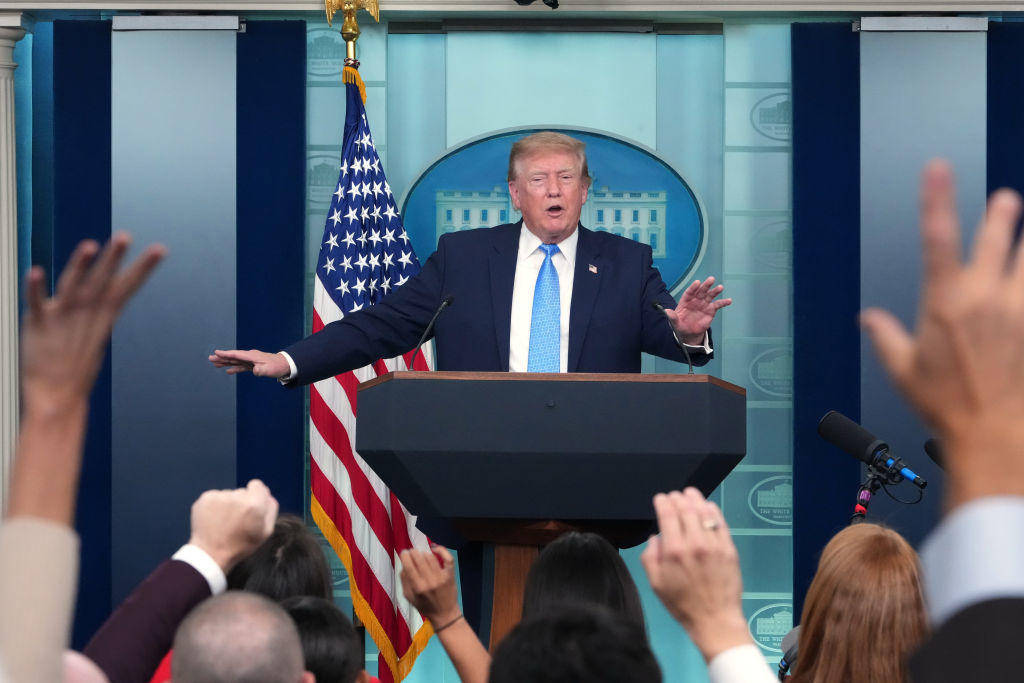
On November 9, US President Trump delivered a speech at the White House in Washington. Xinhua News Agency/AP
Trump’s attitude has changed
After the Republican Party’s disastrous defeat in the midterm elections, Trump’s stance on the war in Iran has changed significantly. On November 5, he said that the United States would decide whether to take further strikes against Iran to ensure the complete end of Iran’s nuclear program; on the 8th, he changed the topic and said that as long as the US-Iran negotiations make progress, it is “extremely unlikely” that the United States will resume large-scale military operations against Iran. It is close to reaching an agreement with Iran and there is “no reason” to escalate the war in Iran.
On the 9th, Trump posted a message after his talks with the visiting Qatari Prime Minister and Foreign Minister Mohammed, saying that the possibility of the United States resuming military operations against Iraq is “very small” and that “the situation is moving in a positive direction toward ending the conflict.” Later that day, Trump told the media at the White House that “militarily, the war in Iran is effectively over.” The Associated Press reported that this is one of Trump’s clearest statements to date, showing that he no longer adheres to his previous threat to restart military strikes against Iraq after the U.S. midterm elections.
Public opinion believes that there are multiple reasons behind Trump’s change in his stance on the Iran issue: First, the Republican Party suffered a disastrous defeat in the midterm elections, and the war in Iran has become an important issue for internal reflection within the Republican Party. Trump needs to prevent the war in Iran from continuing to become a domestic political burden. U.S. Representative Thomas Macy, a Republican from Kentucky, has proposed articles of impeachment against Defense Secretary Hegseth on the 9th. The House of Representatives may vote on impeaching Hegseth as early as mid-week. Hegseth is generally regarded by American public opinion as the main promoter of the war in Iran. Second, the marginal benefits of military strikes have declined. Destroying Iran’s military capabilities will hardly force it to accept U.S. political conditions. Maintaining a maritime and land blockade as an alternative can also put economic pressure on Iran. Third, the Gulf countries do not want the resumption of the war to affect themselves, and are actively mediating, hoping to break the current deadlock through negotiations.
How was the conversation with Mei Yi?
The U.S. Axios news website disclosed on the 8th that the main mediator, Qatar, together with regional countries such as Pakistan, Saudi Arabia, Egypt, and Turkey, are discussing a draft with the United States and Iran that requires both parties to take a series of steps to build mutual trust for a broader agreement.
According to the report, first, the United States will lift its naval blockade and release some of Iran’s frozen funds. In return, Iran will formally invite the International Atomic Energy Agency to send inspectors to visit the bombed nuclear facilities; second, the Strait of Hormuz will be reopened, and then nuclear negotiations will be restarted, focusing on Iran’s high-purity enriched uranium stockpile.
The British “Guardian” reported on the 7th that according to the mediation plan proposed by Qatar, Iran does not need to commit to transporting its high-purity enriched uranium out of the country. Possible options include reducing the concentration through a dilution process. Iran has put forward a number of preconditions for opening the strait, including an end to the war in Lebanon, the withdrawal of U.S. troops from Iran’s coastline, a promise to lift some economic sanctions, and an agreement to pay war reparations. According to reports, the order in which the United States and Iran will implement substantive concessions has become a core obstacle in the negotiations.
Officials from the United States and Iran have not disclosed the specific contents of the plan. U.S. Secretary of State Rubio said on the 8th that the current diplomatic methods to end the war in Iran have had little effect. He accused Iran’s demands of being “not only unacceptable, but in some cases simply unrealistic.” Iranian Foreign Minister Araghchi posted on social media on the 9th that the “two-day plan” proposed by Iran is still valid and “it is now the White House’s turn to make a choice.” According to Iran, the “two-day plan” aims to restore security in the Strait of Hormuz and the Persian Gulf. If the United States implements Iran’s requests, conditions for positive changes in the regional situation can be created within two days.
US Vice President Vance has recently directly intervened in indirect negotiations between the United States and Iran. The Axios news website reported on the 6th that Vance has been communicating with Qatar Prime Minister and Foreign Minister Mohammed, Pakistan Army Chief of Staff Munir and other mediators almost every day recently. Vance and the mediators discussed the possibility of a working-level technical meeting between the United States and Iran.
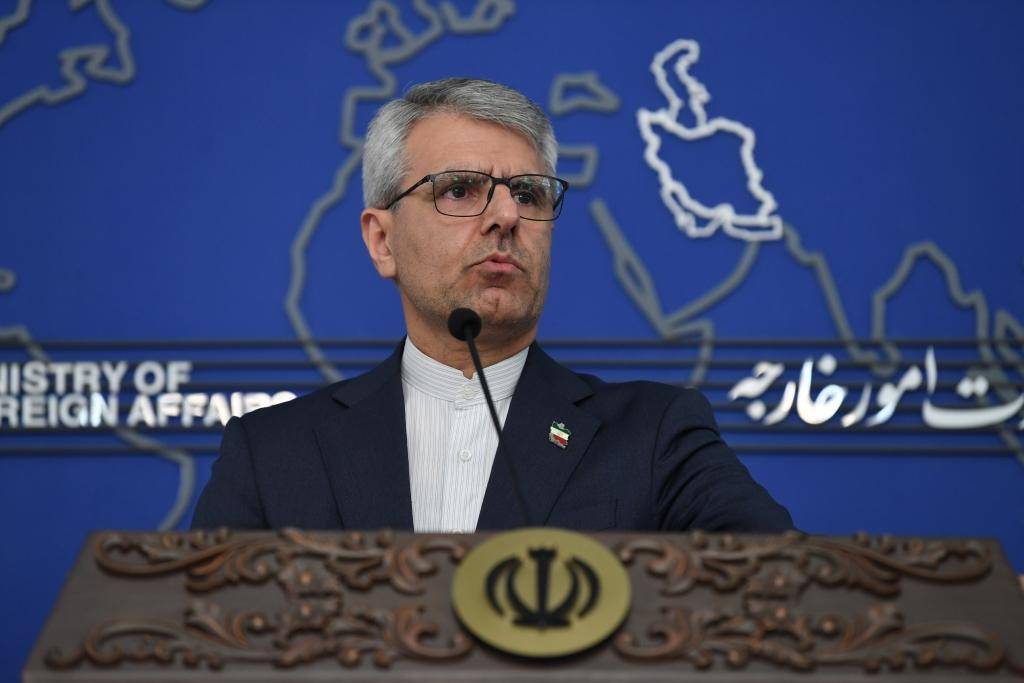
On November 9, in Tehran, the capital of Iran, Iranian Foreign Ministry Spokesperson Bagaei attended a regular press conference. Bagaei said that the United States’ “Iron Gate” plan to contain Iran from the land is no different from other containment actions it has taken before and will definitely end in failure. Xinhua News Agency
Can the deadlock be broken?
After the United States softens its tough stance, the possibility of a restart of large-scale war between the United States and Iran in the short term has declined. However, it remains to be seen whether the two sides can break the current deadlock of “no war, no peace” through negotiations.
In the United States, Trump is currently more inclined to increase pressure on Iran through economic means, and it is difficult to make concessions on the Iranian nuclear issue. After meeting with Qatari Prime Minister and Foreign Minister Mohammed on the 9th, he posted on social media that Qatar, Saudi Arabia, the United Arab Emirates, Bahrain, Kuwait and other countries prefer to maintain the status quo, that is, continue to implement “the largest maritime blockade in history” and implement the “Iron Gate” plan, which covers land and sea. At the same time, all parties agreed that Iran would never be allowed to possess nuclear weapons and “this is non-negotiable.”
Iran’s stance remains tough. Mohsin Rezai, secretary of Iran’s Supreme National Security Council, posted on social media on the 10th that the war against Iran has severely damaged the US government. “It is time to accept the seven conditions repeatedly proposed by Iran and choose to surrender.” Iran’s Ministry of Foreign Affairs once again emphasized on the 9th that the lifting of sanctions by the United States and the end of the war are the prerequisites for starting negotiations.
Analysts believe that although the possibility of the United States restarting large-scale military operations in the short term has declined, it is still not easy for the United States and Iran to reach an agreement through concessions. It is expected that the United States’ economic blockade and sporadic small-scale attacks on Iran will continue. The United States still deploys a large number of armed forces in the Middle East and still has the initiative to take military action.
On the other hand, Israel remains tough on Iran. Israeli Defense Minister Katz said on the 8th that Israel’s “mission against Iran has not yet been completed” and that Iran is trying to “restart the process of acquiring nuclear weapons” and Israel will take “preemptive” actions against the threat. But Katz did not provide any evidence to prove the above threats, nor did he specify what specific actions would be taken.
Related Reading
- The first in the country! How to learn “unpopular secret skills”? Who will teach? Dean’s interpretation2026-11-12
- The price of refined oil may drop for the sixth time this year. Filling up a tank will cost about 15 yuan less2026-11-12
- “Token hoarding” became a hot word in the “Double 11” circle, and after Li Jiaqi, Luo Yonghao also came to sell2026-11-12
- Fireballs are scattered around Shijiazhuang. How much is the value of “visitors from outside”?2026-11-11
- Israel’s new Knesset officially unveiled2026-11-11