The facts are happening and the process is ongoing.
Text | Chinese Business Strategy Hua Zhiguang
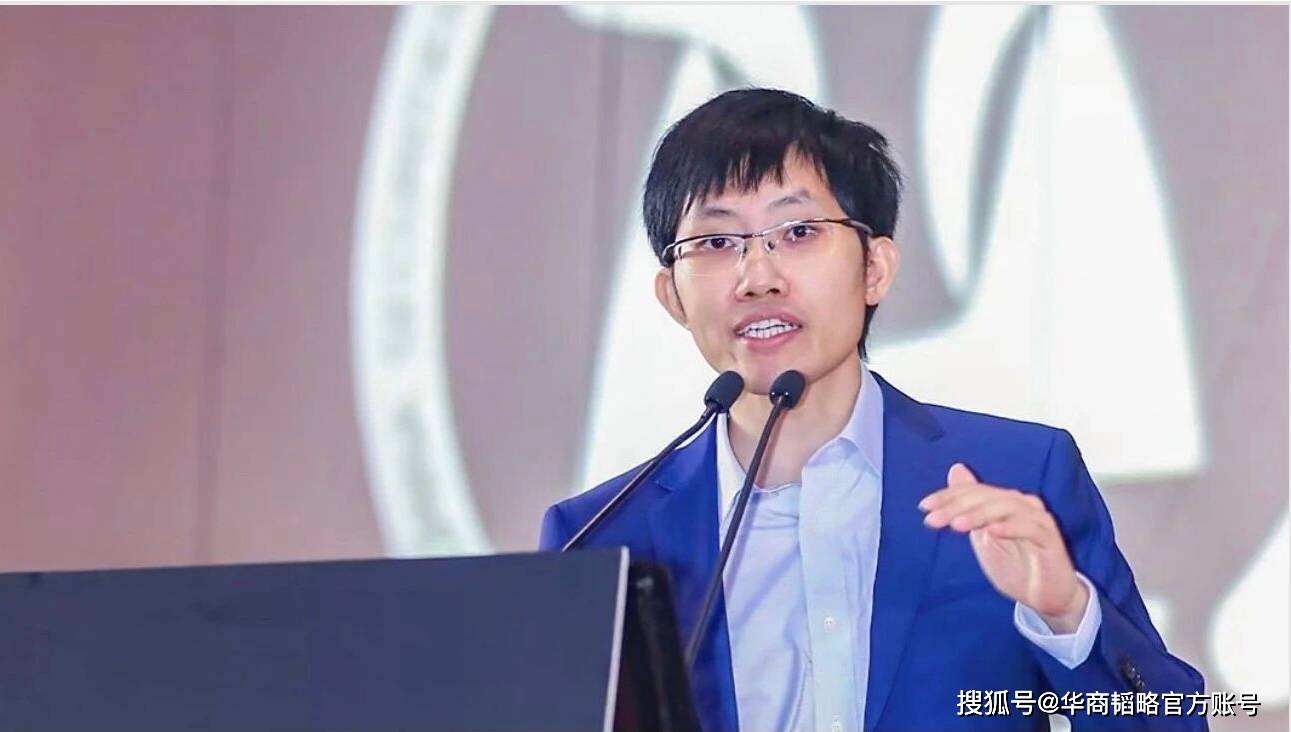
On October 27, the 2026 Hurun Rich List was released. 41-year-old Liang Wenfeng made the list for the first time with 280 billion yuan, directly ranking seventh in the country. He is the richest among all the new faces this year.
Two years ago, he said in an exclusive interview: When this society allows hard-core innovators to become famous, collective thinking will change. “We just need a bunch of facts and a process.”
Now, he himself became one of the facts.
【01】
January 28, 2025, Lunar New Year’s Eve, Mililing Village, Qinba Town, Wuchuan City, Zhanjiang, Guangdong.
Several red banners were hung in the village. One read: “Warm congratulations to Wen Feng for becoming the pride of his hometown, welcome home!” Another read: “Warmly welcome Wen Feng for adding glory to his hometown!”
Next to the stone monument at the entrance of the village, the villagers built a double happiness arch with the couplet:
“Wen Feng returned to his hometown to spread his good achievements and add impetus to rural revitalization.”
Eight days before New Year’s Eve, DeepSeek-R1 was released; the day before New Year’s Eve, the DeepSeek application topped the free list in the US Apple Store, and the whole world was asking about this Chinese company and its founder.
The person greeted by the banner was someone the whole world was asking about, and someone who was unfamiliar to many Chinese netizens who could name a lot of Chinese business tycoons—DeepSeek founder Liang Wenfeng.
Fellow villagers said that he is relatively introverted and usually doesn’t go out much when he returns home during the Chinese New Year. The afternoon before returning to the village, he played football with his old classmates. He left the village on the morning of New Year’s Day.
After he left, tourists came one after another and took pictures in front of the stone monument and arch at the entrance of the village.
A small village in western Guangdong has become a check-in place because of a scholar.
This is where Liang Wenfeng was born. He was born here in 1985, and his parents were both primary school Chinese teachers.
In Guangdong in the 1990s, there were opportunities to make money everywhere, but studying was not something that was highly regarded. Parents often come to his house to talk to his father, who is a teacher, about their children’s future. They talk back and forth with the same meaning:
Reading is useless.
Liang Wenfeng, who grew up in the atmosphere that “study is useless”, turned out to be a good student.
In junior high school, he had already finished high school mathematics and started studying college mathematics.
Mr. Rong, the head teacher of the junior high school, remembered that this student had “strong mathematical thinking ability” and a quiet personality, but he was not a nerd. He had his own method of learning and knew how to combine work and rest.
In 2002, 17-year-old Liang Wenfeng was admitted to Zhejiang University to study electronic information engineering with the top score in the college entrance examination of Wuchuan No. 1 Middle School. He then went on to graduate school at Zhejiang University, majoring in information and communication engineering, studying under Xiang Zhiyu and doing machine vision. Master’s thesis, researching a robust PTZ camera target tracking algorithm.
That was the era when China’s colleges and universities expanded their enrollment and engineering talents poured out in droves. Thousands of engineering students start from small towns and villages, enter universities, and then enter factories, laboratories and Internet companies.
Liang Wenfeng is just one of them.
The difference is,He identified something very early on that few people believed at the time.
【02】
In 2008, the global financial crisis.
This year, Liang Wenfeng, who was still studying at Zhejiang University, firmly believed that artificial intelligence would definitely change the world.
At the time, this was an unpopular idea. Deep learning has not yet come out of the circle, AlexNet will have to wait another four years, and “artificial intelligence” remains more in papers and science fiction.
Liang Wenfeng doesn’t care what others think;If you believe in it, do it yourself.
Since 2008, he and his classmates have been accumulating market data and thinking about using machine learning to do fully automated quantitative trading. According to reports, the initial principal was only 80,000 yuan.
After graduating with a master’s degree in 2010, he did not think about finding a good job, but first tried some entrepreneurship in Chengdu, and finally decided to use his own ideas in finance.
In the first few years, there was no public information record, no financing news, and what was probablyA young man keeps the market data and codes and tries them year after year.
At that time, Liang Wenfeng’s benchmark was the Renaissance Company of American quantitative legend Simons. Moreover, he really followed the other person’s path: in 2013, he founded Jacobi Investments with Zhejiang University alumnus Xu Jin; in 2015, he established the later famous quantitative trading company – Magic Square.
The word “Magic Square” is taken from the Nine Palaces Picture in Luo Shu in ancient China. It refers to a mathematical structure in which numbers are arranged in a square array so that the sum of the numbers in each row, column, and two diagonals is equal.
In April of that year, CSI 500 stock index futures were listed, giving China a more convenient tool for quantitative investment. A window of time, just for a person who has been preparing for seven years.
The window is also accompanied by wind and waves. In the summer of the same year that Magic Square was established, A-shares fluctuated violently. Subsequently, stock index futures trading was severely restricted, and many quantitative teams fell behind.
Those who survive do not rely on luck, but on the data and models accumulated over the years than others.
In October 2016, Magic Fang used GPU to run the first trading position generated by deep learning. In the following years, almost all strategies were handed over to AI models.
What really makes his peers incomprehensible is that he buys cards and sells Nvidia GPUs.
“From the earliest 1 card, to 100 cards in 2015, to 1,000 cards in 2019, and then to 10,000 cards, this process happened gradually.” Liang Wenfeng said. In 2019, Huanfang spent nearly 200 million yuan to build “Yinghuo 1”, equipped with 1,100 GPUs; in 2021, it spent another 1 billion yuan to build “Yinghuo 2”.
What is a quantitative private equity company doing with so much computing power?
Even he himself said that it was more out of curiosity.Curious about where the boundaries of AI capabilities are.
He made an analogy: “An exciting thing may not be measured simply by money.” It’s like buying a piano at home. Firstly, it’s affordable, and secondly, it’s because there are a group of people who are eager to play music on it.
In 2021, Huanfang’s management scale once exceeded 100 billion yuan, but then its performance retreated and it began to actively shrink its scale. What the outside world sees is the rise and fall of a quantitative giant, and few people notice it.Those tens of thousands of cards are still there.
A year later, the United States implemented export controls on high-end chips to China.
By 2023, except for a few major Internet companies in China, there will be tens of thousands of A100s in hand, and almost only Magic Square. Curiosity, which was initially regarded as a quirk, became one of the earliest trump cards of China’s big models.
【03】
In July 2023, Hangzhou Deep Seek was established, with the brand name DeepSeek.
When a quantitative company builds large-scale models, many people’s first reaction is: Why?
Liang Wenfeng’s answer was very simple. This is a question of how to do it, not why. In his opinion, general artificial intelligence may be one of the next hardest but most valuable things.
He later explained: “In the past many years, Chinese companies have been accustomed to other people’s technological innovations, and we use them to monetize applications, but this is not a matter of course. In this wave, our starting point is not to take advantage of the opportunity to make a fortune, but to go to the forefront of technology to promote the development of the entire ecosystem.”
The way he manages his team is also different from the industry.“We don’t have KPIs or so-called tasks.” The organization is flat and anyone with ideas can allocate resources to try it out.
His way of recruiting people is equally unusual. Core technical positions are basically for fresh graduates and young people who have graduated one or two years ago. They are based on ability rather than experience. The criteria have always been love and curiosity.
“The V2 model does not have people who have returned from overseas, they are all local. The top 50 top talents may not be in China, but maybe we can build such people ourselves.”
Not only must he lead such people to create their own original creations, but he must also create advantages. The core is to accelerate the cost reduction of large models and accelerate their popularity and inclusiveness.
In May 2024, the open source DeepSeek-V2 was released, and the input price reached 1 yuan per million tokens. Major manufacturers were forced to follow up with price cuts, and the industry began to lament the catfish effect.
But Liang Wenfeng said: “We didn’t mean to become a catfish, we just accidentally became one.”
That summer, he gave a rare exclusive interview and a rare high-profile: People often say that there is a gap of one or two years between China’s AI and the United States, but the real gap is the difference between originality and imitation; in the IT wave of the past thirty years, China has basically not participated in real technological innovation; China must gradually become a contributor instead of always being a free rider.
He is not superstitious about his opponents: “OpenAI is not a god, and it is impossible to always be at the front.” Nor does he intend to close the door: “We will not close the source.” In his view, open source is more like a cultural behavior than a commercial behavior.
He also said that the problem facing DeepSeek has never been money, but that high-end chips are embargoed.
If you don’t have enough cards, you’ll have to pick at the algorithm. In December 2024, DeepSeek-V3 was released, and the training cost listed in the technical report was US$5.576 million.
On January 20, 2025, DeepSeek-R1 was officially released and open sourced globally. In the afternoon of the same day, Liang Wenfeng sat in the forum of experts and entrepreneurs hosted by Premier Li Qiang.
A few days later, DeepSeek-R1 rushed to the top of the free list in the US Apple Store; it also gave the largest market capitalization company in the United States the largest market capitalization increase in history. Let the White House, Silicon Valley, and Wall Street ask together:
How did a Chinese team of more than 100 people do it?
The place where the neck was stuck eventually developed skills that even the person with the stuck neck couldn’t do.
For a time, national sports-level models, companies, and even individuals were placed on the heads of Liang Wenfeng and Deep Search.
On February 17, Liang Wenfeng appeared again at the private enterprise symposium. A quantitative private equity boss whose name was almost unknown outside the industry a few years ago has become one of the most watched faces of independent technological innovation in China.
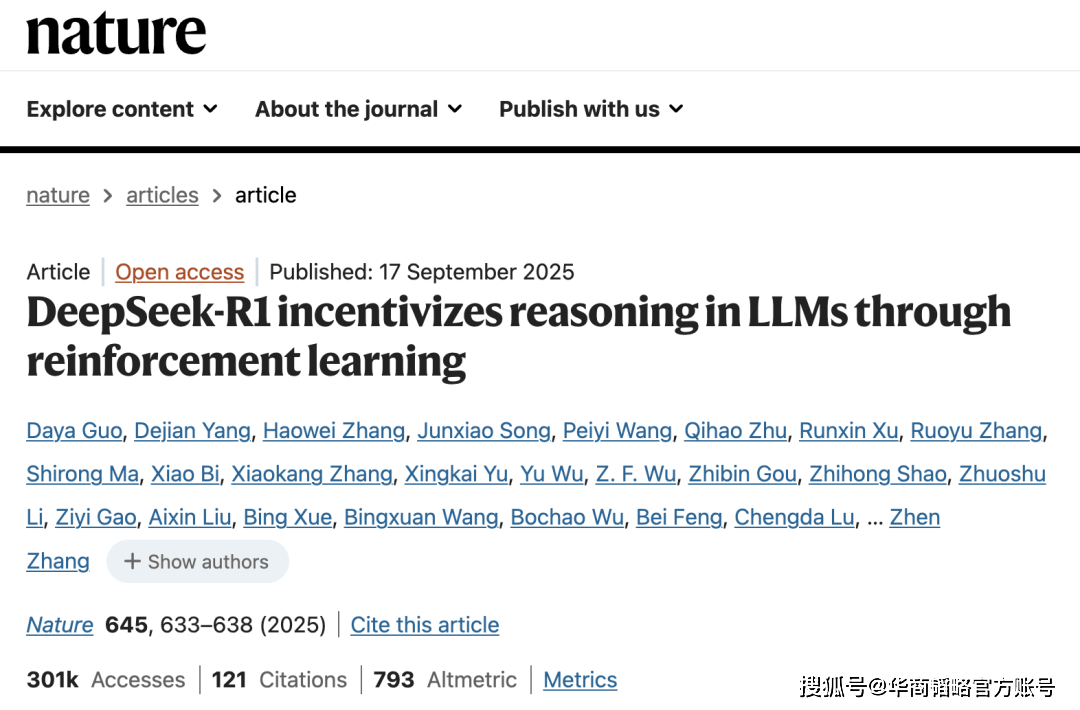
In September of this year, R1’s paper appeared on the cover of Nature, and Liang Wenfeng was the corresponding author.
At the end of the year, he was selected as one of the top ten scientific figures of the year in Nature. One of the reasons is that DeepSeek put model weights and complete training methods on the table.
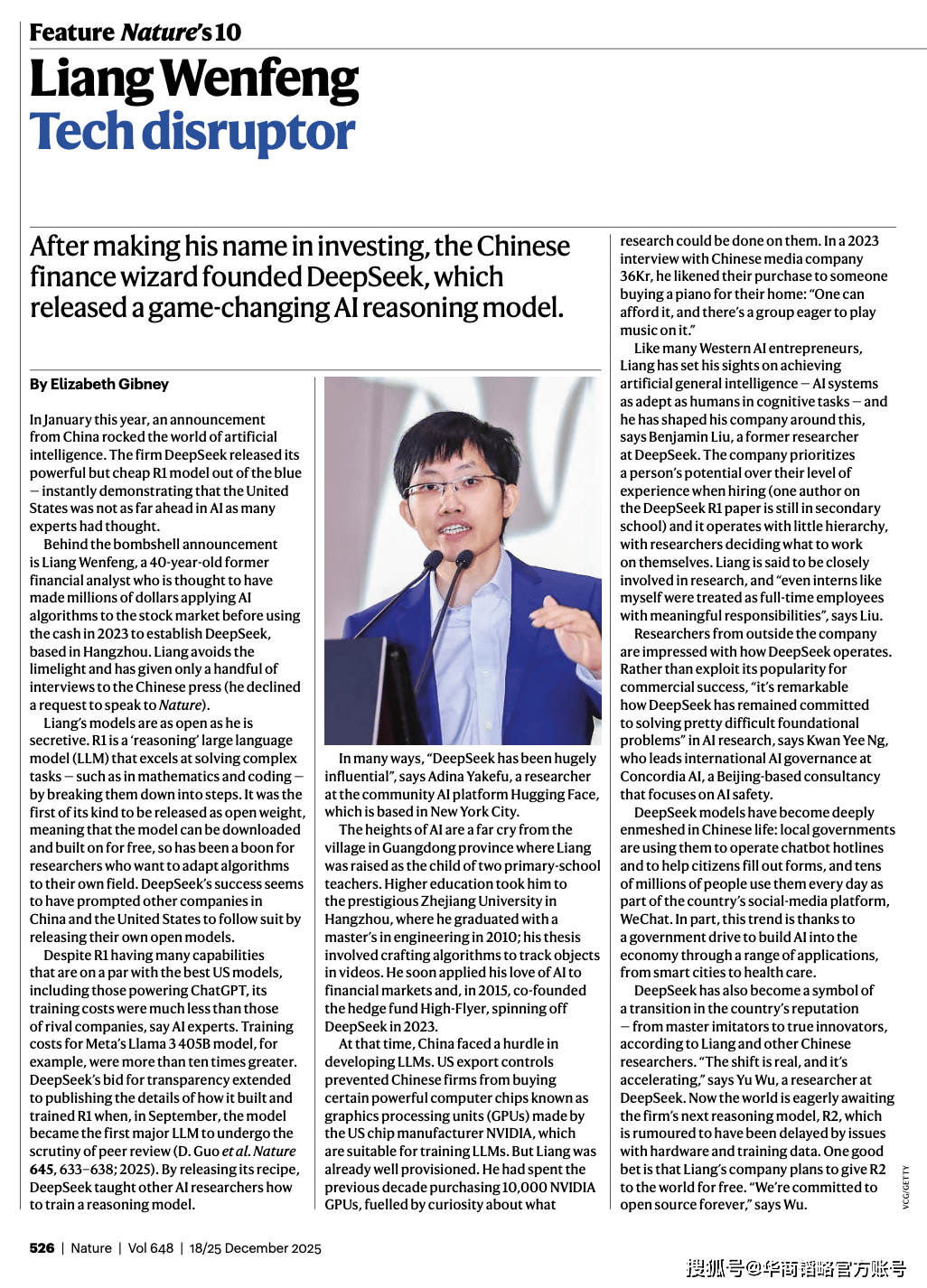
In a year when top AI companies are generally tightening technical details, a Chinese company has disclosed its “recipe” to the world for testing.
This is confidence, a declaration, and a contribution.
【04】
In 2026, the pace of DeepSeek will obviously become faster.
On April 24, the V4 series was released and open sourced. The parameters of the flagship version reached 1.6 trillion, one million contexts became standard, and it was announced that it would adapt to Huawei’s Ascend computing power.
Two years ago, Liang Wenfeng also said that money has never been a problem and the company is not in a hurry to raise funds. However, this year it has been soft on money: the first round of financing is about 51 billion yuan, of which Liang Wenfeng personally invested about 20 billion yuan.
The scale of the second round has reportedly increased to nearly 100 billion yuan. Moreover, the company is preparing to be listed on the Science and Technology Innovation Board, and DeepSeek’s annual revenue has reached the level of US$1 billion.
In a track where computing power is ammunition, this does not mean changing the original intention, but rather not losing on ammunition.
Two years ago, Liang Wenfeng said in an exclusive interview:When this society allows hard-core innovative people to become successful, the collective thinking will change, “We just need a bunch of facts and a process.”
This year, there are more than 160 entrepreneurs on the Hurun list whose wealth comes from AI; but in 2019 and before, there was no one on the list whose main business was AI. Joining Liang Wenfeng on the list for the first time are Yushu Wang Xingxing, Zhipu Tangjie, and MiniMax Yan Junjie, all of whom are hard-core innovators.
Thirty years ago, a parent sat at his home and advised his father, a teacher, that studying is useless. Thirty years later, the villagers pulled up banners and put up arches at the entrance of the village, waiting for the child who was studying to go home.
The facts are happening and the process is ongoing.
【Reference】
[1] Hurun Research Institute: “2026 Hurun Rich List”
[2] Undercurrent Waves: “Revealing DeepSeek: A more extreme story of Chinese technological idealism”
[3]36氪: “Crazy Magic Square: The Road to Large Models of an Invisible AI Giant”
[4] Wuchuan Municipal People’s Government Website: “A Sensation in Silicon Valley!” Founder of DeepSeek, the cheating AI genius comes from Zhanjiang》
[5] “Nature” (Nature): DeepSeek-R1 paper and “Top Ten Scientific Figures of 2025”
——END——
Welcome to follow [Chinese Business Tao Lue], get to know the famous figures, and read the legend of Tao Lue.
All rights reserved. Private reproduction is prohibited.
Related Reading
- Nvidia live updates: Jensen Huang ousted, CFO Colette Kress to serve as interim CEO2026-11-13
- Are mangoes not afraid of red fruits?2026-11-12
- Original: After Huang Renxun, who is most likely to take over Nvidia?2026-11-12
- Samsung’s roll-screen mobile phone is exposed, creating a new form ahead of Huawei and Apple, and folding screens are expected to be eliminated2026-11-12
- Musk’s favorite car is going to be discontinued.2026-11-12