A staff member of the Siberian and Far Eastern Plague Prevention Institute in Irkutsk, Russia, died of severe pneumonia, attracting international attention. The Director-General of the World Health Organization confirmed on October 7 that Russia had responded to WHO inquiries, stating that no local plague cases had been reported recently and that about 200 contacts had been quarantined. WHO is still requesting the test results, health status of the deceased and contacts, and the basis for prevention and control measures, and it is not yet able to complete a comprehensive risk assessment.
The “Huashan Infection” WeChat public account published “Tracking Plague Suspects” on October 8, 2026 | Will the “Black Death” reappear? “Experts will explain it to you one by one”, giving a detailed introduction to the clinical types of plague, why epidemics occur, laboratory infections, real-time monitoring and rapid response, etc.
The above-mentioned article stated that plague includes three clinical types, namely bubonic plague, septicemic plague and pneumonic plague. In the same epidemic, the three types can coexist, and the clinical manifestations of the same patient may also change with the course of the disease. The key to determining the public health risk is whether there is lung infection and respiratory transmission.
There were indeed laboratory-associated plague infections in history, but they should not be confused with large-scale leaks. A clear factual boundary must be drawn here: the death of staff and isolation of contacts cannot be directly equated to a confirmed diagnosis of plague, nor can they directly prove a laboratory leak. WHO is still verifying information that another employee suffered from pneumonia of unknown cause, so the “second plague patient” cannot be regarded as a confirmed fact. While we await the results of the investigation, we can answer a more general question: Would the Black Death still be repeated today, even if it was ultimately confirmed to be plague?
The Black Death has receded, but the pathogen has not disappeared
Plague is caused by the bacterium Yersinia pestis. Historical plague pandemics, including the medieval “Black Death,” occurred in eras that lacked etiological understanding, effective treatment, and modern public health systems. Today, humans have the tools to identify pathogens, treat patients, and interrupt transmission; these changes mean that historical disasters can no longer be used directly to predict modern risks.
But the plague was not eradicated. It is a zoonotic disease in which the pathogen can maintain circulation between wild small mammals and their fleas. People become infected through flea bites, contact with infected animal tissue, or inhalation of infectious respiratory particles excreted by patients with pneumonic plague. The decrease in human cases does not mean that the transmission cycle in nature has ended.
This is why treating human patients is very effective, but antibiotics alone cannot eliminate all natural foci. Prevention and control must pay attention to exposure to animals, vectors and people at the same time, and cannot just focus on cases in hospitals.
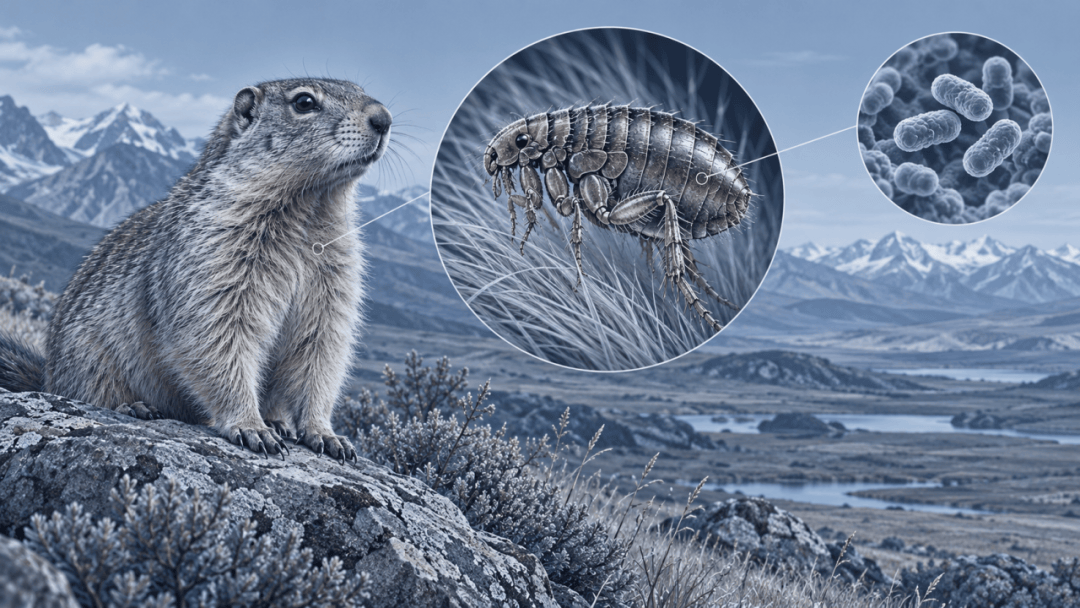
Except for the source of the images in the article, the rest are generated with the help of AI. “Huashan Infection” WeChat public account picture
Three clinical types can appear in the same epidemic
Bubonic plague, septicemic plague and pneumonic plague are not diseases caused by three different pathogens, but manifestations of the same bacteria in different infection routes and disease stages.
After being infected by flea bites, bacteria often travel along the lymphatic system to local lymph nodes, causing fever and painful swollen lymph nodes, which is bubonic plague. Bacteria may also directly enter the bloodstream, causing primary septicemic plague; after bubonic plague progresses, sepsis can also occur and involve the lungs through the bloodstream, forming secondary pneumonic plague.
If infectious respiratory particles are inhaled, the infection can start directly in the lungs, forming primary pneumonic plague, which may later progress to sepsis. Therefore, it cannot be understood that “bubonic plague can only spread bubonic plague, and all patients in a pneumonic plague epidemic can only have pneumonic plague.” In the same epidemic, the three types can coexist, and the clinical manifestations of the same patient may also change with the course of the disease.
The key to determining the public health risk is whether there is lung infection and respiratory transmission. Bubonic plague is usually not spread through daily interpersonal contact; pneumonic plague can be spread in close contact and requires timely isolation and standardized protection. The same clinical type does not automatically prove human-to-human transmission: epidemiological investigations must also investigate common animal or vector exposures.
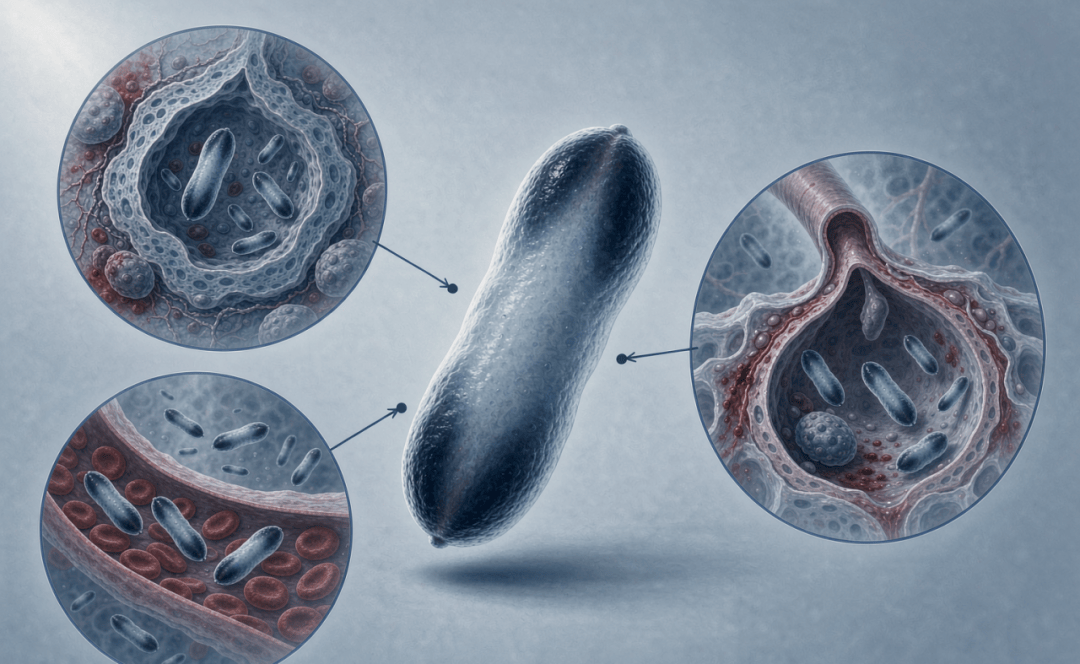
“Huashan Infection” WeChat public account picture
Why do epidemics still occur when antibiotics are available?
Plague is a disease that can be treated with antibiotics. Drugs such as gentamicin and some fluoroquinolones can be used for treatment. The specific choice depends on the clinical type, condition and patient situation. But “there is a cure” does not mean “it doesn’t matter if it’s a few days late.”
Pneumonic and septicemic plague progress rapidly. Early symptoms such as fever, fatigue, and cough lack specificity. If there is no inquiry about animal contact, natural foci activities, or laboratory work history, they may be regarded as ordinary infections. The U.S. CDC clearly recommends that when there is a high clinical suspicion of plague, appropriate treatment should be started immediately without waiting for the confirmation result.
From a clinical perspective of infectious diseases, the risk is often not just whether there is a drug, but whether the patient can be identified in time, whether the first dose of effective antibiotics can be given as early as possible, and whether severe treatment and prevention and control can be carried out simultaneously.
Likewise, modern plague control achievements cannot be attributed simply to the spread of vaccines. Plague vaccine is not a vaccine that is routinely available to the public around the world. WHO does not recommend universal vaccination, but considers it among specific high-risk groups. Modern prevention and control mainly relies on surveillance, early diagnosis and treatment, infection protection, contact management and animal vector control.
The epidemic of this century has given a reminder
In 2009, an epidemic of pneumonic plague occurred in Ziketan Town, Xinghai County, Hainan Tibetan Autonomous Prefecture, Qinghai Province. China’s official records are clear: a suspected epidemic was discovered on July 30, and confirmed and reported on August 1; the Ministry of Health subsequently released epidemic data for August 2009 as 12 cases of plague and 3 deaths. The local area carried out epidemiological investigation, isolation and treatment, management of close contacts and treatment of the epidemic source. This is a controlled epidemic of pneumonic plague.
In 2010, a plague epidemic occurred in Peru. WHO reported on August 10 of that year that as of July 30, 17 cases had been confirmed, including 12 cases of bubonic plague, 4 cases of pneumonic plague, and 1 case of septicemic plague. This also directly shows that three clinical types can appear simultaneously in an epidemic.
In 2017, a larger plague epidemic occurred in Madagascar. According to WHO statistics, a total of 2,348 confirmed, clinically diagnosed and suspected cases were reported from August 1 to November 22, including 202 deaths; 1,791 of them were classified as pneumonic plague, but not all were laboratory confirmed. The epidemic has affected major cities, indicating that widespread transmission is still possible under modern conditions. It is worth noting that the 33 strains of Yersinia pestis cultured at that time were all sensitive to the antibiotics recommended in the prevention and control plan.
The significance of this set of facts is that the absence of drug resistance does not guarantee that an outbreak will not occur; effective drugs must be transformed into actual protection through timely discovery, treatment and public health response.

“Huashan Infection” WeChat public account picture
Laboratory infections have occurred, but they should not be confused with large-scale spills
There are historical records of laboratory-associated plague infection and subsequent transmission.
In 1898, researchers in Vienna conducted research using plague strains brought back from Bombay, India. Franz Barisch, a laboratory worker, died after being infected; the doctor Hermann Müller and the nurse Albine Pecha who cared for him subsequently contracted pneumonic plague and also died. Medical history research supports this chain of secondary transmission following laboratory infection.
But it cannot be written as “leakage of plague caused pandemic in Vienna”. The historical archives of the University of Vienna record response measures such as quarantine, and clearly point out that claims such as “infected laboratory rats escaped into the sewers” were false news of the year.
In 2009, a researcher in Chicago, USA, died after being infected with an attenuated plague strain used in the laboratory. CDC investigation confirmed that it was septicemic plague, with no pathological evidence of pneumonic plague; the specific exposure route could not be identified, and no new infections were found. This case illustrates that even attenuated strains require strict biosecurity management, but it is not a case of causing a community outbreak.
Therefore, laboratory-acquired infections, limited transmission chains after infection, and large-scale community epidemics caused by accidental release of pathogens are three different levels of problems. Historical records prove that the first two situations have occurred, but the third situation cannot be determined based solely on “laboratory staff being sick”, nor can old cases be used to replace the investigation evidence of this incident.
Real-time monitoring and rapid response
For the public, the focus is on clear exposure and official risk information. In natural plague foci, you should avoid contact with dead animals, avoid hunting, skinning or eating potentially infected wild animals, and pay attention to flea prevention. If you develop fever, painful lymphadenopathy or respiratory symptoms after relevant exposure, you should seek medical treatment promptly and proactively explain your exposure history. Prophylactic antibiotics should be determined by a professional based on exposure assessment.
For medical and public health systems, plague should not be forgotten in the differential diagnosis just because it is rare. Only by promptly asking about occupational and animal contact history, initiating treatment as early as possible, protecting medical staff, and tracing contacts can the channel between a single case and subsequent transmission be cut off.
This time, WHO requested additional testing and contact information, and proposed to provide technical support on plague and laboratory biosafety, which reflects the need to verify risks and prepare for responses under uncertain conditions. This is consistent with the judgment that “there is no need to panic, nor should we take it lightly.”
Related Reading
- The price of naked tickets is as low as 200 to 300 yuan. After the long holiday, the “missing” ticket window is opened.2026-10-09
- US Dragon spacecraft returns to Earth carrying 4 astronauts2026-10-09
- Geopolitical tensions in the Middle East spurred a surge in international oil prices2026-10-09
- Temple in the rain: Shanxi’s low-level cultural relics face climate difficulties2026-10-09
- Curtis Flowers, Mississippi man wrongfully convicted after being tried for the same killings 6 times, dies at 562026-10-09