Cultural protection volunteer Zhang Xiaojun’s car is fully equipped. Sickle, spray can, pesticide, hard hat, trekking pole, shovel, crowbar, handsaw, axe, flashlight, rope, ladder.
The sun was shining brightly at noon, and the mountain road was twisting and turning, passing through cornfields. He drove the car deeper into the mountains.
Until the grass filling the courtyard of the Black Tiger Temple in Qinshui, Jincheng, blocked him from the door. “It rains more this year than in previous years,” Zhang Xiaojun said, looking at the weeds all over the yard. In previous years, he only used a sickle to cut the grass, but this year the grass grew too fast. He bought some medicine and a spray bottle and started trying new methods to kill the weeds. Less than two months ago, he and his friends came here once and used sickles to cut away the grass in the yard. But now, after several consecutive rains, the grass has grown to half a person’s height again.
Above this temple with obvious Jin Dynasty characteristics on the front eaves of the main hall, cultural preservation volunteers raised funds to erect a colored steel and tile shed to protect it through another summer with increasing rain.
Not just this Black Tiger Temple. According to the Shanxi Provincial People’s Government website, in recent years, Shanxi Province has seen a trend of excessive precipitation during the flood season, with extreme precipitation and high temperature and heat waves appearing frequently. In Shanxi Province, from national key cultural protection units to low-level cultural protection units, the frequency and intensity of extreme rainfall have put these wooden temples, murals and rammed earth walls that have withstood hundreds or even thousands of years of wind and rain, facing severe challenges.
Both the government and the private sector are taking action. They are racing against the weather and time, hoping to regain the cultural heritage that has lasted for thousands of years bit by bit.
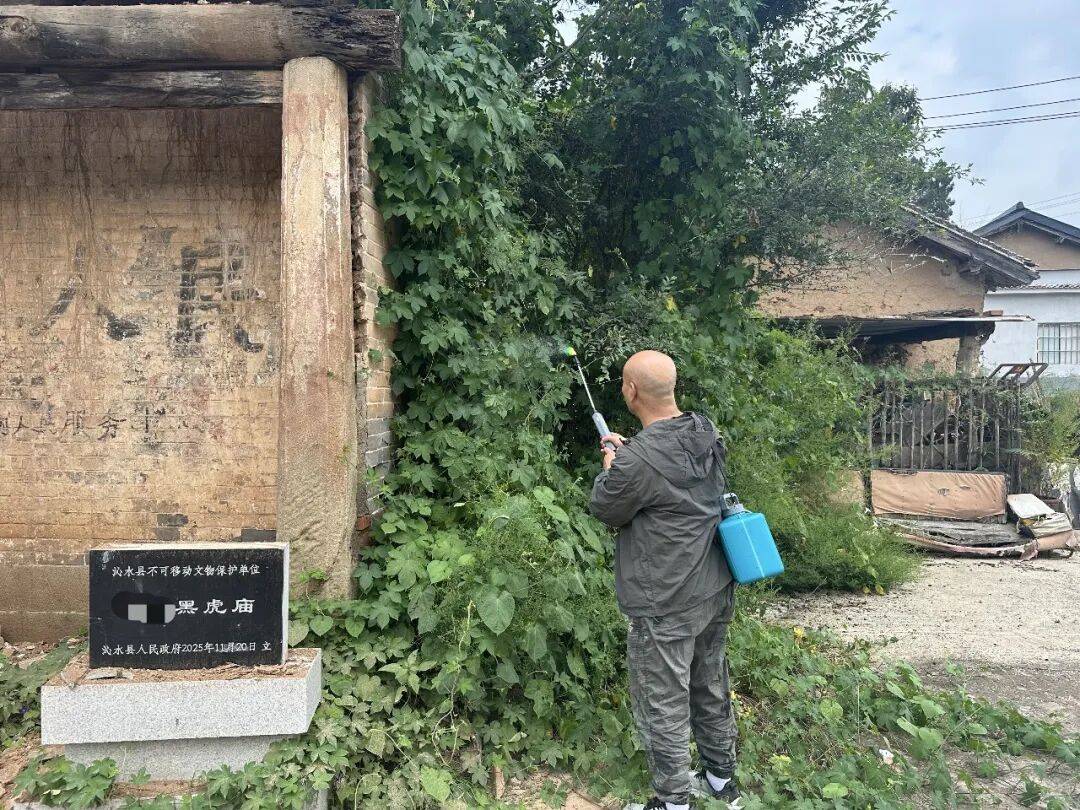
▲In the summer of 2026, Zhang Xiaojun came to Qinshui Black Tiger Temple several times to weed. Photo by Beijing News reporter Li Bingjie
風雨襲來
Whenever it rains, Zhang Xiaojun will think of the Black Tiger Temple. The more and heavier the rain fell, the more uncertain he became about how long the Black Tiger Temple could last.
But the wind and rain did not change his will. Walking through the mountains and fields of Qinshui County, Jincheng City all year round, he clearly felt that it had rained more and more in recent years.
In 2018, Zhang Xiaojun discovered the Black Tiger Temple for the first time. Local elders called it the “Empress Temple”. There is a legend circulating here that “The Empress sits in charge of the Black Tiger Lord and guards the door.” At that time, the outline of the main hall of the Black Tiger Temple was generally intact. The stone pillars, column bases and brackets on the front eaves still existed. However, the roof tiles were missing, some of the eaves and roofs had collapsed, most of the doors and windows were missing, and trees were surrounding the surrounding area.
This is an unclassified immovable cultural relic. In the following years, he came intermittently and saw that the gap in the front eaves of the main hall was getting bigger and bigger. He judged that this abandoned ancient temple was being damaged at an accelerated rate. On the one hand, it was due to lack of repairs, and on the other hand, it was increased precipitation. “Rainwater is the natural enemy of ancient wooden buildings.”
In 2023, the Jincheng Cultural Relics Protection Volunteer Association raised more than 13,000 yuan and spent two days erecting a color steel tile shed for the main hall, which can protect this endangered temple when the rains get heavier.
But there are still some components in the front hall that are decaying. “When I didn’t hold an umbrella, the rain had penetrated into the wood. There has been a lot of rain in recent years. Even if the building itself is not exposed to rain, the external environment is humid and it is difficult for the wooden components to dry out quickly and completely, so it is still greatly affected.”
The Yuhuang Temple in Zhangcun, Jincheng City, about 60 kilometers away from the Black Tiger Temple, is also facing challenges brought by climate change.
This immovable cultural relic, which is also unclassified, was overhauled by the village in 2013. A village cadre in Zhangcun took office in 2018. He said that the village has always attached great importance to protecting the village temple. In the early years, they did not need to regard temple inspections as a top priority.
But now, due to increased precipitation and frequent extreme weather, he visits the temple “more than half the time before.” To make sure everything is safe and the rain has not started yet, he has to go to the temple to see if the roof is leaking, whether the walls are wet, and whether the foundation is dented.
He remembered that at the turn of summer and autumn in 2025, it rained intermittently for a whole month. When he was inspecting the temple, he found that the roof of the East Er Hall of the Jade Emperor Temple had “almost collapsed in half”, and he quickly covered it with a blue rainproof cloth. When the rain stopped, the village replaced the roof of the entire temple.
Earlier in 2021, there were continuous rains in autumn, and the roof of the west wing of the Jade Emperor Temple also collapsed.
It’s not just low-level artifacts that have been damaged. In the autumn of 2025, it rained for a whole month, and the main hall of the Erxian Temple in Xiaonan Village, Zezhou County, the fourth batch of national key cultural relics protection units, also leaked.
This temple is famous for its small wooden sculptures of heavenly palaces and pavilions. The Hall of the Two Immortals in the main hall was built during the Northern Song Dynasty. There are 16 colorful sculptures of the two immortals, their attendants, and female officials on the altar in the main hall. It is the earliest statue of the two immortals of the Song Dynasty in the southeastern Shanxi region, and is also the only statue of the two immortals of the Song Dynasty in the country.
Yang Liangen, who is in his seventies, is the cultural conservator of this temple. He and his wife have guarded the temple for nearly 30 years. On that heavy rainy night, he found that rainwater seeped from the tile cracks on the roof of the main hall and dripped onto the top of the small woodwork. He tried to cover the Tiangong pavilion and colorful sculptures with a raincloth, but the space was too small. “I wanted to stuff the raincloth in, but I had to be careful not to touch the cultural relics.”
The leakage was quickly taken seriously. Yang Liangen said that the director of the County Culture and Tourism Bureau, the deputy county magistrate, and the county magistrate all came to see it. In July 2026, the Zezhou County Culture and Tourism Bureau issued an announcement stating that the protection and repair work of the Erxian Temple in Xiaonan Village had begun. In August, the back slope of the roof of the Erxian Temple in the main hall had been repaired and the tiles had been replaced.
Now, whenever it rains, he has to go into the palace and inspect it carefully. When he sees that the roof no longer leaks, he is so happy that his eyes crinkle with laughter. But earlier, weather changes were not the subject of his work. How to drive away thieves with a flashlight was what he cared more about.
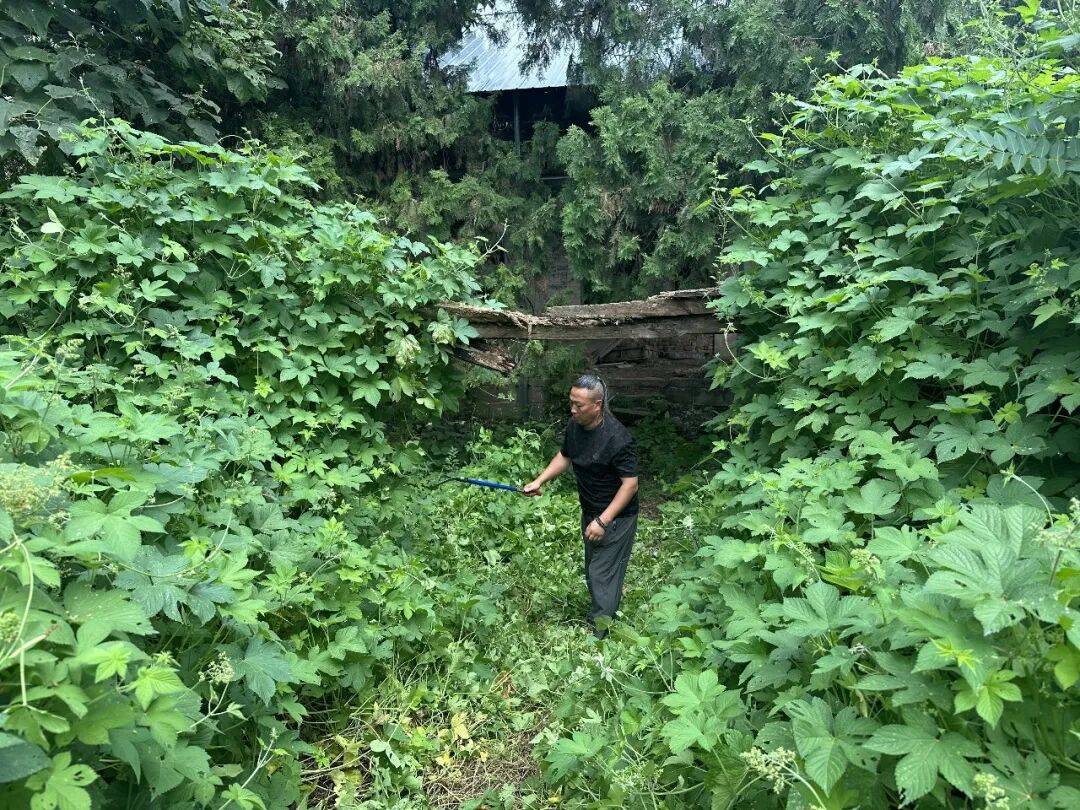
▲Cultural preservation volunteers are doing weeding work in ancient buildings. Photo by Beijing News reporter Li Bingjie
Cultural security sites in southeastern Shanxi are more affected by climate change
Many cultural conservators and volunteers interviewed told the Beijing News reporter that it is their general consensus that the number of continuous rains and frequent extreme weather events in recent years has accelerated the damage to cultural relics.
Zhan Changfa, former vice president and second-level researcher of the Chinese Academy of Cultural Heritage, told the Beijing News reporter that as far as Shanxi Province is concerned, rising temperatures, increased annual precipitation and frequent extreme weather are all supported by data. These changes will have an impact on cultural relics.
According to “Shanxi Science and Technology News”, in March this year, the Shanxi Provincial Meteorological Bureau held a press conference to disclose that last year Shanxi Province showed climate characteristics of “significantly more precipitation, higher temperatures, and more high-temperature days.” In terms of precipitation, the annual precipitation is 699 mm, which is 45.8% higher than the annual average. This precipitation is the third highest in history since 1961.
In 2024, the World Meteorological Day media briefing held by the Shanxi Provincial Meteorological Bureau also confirmed the trend of climate change. It was introduced at the meeting that extreme events and disasters such as extreme high temperatures, droughts, and heavy rains are common in Shanxi Province. Since 1961, the average temperature warming rate has been as high as 0.3°C/10 years, making it one of the regions with a more obvious warming trend in the country. In addition, the average precipitation in Shanxi Province in the past 10 years has exceeded the 1960s, when the precipitation was the highest in the last century.
Wang Xinyuan, a researcher at the Institute of Aerospace Information Innovation of the Chinese Academy of Sciences and the UNESCO International Space Technology Center for Natural and Cultural Heritage, has also seen the same trend in remote sensing data. He made charts and compared data, overlaying Shanxi Province’s national key cultural heritage sites with climate change-sensitive areas, and further concluded that cultural heritage sites in southeastern Shanxi are more affected by climate change and face higher risks.
Southeastern Shanxi is high in the Taihang Mountains, with basins scattered between the mountains. Yang Jie, a local scholar of literature and history in Shanxi, also believes that “it is very easy to cause microclimate reactions here, so it is particularly sensitive to climate change.”
Wang Yu, executive director of the Jincheng Cultural Relics Protection Volunteers Association, said that in the autumn of 2025, the rain continued in the Jincheng area for nearly a month. Many ancient wooden structures in the southeastern Shanxi region have problems such as rain leakage and loose cracks in the walls. Rainwater seeps into the walls and some rammed earth wall structures begin to collapse little by little.
Li Zhiqiang, deputy director of the Zezhou County Culture and Tourism Bureau, has noticed the challenges posed by the weather to cultural preservation work since 2021. He recalled that in the autumn of 2021, it rained continuously throughout Shanxi. “All ancient buildings, including old houses in the countryside, and the gray back layer and wheat straw mud under the tiles were completely soaked.”
“It rains a lot, and the moisture content of the entire roof exceeds the standard. In November, when it freezes and the inside is not dry, the damage to the ancient buildings will be great.” He said that many times, the naked eye cannot fully see what changes the cultural relics have undergone. Sometimes it seems that the structure of the building has not changed, but water penetrates the interior of the building, the weight increases, and the beams begin to deform. Water seeped down the wall, and the rammed earth wall began to bulge and fall off. If there are murals on the wall, and water vapor comes from behind, the murals will become chipped, chalky, and fall off.
Zhan Changfa told the Beijing News reporter that the main risk of wooden structures is that the moisture content of wood exceeds 20%, which may cause mold, worms, and looseness; earthen ruins and rammed earth walls are prone to softening and collapse due to water saturation; colored plastic murals are prone to peeling and cracking under conditions of severe fluctuations in humidity; masonry towers and city walls are affected by freeze-thaw cycles, and repeated freezing and thawing of crack water can cause structural swelling and cracking. These humidity-sensitive storage types have the highest risk level.
Shang Ruihua, a teacher in the Department of Architecture, School of Architecture and Art, Taiyuan University of Technology, studied the earthen city walls in Shanxi during his postdoctoral period. She found that in years with sufficient rainfall, the root system grows denser near the surface. “The dense growth of plants increases the building’s ability to resist rain erosion, but the problem is that the roots of the plants will gather water, and the water’s penetration will also be transmitted downward. This is where the damage caused by plants to the building lies.”
Some people believe that cultural relics have experienced climate changes for thousands of years and have the ability to adapt. But according to Zhan Changfa, climate change is currently accelerating. Just as individuals can adapt to slow cooling, but will lose their temperature if they suddenly enter an icy water environment, ancient buildings are currently facing this kind of sudden climate stress.
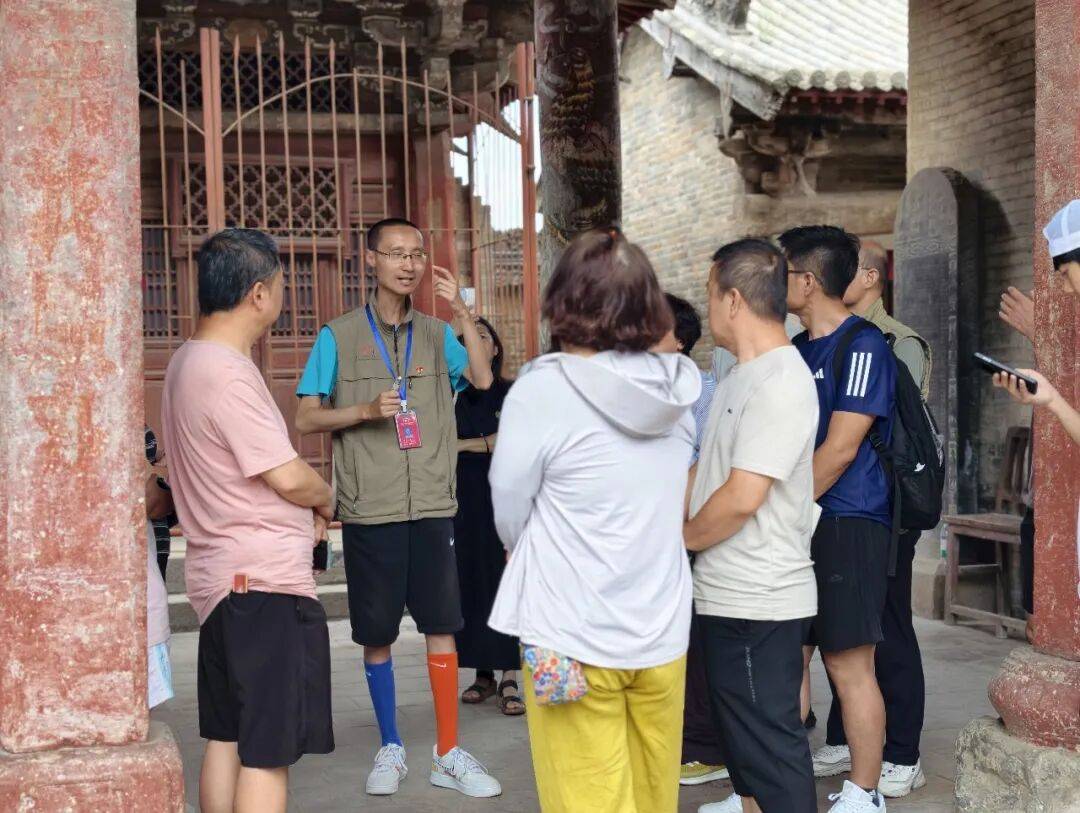
▲Wang Yu is the executive director of the Jincheng Cultural Relics Protection Volunteers Association, and the Erxian Temple in Xiaonan Village, Zezhou County is his permanent base for explanations. Photo provided by interviewee
“Adoption” and “Umbrella”
In response to these changes, both the Shanxi government and the private sector have taken action.
Niu Xuefeng, 40, came to Xiaohe Xisan Church in Lingchuan County for the first time in the summer of 2025.
There are murals on the back eaves of the main hall of the three churches depicting the integration of the three religions. In the middle is Sakyamuni, on the left is Confucius, and on the right is Laozi. The principals of Confucianism, Buddhism and Taoism live on the same wall, which is also the origin of the name “Three Churches”. There are twelve dragons distributed around the picture, six on each side. There are also Qinglong and White Tiger on the left and right.
The first time he came, Niu Xuefeng discovered that there was a 70- to 80-centimeter hole in the roof in the southeast corner of the front wall, water was seeping through the back wall, and there were several clear water marks on the murals.
He saw the heritage value of the three-chapel building, but also realized that the nave roof, which had already lacked maintenance, was more vulnerable to irreparable damage in years with increased rainfall. In addition, the damage to the wooden structures of ancient buildings is hidden. After being eroded by rain, the appearance may not change significantly for three to five years, but there is still a risk of sudden collapse.
Niu Xuefeng decided to participate in the adoption of this three-story church. “It has value, but it is of a low level. If you wait in line for the official to repair it, it may take a long time. The building itself may be able to withstand the wait, but once the murals are damaged, they cannot be restored.”
Adoption of cultural relics is part of Shanxi Province’s “Civilization Watch Project”, which mobilizes social forces to participate in the protection of cultural relics through donations, fund-raising, investment, adoption, etc. According to Shanxi Daily, more than 500 cultural relic building adoption projects have been promoted from 2017 to 2024.
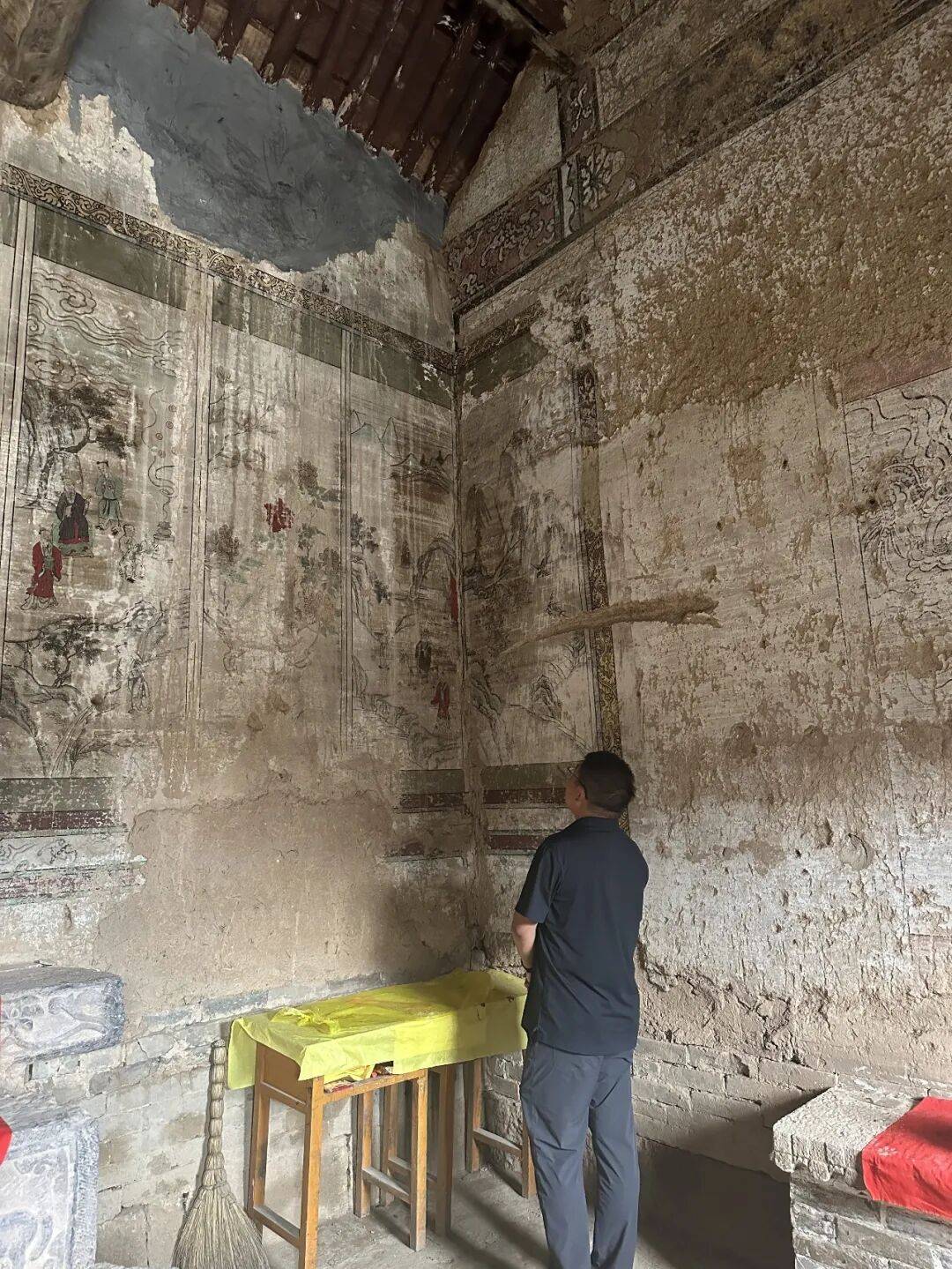
▲Niu Xuefeng adopted Xiaohe Xisan Church in Lingchuan County in 2025. The murals in the main hall have been damaged, and he hopes to preserve it before the situation worsens. Beijing News reporter Photo by Li Bingjie
In April 2026, when the weather warmed up, Niu Xuefeng invested 40,000 yuan and started construction. The village took the lead in the renovation, and the county cultural preservation center sent people to provide guidance. After Niu Xuefeng was adopted, the village also raised 70,000 yuan.
Before the rainy season this year, Niu Xuefeng completed the adoption of cultural relics from the three churches. After repairs, the hole in the southeast corner was blocked, so he didn’t have to worry about rainwater pouring into the temple and getting the murals wet.
In addition to adoption, the “Umbrella Project” is also an effective rescue operation often mentioned by officials and volunteers. The core method is to add a colored steel tile protective shed on the periphery without damaging the ancient building itself. Color steel tiles are low-cost, fast to construct, and can provide immediate protection for leaky roofs.
Volunteers from the Jincheng Cultural Relics Protection Volunteers Association, where Wang Yu, Zhang Xiaojun and Niu Xuefeng belong, also raised funds to “support” ancient buildings such as the Ancestral Temple in Fanwa Village, Qinshui County. They put up a metal roof and protected the entire side hall underneath.
On August 17, when a Beijing News reporter followed Zhang Xiaojun to the Ancestral Temple in Fanwa Village, Qinshui County, the pattering rain had just stopped. The grass and trees were taller than people, so Zhang Xiaojun struggled to find a way. The two murals in the side hall are relatively well preserved. On the mottled walls, the overall outline of the Qing Dynasty picture of infants playing is still there, but there are also traces of rain erosion, and the wall without murals has collapsed to the ground.
Zhang Xiaojun attaches great importance to this mural, and “holding an umbrella” can extend its life in rainy years. However, Wang Yu believes that “the architectural condition of Fanwa Patriarch Temple is in a precarious state. It does not mean that the problem will be solved if a shed is built.”
In addition to “adoption” and “umbrella support”, Wang Xiaobin, head of the Lingchuan County Cultural Relics Protection Center, also vigorously promotes the model of private capital participation. In the past few years, he has been contacting people who are willing to contribute to low-level cultural protection units. The guidance provided by the government and the influx of private funds can help address the urgent needs of low-level cultural preservation units that have not yet been able to wait in line for repairs.
Previously, at the Yuhuang Temple in Yenan Village, Wang Jun, the village party secretary, discovered that cracks in the wall that were originally only two fingers wide had expanded to four fingers wide due to climate and other reasons.
The superior cultural relics administrative agency allocated 300,000 yuan in rescue funds, and this 300,000 yuan mobilized more than 1 million yuan in private donations. Among the people who donated money were coal miners, retired teachers, and tourists passing by. The names of all donors are engraved on the renovation monument erected in September 2025.
Wang Xiaobin said, “In the past few years, I have obviously felt that there are more people building temples in Murakami, and ordinary people are willing to pay.”
▲Wang Jun, party secretary of Yenan Village, Lingchuan County, said that before the Jade Emperor Temple was repaired, the wall had cracked. Photo by Beijing News reporter Li Bingjie
Climate change is just a magnifying glass
Many interviewees believed that climate change has accelerated the process of damage to cultural relics. Shang Ruihua said that in recent years, the proportion of climate impacts has become larger and larger. “Climate change is an important external trigger, but it only exposes the hidden dangers that already exist and makes them visible to the public in a short period of time.”
Under climate change, Shanxi’s ancient buildings face complex dilemmas.
The same rain falls differently on a state protection unit than on a low-level cultural protection unit. Li Zhiqiang mentioned the management difficulties faced by grassroots cultural preservation administrative units. There are more than 1,700 cultural relic sites in the county, and the official power is limited. Limited funds should be given priority to national security and provincial security, and low-level cultural relics should be relatively ranked behind. However, the base of low-level cultural protection units is large and the degree of damage is serious. “It is unrealistic to want to solve them all at once.”
Both people and technology are lacking. Li Zhiqiang said that if you want to know what kind of impact climate has on buildings, you need professional equipment and professional technicians, but these are not what the county-level cultural relics administrative department can do.
Another layer is the issue of property rights and cognition. The property rights of some low-level cultural relics belong to groups or individuals, and the division of rights and responsibilities often hinders protection work, resulting in delayed repairs and poor preservation conditions. Wang Yu said that one year, the association saved more than 10,000 yuan and wanted to “hold an umbrella” for an ancient building. The building was in disrepair and was severely eroded by rainwater. But the village collective didn’t understand it at first. “From the perspective of the villagers, this thing may not have much value anymore, and there is no incense. It is just a group of abandoned buildings. After all, there is almost no one in the village.”
After repeated communication, the village collective agreed and set up the shed. But building a shed only extends its life. Wang Yu said: “We can only rescue but not repair, so we cannot solve the fundamental problem.”
Li Ying, director of the International Exchange Center of the Shanxi Kecheng Energy and Environmental Innovation Research Institute, told the Beijing News reporter that they have conducted pilot projects in cultural preservation units such as Foguang Temple, Yongle Palace, and Jinci Temple. They hope that through scientific monitoring methods, they can answer the question of how Shanxi Province should respond to the impact of climate change on cultural heritage in the future.
Related Reading
- The price of naked tickets is as low as 200 to 300 yuan. After the long holiday, the “missing” ticket window is opened.2026-10-09
- US Dragon spacecraft returns to Earth carrying 4 astronauts2026-10-09
- Geopolitical tensions in the Middle East spurred a surge in international oil prices2026-10-09
- Russian plague prevention researcher dies, experts explain: What types of plague are there? Have laboratory infections occurred?2026-10-09
- Curtis Flowers, Mississippi man wrongfully convicted after being tried for the same killings 6 times, dies at 562026-10-09