“AI is good at finding the fastest answers in known data, and the Nobel Prize awards are often answers that can withstand the test of time.”
Text/Ba Jiuling
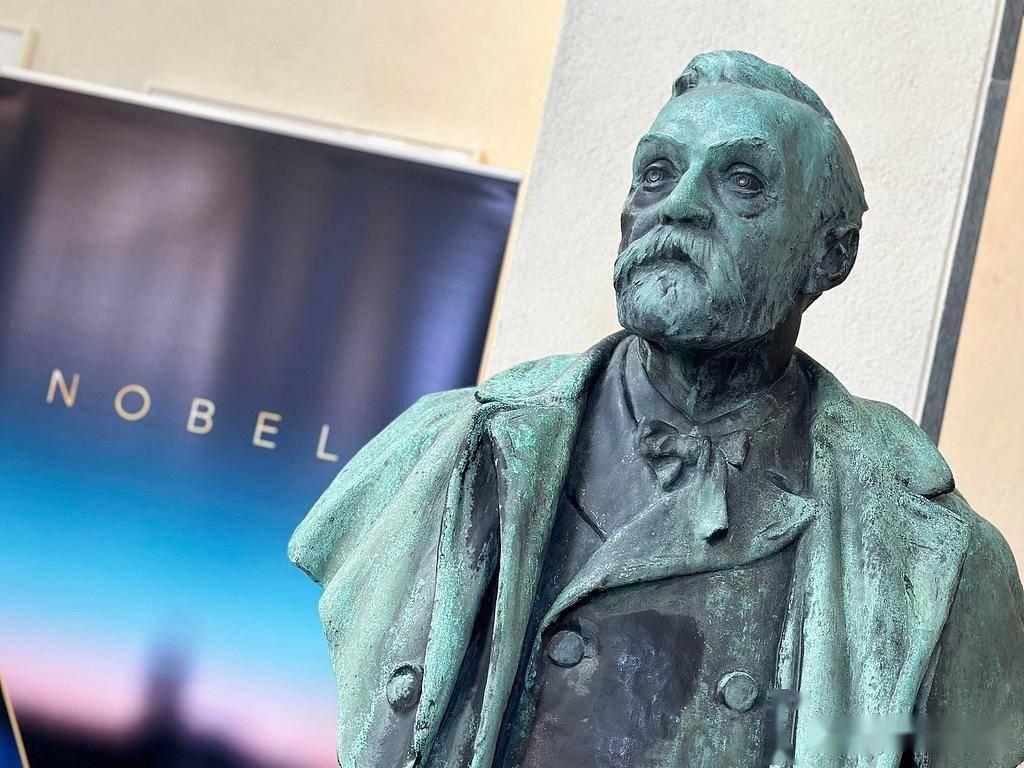
This week, the 2026 Nobel Prizes are announced one after another.
This year marks the 125th anniversary of the establishment of the Nobel Prize. The Nobel Foundation has raised the individual prize to 12 million Swedish kronor, equivalent to approximately 8.15 million yuan, a record high. The explanation given by the foundation is to increase the bonus and maintain the long-term significance of the Nobel Prize.
This actually indirectly proves the Nobel Foundation’s financial management capabilities over the past century.
Its initial capital was about 31 million Swedish kronor, but with the help of diversified investment methods such as stocks, real estate and alternative assets, the foundation’s assets reached 6.744 billion Swedish kronor last year. Over the past five years, the foundation’s average annual return on total investment has been 7.7%, and over the past 10 years, the return has been 7.6%.
As of the evening of October 8, all four awards have been announced: the Physiology or Medicine Award, the Physics Award, the Chemistry Award, and the Literature Award. The laureates study the complex brain, the unknown universe, tiny molecules and provide poetry for humanity. 歌A spiritual feast.
It is worth mentioning that in the high-tech track revealed by the awards, there is also the follow-up and layout of China’s scientific research strength. Before the lottery was drawn, many Chinese scientists became popular candidates, but no one won the prize. Various types of AI also confidently demonstrated their predicted answers, and they were proven wrong, occasionally wildly wrong.
獎項
The first to be announced was the Nobel Prize in Physiology or Medicine. The winners were American scientist Carl Deisseroth and two German scientists Peter Hagermann and Georg Nagel.
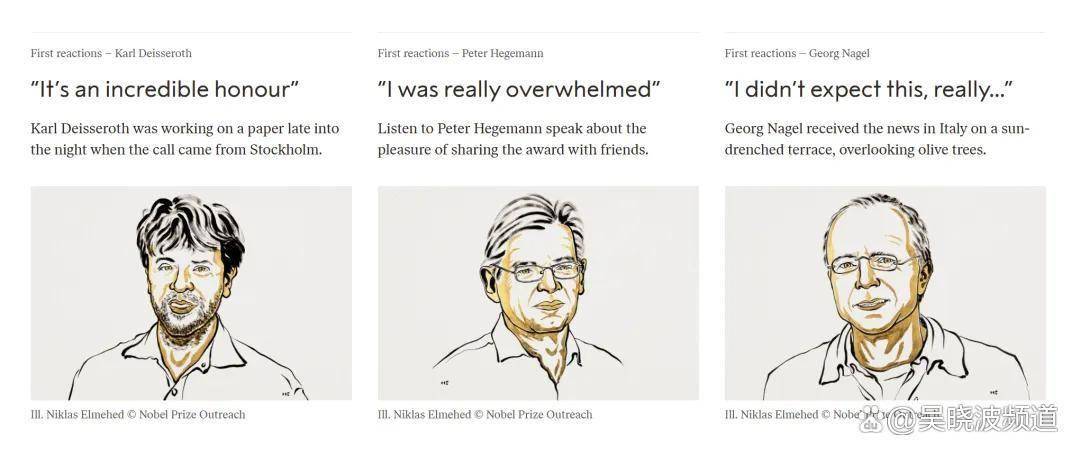
The trio provides an important weapon for exploring the mysteries of the brain.
Initially, two scientists in Germany discovered a special protein called channelrhodopsin in a single-cell algae. When blue light illuminates the protein, the protein’s ion channel will open, and charged ions will flow into the cell, generating an electrical signal. Scientists in the United States introduced the gene encoding channelrhodopsin into rat nerve cells and successfully triggered nerve signals through blue light irradiation.
This is where optogenetics was born. It is equivalent to installing a control switch on the brain, allowing humans to accurately locate which group of nerve cells corresponds to which emotion, memory or physical behavior for the first time. This technology helps us understand the working mechanism of the human brain and provides new possibilities for treating depression and Alzheimer’s disease.
This technology is being used to treat retinitis pigmentosa. The disease destroys photoreceptor cells in the retina, causing loss of vision.
The next Physics Prize was announced, and the prize money was awarded exclusively to 82-year-old physicist Francis Hartzen. This is the first time since 1992 that this prize has been awarded to only one person. His main contribution was the successful capture of a mysterious ghost particle.
This kind of particle is called a neutrino, and it is one of the most numerous material particles in the universe. It is invisible and intangible, but trillions of them pass through our bodies every second. It carries no charge, is not affected by magnetic fields, neither loses energy nor changes direction, and carries the most authentic information deep in the universe. Through it, the secrets of the universe can be explored, but capturing them is very difficult.
In the 1980s, Halzen proposed a plan to transform the Antarctic ice into a detector. After about fifteen years of demonstration and ten years of construction, the IceCube Neutrino Observatory was built in Antarctica in 2011 at a cost of US$271 million and funded by the National Science Foundation.
The observatory is equipped with thousands of light sensors embedded in the transparent deep ice, allowing researchers to observe and capture the faint flashes of light produced when neutrinos interact with other particles in rare ways. Shortly after the observatory was built, the first high-energy neutrinos from distant galaxies were detected.
After winning the award, Halzen said he felt “relieved.” Because this observatory has brought together more than 450 researchers to participate, if they do not win the award, they will be letting down these outstanding colleagues.
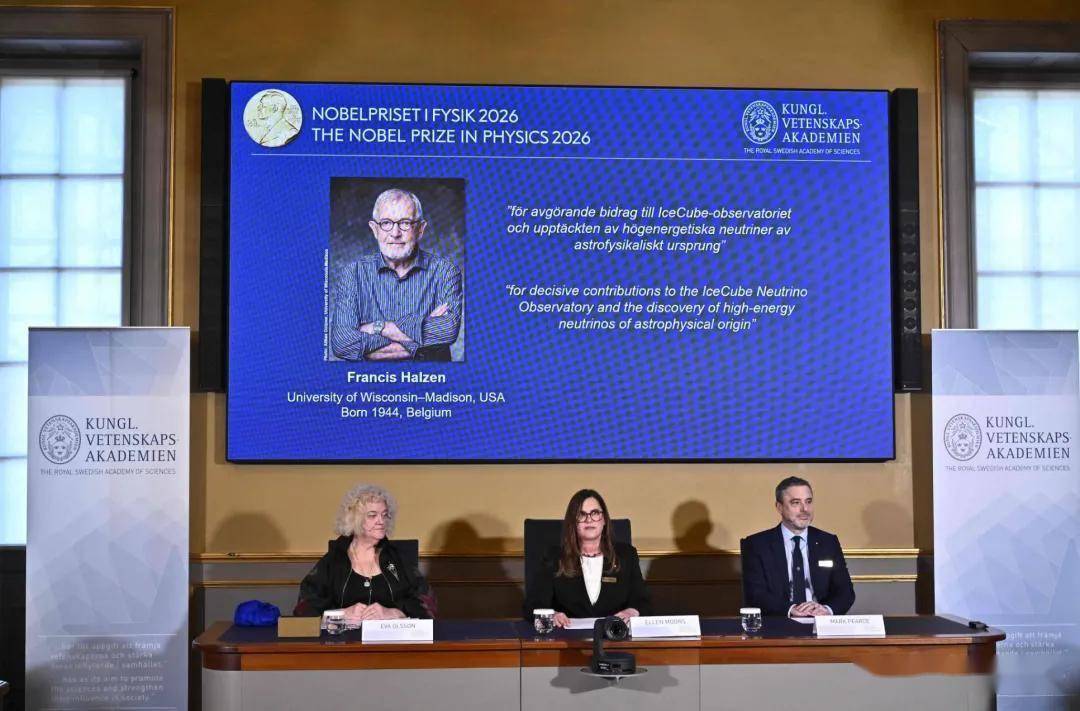
2026 Nobel Prize in Physics announced
Xu Donglian of Shanghai Jiao Tong University was a member of the observatory’s cooperation team and experienced the first batch of high-energy neutrino searches. After returning to China in 2018, she became the chief scientist of the “Hailing Project”. The “Sea Bell Project” is a neutrino telescope project planned to be built by China. The planned construction site is in the deep sea. “It is deployed in the 3,500-meter deep sea in Hainan. It consists of about 1,000 photoelectric detection strings and contains a total of 20,000 new multi-photomultiplier tube capsules, which can cover a seawater volume of about 10 cubic kilometers.”
The latest official news disclosed is that on September 9, the 17th command and dispatch meeting and the 35th cross-project promotion meeting of the “Hailing Project” were held. At present, the construction of photoelectric vertical cables, scale systems, data collection, acoustic positioning and other subsystems is progressing steadily.
French scientist Henri B. Kagan, 95, and Japanese scientist Kenzo Kip, 76, won this year’s Nobel Prize in Chemistry. These two senior scientists have solved a problem that has plagued the life science community for more than a century and provided important ideas for the synthesis of chiral drugs.
Henry B. Kagan and Kip Constitution III
Many molecules have two configurations, left and right, that are mirror images of each other, just like your left and right hands. This characteristic is called “chirality.” But life seems to have a preference. The amino acids that make up proteins are almost all left-handed, and sugars are almost all right-handed. The preference of living systems for a certain chirality is called “homochirality.”
In ordinary chemical reactions, two molecules that are mirror images of each other are often produced at the same time. For drugs, their biological activities may be completely different. One may have a therapeutic effect, while another may have a weak effect or even produce different side effects. Therefore, how to make a chemical reaction produce only the desired one as much as possible has always been an important issue in organic chemistry.
Kagan and Kia Hexiansan’s research revealed one of the key mechanisms. They found that the originally small chirality difference in the reaction can be continuously amplified through nonlinear effects and autocatalysis, making the chemical reaction more and more biased towards producing one of the mirror image molecules. Such research not only helps scientists understand why life has the “single chirality” it has today, but also promotes the development of the pharmaceutical industry.
熱門
On the evening of October 8, it was announced that Canadian poet Anne Carson would win the 2026 Nobel Prize in Literature. The reason for the Nobel Committee is to recognize “his bold and creative literary creations. These works create new forms for contemporary literature in an interesting dialogue with the classical tradition.”
Anne Carson
Before the final results were announced, Chinese writer Can Xue was the popular candidate. On a foreign betting website, Can Xue ranked first on the odds list for the Nobel Prize in Literature. At the top of the list is Haruki Murakami, an old acquaintance.
This is not the first time Can Xue has become a favorite for the Nobel Prize in Literature. This 73-year-old writer is the author of works such as “Huangni Street” and “The Cabin on the Mountain”. With his avant-garde and experimental writing style, he has gained continued attention in overseas literary circles, and many of his works have been included in literature courses in European, American and Japanese universities. But there are also many readers who say that the work is difficult to understand.
In fact, in addition to the literature award, this year there are 9 Chinese scientists who are regarded by the outside world as popular candidates for related awards.
There are four Chinese scientists in the field of physiology or medicine.
Lo Yuk-ming, President of the Chinese University of Hong Kong and academician of the Chinese Academy of Sciences. In the 1990s, he discovered the presence of fetal cell-free DNA in the plasma of pregnant women and developed non-invasive prenatal testing technology. Over the past few decades, this technology has gradually become an important means of prenatal screening worldwide.
盧煜明
The other three are Chinese-American scientists.
In the field of physics, Xue Qikun, academician of the Chinese Academy of Sciences and president of Southern University of Science and Technology, is one of the popular scientists. In 2012, Xue Qikun led a team to experimentally observe the quantum anomalous Hall effect for the first time in a magnetic topological insulator film system. The research solves an experimental puzzle that has long puzzled physicists. Another popular candidate is Ye Jun, a foreign academician of the Chinese Academy of Sciences who has long studied quantum precision measurements and ultracold atoms.
There are three Chinese-American scientists in the field of chemistry.
Liu Ruqian developed base editing and pilot editing technologies, allowing scientists to modify DNA more accurately. Zhuang Xiaowei invented STORM super-resolution microscopy imaging technology, which allows researchers to break through the resolution limitations of traditional optical microscopes and see minute structures inside cells that could not be directly observed in the past. Deng Qingyun is an important pioneer in organic light-emitting diode research. His research ultimately promoted OLED from laboratory technology to consumer electronics such as mobile phones and televisions.
Why are these people the favorites for this year’s Nobel Prize?
An obvious reason is that they all have “Nobel Prize weather vane” signals. Some have won top international scientific awards such as the Wolf Prize and the Lasker Prize, and some have been selected for the Clarivate Analytics Citation Laureate. Since its inception in 2002, 89 citation laureates have gone on to win the Nobel Prize. Although Clarivate also emphasized that the citation crown is not a prediction of the Nobel Prize winner that year, it is still an important reference for the outside world to judge the impact of scientists’ scientific research.
More importantly, the wisdom and hard work of these people have had a world-class impact. Some of their research has changed the way humans understand the material world, some have changed medical diagnosis and disease treatment, and some have entered the daily lives of ordinary people. They did not win this year, but they may still become Nobel Prize winners in the future.
AI
AI has demonstrated its capabilities and controversies in scientific research.
In the past few years, scientists in the field of AI have won Nobel Prizes, and the Google DeepMind team that used AI to solve protein folding problems also won Nobel Prizes.
A month ago, OpenAI caused huge controversy in the mathematics community after claiming that it had solved a millennium mathematical equation problem. On the occasion of the announcement of this Nobel Prize, OpenAI disclosed a large number of mathematical research results produced by cutting-edge models, totaling 722 research manuscripts and 372 result families, covering multiple hard-core fields such as algebra, geometry, number theory, and theoretical computers, including the quasi-Riemannian hypothesis.
Once again, anxious mathematicians’ jaws dropped.
But in other aspects, AI is still a bit blindly confident.
Before the Nobel Prize was announced, a German media asked nine mainstream AI models such as ChatGPT and Gemini to predict the winners. When it comes to prizes in physics, chemistry, physiology or medicine, AI predictions are mostly wrong.
For example, most models predict that prizes in physiology or medicine will be awarded to researchers related to GLP-1.
GLP-1 is a hormone secreted by the intestines after eating, which can send a set of “fullness signals” to the body. Scientific researchers have transformed structurally stable GLP-1 receptor agonists, drugs known as semaglutide, which can not only treat diabetes, but also become a weight loss tool.
For the Chemistry Prize, Liu Ruqian is highly favored, while for the Literature Prize, Can Xue is favored. Microsoft’s Copilot awards awards to deceased scientists, but Nobel Prizes have long been excluded from awards to deceased people. ChatGPT also conclusively predicted the winner of the Nobel Prize in Mathematics, but the Nobel Prize does not have a mathematics prize.
AI is good at finding the fastest answers in known data, and Nobel Prizes often reward answers that can withstand the test of time.
It is thanks to long-termism that Nobel’s original legacy can span more than a century and continue to thrive. Scientific research, the same thing.
Author|Ma Leilei
主編|何夢飛
Related Reading
- Someone finally bought the original robot2026-10-09
- Original AI game, Game of Thrones2026-10-09
- A hand-made variety show with a local flavor is earning 500,000 yuan a month.2026-10-09
- How hard should you press the brake pedal of a million-dollar luxury car to be considered “overstepping”?2026-10-09
- Where is the “last mile” of enterprise AI implementation stuck?2026-10-08