
Before graduation, college students are already busy working on AI projects.
Fixed focus One (dingjiaoone) original
Author|Lei Jing Chen Dan Wang Lu Wang Hanxing Li Mengran=
Editor | Lei Jing
Hackathons are getting more and more popular.
According to statistics from the AI event community “AI Event Pass”, in the first half of this year, nearly 500 hackathons were held across the country, with an average of two or three hackathons per day. The organizers included universities, technology companies and entrepreneurial communities.
A Hackathon is a limited-time development competition. Participants usually need to form a team within 24 hours, 48 hours or 72 hours, from proposing ideas, designing solutions to developing products, and finally handing over a working demo. In order to complete the work before the deadline, it is common to stay up late to write code, temporarily modify the plan, and submit the project on time.
In the past, such competitions were mainly for programmers and technical developers. Nowadays, with the continuous improvement of AI Coding capabilities and the lowering of programming barriers, people who cannot write code also have the opportunity to use AI to turn their ideas into products. The forms of competitions are becoming more and more diverse. In addition to traditional software development, there are also different types of competitions such as AI games, intelligent agent applications, and AI video creation.
Among the contestants, there were many college students who had not yet graduated. In addition to computer majors, students majoring in journalism, foreign languages, film and television, etc. have also begun to appear in hackathon competitions. Their purposes for participating in the competition vary. In addition to accumulating project experience and increasing their chances of finding jobs after graduation, they also hope to get in touch with the industry, meet like-minded partners, or try to turn their ideas into products.
For them, a hackathon is a bit like a condensed workplace practice. Some people became product managers for the first time, some led development teams, and some experienced the complete process from proposing ideas to delivering works.
AI makes it easier for them to come up with ideas, but it also allows them to encounter practical problems in advance: What should they do if the functions cannot be completed? Once the technology is realized, does the product have value? How much help can an award certificate bring when applying for a job?
We spoke with five college students who have participated in hackathons. Some people began to consider starting a business after winning the prize, some participated in the competition but failed repeatedly, and some found that they needed to make up more lessons than they imagined.
Here’s what they had to say.
01. Winning two first prizes in half a year, liberal arts students can also make AI products
Jiang Jiang|Nanjing University Second year graduate majoring in Journalism and Communication
I have always been a more practical and step-by-step student. I majored in journalism and communication as an undergraduate and graduate student. I really like my major and think that after graduation, I will most likely go to a company to do marketing, advertising or content-related work.
In March this year, the school opened an AI+ industry-related course, and I began to be systematically exposed to AI. Once, the teacher recommended us to visit the College Hackathon League Finals held in Nanjing. There were more than 50 final projects from different universities at the scene. When the contestants introduced their works, their eyes were shining.
I originally thought that the hackathon was a competition only for students with technical backgrounds, but I didn’t expect that there were many liberal arts and art students present. Everyone can turn their ideas into products. The competition has a great impact on me, like discovering a new continent.
In May, I signed up for my first hackathon. At that time, I didn’t know much about AI and had no development experience, so I basically went there with a learning mentality. The competition was organized by the seniors of the school, and the atmosphere was relatively relaxed. It was more like communicating and learning. Although I didn’t win an award, I at least made my first work and gained experience.
After this first experience, I began to study the competition proposition in advance and figure out how to make a product that is both creative and meets the requirements.
The second time I participated was the Douyin Hackathon Nanjing Station, where I was required to complete a product in about 24 hours. I formed a temporary team on site, mainly responsible for product direction, and developed a small game with my technical classmates.
We borrowed the theme of “no duck can escape Nanjing alive” and let the player play as a duck to break through the city of Nanjing and find ways to avoid various obstacles. Once the challenge fails, it will be turned into salted duck or roast duck and served on the table.
The idea was interesting, but the execution was not that smooth. It is easy for liberal arts students to seek perfection and perfection when making products, and they want to make the functions as perfect as possible from the beginning. Fortunately, there were technical classmates in the team who quickly verified the plan and found that the original idea was not feasible.
At that time, five or six hours had passed since the game, so we had no choice but to overturn it and start over again. Everyone took turns catching up on sleep, staying up late to work, and finally completed the game and won the first prize in Nanjing Station.
This made me realize that it is not enough to be creative when making a product, you also have to consider whether it can be realized. Later, when I participate in competitions, I will spend a quarter of the time discussing product positioning, figuring out what problems to solve, and then starting development.
In July, during my internship at Xiaomi headquarters in Beijing, I participated in a hackathon organized by Xiaomi. We have done an elderly care project, hoping to use smart hardware to protect the safety of the elderly while reducing the impact of cameras on their privacy. We passed the screening and defense all the way and won the first prize in the country, with a bonus of more than 30,000 yuan.
What impressed me even more this time was the opportunity to communicate with Xiaomi’s internal engineers and product personnel, and listen to them give suggestions to the project based on their actual work experience. After the game, we also discussed follow-up plans with the relevant departments responsible for whole-house intelligence. Although the project has not been implemented yet, it exposed me to things that I could not learn in class.
After several competitions, I also made many friends from different majors. Everyone has established a small group, shares with each other when they see suitable competitions, and forms a team together when they have ideas. Now that I make my own products, I often ask them for advice when I encounter problems that I don’t understand.
I also gradually discovered that a liberal arts background did not prevent me from participating in product development.Journalism and communication majors need to understand the audience and gain insight into needs. Making products also requires understanding what users want. What you have learned can also be used in new areas.
After finishing my internship in October, I arranged a gap period for myself to stay at home and tinker with AI products. I became what everyone calls a “builder” and combined my own self-media to create my first personal commercial small project. I made a profit of about 5k in two months.
When I was interning in a large factory, I was only responsible for part of the work in a certain department, and the pace of project advancement was relatively slow. In a hackathon, you can go through the complete process from idea proposing to development and presentation in just one or two days.Although it is very tiring, I quite enjoy the feeling of being able to see ideas turn into products very quickly.
I’m willing to try more different things now. I haven’t decided which path to choose in the future, but at least I don’t want to set limits for myself too early.
02. After studying traditional film and television for three years, I shot a 5-minute short film in 48 hours.
Bu Xing Yun|Fourth year film and television production major at Macau University of Science and Technology
In August, two classmates and I participated in the AI Imaging Hackathon jointly organized by the College Student AI Art Season and Biotech Vidu. The competition requires the completion of a 5-minute science fiction short film within 48 hours. From script thinking, screen generation to post-editing, everything has to be completed within these two days.
In the first three years of my undergraduate studies, I studied traditional film and television production and participated in short films, documentaries and other projects. Later, the school opened a direction in AI audio-visual creation, and I chose this direction. Last semester, my team members and I completed our first AI short film. It was also from that time that I began to seriously consider whether I could engage in AI film and television production, AI project management, or AI content operation-related work in the future.
I initially signed up for the Hackathon because I thought it was new, wanted to experience limited-time creation, and wanted to get to know creators from other schools. Of course, the bonuses are also very attractive.
Before the game, we specially studied the generation effect of Vidu, and also built a set of real-life video prompt words Skill, hoping to unify the picture style and reduce the time of repeatedly modifying the prompt words.
On the day of the competition, the organizers announced the theme: science fiction.
The three of us formed the “Little Lotus” team, all involved in directing and shot generation. I am mainly responsible for project coordination, character visual material production, and some shot generation and editing.
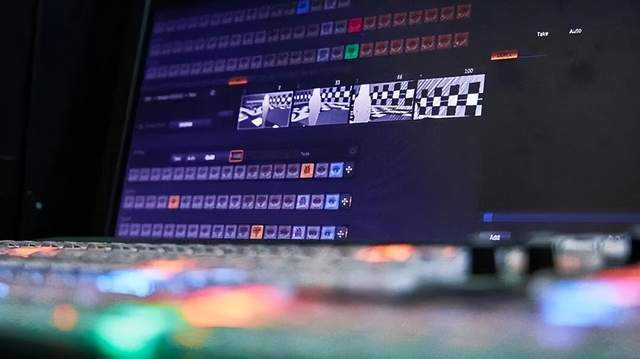
Just discussing the story took nearly half a day. In the end, I decided to make “Seed”, which tells the story of a mother who leaves her daughter the opportunity to live in a new area in the future when the world’s energy sources are gradually depleted. Although it is a science fiction film, we want to tell a story about the relationship between mother and daughter.
After confirming the script, we divided the work according to the scene, using Midjourney to generate pictures, and then Vidu to generate videos. For more difficult shots, we needed to use other models. It wasn’t until late the next night that the material generation was basically completed and intensive editing began.
The biggest headache is actually time. The first version of the script had more plot, but when it was actually done, it was discovered that it exceeded the 5-minute time limit and there was no time to generate that many shots. We discussed for a long time which plots to cut, and in the end we had to leave out some designs that we originally liked.
In the past, when I was doing coursework, I had relatively free time, so I could polish it slowly. A hackathon is completely different, it’s very stressful and a lot of decisions have to be made on the spot.That competition made me realize that being able to use AI tools is only one aspect. What is more important is being able to tell the story clearly within a limited time.
Fortunately, the work was successfully completed in the end, and our “Seed” also won the second-class honorary work. After the competition, we improved “Seed” and took it to Tencent’s “One Old and One Young” AI Charity Video Competition, and won the Excellence Award.
I think hackathons are different from classes and internships. The class is mainly about learning knowledge, and the internship can expose you to the real content production process of the company. In the hackathon, you have to use everything you have learned within 48 hours, and you have to solve various unexpected problems with your teammates.
If I had not been exposed to AI, I might have still followed the direction of traditional film and television, and I didn’t have a particularly clear idea of what I would do after graduation. The emergence of AI has allowed me to find a direction that I am really interested in.
Now, I am doing internships related to AI video operations while preparing for graduate school applications. In the future, I also want to try to develop the short films I have made into a series, and I will continue to participate in competitions if I have the opportunity.
If there are students who want to participate in a hackathon but are worried that they are not capable enough, I would suggest giving it a try first.In fact, AI is not as complicated as imagined, and many things can be learned by doing.At least for me, if I didn’t dare to sign up because I had no experience, I wouldn’t have had the following experiences.
03. After winning the hackathon, I became more aware that I still had a lot of lessons to make up for.
Ryan|Freshman School of Computer Science, Shanghai Jiao Tong University
At two or three in the morning, our system was finally fully operational.
The camera takes a picture of the washing machine and transmits it to the cloud. AI identifies whether the washing machine is running or idle, and then synchronizes the results to the mobile phone. The entire process does not require manual operation. I stared at the results and was so excited that I couldn’t sleep.
A few hours later, I drank a glass of iced Americano, stood in front of the judges, and talked about how our solution solved the real problem, how it worked from beginning to end, and how we built the software and hardware ourselves. When I received the award, my teammates and I cheered together.
This is a hackathon competition held by Shanghai Jiao Tong University in early September. I was just a freshman at the time, and not long after I entered school, I won the championship with my teammates. Now looking back at my competition experience at that time, the excitement was real, and the youthfulness was also real.
During military training, I saw the registration information for the competition. I happened to have a project that I had been studying. I thought it was suitable and decided to give it a try.
Signing up is more out of interest. I participated in similar competitions when I was a sophomore in high school. This process of turning ideas into physical objects is very attractive to me.I also have plans to start a business in the future. I would like to try more when I encounter opportunities like this. I don’t want to wait until I am “ready” to start.
What we do is a washing machine status inquiry and reservation system. The usage status of the school’s washing machines cannot be checked online. Students often run downstairs with clothes in their hands, only to find that the washing machine is running and have to carry them back to the dormitory to wait. So I thought, could we make a system so that everyone can check it in advance on their mobile phones.

This project involves both software and hardware. The APP is relatively easy to make. The difficulty lies in the hardware for monitoring the status of the washing machine. The washing machine itself is not connected to the Internet. We have to install the camera ourselves, monitor its status in real time, and then transmit the picture to the cloud for AI recognition.
The competition lasted only two days, so we stayed up until two or three in the morning and went to bed at 7 o’clock the next morning to prepare for the official report. The ability to withstand stress is forced out. I’m very lucky. I met reliable and capable teammates and learned a lot from each other.
Although I won the championship, after reviewing it, I felt that the project was not completed well enough.
We forcefully added an additional device to the washing machine to make up for its own shortcomings of not being connected to the Internet, and convinced ourselves that this was necessary. Thinking about it now, we were too focused on how to implement this solution, but did not fully consider whether there was a better solution. This is not much different from the steam train era who was obsessed with training a batch of faster horses, and the people in 2024 who are wrapping a layer of interfaces on large models and making various “shell” applications.
This makes me better understand what Chinese AI scientist He Kaiming said: “The ideas that come up are generally very poor” and “Bet on the right problem, rather than on a certain solution.”There will be 10,000 people in the world thinking about the same idea as you. Only through trial and error and rapid iteration can you discover the problems and find a direction worth continuing.
I also know that this award has limited help in employment in the AI industry. Compared with scientific research results such as publishing papers, this experience is not a very outstanding advantage. But I will still choose to participate in the future. On the one hand, I can practice my ability to resist stress and work in a team. On the other hand, I do have a sense of accomplishment. I don’t want to package it as an amazing experience. In addition to being a champion, I also know where I have shortcomings.
What makes me happy about this competition is not just the championship. It was the first time that I led a team to do something from start to finish, turning a rough idea into a truly operational product. If you want to start a business in the future, you have to make something first. I hope that I can still remember the excitement of that early morning in the future, and I also hope that one day I can make a truly valuable product.
04. I thought I was a gaming genius, but ended up running 5 games in a row and only got a consolation prize.
Yixuan | Sophomore, Sun Yat-sen University, Computer Science
I am now a sophomore in college, majoring in computer science. Many people think that computer science students write code every day, but I am actually the kind of person who has a big brain but not very good hands-on skills. I think more and do less.
The first time I came across a hackathon was when I was a freshman. I signed up for a local programming hackathon with my classmates. That time had nothing to do with AI. It was just a group of people locked in a room to answer questions, solve some very tricky coding problems, find bugs, and fix bugs. It was more like a code competition. To be honest, the experience was average. I thought that this was what a hackathon was.
It wasn’t until I participated in my first AI hackathon at the beginning of this year that I discovered that it could be played like that. It was an AI game development hackathon for college students in the Greater Bay Area. About 150 teams participated, and the whole process lasted 72 hours. My roommate and I teamed up, used AI to assist in writing code, and made a small game called “Cat Cat”.
The idea came from my discovery that many cat owners on the Internet shared their experiences of cats running away from home and finding them back. I collected a large number of such cases and posted several notes on Xiaohongshu to collect real stories. Then I turned these scenes into levels to simulate the process of owners trying to find ways to get their cats back.
Every time a cat is retrieved successfully, the game will automatically generate a picture of “cat-finding tips”, which can be saved on your phone and you can learn some knowledge while playing.
That time we won the first prize, and when I stood on the stage to receive the award, I felt that I was the chosen one and a game creative genius.
Then I drifted off. In the next three months, I applied for 5 more hackathons one after another, the larger ones such as the OpenClaw Hackathon in Shenzhen. The most recent one was to follow a senior who was an intern at Tencent to participate in the South China Regional Preliminary Round of the Tencent Cloud Game Development Hackathon. It was a pity that we passed the online on-campus selection, but the offline road show was not done well. We were too pressed for time and had too many ideas. We tried to cram everything into it, and in the end we failed to make it to the finals.
After all, in these five hackathons, I only received one excellence award, which was basically a consolation prize. But I enjoyed it instead.
Because I am usually quite introverted,Hackathons are the kind of occasions where you can make friends without requiring high-intensity social interaction., everyone gets together to work, no need to deliberately exchange greetings, they will naturally become familiar with each other.
Of course there are also practical considerations. I heard from my senior brothers and sisters that when looking for a job after graduation, you need to not only strive for academic qualifications and internships, but alsoHaving a few impressive hackathon award-winning experiences is also a plus.I thought that while I still have plenty of time during my sophomore year, I would try my luck, just in case I hit the jackpot one day.
I am actually a hackathon newcomer, so I don’t have much experience. My advice to newcomers is to have no baggage. The competitions I participated in basically had no barriers to entry. I just found a few good friends to form a team and just treated myself to a fun trip. Anyway, the worst result is like me, getting a consolation prize.
05. A sophomore liberal arts student studying Arabic went to a hackathon to write code.
Xiaolan|Shanghai International Studies University, sophomore, Arabic major
I study Arabic. According to the employment paths of previous seniors, after graduation, there is a high probability that they will work in marketing for Chinese companies that go overseas, or they will be sent to work overseas.
But I started to be “anxious” in the first semester of my freshman year.
Many companies now clearly require candidates to use AI tools, such as Codex and Workbuddy, when recruiting. I realized that in this day and age, having a language is not enough. In order to be competitive in the future, I started to go online to teach myself how to use various AI tools.
As I continued to learn, I developed a small program for memorizing Arabic words. At first, it was just to solve my own pain points. Later, I promoted it within the Arabic departments of major universities and found that it can really help students solve their problems. This gives me a great sense of accomplishment.
With this small program as a foundation, this year, I signed up to participate in the Claw Hunt hackathon competition in Shanghai in 2026.
At the hackathon site, I was one of the very few liberal arts students, and I was only a sophomore. Because we met two senior graduate students before, we formed a team directly. The first day of the competition was about check-in, rule sharing and round-table communication, and then it entered the extreme development session.
In this team, I am not only the one who “learns Arabic”. My role is equivalent to a product manager, with a little bit of backend development. Because there are students in the team who are good at front-end and coding, the core technical work is left to them.I am mainly responsible for defining this product and optimizing human-computer interaction. We plan to make a Personal Agent for iOS, with the goal of helping people review every detail of their daily lives.
But reality soon hit us hard. The biggest problem with making an app from scratch is simply not enough time. When the deadline came, we only made a very simple demo.
As far as I know, some contestants submitted their own existing projects. Their degree of completion is extremely high, and they are naturally more likely to be favored by the judges. And a team like ours that develops from scratch does not actually have an advantage in a short-term review environment.
Although I didn’t win any prize, the biggest gain from this experience for me is just two words: eye-opening.
In the past, in schools, the traditional education system did not pay much attention to the cultivation of “AI+ related”, especially in liberal arts schools like ours. Although we are still exploring, no matter the depth or breadth, it is far from meeting the needs of the ever-changing job market. At the hackathon site, I saw real development scenarios and how others used technology to reduce dimensionality.
After that, I also plan to participate in more AI competitions.For no other reason than to work on projects, get to know people in companies or investment institutions, and pave the way for your career development.If there are students who want to participate in similar competitions, I would like to say to them: don’t be anxious about the use of AI tools.
In the final analysis, these software and programs are for human use. Rather than worrying about the use of AI, what is more important is thinking: How to put your ideas into practice? What is the value of your idea? What problems can it help others solve? A good idea will always be more helpful than using 10 AI Agents.
Related Reading
- Original Zhao Benshan said, why is AI music so scary?2026-11-23
- iPhone 18 big update, see you next spring! But Apple’s challenge has just begun2026-11-23
- Anthropic sounds the death knell of the AI bubble?2026-11-23
- Wei Ya stopped broadcasting live, but her husband expanded his business.2026-11-23
- Great GTA 6, “not fun” GTA 62026-11-22