He won the world championship on the track, but his school recruitment was hotly searched for with an annual salary starting from 120,000 yuan.
On October 26th and 29th, Zhang Xue, the founder of Zhangxue Motorcycle, came to Chongqing University of Technology and Chongqing University to conduct campus recruitment presentations. When this entrepreneur with technical ideals walked into a university to recruit engineers, he was greeted not only with applause, but also with skepticism on the Internet.
Annual salary is 120,000 to 150,000 yuan, six insurances and one fund, plus future salary increases and growth opportunities. In Zhang Xue’s view, this is the sincerity that startups can provide; but in the eyes of some netizens, such a salary seems a little less interesting than the R&D positions of large new energy vehicle companies.
Zhang Xue tried to use the story of an old employee’s shareholding valuation of 30 million yuan to illustrate future possibilities, but it once again sparked controversy. Faced with the criticism of being “arrogant”, he simply responded: “Isn’t the choice a two-way street?”
Both sides seem to make sense: young people want higher wages, and companies need to control costs; engineers want to see immediate returns, and entrepreneurs prefer to talk about future growth.
What’s even more interesting is: Why does a company that has just gained the favor of capital and has a post-investment valuation of 6 billion yuan still be careful about the salary of fresh graduates?
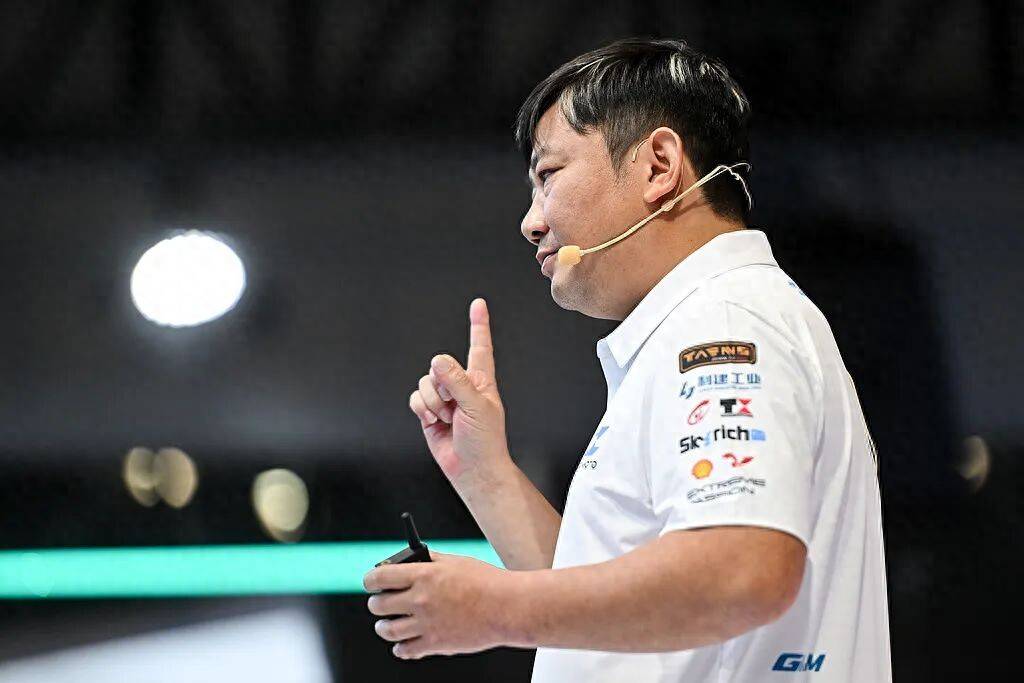
Zhang Xue, founder of Zhang Xue Motorcycle. Picture/Visual China
120,000 people who “can’t achieve low level and high level”
According to the “2026 Chinese College Student Employment Report” released by MyCOS Institute, the average monthly income of my country’s 2025 undergraduate graduates six months after graduation is 6,435 yuan, equivalent to an annual income of approximately 77,200 yuan.
Let’s look at another set of data. Data released by the National Bureau of Statistics in May 2026 show that the average annual salary of employees in the manufacturing industry in urban non-private units across the country in 2025 will be 113,600 yuan, and that in the private sector manufacturing industry will be 76,100 yuan. However, among manufacturing enterprises above designated size, the average annual salary of professional and technical personnel reaches 152,000 yuan. “Manufacturing industry above designated size” refers to manufacturing enterprises whose main business income (or sales) reaches 20 million yuan or more.
If we compare these data, the annual salary of 120,000 to 150,000 yuan given by Zhang Xue Motorcycle is roughly the same as the average salary of manufacturing workers nationwide. Therefore, it is not accurate to simply conclude that Zhang Xue Motorcycle pays a “low salary.”
However, the problem is that the job market faced by graduates of relevant majors from Chongqing University is not the entire automobile manufacturing market, but the more competitive R&D talent market.
According to data released by the Chongqing Municipal Economic and Information Commission in January this year, Chongqing’s automobile production will reach 2.788 million units in 2025, returning to its position as the “No. 1 automobile city” in the country. Chongqing not only has “new car manufacturing forces” such as BYD, Thalys, and Li Auto, but also established car companies such as Great Wall, Changan Ford, and Geely Automobile have also set up manufacturing bases in Chongqing.
At the same time, as a 985 prestigious school, Chongqing University has a profound foundation in mechanical engineering and vehicle engineering, and has hard-core scientific research platforms such as the “National Key Laboratory of Mechanical Transmission”. Its graduates are highly recognized in the industry and are also a “must compete” for major car companies’ annual recruitment.
According to multiple domestic media reports, some Chongqing University graduates with master’s degrees in vehicle and machinery have entered R&D positions at large car companies such as Cyrus and BYD, with annual salaries reaching 200,000 to 350,000 yuan, and some intelligent driving algorithm positions are even higher. In comparison, Zhang Xue’s annual salary of 120,000 yuan is indeed not outstanding.
If one company gives 120,000 yuan and another company gives 220,000 yuan, there is nothing wrong with graduates choosing the latter. Similarly, if an enterprise decides how much salary to pay based on its own operating capabilities, it cannot simply be understood as disrespecting talents.
Losing money and spending money on R&D
There is another background to this controversy that deserves attention: Zhang Xue Motorcycles is growing rapidly.
This domestic motorcycle company founded in 2024 made a breakthrough in the 2026 World Superbike Championship with its independently developed high-performance models and quickly gained market attention. Zhang Xue once publicly disclosed at the 2026 Enterprise Partners Conference that its total output value in 2025 would reach 750 million yuan, and its R&D investment would be 69.58 million yuan. The R&D investment accounted for approximately 9.33% of sales revenue, and the annual loss would be 22.78 million yuan.
Compared with other A-share listed motorcycle companies, the R&D expense rate of CFMoto (603129) for 2025 is 6.18%, Qianjiang Motorcycle (000913) is 7.06%, and Loncin General (603766) is about 2.45%. Zhang Xue Motorcycles is far ahead of its peers in R&D investment, even catching up with large car companies.
And this number is growing. According to reports from the Securities Times, Financial Associated Press and other media, Zhang Xue Motorcycles completed the latest round of financing in August 2026, with a post-investment valuation of nearly 6 billion yuan. He had previously stated that he would increase the full-year R&D budget to 135 million yuan.
This is also a common problem faced by some technology manufacturing companies at present: high valuations and low profits. If they do not rely on external financing, the free cash available on their accounts will be insufficient for research and development.
Assume that Zhang Xue ultimately plans to recruit 100 graduates with an average annual salary of 120,000 yuan, and the annual basic salary budget is 12 million yuan. If the average annual salary increases to 250,000 yuan, the budget will increase to 25 million yuan. For wages alone, an additional 13 million yuan is spent every year, not counting other labor costs borne by the company.
For Zhang Xue Motorcycle, which has an annual loss of 22.78 million yuan, this is not an expense that can be ignored.
Use equity to retain people
If the salary cannot match that of big manufacturers, can we use equity to retain engineers?
For start-up companies with limited funds and urgent need for R&D talents, it is a realistic choice to allow employees to share the future growth benefits of the company. But whether equity incentives can truly retain talents depends not on how much wealth the company promises, but on how the benefits are distributed, when they are cashed out, and how much risk employees need to take.
BYD’s approach is somewhat representative. In 2025, BYD will launch an employee stock ownership plan, with the number of participants not exceeding 25,000, the total capital not exceeding 4.1 billion yuan, and conditions for installment unlocking and performance assessment being set. Tesla in the United States also uses equity incentives extensively. According to its 2025 annual report submitted to the U.S. Securities and Exchange Commission, the share-based payment expenses recognized throughout the year were approximately US$2.825 billion, of which the R&D department corresponded to approximately US$1.332 billion.
What the two companies have in common is that they link some employee benefits to the long-term development of the company through institutionalized incentive arrangements. However, as listed companies, BYD and Tesla have public stock trading markets, and employees usually have relatively clear channels for monetization after meeting vesting, lock-in and related transaction restrictions.
The situation with Zhang Xue Motorcycle is different. Zhang Xue once mentioned in a school recruitment presentation that an employee who has followed him in starting a business for many years has a valuation of about 30 million yuan in shares. However, the valuation of 30 million yuan does not mean that he has received 30 million yuan.
For start-up companies that have not yet been listed, whether the equity held by employees can be realized often depends on subsequent financing, company listing, equity transfer or company buyback and other conditions. If there is no clear exit arrangement, no matter how high the paper valuation is, it may not be converted into actual income for the time being. What’s more, the equity returns received by early core employees do not mean that ordinary R&D personnel who join later can replicate it.
Therefore, what Zhang Xue Motorcycle really deserves to learn from is not how many equity incentives BYD and Tesla have provided, but how to establish an incentive system suitable for its own development stage. For example, while ensuring a reasonable basic salary, set up project bonuses, technical achievement awards and equity vesting in installments for engineers who undertake key research and development tasks, and clarify the award conditions, repurchase price and exit method.
After all, for young engineers who have just graduated, the wealth they may obtain in the future is important, but how much salary they can get every month and whether their income can grow in a few years are equally realistic.
“Zhang Xue” who support the manufacturing transformation
Zhang Xue is not a boss who is unwilling to pay high wages. He once said that the company has established an employee equity incentive platform, and some heads of R&D, procurement and manufacturing have obtained shares. Among the company’s open recruitment positions, the monthly salary of an automotive styling director reaches 60,000 to 90,000 yuan, and the maximum annual salary can exceed 1 million yuan.
Behind this is Zhang Xue’s business logic: mature engineers can directly solve key technical problems, while fresh graduates usually require a certain training and growth cycle.
The transformation China is experiencing is that the competitive advantage of the manufacturing industry is gradually shifting from relying on low wages and large-scale labor supply to relying on the comprehensive advantages formed by engineers, skilled workers, R&D investment and a complete industrial chain.
According to the “Statistical Bulletin on National Science and Technology Funding Investment in 2025” released by the National Bureau of Statistics, the Ministry of Science and Technology, and the Ministry of Finance on October 16, 2026, the national R&D funding in 2025 was 3.93 trillion yuan, a year-on-year increase of 8.2%. Among them, enterprises bear 77.4% of the R&D investment, and the R&D expenditures of manufacturing enterprises above designated size are 2.32 trillion yuan.
When innovation increasingly occurs in the R&D, trial production, production and technology improvement processes of industrial enterprises, the question enterprises face becomes: Can the value generated by technological innovation be transformed into employee income and career development opportunities?
In October 2026, the central government successively issued the “Opinions on the Development of New Productivity” and the “Opinions on Promoting the In-depth Integration of Scientific and Technological Innovation and Industrial Innovation”, clearly proposing to strengthen the dominant position of enterprises in scientific and technological innovation, promote technological upgrading of the manufacturing industry, and improve the training and innovation incentive mechanism for engineering and technical talents.
In recent years, the country has promoted the transformation of manufacturing from cost-driven to technology-driven through policies such as R&D tax incentives, training of outstanding engineers, school-enterprise cooperation, and equity incentives. However, the increasing importance of technical talents does not mean that all manufacturing companies have the ability to pay high wages.
Zhang Xue Motorcycle’s salary controversy exactly reflects the contradiction in this transformation: the country is paying more and more attention to engineering and technical talents, but the profitability and salary mechanisms of some manufacturing startups have not yet adapted to the new requirements of competition for technical talents.
How to control operating costs while allowing engineers to earn reasonable incomes and share corporate innovation results will become an important test for China’s manufacturing industry to continue to release engineer dividends.
Author: Xiong Ke
Related Reading
- World, line up to sell goods to China!2026-11-12
- Ni Runfeng, the “King of Color TV”, passed away. From a workshop technician to the head of a state-owned enterprise, his ups and downs in half a life defined an era of home appliances.2026-11-12
- Original “Fearless” Wang Jianlin regains control of Wanda Business Management, and his net worth has evaporated by 200 billion in ten years2026-11-12
- Original: The middle-class people are crazy about grabbing Archaeopteryx in Sam2026-11-12
- There is no more double 11 in the world, leaving businesses miserable2026-11-11