Behind the exit of home appliances is the transformation of Chinese home appliances from apprentices to rivals, as well as the cruel logic of corporate transformation and emerging industries.
Text/Daily Capital
Autumn in Hong Kong is not cold, but in the last week of October, South Korean technology giant Samsung Electronics could no longer sell its home appliances.
On October 27, according to foreign media reports, Samsung’s Hong Kong online store has stopped selling major home appliances including refrigerators, washing machines, air conditioners and vacuum cleaners. Samsung’s customer service representative in Hong Kong explained that it was “temporarily out of stock” and emphasized that it had not received any official notification about withdrawing business. However, there is news that Samsung’s Hong Kong subsidiary began preparing for the withdrawal about one to two months ago.
What is intriguing is that the size of Hong Kong’s home appliance market is estimated to be about 2.7 trillion won (approximately 13.473 billion yuan), and the local per capita GDP exceeds US$50,000. It has always been a strong market for imported high-end home appliances. In 2025, Samsung’s share of the Hong Kong refrigerator market will be approximately 15%, ranking third, behind Japan’s Hitachi and the United States’ Whirlpool.
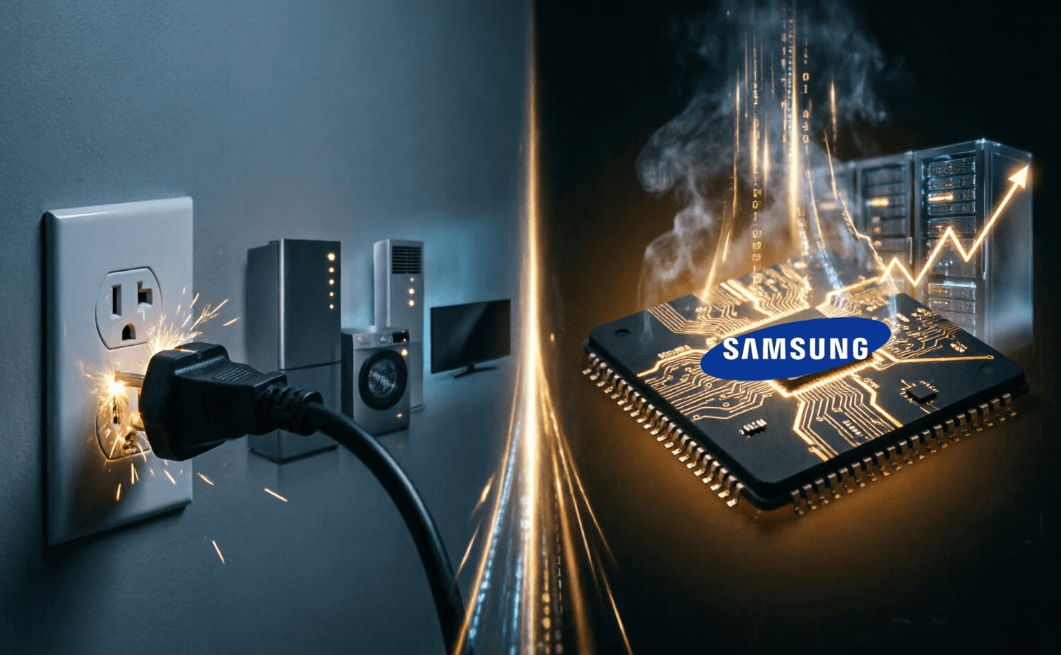
If we say that the “stop sales of all categories of home appliances in mainland China” in May also had decent words of so-called strategic contraction and channel adjustment, then. Nowadays, even Hong Kong, a bridgehead known for its high-end consumption, is beginning to loosen up. Samsung’s home appliance business’s presence in the Asian consumer market can no longer be summed up by the word “shrinking.” It was a true unplugging. Moreover, even Samsung itself doesn’t want to laugh this time.
Extending the timeline, Samsung’s withdrawal from China was not an impulsive move, but a history of progressive withdrawal that lasted five years.
On May 6 this year, Samsung Electronics released the “Samsung Home Appliances Business Adjustment Notice” through its official website, announcing that “in response to the rapidly changing market environment, after careful study, it has been decided to stop selling all home appliances, including TVs and monitors, in the mainland Chinese market.” This notice covers as many as 13 categories, including almost all major home appliances including TVs, monitors, large commercial displays, air conditioners, and refrigerators. At this point, 34 years after Samsung entered the Chinese market, it has come to an end in the field of consumer home appliances for the first time.

It was not without warning before. As early as 2026 AWE (China Home Appliances and Consumer Electronics Expo), Samsung was absent again – the last absence dates back to 2021. In April of this year, news began to circulate on the Internet that Samsung Electronics planned to strategically shrink the Chinese market through channels and supply chains, with the core involving the display business. “Some core agents have received notices of suspension of replenishment, inventory clearance is progressing simultaneously, and offline 3C and home appliance stores are gradually withdrawing cabinets.” A Samsung store employee told the media more bluntly, “Currently, the total inventory of Samsung home appliances in China is only about 30,000 units. We will exit the store when the remaining products are sold out.”
The collective rise of China’s local brands may be the core reason for Samsung’s retreat in its home appliance business. Statistics from Luotu Technology show that China’s TV market shipments will be approximately 32.89 million units in 2025, and the combined share of eight Chinese manufacturers including Hisense, TCL, Xiaomi, and Skyworth will reach 94.1%; while the combined shipments of the four major foreign brands, Samsung, Sony, Philips, and Sharp, have fallen below 1 million units. The data of Aowei Cloud Network is even more cruel: 2025Samsung TV’s online share in China is only 0.67%, and its offline share is 3.09%; the market shares of refrigerators and washing machines are both hovering around 0.4%。
Price is the most intuitive manifestation of Samsung being overthrown. For example, the cheapest Samsung 75-inch TV costs about 5,000 yuan, while domestic brands cost about two to three thousand yuan. Behind this sentence is the end of an era: when the gap in display technology is quickly smoothed out, when the perception of “foreign brands = high-end” is broken down by the high cost performance of domestic brands, the high-premium pricing system that Samsung home appliances rely on to survive has lost its foothold in China, the world’s largest and most competitive home appliance market.
To understand why Samsung home appliances have reached the point of pulling the plug in the Chinese market, we can go back to three explanations that have been repeatedly verified by the industry.
“Acclimatization” at the organizational level is one of the main reasons. Almost everyone in the home appliance circle knows that Samsung’s “headquarters are highly centralized, the China region has no pricing and product definition rights, and the decision-making chain is too long, making it difficult to respond to market changes in a timely manner.” In fact, this is also a common problem for some multinational brands that have suffered heavy losses in the Chinese market.
Strategic misjudgment of the technical route is another major reason for the defeat of Samsung Home Appliances. Samsung chose to bet on OLED and Micro LED in the field of color TVs, causing it to abandon its supply chain layout in the still vibrant LCD technology. This is an important reason for its decline in competitiveness. On the contrary, many domestic brands have achieved “lane change and overtaking” on the Mini LED track by leveraging their advantages in the panel industry chain.
The repeated swings in channel models are also a topic that cannot be avoided. In 2021, Samsung outsourced its white goods business to two agents, Shenzhen Feide Industrial Group and Huitongda. The former is responsible for high-end channel agency, and the latter is famous for its mom-and-pop stores in the sinking market. But the actual effect was not ideal: Feide failed to build up enough volume, while Huitongda lowered Samsung’s high-end image and caused chaos in the after-sales system. In 2024, Samsung changed back to the direct operation model, but at this time the gap with domestic brands has further widened. Samsung’s China home appliance business has long lost its ability and willingness to “roll”.
Financial figures are the coldest footnote of this exit. According to China Business News, from 2014 to 2015, Samsung sold about US$3 billion in color TVs and about US$1 billion in household appliances in China in a year. According to the business plan by 2026, the sales target of color TVs has dropped to about 5% of the peak period, and the target of white goods and other household appliances is only about 1% of the peak.In 2025, the VD/DA division of Samsung Electronics, where TVs and home appliances are located, will suffer a loss of approximately 926 million yuan, which is the first time in the history of this sector that a deficit has occurred.。
But note that the other side of the coin is a more profitable Samsung.
If you switch the lens from “Home Appliances” to “Chips”, the picture will be completely reversed. In 2025, Samsung’s Device Solutions (DS) division will have total revenue of 130.1 trillion won (approximately 610.169 billion yuan), operating profit of 24.9 trillion won (approximately 109.851 billion yuan), and a profit growth rate of as high as 64.9%.
By the first quarter of 2026, Samsung Electronics’ total revenue reached 133.9 trillion won and operating profit was 57.2 trillion won, both hitting quarterly record highs. Among them, the DS department contributed approximately 53.7 trillion won in operating profits, accounting for 94% of the company’s quarterly operating profits. The single-quarter profit has exceeded the total for the whole year of 2025.
At the same time, Samsung’s position in the AI computing power industry chain has become increasingly clear. As a core storage supplier for NVIDIA, Google, and Apple, Samsung has undertaken incremental orders for all categories of HBM high-bandwidth memory, server DDR5, general-purpose DRAM, and NAND flash memory. Memory chip manufacturers have proactively shifted their production capacity from general-purpose products to more profitable AI-specific chips, resulting in a serious shortage of general-purpose storage for laptops and servers, and the balance of supply and demand has completely shifted towards the supply side.
Many institutions have judged that the expansion rate of demand for AI inference infrastructure has long exceeded the production capacity deployment pace of global storage manufacturers such as Samsung, SK Hynix, and Micron, and the imbalance between supply and demand will continue at least until 2027.
Driven by the AI craze, Samsung’s market value also ushered in a historic breakthrough. On May 6, Samsung Electronics’ stock price surged 13%, and its market value exceeded one trillion U.S. dollars, becoming the second Asian company to cross this line after TSMC. After the third quarter results of 2026 were announced, Samsung Electronics became the company with the highest quarterly operating profit in the world – this number has exceeded Nvidia’s level last quarter.
To put it simply, a company that sells TVs has become a company that sells “computing power raw materials.” When more than 90% of profits come from the semiconductor business, the meager profits from the home appliance business can of course be ignored.

Investors who are familiar with the home appliance field in China, Japan and South Korea may find this scene familiar. Yes, Samsung’s changes can’t help but remind people of Sony back then.
In the mid-to-late 2000s, Japan’s Sony also experienced a painful turn from the “king of consumer electronics” to “strategic contraction.” Sony once regarded the TV business as its core pillar around 2005, but it gradually fell behind Samsung, Sharp and Chinese manufacturers in the selection of LCD and OLED routes and global panel competition. After the global financial crisis in 2008, Sony’s TV business suffered huge losses for many years. It finally decided to outsource some TV production around 2011, and promoted the “One Sony” strategy around 2012, shifting its business focus to content businesses such as image sensors, games (PlayStation), film and television, and music.
Since then, Sony TV’s share of the global market has continued to decline, but in the field of image sensors, Sony Semiconductor Solutions has become the CMOS supplier of almost all high-end smartphones such as Apple and Huawei, and has also established a stable source of profits in the fields of games and content.
Sony’s turnaround is strikingly similar to Samsung’s situation today: the same consumer electronics business is losing to emerging rivals in terms of cost and speed, the same upstream core components (sensors/memory chips) have become the mainstay of profits, and the same shift from “selling products” to “selling technology and ecology.” The difference is that Sony completed its turnaround earlier, while Samsung took longer to admit that its front line on the C-end machine could no longer be maintained.
Back to the original question: Why isn’t it funny when Samsung pulls the plug? Because this is not a simple story of “foreign companies can’t do it”. In an era where industrial cycles overlap with geotechnical competition, Samsung’s exit reminds at least three things.
The most important thing is that the globalization of consumer electronics is reshaping it. Samsung has not really left China – it has shifted its Suzhou factory from “sales in China” to “production in China and supply to the world”, and continues to invest in Xi’an NAND factory (with a cumulative investment of more than 28 billion US dollars, responsible for about 40% of the world’s NAND production capacity), Suzhou Production Technology Research Institute (the first overseas R&D headquarters outside South Korea in Samsung’s production technology research network) and local production lines of high-end ultrasonic diagnostic equipment.
At the same time, Samsung has also concentrated its operating resources on semiconductors and smartphones, redefining the Chinese market from a “profit source” to a “global supply chain node.” This means that the “exit” of foreign-funded enterprises is sometimes not an exit, but a different form of existence.
Equally important is that the choice of technical route often determines the life or death of an enterprise for ten years. Samsung’s bet on OLED/Micro LED and Sony’s hesitation in the LCD era are essentially gambles on “next-generation display technology.” The reason why Chinese brands can achieve a lead in Mini LED is not only because of the correct selection of technical routes, but also because of the vertical integration capabilities from panel to complete machine.
What is easy to overlook is that high-end does not mean peace of mind. The “high-end customer base” accumulated by Samsung Home Appliances in the Chinese market still exists, and Huabi TV and Huajing TV are still “Internet celebrity machines” on social media. Consumers’ discernment of design, sound quality, and picture quality still exists, but the premium they are willing to pay for it has been reduced from “3,000 yuan” to “a few hundred yuan.” When “80% performance and quality at half the price” becomes the industry consensus, the only moats left for high-end brands are technological generation gap and brand belief – and these two things are precisely what Chinese companies are best at catching up with.
For Samsung, withdrawing from the home appliance business is not a joke, but a cold arithmetic problem: when the profit of a quarter of memory chips can cover ten years of losses in the home appliance business; when the demand for AI infrastructure pushes the price of DRAM to rise by 90% in a single month, turning HBM into a scarcer resource than TVs – closing a loss-making C-end business is a rational and even necessary choice.
For China’s home appliance industry, Samsung’s unplugging is not a “victory” that can be celebrated. It is more like a mirror: it reflects the twenty years it took Chinese brands to transform from apprentices to rivals, and it also reflects the cruel logic of globalized industrial division of labor – the upstream eats meat, the downstream drinks soup; only those who can make chips are qualified to decide who can sell TVs.
More importantly, after Samsung pulled the plug, what was left was not a vacancy, but a complete industrial restructuring, as well as in-depth thinking on corporate transformation and emerging industries.

Related Reading
- Nvidia live updates: Jensen Huang ousted, CFO Colette Kress to serve as interim CEO2026-11-13
- Are mangoes not afraid of red fruits?2026-11-12
- Original: After Huang Renxun, who is most likely to take over Nvidia?2026-11-12
- Samsung’s roll-screen mobile phone is exposed, creating a new form ahead of Huawei and Apple, and folding screens are expected to be eliminated2026-11-12
- Musk’s favorite car is going to be discontinued.2026-11-12