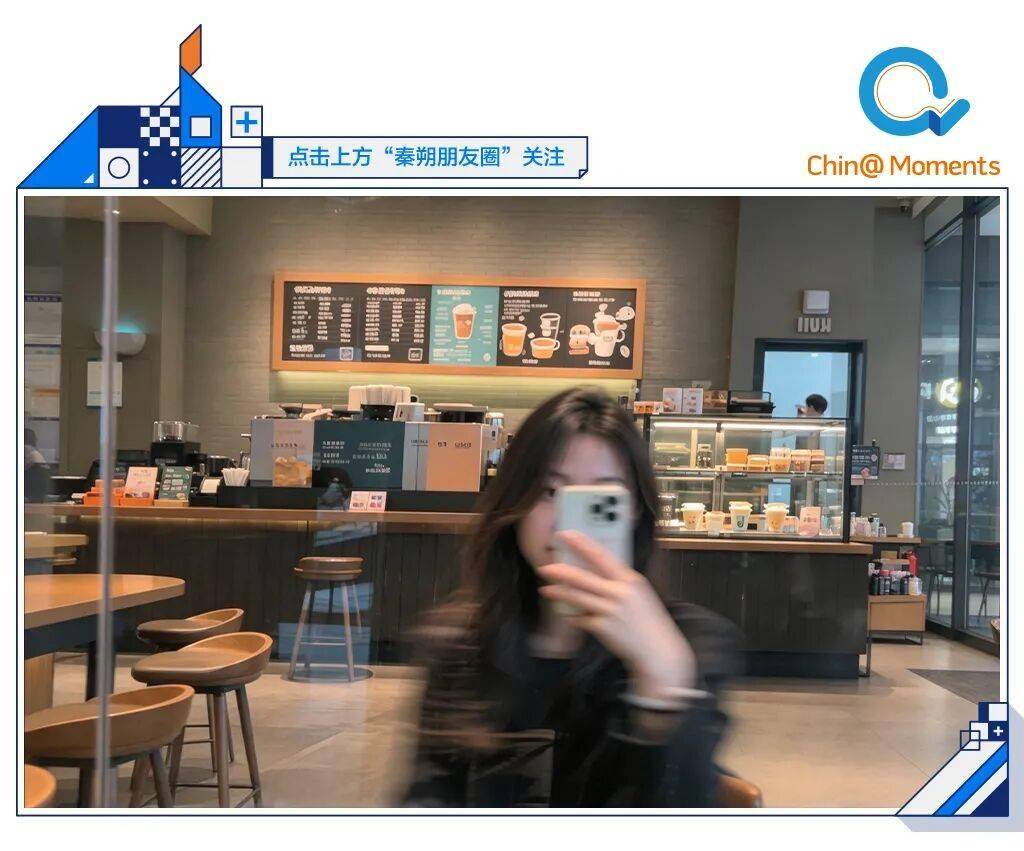
Starbucks has been making quite a fuss about this recently. Suddenly, there was a small sign on the table that said “Business space, please take a seat.”
When this brand came out, it was almost like being in a TV series. On October 19, someone posted unopened materials on the Internet. Everyone asked the store clerk, and the store clerk said that the implementation would start on the 20th; but the official immediately jumped out and said that the news was untrue. On the 20th, reporters from all walks of life went to the store to visit the store. Some clerks said it was just a suggestion, some said they had to wait for notification from above, and some said that people who bought things should be allowed to sit first during peak hours.
On the 21st, officials confirmed with the media that consumption seating will be officially implemented nationwide starting from the 22nd. However, if customers have any reasonable unexpected needs, they will be properly handled.
In just three days, from denial to ambiguity, to the final official confirmation, a cafe turned a small incident into a three-act drama.
Starbucks has completely changed its image as a “third space”, which requires a twists and turns in the plot. Looking ahead, there are still a few rounds left.
This summer, there was a famous scene at the Starbucks in Huzhou: three ladies sat there from the moment the store opened until noon without spending a penny. They actually left a glass of tomato juice on the table to occupy their seats when they went out to eat at noon. When they came back after finishing their meal, they found that the seat was occupied by a customer who actually bought coffee. Fortunately for the three of them, they kicked the customer away. The customer was so angry that he called the police. As soon as this matter became a hot search topic, the comment section of netizens was overwhelmingly one-sided, with everyone shouting that Starbucks should take care of people who only sit and do not buy.
But, but, dear friends, in July last year, some Starbucks stores in Guangdong also launched some kind of “Xingzi Study Room”, which claimed that there was no need to spend money, no time limit, the socket could be plugged in at will, and warm water could be drunk at will.
In just over a year, the pendulum has swung back and forth from the original free study room to the current one where consumers are invited to sit.
Sure enough, this is a magical world where short stills are transformed into reality. Everything can be reversed at any time, making people overwhelmed.
Discussions about this matter have been overwhelming on the Internet for a long time. The first heart of the third space is broken, the social understanding is gone, and the brand premium cannot be maintained. Everyone knows these truths, and they are indeed explained clearly. But today we won’t talk about those big words, let’s talk about what economic, social and cultural changes Starbucks has witnessed?
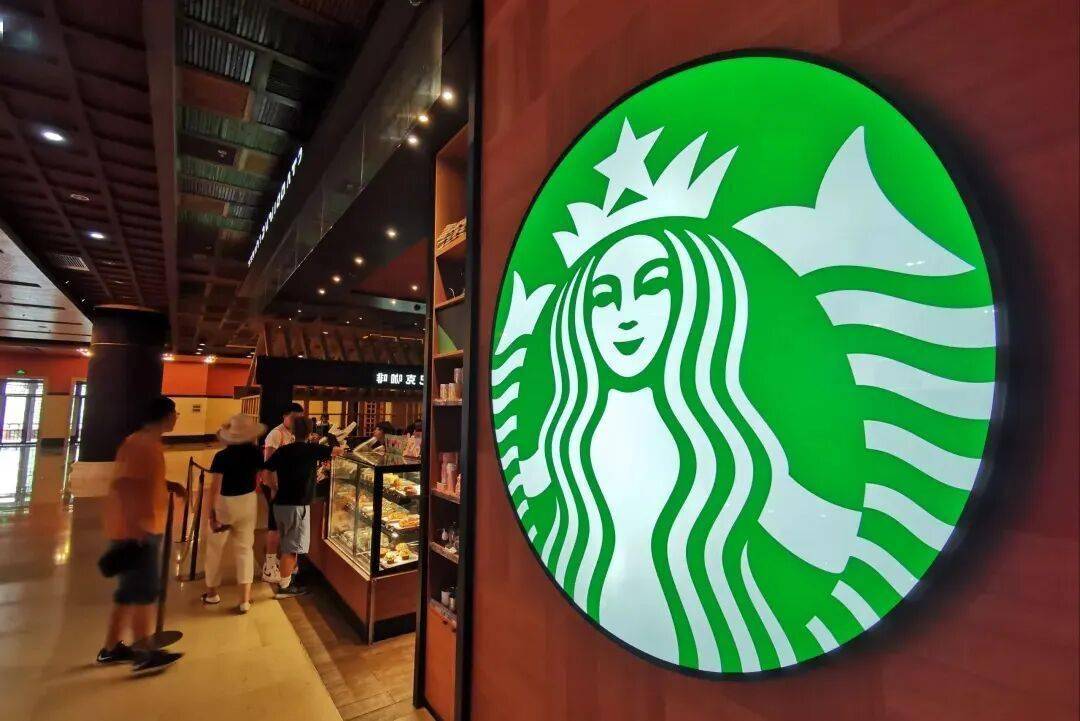
When the new regulations came out, a store clerk said in an interview that pregnant women, delivery boys, passers-by who suddenly encountered rain outside, and security guards on duty nearby, if they need a break temporarily, they can come in and have a rest without spending money. The store also provides free hot water.
But what about the kind of seats outside the list? That is what everyone often calls “sitting around”, and you have to spend money. People who sit idle often cannot give any specific reason, and there is no need to say it. He just wants to stay in this place for a while. The consumption receipt helps you answer the core question: Why do you stay here?
So, the real price on this small wooden sign is not coffee at all, but “leisure”. Tired people can sit for free, but if you want to be idle, you have to pay the bill.
There was once a scholar who taught Veblen and wrote “The Theory of the Leisure Class”. He said at that time that leisure is a capital that the rich display exclusively for others to see. The result was good. Starbucks made a 180-degree turn on this old logic. Here, leisure has turned into a small commodity that can be retailed at the counter, broken into small portions. For about thirty yuan, you can buy a short afternoon of “leisure class” experience. Those who come to sit around without spending money are actually “stealing” this leisure in the eyes of the store, and stealing the rights of the customers next to them who spent money to buy this leisure.
Speaking of occupying a seat, the cup of tomato juice in Huzhou is definitely the most amazing detail in the whole thing. Although the person left, the cup stayed, and a cup of drink sat there for the person. We Chinese are very familiar with this routine. When I was in school, I used a book to occupy a seat in the university library, a pack of paper towels to occupy a seat when I went to the cafeteria, a coat to occupy a seat in the train station waiting hall, and even a brick to occupy a seat at the entrance of the vegetable market. As long as the agent is present, everyone tacitly accepts this account.
On the Starbucks table, the paper towel means that the table belongs to the person who came first; the table card means that the table belongs to the person who paid the money. Two little things are facing each other on the table, and what stands behind them are actually two completely different sets of old rules: one is first-come, first-served in our rural society, and the other is the clearing of money and goods in modern business society.
Let’s zoom in a little further and make an article using a store with an area of 100 square meters. Two hundred years ago, the German economist Du Neng wrote a book called “The Isolated State”, in which he drew a picture. The city is in the middle, surrounded by circles outside. Those who grow vegetables and milk cows are closest to the city, then outside are the woods, and the outermost is for grazing. Whoever can afford the land rent can occupy the inner circle.
Shrinking this picture and moving it to a Starbucks of about 100 square meters is completely feasible. What is the center of the circle here? It’s the socket in the corner. The seats around the sockets are definitely first class. As soon as a person carrying a computer enters the door, his eyes are like radar and he looks for the corner first. As long as there is a hole in the corner, his butt can rest securely.
The seats by the window are considered second-class places, with sunshine and street views. They are perfect for chatting with people, taking photos, or holding your chin and pretending to think deeply about life.
The long table in the middle was only considered third-class. There were strangers on both sides that I didn’t know. You had to tuck your elbows tightly when sitting.
Walking further outside, next to the restroom and the dining table, you are on the outskirts of the city. People are coming and going, the grinder is rumbling, and the delivery rider is shouting numbers at the top of his lungs every now and then.
In Du Neng’s circle, ground rent was paid with real money; but in Starbucks, ground rent was paid with “time.” Everyone has the same qualifications for buying a cup of coffee, but the table next to the socket will always end up in the hands of those who are most willing to waste their time, sitting there for a whole morning, an afternoon or even a whole day.
This new rule of consumption and seating can only control whether you spend money to buy something, but it cannot control how much you spent or how long you plan to sit.
There is another account that no one paid attention to. Starbucks China’s online takeout business has been growing in the past two years, and its financial reports always attribute revenue growth to this. But think about it, doesn’t the price of that cup of coffee delivered include the rent, renovation costs and air-conditioning costs? Of course it’s amortized, including the depreciation of the chair.
Although those who ordered takeout paid for seats, they did not come to sit in the physical store at all. Those who come to sit around without consuming are actually sitting in the seats of takeaway customers thousands of miles away. In economics, this is called “cross-subsidization.”
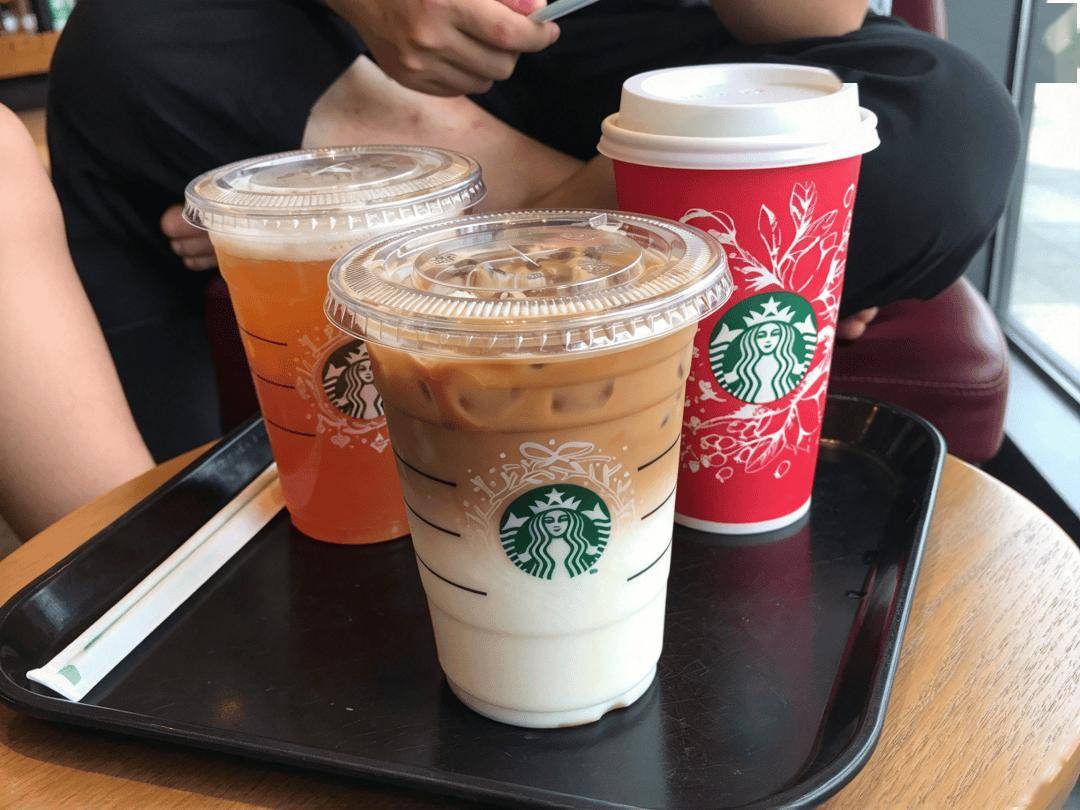
In fact, Starbucks has long been aware of the phenomenon of sitting but not buying. Why did it wait until October this year to put up the brand? This has to do with the “transaction costs” that Coase talked about. In the past, it was a matter of confusion as to who should own the seat. The price of confusion was that paying customers had no place to sit, and the price of clear distinction was that the clerk had to be scolded. Huzhou’s cup of tomato juice changed the direction of the trend, and netizens’ saliva helped the store clerk share the cost of demarcation, so the sign was put on the table as a matter of course.
Americans actually went back and forth on the same road twice. As early as 2018, a Starbucks in Philadelphia called the police and took away two black customers who had not ordered yet and were waiting to be talked to. As a result, public opinion exploded. The then boss Schultz was so frightened that he quickly opened the door and announced that anyone could come in and sit and use the restroom.
In January last year, the new company rules ruthlessly closed the door. It clearly stipulated that if you want to stay in the store or use the bathroom, you must buy something first. If you don’t want to buy something, please leave immediately. If necessary, call the police directly. One hot search opened the door, but after seven years of trouble, another hot search closed the door.After the implementation of the New Deal, the decline in same-store sales in North America narrowed, and even turned positive year-on-year in the fourth quarter of 2025, giving Starbucks more confidence to continue tightening.
In the economic cycle of these decades, the Starbucks table is like a mirror, reflecting the ups and downs of the entire social mood.
When the economy is good, everyone has a lot of money, and a cup of coffee costing thirty yuan is nothing. StarbucksKatsuya is happy to play some kind of “third space” utopia. There is no time limit. No matter you are here to discuss business, go on a date or simply be in a daze, the door is always open for you. The main thing is to be decent and generous. The coffee shop at that time was a spiritual oasis in the city.
But once the general environment changed and life was no longer as easy as before, the style of the painting immediately changed. On the one hand, everyone has less spare money, and a thirty-yuan cup of latte has become a dispensable consumption downgrade, and individual tourists are decreasing; but on the other hand, those who are unemployed, semi-employed, or full of anxiety are in greater need of such a refuge that can provide air conditioning, Wi-Fi and legal seats. As a result, there are fewer and fewer empty seats in the store, more and more people are not consuming, and paying customers who really want to buy a cup of coffee can’t even find a place to sit.
This becomes a sandwich cookie with no solution. It’s not that Starbucks doesn’t want to continue to pretend to be generous, but the store’s square footage and rent can no longer sustain it. It put up this sign of “please take a seat, consumers”. In the final analysis, it means that it has to bow to the abacus in the face of the cold reality of economic downturn. Being generous is generous, and the business must survive after all. Nowadays, unemployed and semi-unemployed people go to party and mass service centers, and some of Starbucks’ social functions have also been transferred.
Times have changed.
In early 1999, Starbucks opened its first store in the Mainland at Beijing International Trade Center. At that time, a cup of latte was worth half a day’s wages. Holding it in your hand was a sign of dignity and a reminder of the outside world. The next year it moved into the Forbidden City, and seven years later it quietly withdrew. Written in 2004“I struggled for 18 years before I could sit down and drink coffee with you” is proof that the economic upturn and the era of meritocracy coexist with the aroma of coffee.
Since then, office buildings have opened one after another. In 2013, they were named by CCTV and said to be more expensive than in the United States. When the Shanghai Roastery opened in 2017, there was a long queue at the door. It was considered the most popular time. Fortunately, Luckin came out in the same year, and within two years it surpassed it in terms of store count, with prices ranging from 9.9 yuan to 8.8 yuan. Starbucks had no choice but to issue coupons to reduce the price and exchange the price for customer traffic.
In November 2025, Seattle handed over 60% of its Chinese business to Boyu at a price of US$4 billion. It will be delivered in the spring of this year, and more than 8,000 stores have changed owners. KFC and McDonald’s have gone down this road a few years ago. For more than 20 years, people first looked up at this cup of coffee, and then looked at it flatly. Now there is a sign on the table, urging customers to pay before sitting down. The wallets and hearts of the Chinese people are reflected in this paper cup.
We actually have a very localized feature here. The sign said “please” politely, the store clerk’s statement was a mild “advice,” and the official said they would communicate in a friendly and friendly manner. Although the rules have been established,但knife in scabbard可Didn’t pull it out.
First, put the reason clearly on the table. As for the specific implementation, it all depends on the look on the clerk’s face. Coase calculated the economic accounts of property rights back then, but here, when opening a store and doing business, we have to calculate one of the most important things, and that is “face.” Face is also a part of transaction costs, and it is often the most expensive one.
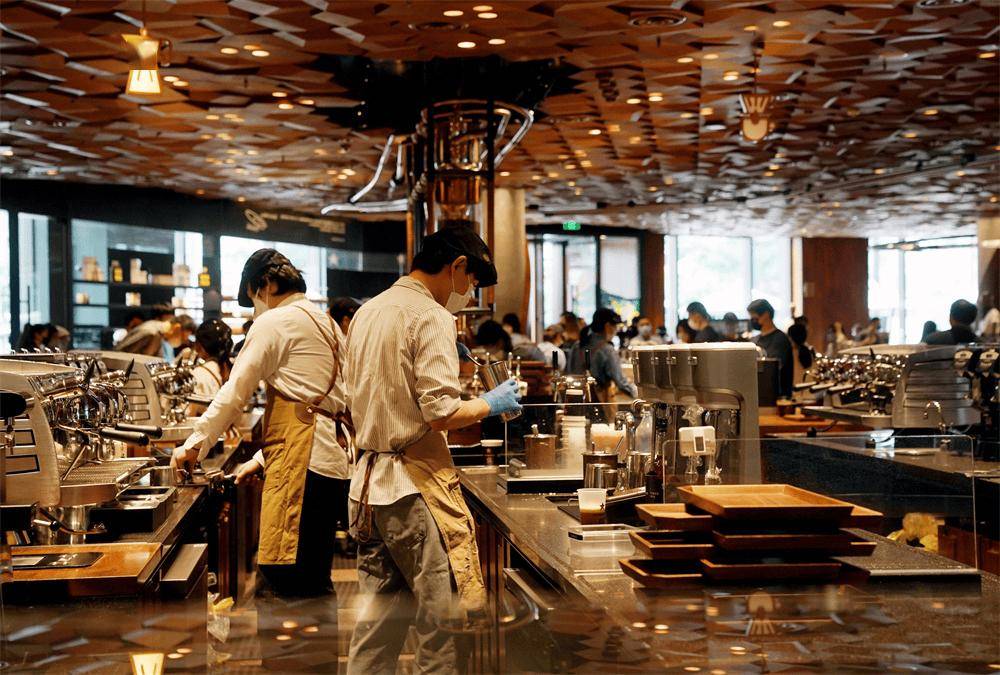
Let’s take another look at what Wu Zimu wrote about the teahouses in Hangzhou in “Menglianglu”. He divided the customers into categories: Guangpaier, Renqing Teahouse, and Shitou. Today, eight hundred years later, if you just walk into a Starbucks and take a look: Mondays are where real estate agents go to talk, Wednesdays are where insurance agents sell insurance policies, and weekends become a dating bureau. There was no need for anyone to plan at all. Human beings themselves reorganized a small cafe into different departments.
People who often hang out at Starbucks probably have a little secret habit: always leave the last sip in the cup. That sip of coffee had already been completely cold, and after the ice melted away, it even turned into a layer of tasteless water. But I just couldn’t drink. Once the glass is empty and all that’s left is a computer with a lit screen and a lone person on the table, your legitimate claim to the seat is completely gone.
Therefore, you must keep that sip to let the cup prove that it is still being used, people are still consuming, and the seats are still being rented. To put it bluntly, the sip left at the bottom of the cup is actually a lease renewal contract.
Business is inherently about finding a balance between generosity and shrewd calculations that allows you to survive. The fire of public opinion is traffic. No matter what happens, swinging back and forth can stay in focus. Now everyone understands this. It is honestly controlled by dopamine, and it can also control dopamine.
Related Reading
- Little genius, making a fortune as a primary school student?2026-10-29
- Lei Jun, whose wealth has shrunk by nearly 50%, “sold his house” to Xiaomi employees2026-10-29
- LABUBU cools down, Bubble Mart cuts in half2026-10-29
- Only 39 days after Mbappe was signed by a well-known brand, related promotional materials were quietly removed from the shelves2026-10-29
- With profits exceeding RMB 100 billion, the “King of Chinese Stocks” still suffered from the fall of investors2026-10-28