There is a small town in southern Germany called Herzogenaurach. There is a small river in the city called the Aurach River.
On both sides of the river are the Dassler brothers.
Maybe you don’t know what these brothers’ names mean, but you must have heard of these two brands:
Adidas, Puma (PUMA).
Yes, it was founded by these two brothers. brother Rudolf·Dassler, born in 1898, was a good talker and in charge of sales; his younger brother, Adolf Dassler, was born in 1900 and made shoes. Later, everyone called him “Adi”.
兩人在In 1924, the “Dassler Brothers Sports Shoe Factory” was registered. In 1936, it supplied spike shoes to American player Owens and became an instant success. But during World War II, the brothers broke up completely due to various reasons such as family conflicts and business philosophy.
In 1948, the two brothers separated: Adolf stayed in the original factory and named it Adidas; Rudolf crossed the river and started a new business, first called Ruda, and then PUMA, Puma.
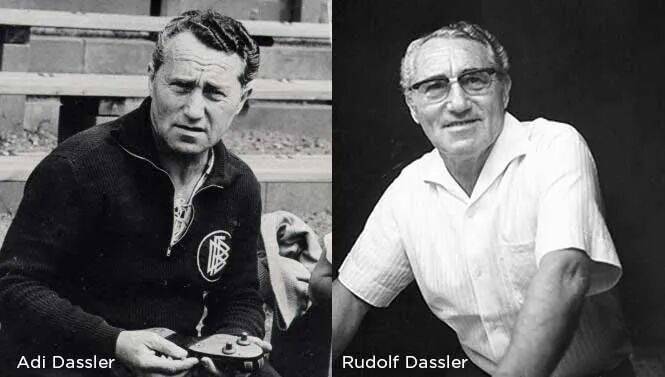
This is more than seventy years. The two brothers never reconciled until their deaths. The cemeteries are located at two ends of the town. It is said that their last words were“Fight on.”
But no one expected,On October 7, 2026, a company from Jinjiang, Fujian Province “ate” one of the giants.
On the evening of October 7, Anta announced that it would acquire more than 43.01 million shares of PUMA SE from Artémis, the investment company of the French Pinault family, for 1.5055 billion euros in cash, accounting for 29.06% of the issued share capital. Anta thus became the single largest shareholder of PUMA.
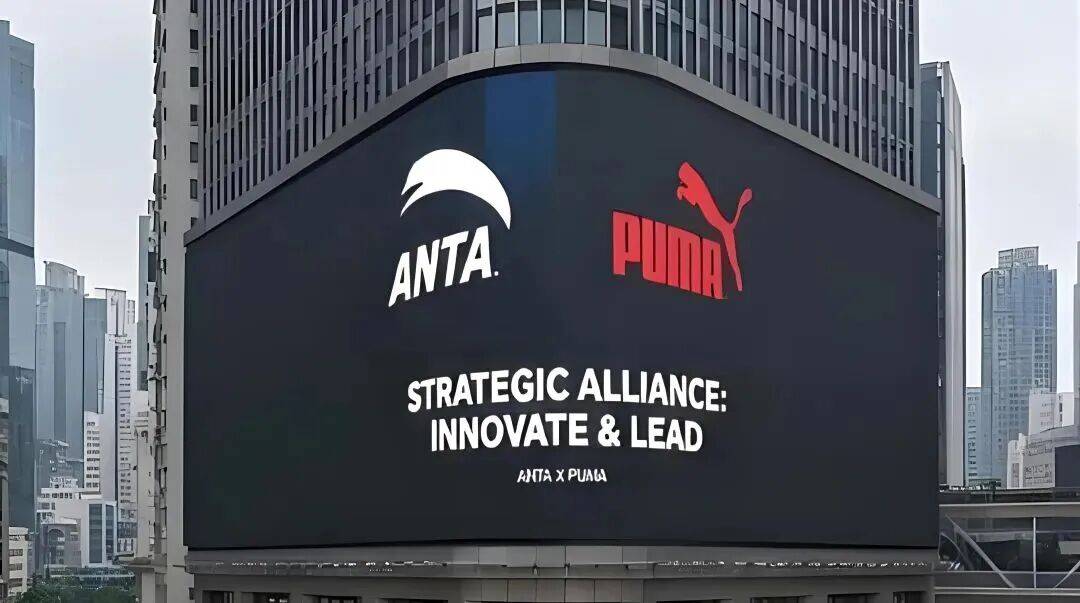
Note, not the controlling shareholder,This is consistent with many media interpretations“Anta acquires Puma” is not the same thing.
Different from the previous acquisitions, this time Anta clearly“Not launching a comprehensive offer”, but only seeking to appoint suitable representatives on the supervisory board.
也就是說PUMA will still operate independently, and its brand identity, corporate culture, and German listed company governance will be retained.
Anta’s role is“Long-term shareholders + governance participants + regional enablers”.
In Ding Shizhong’s words, it is supportThe transformation that PUMA is making is helped by Anta’s retail and operational expertise.
So, nowWhat is the situation of PUMA?
From a brand perspective, the gap with Adidas is getting wider and wider.PUMA’s sales in 2025 were 7.296 billion euros, a decrease of 8.1% adjusted for exchange rates; net losses from continuing operations were approximately 645 million euros, and sales in the first half of 2026 were 3.554 billion euros. The fixed exchange rate dropped another 5.2%, and wholesale in the second quarter was still declining.
CEO Hoeld的分析是: The product is too complex and consumers cannot explain it.Which model does PUMA represent? There are a lot of low-quality big customers in wholesale, and they rely on discounts to clear goods. The more the brand sells, the more “cheap and busy” it becomes.
簡單點說,The problem with PUMA is “Everyone knows it, but they don’t know why they buy it”,Not as professional as Nike and Adidas, but trendy又The joint name will not continue,缺乏爆點。
但這個The “skinny” brother still has a lot of brand assets overseas:
產品賣到More than 120 countries; Suede and Speedcat are trendy hard currencies. In football, they have long-term possession of national teams, clubs and event resources, and they also have deep knowledge in some markets in Africa, Latin America and Europe.
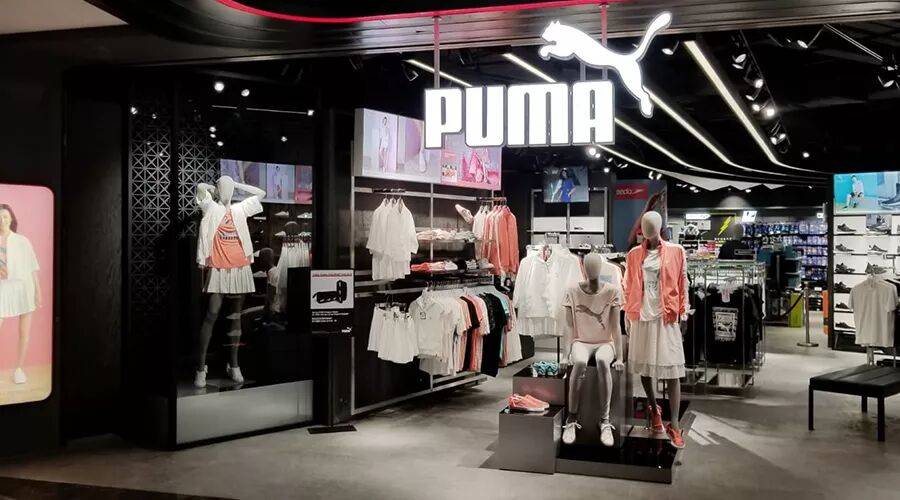
For Anta, this set of assets is very complementary: Anta’s main brands are strong in mass basketball, running and national fashion.FILA is strong in fashion, Arc’teryx Salomon is strong in outdoor, but global football, global mass sports, Latin America, Africa and India channels have always been weak links.
PUMA came in and made up for its shortcomings.
Anta can also use Chinese/ Asia-Pacific retail capabilities help PUMA start the market that is easiest to transform, and use its status as the largest shareholder to promote the transformation of PUMA’s products, channels, and brands in the board of supervisors.
In fact, Anta’s investments over the years have one thing in common:
Bought from brandThe “low” period.
In 2009, Anta took over FILA’s Greater China trademark and operating rights from Belle. At that time, FILA was losing money in China. Anta did not treat it as a “foreign brand”, but redone its channels and first- and second-tier markets.
More than ten years later,FILA has become Anta Group’s second largest revenue source, with revenue of 15.045 billion yuan and operating profit of 4.315 billion yuan in the first half of 2026, with an operating profit margin of approximately 28.7%.
The key to this step is: full authority, regionalization, and localization.
In 2016, it bought Descente China and in 2017, it bought Kolon China. It is also to a large extent that these two brands have been brought from a state of “dire straits” to stable profitability.
In 2019, Anta led a consortium, attracted capital from Tencent, FountainVideo and other companies, and acquired Amer Sports for 4.66 billion euros, including Arc’teryx, Salomon, and Wilson.
結果呢?In 2024, Amer’s revenue will be US$5.183 billion, and it will be relisted on the New York Stock Exchange, with high growth in Greater China.
But this time I bought itPUMA is different. The prerequisite for the success of previous investments was full control of the Chinese business, or a consortium holding the shares and wholly-owned renovations.
到了PUMA, Anta chose to become “the largest shareholder with 29.06%, two seats on the board of supervisors, and no control over daily life.”
The difficulty factor has become higher——Even though Anta has a very effective approach to retailing in China, the other parties are German listed companies, global labor unions and supervisory boards, seven major regions, and hundreds of countries. You can’t give orders, you can only make suggestions, set an example, and wait for consensus.
Many Chinese companies tend to expand as soon as they become big. They want to keep everything in their own hands and wish that every market in the world could be repeated in their own way.
Anta increasingly knows how to use its discretion: some businesses need to be fully run, some need joint ventures and co-management, and some only need to participate in management.
Of course, Anta has the capital to wait and try.
In the first half of 2026, Anta Group’s revenue was 43.51 billion yuan, a year-on-year increase of 12.9%; gross profit margin was 63.9%, operating profit was 11.76 billion yuan, and operating profit margin was 27%.
free cash flow11.63 billion yuan, a year-on-year increase of 54.2%, and the net cash at the end of the period was approximately 39.11 billion yuan.
Within the industry, this data is already very impressive.
And what drives growth is exactly what Anta picked up.“Low-hanging fruits” – Descente, Colon, MAIA, Wolf Claw, etc. totaled 10.69 billion yuan, an increase of 44.2%, and operating profits increased by 43.9%.
Because of this, Anta has the strength and motivation to buy some new assets.
More importantly,PUMA is not consolidated or fully tendered, and Anta does not need to bear all its debts and global employee integration costs. It uses minimal management occupancy in exchange for maximum strategic options.
This deal is a good deal.
If all goes well, people will remember in the futureIn 2026, it may be said: Anta has taught一個A long-established German brand that is selling shoes again.
Many events are more interesting when linked together.
That is, Anta issued the purchaseOne week before the announcement of PUMA shares, Nike released its financial report and announced that it would cancel the independent region of “Greater China” starting from fiscal year 2028, merge it with Asia Pacific into the new “Asia Pacific and Greater China”, and move its regional headquarters to Singapore.
Nike entered China 45 years ago and was the sports enlightenment for a generation. The first pair of Air Jordans, the first T-shirt with hooks, the Nike+ watch on my wrist during my first night run. For a long time, the word “Nike” has been almost synonymous with sports consumer culture.
但現在,Nike in ChinaThe 45-year golden era has come to an end.
In the first quarter of fiscal year 2027, Nike’s global revenue was US$11.213 billion, a year-on-year decrease of 4%; Greater China revenue was US$1.18 billion, a year-on-year decrease of 22%, and EBIT fell by 34%.
這已經是Nike’s Greater China region experienced year-over-year declines for the ninth consecutive quarter.
at the same time,Nike’s stock price has fallen by more than 40% this year. Compared with its high point in 2021, about three-quarters of its market value has been evaporated.
Why did the giant of yesteryear reach this point?
Because neither R&D nor quality can keep up with the speed of Chinese brands and the expectations of Chinese consumers.
現在南京東路的In the Nike flagship store, there are more clerks than customers, and there are still Dunks, AF1s and AJs on the shelves.反觀Anta next door,In FILA’s store, young people lined up in front of the shoe-trying bench.
If you take a few steps in the mall, you will clearly feel one thing:
今天The operations of domestic brands are already more efficient than those of international giants.“Understand” consumers, at least, respect consumers more.
The clerks in Anta stores will use itThe ipad brings up disassembly diagrams of running shoes for customers, showing off the latest sole technology. The store staff will help users try on the shoes more patiently and hand them over to them.
There is an old Chinese saying: If you don’t accumulate small steps, you can’t reach a thousand miles.
Starting from a small OEM factory in Jinjiang, why can Anta defeat the big international brands and even export its retail operation capabilities to international giants?
早在2005,安踏就The earliest sports science laboratory in the domestic sporting goods industry was built. Since then, R&D investment has continued to accumulate. Public materials show that its cumulative R&D investment has exceeded20 billion yuan, and plans to invest another 20 billion yuan in the next five years, with over 7,400 patent applications.
這類投入What did you get in exchange?
We have seen that more and more star players are beginning to choose Anta equipment on the court.
At the 2026 Milan Winter Olympics, Anta provided equipment for the national team. The short-track speed skating uniforms are made of a new generation of self-developed anti-cut materials, which are level 4 and higher than the International Skating Union Level 3 requirements. The materials and ready-made garments are domestically produced. Global sales of PG7 running shoes have exceeded 4 million pairs, and they have been included in annual recommendations by overseas running media.
In terms of service, Anta is not arrogant. Compared with foreign big brands who ignore customers, Anta’s clerks still insist on squatting down and handing shoes to users:“You try it, if it doesn’t fit I’ll change it.”
Starting from Jinjiang, Anta has not left its consumers for a day for decades.
很多人Today’s interpretation of Anta can easily be misunderstood as: Anta has money, so buy, buy, buy.
But that’s not the truth, the truth is decades of continuous investment, continuous service, and continuous enthusiasm.
Related Reading
- Original Competition for high protein, a new battlefield for the dairy industry2026-10-09
- Extra-long egg tarts are cool: a hot-selling product that only lasted two months2026-10-09
- Oh my God! Stephen Chow, selling assets for HK$1…2026-10-09
- Technology stocks fell into pieces, but the concept of plague became popular2026-10-09
- Hengdian’s “Visa on Arrival” program has become popular, with young people playing villains and aunts playing empresses2026-10-08