Produced | MiaoTou APP
Author | Zhang Beibei
Editor | Ding Ping
Header image | AI drawing
On October 8, the first trading day after the holiday, the market opened higher and moved lower, giving a sap to the funds that were looking forward to recovery.
The GEM index initially rose by more than 1%, and then fell to 3.15%; the Science and Technology 50 fell even more, falling 4.82%; the rising index fell 0.79% as of the close, and the Shenzhen Component Index closed down 2.07%. More than 3,700 stocks fell under heavy selling pressure.
What drags down the index is mainly technology, especially AI hardware.CPO, semiconductors, and optical chips collectively fell sharply, and stocks such as Yuanjie Technology and Changguang Huaxin fell to their limit. Mainly due to the triple negative overlay:
First, rising oil prices have intensified concerns about inflation, and long-term U.S. bond yields have risen, suppressing global high-valued growth assets.
Secondly, news of a price cut for 1.6T optical chips circulated during the session. Although companies such as Changguang Huaxin subsequently denied it, the stock price still weakened.
Third, the new FCC regulations are about to take effect. Morgan Stanley reports that starting from 3.2T optical modules, the proportion of American materials may be restricted to exceed 65% in the future.(This is a deduction, not the official text of the FCC that has taken effect). Optical modules are the strongest point of China’s AI hardware. The market is worried that the growth ceiling will be lowered. CPO and optical communications took the lead in plummeting, bringing down the entire AI hardware sector.
However, under the weak market, plague concept stocks were swept by funds first.
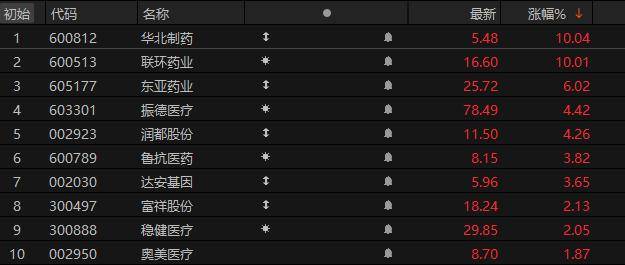
North China Pharmaceutical opened at the daily limit today, and Lianhuan Pharmaceutical, Zhende Medical, etc. followed suit; as of the close, the concept of plague was still strong, with North China Pharmaceutical and Lianhuan Pharmaceutical hitting the daily limit, and Zhende Medical, East Asia Pharmaceutical, Rundu Pharmaceutical, Lukang Pharmaceutical, etc. collectively closed in the red.
背後是,Funds are pricing in advance the risk of the plague spreading.
So, why can the plague concept take on some of the hedging funds? Which companies actually have the goods and what is their quality? Let’s look at it in detail next.
The market buys “just in case”
Let’s look at what happened first.
A 28-year-old female employee of an anti-plague research institute in Irkutsk, Russia, died on October 2. Foreign media linked it to “pneumonic plague” and Russia identified pneumonia of unknown origin. On October 6, WHO Director-General Tedros Adhanom Ghebreyesus asked Russia to provide additional information to identify the cause of severe pneumonia. Later, the media floated the theory of a second death, but it was not officially confirmed.
The reason why this matter has attracted great attention from the market lies in four aspects:
First, the institutional background is sensitive.The research institute where this employee worked included the highly lethal Yersinia pestis bacterium; pneumonic plague itself manifested itself as acute severe pneumonia, which was consistent with her severe pneumonia symptoms. This was an important reason why the outside world quickly linked this incident to pneumonic plague. However, it should be noted that Russia has not yet confirmed the pathogen.
Second, the communication chain has a lot of room for imagination.Pneumonic plague can be transmitted from person to person through droplets at close range. If established, it will be extrapolated from laboratory cases to contact chains, hospitals, communities, and even cross-border infections.
(Chart production: Huxiu Miaotou)
Third, expectations for specific drugs have been shattered.Although there are specific drugs for plague, the cure rate is not low if antibiotics are used early. However, there have been deaths, shattering expectations that the disease would be stable with medicine.
Fourth, the awareness of stocking up on Class A infectious diseases.Plague is a Class A infectious disease. Previous incidents such as influenza and COVID-19 have led to the market’s perception of hoarding medicines and supplies, which may be accompanied by price increases.
The four are superimposed, and the funds do not need to wait for a diagnosis. The premium will be paid first based on the worst-case scenario, and the transaction is “just in case.”
Following this “just in case” premium, we look for benefits in the industry chain.
In the industry chain, the treatment line is the hardest
The beneficiary links of the industrial chain of plague (Yersinia pestis infection) can be roughly divided from high to low certainty: treatment > detection > protection and vaccine.
The reason why funds swept the treatment line first is because after the retreat of technology, risk-averse funds flocked to low-level pharmaceuticals, and the treatment line is the most certain link in the entire chain. The harder the logic, the sooner it will be scanned.
(Chart production: Huxiu Miaotou)
Let’s look at the treatment line first.
Currently, there are mature guidelines for plague treatment.
According to the National Health Commission’s plan, streptomycin is the first-line specific drug for diagnosis and treatment of plague; fluoroquinolones(Moxifloxacin, ciprofloxacin, levofloxacin), doxycycline, etc. are alternatives. At the same time, doxycycline, ciprofloxacin, etc. can be used as close preventive treatments.
And the “Plague Diagnosis and Treatment Plan (2023 Edition)” clearly stipulates,Antibiotic treatment must be started as soon as plague infection is suspected.In other words, treatment medication is initiated before the diagnosis is made.
因此,As long as the direction of the plague is determined, treatment line medication is a definite policy necessity and the logic is the strongest.
Mapping to the capital market, it is mainly divided into two categories:
(1) First-line drug streptomycinThe listed companies included in the layout mainly include North China Pharmaceutical, Lukang Pharmaceutical, etc. Among them, North China Pharmaceutical has the production qualifications for streptomycin sulfate raw materials and injections, and is one of the major streptomycin manufacturers in China; Lukang Pharmaceutical also has streptomycin products for combined treatment of plague.
(2) Alternative drugs/close prophylaxisThe companies involved include Rundu Co., Ltd., Lianhuan Pharmaceutical, Dongya Pharmaceutical, etc.
Among them, Rundu Co., Ltd.’s moxifloxacin has clear indications for plague in its instructions; Lianhuan Pharmaceutical has doxycycline hydrochloride tablets, which can be used for plague treatment and close contact prevention; East Asia Pharmaceutical has levofloxacin replacement drugs, etc. In addition, although Jingxin Pharmaceutical has ciprofloxacin and levofloxacin, the company has switched to psychiatric neurology + cardiovascular and cerebrovascular + imaging diagnosis, which is not a pure event target.
It should be noted that streptomycin is more irreplaceable than alternative drugs/close prevention companies, and the performance of the capital market may be the same.
Let’s look at the detection line again, which is the second echelon of certainty.
Plague is a Class A notifiable infectious disease, and testing is a legal necessity. However, the increase in testing depends on the spread of the epidemic. Only when the epidemic spreads will large-scale testing be carried out. ObviouslyThe certainty is lower than that of “drugs are used immediately when suspected and the treatment line is initiated before the diagnosis is confirmed.”
Therefore, although Daan Gene, Shuoshi Biotech, Zhijiang Biotech, etc. all have testing products and the capital market is active driven by this incident,The short term is more event driven.
The last is the vaccine, the line of defense, the end where emotions overflow, and where logic is the thinnest.
疫苗環節, the global research and development of plague vaccines is mainly based on biodefense/national long-term reserve logic. For example, the plague vaccine developed by Dynavax in the United States in cooperation with the Department of Defense is used in biological attack scenarios rather than marketed commercial varieties. Live human plague vaccine already on the market in China(EV76 freeze-dried live vaccine), produced by Lanzhou Institute of Biological Products, a subsidiary of Sinopharm China Biotech(unlisted company)。
And WHO does not recommend routine vaccination for the general population. It is generally only used for high-risk groups such as plague-endemic/animal epidemic areas, laboratory exposure to strong viruses, hunting/entering natural epidemic foci, etc. A-shares have almost no real plague vaccine targets, so the vaccine aspect has the weakest certainty.
防護環節, there are listed companies such as Zhende Medical and Wenwen Medical, but masks and protective clothing are general consumables and have weak relevance to the plague incident. And the performance of protection companies shows pulse characteristics.
Taking Winner Medical as an example, revenue from infection protection products will reach 4.735 billion yuan in 2022(Accounting for 41.7% of revenue), it dropped sharply to 913 million yuan in 2023 after the COVID-19 epidemic subsided, a decrease of 80% in one year. This shows that the performance of protection depends entirely on the intensity of the epidemic and is not sustainable.
Only when there is evidence of human-to-human transmission can the line of defense be repriced.
寫在最後
To sum up, this wave of plague concept market is a risk premium transaction in case the epidemic spreads.
Funds are scanned for streptomycin first, then for Moxi/Doxy, and then for testing and protection. The logical sequence corresponds to the urgent needs of the plan: medication if suspected>isolate and test if suspected>replenish protection only after confirmation>vaccine only for high-risk groups.
The sustainability of capital market conditions depends on whether there will be an upgrade signal. There are four main ones:
(1) A supplementary inspection by Russia or the WHO confirms Yersinia, and the typing points to pulmonary type/drug resistance;
(2) An officially confirmed second case or second-generation contact becomes ill;
(3) Suspected cases are detected at the domestic border/epidemic source and a Category A 2-hour direct report is initiated;
(4) The National Health Commission or the Centers for Disease Control and Prevention announces the reserve of streptomycin/moxil/doxi, and the centralized procurement or emergency allocation of testing reagents.
The more of the four factors, the stronger the elasticity of the treatment line; and if Russia finally determines that it is not plague, the WHO closes the risk assessment, and the contact observation period expires without new cases, etc., then this round of market is more driven by emotions, and the premium previously given will narrow, so beware of a correction.
Related Reading
- Original Competition for high protein, a new battlefield for the dairy industry2026-10-09
- Extra-long egg tarts are cool: a hot-selling product that only lasted two months2026-10-09
- Oh my God! Stephen Chow, selling assets for HK$1…2026-10-09
- Adidas’ “brother” was bought by Anta2026-10-09
- Hengdian’s “Visa on Arrival” program has become popular, with young people playing villains and aunts playing empresses2026-10-08