“Sing Ye” still has box office appeal, but the theater business of its listed companies has not benefited from this.
On October 6, Bigo Group (08220.HK) announced that the company sold 100% equity of its wholly-owned subsidiary Bigo Cinema Investment Co., Ltd. (hereinafter referred to as “Bigo Cinema Investment”) for a consideration of HK$1. After the transaction is completed, Bigo Group will no longer engage in any theater business.
Behind this transaction are real pressures such as continuous losses in the theater business, declining revenue and net debt.
For the company, this also means that after 16 years of relying on listed companies to lay out the film industry, it is once again restructuring its business territory.
01Sold cinema business for HK$1
In fact, what Bigo Group is selling this time is not an asset that is growing rapidly.
Bigo Cinema Investment was registered in Hong Kong in 2010 and is mainly responsible for the cinema business in mainland China. In recent years, the operating performance of this business has continued to come under pressure.
Data shows that in the two fiscal years ending March 31, 2025 and March 31, 2026, Bigo Group’s theater business recorded operating losses of approximately HK$2.543 million and HK$1.2 million respectively.。
Although the loss in fiscal year 2026 narrowed by approximately 52.81% year-on-year, revenue also fell by 18.06% year-on-year from HK$2.747 million in fiscal year 2025 to HK$2.251 million.
In other words, although the losses in the theater business have narrowed, the revenue scale is not large, and it has not yet gotten rid of the loss situation. By the end of August, the net liabilities of this business were approximately HK$8.6 million.
Under such circumstances, it is a matter of course that Bigo Group chooses to sell its theater business.
According to the announcement, the company sold all the shares of Bigo Cinema Investment for a symbolic consideration of HK$1. The buyer was an independent third-party individual whose specific identity was not disclosed.
Bigo Group announced that after considering the financial performance of the theater business and the overall business and operating conditions, the board of directors believed that the sale was appropriate.
Judging from the transaction price, 1 Hong Kong dollar is almost negligible. But this does not mean that Bigo Group is simply selling assets at a loss.
After the transaction is completed, Bigo Cinema Investment will no longer be a subsidiary of Bigo Group, and its financial results will not continue to be integrated into Bigo Group’s financial statements.
Bigo Group said the sale will help strengthen cash flow, improve liquidity and reallocate resources to other existing opportunities. Proceeds are planned to be used for general working capital.
For a listed company that has continued to lose money in recent years, it is obviously easier to improve its financial statements and capital position by selling and divesting related liabilities than continuing to invest funds to maintain a business of limited scale and still losing money.
Judging from the overall performance of Bigo Group, this adjustment is not an isolated incident.
Since Stephen Chow took over the Bigo Group through a backdoor, the company has been in the red at other times except for a profit of HK$12.965 million in fiscal year 2013. From fiscal year 2022 to fiscal year 2026, the company’s revenue will be approximately HK$8.494 million, HK$5.522 million, HK$7.848 million, HK$12.114 million, and HK$47.38 million respectively. 30,000 Hong Kong dollars; during the same period, the net profit attributable to the parent was a loss of approximately 13.779 million Hong Kong dollars, 9.03 million Hong Kong dollars, 12.781 million Hong Kong dollars, 21.447 million Hong Kong dollars, and 25.908 million Hong Kong dollars respectively.
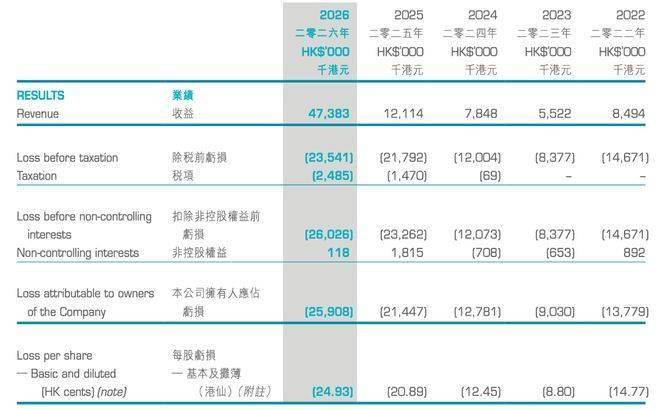
It can be seen that although the revenue of Bigao Group has increased significantly year-on-year in the most recent fiscal year, the level of losses has not changed much.
The withdrawal of the theater business means that the “film and television production + physical theater” and other business lines that Bigo Group has built around the film industry over the past many years have further shrunk.
As of the close of trading on October 8, The share price of Bigo Group is HK$4.710, up 2.39% in a single day. The company’s total market value is approximately HK$853 million.。
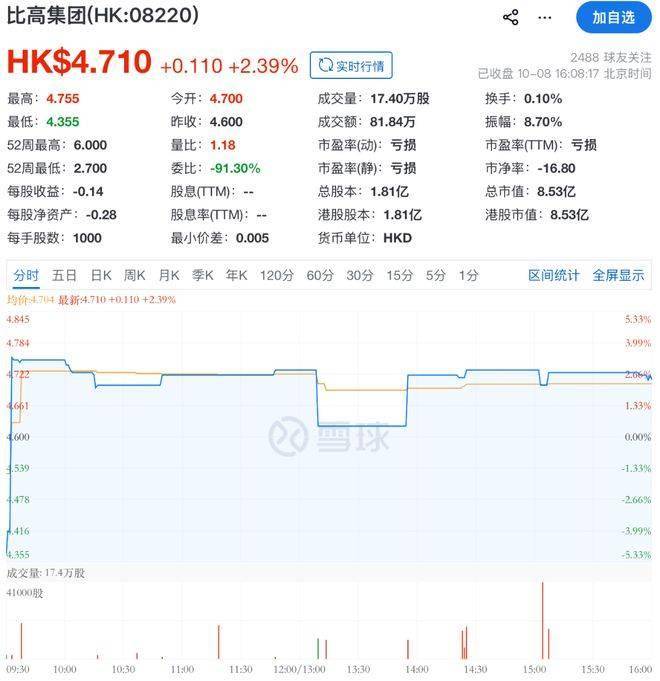
According to the latest information, Stephen Chow, as an executive director and discretionary trust beneficiary, together with persons acting in concert, holds approximately 61.89% of the issued share capital of Bigo Group, of which Stephen Chow personally holds approximately 71.901 million shares.
02“Xingye” takes over listed company
Stephen Chow was born in June 1962 in a slum area in Kowloon, Hong Kong. In 1980, he entered the entertainment industry as a special actor on a television station. Later, he worked as a stuntman and a bit player.
Until 1988, Stephen Chow was appreciated by Lee Xiuxian and starred in the movie “Pioneer of Thunder”. With his outstanding acting skills in the film, he won the Best Supporting Actor Award at the 25th Taiwan Film Golden Horse Awards and became an instant hit.
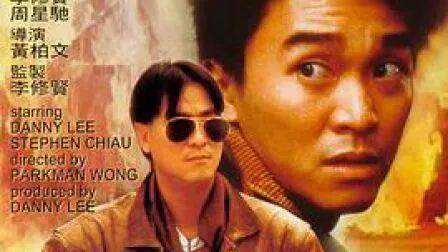
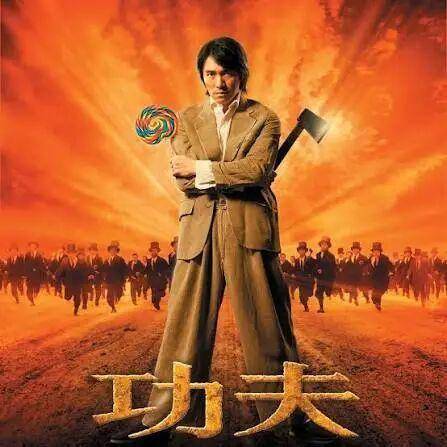
After many years of filmmaking, Stephen Chow has many representative works, including the early “The Gambler” and “Fighting Back to School” series, “The Death Judge”, “Tang Bohu Spots Autumn Fragrance”, “Domestic Lingling Paint”, “Westward Journey” series, “God of Cookery”, “The King of Comedy”, “Shaolin Football”, “Kung Fu”, etc.
The relationship between Bigo Group and Stephen Chow can be traced back to 17 years ago. At that time, the company was still called Ditong International, and it was mainly engaged in the sales of electronic communication equipment and computer hardware equipment.
In June 2009, Ditong International announced its intention to acquire the Granville Identity shopping mall through the issuance of new shares and convertible notes with a total value of HK$300 million.After the transaction is completed, the market expects Stephen Chow to hold 24.21% of Ditong International shares.
In May 2010, Ditong International announced that Stephen Chow would serve as executive director for a five-year term. At the same time, Ditong International changed its name to Bigo Group Co., Ltd. and was listed on the GEM in Hong Kong.
When the backdoor listing was completed, Stephen Chow owned 35.64% of the shares of Bigo Group and was the company’s largest shareholder. “Master Xing” also became Jay Chou.
Driven by Stephen Chow’s star power, On the second trading day after the company changed its name, the stock price rose from HK$0.226 to HK$0.290, a single-day increase of 26.11%, becoming the highest-rising stock in the Hong Kong stock market that day.。
Subsequently, Stephen Chow further increased his holdings. In March 2011, he purchased approximately 407 million shares of Bigo Group, raising his shareholding ratio to 56.2%, becoming the company’s absolute controlling shareholder.
In January 2014, Stephen Chow’s sister Zhou Wenji was appointed as the executive director of Bigo Group.
With Stephen Chow taking over, Bigo Group has gradually shifted its business focus to the entertainment industry, gradually forming four core business sectors: theater investment and management, film production and distribution, franchise and derivative works operations, cross-border marketing and interactive content development.
On the other hand, Stephen Chow’s film career is also at its peak.
After “Yangtze River No. 7” in 2008, Stephen Chow gradually moved from the front to behind the scenes, making more public appearances as a director.
On the first day of the Lunar New Year in the Year of the Dragon in 2013, “Journey to the West: Conquering the Demons” was released, eventually earning 1.248 billion yuan at the box office, becoming the box office champion in mainland China that year.
On the first day of the Lunar New Year in the Year of the Monkey in 2016, “Mermaid” was released, with a final box office of approximately 3.391 billion yuan, setting a new box office record in Chinese film history. Stephen Chow’s commercial value has also reached new heights at this stage.
On the first day of the Year of the Pig in 2019, “The New King of Comedy” was released, eventually earning approximately 627 million yuan in box office.
Since then, Stephen Chow has not released a new film directed by himself for many years. Until this summer, “Kung Fu Girls” was released.
This work is regarded as a companion piece to 2001’s “Shaolin Soccer”. It eventually grossed about 2.345 billion yuan at the box office and became the box office champion of domestic films this summer.
Stephen Chow’s performance in the film market is in clear contrast to the operating conditions of Bigo Group. He himself still has strong film appeal, but the performance of his listed companies is not so optimistic.
03
結語
16 years ago, Stephen Chow took control of a listed company with the help of capital operations to connect his film brand with the capital market.
Sixteen years later, the Bigo Group sold its mainland theater business and re-shrunk its front lines under operating pressure.
Related Reading
- Original Competition for high protein, a new battlefield for the dairy industry2026-10-09
- Extra-long egg tarts are cool: a hot-selling product that only lasted two months2026-10-09
- Technology stocks fell into pieces, but the concept of plague became popular2026-10-09
- Adidas’ “brother” was bought by Anta2026-10-09
- Hengdian’s “Visa on Arrival” program has become popular, with young people playing villains and aunts playing empresses2026-10-08