The latest data shows thatIn the past year, more than 157,000 milk tea shops in China have closed down.
Calculated, on average, more than 400 tea drink stores close their rolling shutters every day, ending their short entrepreneurial careers.
Countless ordinary people emptied their savings, borrowed money to renovate, franchised and opened stores, and ended up losing everything.

The light entrepreneurial track that everyone was once optimistic about has now become an entrepreneurial trap with the highest rollover rate.
Behind the milk tea shops that have closed down everywhere, a special industry has sprung up that is extremely popular.

In the perception of many ordinary people, opening a milk tea shop is the lowest threshold and the safest small business.
It does not require complicated technology or large-scale stores. It is simple to operate daily and quick to get started. Promotions about easily repaying costs and increasing income can be seen everywhere on the Internet, constantly attracting newbies to join the game.
Almost all first-time entrepreneurs regard the milk tea industry as the first choice to test the waters and start a business.
Everyone assumes that as long as the store is open, there will be customer flow and stable profits will be made. It is this common psychological illusion that makes countless people enter the tea market.
No one seriously investigates the real current situation of the industry, and no one calculates the real operating costs. Everyone only sees the excitement of other people opening stores, but cannot see the losses and suffering behind them.
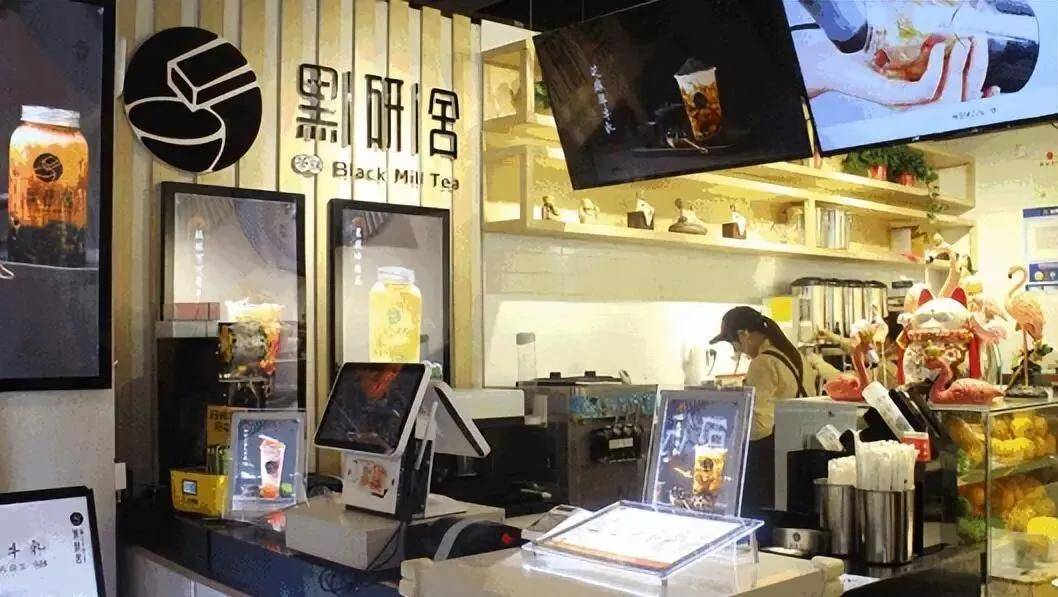
When a large number of novices blindly entered the market, the tea market quickly changed from a blue ocean of incremental growth to a red ocean of stock. The entire street is dotted with various tea drink stores, which diverts customers endlessly, and the revenue of a single store continues to decline.
More and more people are opening stores, but fewer and fewer people can make money. The industry has entered a high turnover mode, with new stores opening every day and old stores closing in a hurry.
The seemingly endless enthusiasm for entrepreneurship masks a serious imbalance between supply and demand in the entire industry.
The ice machines, sealing machines, and refrigerated cabinets piled in second-hand warehouses are the best proof.
Behind every piece of idle equipment is an ordinary person’s broken entrepreneurial dream.

The core reason for the mass closure of milk tea shops is the endless price war caused by industry involution.
Today’s new tea beverage track is no longer an era of pure competition in taste, quality and service. In order to seize market share, major leading brands have launched cross-border low-price competition models.
Traditional milk tea brands have entered the coffee track, and affordable coffee brands have crossed over into the tea beverage category.
Brand boundaries are completely blurred, products are highly homogenized, and they can only rely on price cuts to seize customers.
Americano coffee costs 4.9 yuan, poplar nectar costs 1.9 yuan, and low-priced single products have become the norm in the industry. Behind the extremely low prices is squeezing the already meager profit margins of small and medium-sized franchisees.
In order to keep up with the pace of the market, stores need to purchase more equipment and learn more new product processes, and decoration costs, equipment costs, raw material costs, and labor costs all increase accordingly.
Input costs continue to increase, but operating income continues to shrink due to low-price competition, and the payback period has directly lengthened from a few months to a year or even longer.
Many stores could no longer withstand the pressure and were forced to close before they could make it to the profit stage.
Big brands can rely on their supply chain and volume advantages to withstand the impact of price wars. Small and medium-sized stores without resources, support, and bargaining power are the first to be eliminated by the market.
The cruel industry involution has completely torn apart the entrepreneurial lie that milk tea shops can make easy money.
The layers of bundling and industry rules in the franchise model are the key shackles that crush small stores.
The vast majority of novice entrepreneurs will choose to join a brand to reduce the difficulty of opening a store. However, the franchise model may seem worry-free, but it is actually full of invisible traps that ordinary people cannot see.
Many brands do not rely on store profits. The real income comes from franchise fees and material price differences. Brands will force franchisees to purchase exclusive equipment and exclusive raw materials.
Exclusive equipment has extremely poor versatility, and it is extremely difficult to resell customized water bar equipment. Once the store fails to operate well and closes down, the entire set of equipment has almost no secondary realization value.
The initial investment of hundreds of thousands in decoration and equipment instantly turned into irreparable losses.
Some quick-recruitment brands deliberately exaggerate their profit-making effects, falsely advertise that they can easily repay their investment, and specifically target novices who do not understand the industry, have no experience, and are eager to start a business.
The shop owner spent all his savings to open the shop. In the end, not only could he not make any money, but he was also burdened with debt.
Although the leading brands are relatively formal, they have strict control and strict requirements. The stores have very little room for independent operation, and profits are firmly locked up by the brand supply chain.
Regardless of whether it is a franchise of a small brand or a big name, small and medium-sized franchisees are always in a weak position. They seem to be the boss of their own store, but in fact they are just tools working for the brand.
The current hot second-hand catering equipment recycling industry is the most realistic window to observe the ups and downs of the tea beverage industry.
This group of practitioners, known as catering corpse collectors, are deeply rooted in the front lines of the industry and have witnessed the replacement of old and new stores.
The industry has been experiencing high turnover for many years, and the cycle of store openings and closures has never stopped.
They receive a large number of nationwide store withdrawal clues every day. During peak periods, they can connect with the resources of dozens of closed stores in a single day. There is a huge gap in the market circulation value of equipment of different brands and categories.
The equipment of leading regular tea brands has high versatility, stable quality, and higher market recognition. Even if the store closes, the equipment can be quickly resold and circulated, with relatively low losses.
However, customized equipment from various niche brands that are quick to hire has poor adaptability and a narrow audience, making it basically difficult to sell.
Practitioners can clearly distinguish the high-quality tracks and risk traps in the industry through the circulation differences of equipment.
It is precisely because of the large number of novices who blindly started their own businesses and hastily closed stores that the booming business in the second-hand industry has been supported.
This seemingly profitable side business is actually a true microcosm of the entrepreneurial chaos in the entire tea beverage industry.
The bustling second-hand equipment market is a wake-up call for every ordinary person who dreams of starting a business.
The low barrier to entry in the milk tea industry is just an illusion. The real profit threshold has never been lowered. All unthinking follow-up investments will eventually turn into heavy real losses.
The market is always fair and cruel. There is no business where you can get something for nothing, and there is no entrepreneurial track where you can make money by lying down.
The eliminated idle equipment is the tuition paid by countless entrepreneurs, and it is also the most authentic industry teaching material.
Related Reading
- Original Yang Zhilin broke his wrist: Kimi’s darkest moment and expedition2026-10-06
- SpaceX stock price surges, Musk’s net worth surges by more than $30 billion in one day2026-10-06
- Trump plans another oil stockpile sell-off with global reserves already ‘scarily thin’2026-10-06
- Original Holiday Personality Illustrated: Young people have become “schedulers”2026-10-05
- Stock market headwinds could set up a major rally in coming months, strategist says2026-10-05