問AI· From social networks to Musk, why has the focus of technology imaging changed?
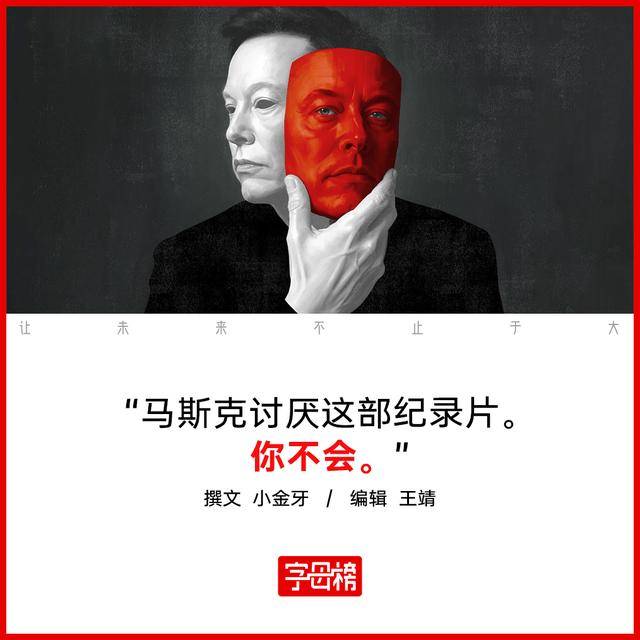
Musk recently cursed people on X again. This time it was the documentary director who was scolded Alex Gibney: He had “no integrity,” was a “despicable person,” and made a movie that was “boring for four hours.”
電影叫 《Musk》, which took nearly four years to film, just premiered in Venice on September 8. Musk’s lawyers acted before the audience:Five days before the premiere, a lawyer’s letter was sent to the studio, warning of possible lawsuits.
Gibney is no stranger to such battles. thisAn Oscar-winning director filmed Enron’s financial fraud and investigated the so-called “Female Jobs”的 Elizabeth HolmesHow to attract investment with the promise of blood tests.
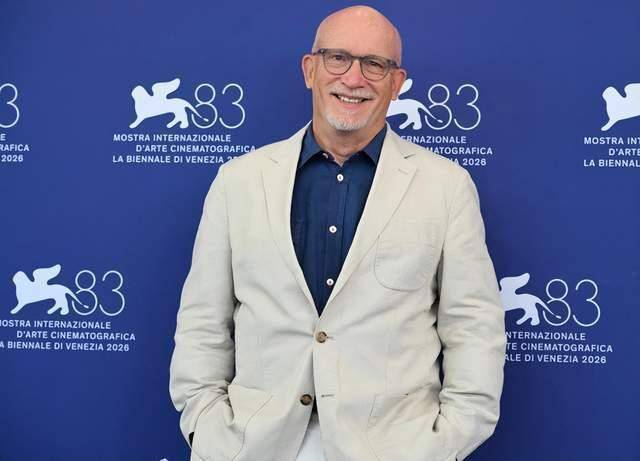
He is accustomed to interviewing former employees, partners and people close to him to find out what happened behind the glossy stories. This time, the camera is focused on Musk.
The premiere will still take place as scheduled. After the screening, the audience stood up and applauded for about four minutes, and some people shouted “Thank you” to the director.
And the angrier Musk becomes, the more excited and expectant the outside world becomes. The most ironic thing is that on September 15, the publisher Bleecker StreetDue to strong audience demand, it was announced that the release date in New York and Los Angeles would be raised from October 16 to the 9th.
In fact, as soon as the 2023 project was announced, Musk determined that it was an “attack film.” Now ex-wives, ex-partners, and former business associates are speaking out, and family life, business commitments, and political power are being put into the same film. Revelations and controversies abounded, but many film critics gave it favorable reviews.
What exactly is in this documentary, which Musk calls “four hours of boring”, that has made Musk chase and scold it for several years?
A
“Musk” has not yet been officially released, and ordinary audiences cannot see the entire film yet. However, the intensive coverage after the premiere, as well as director Gibney’s successive participation in film festivals, press conferences and media interviews, have allowed several “big information” in the film to surface in advance.
1. Internet celebrity ex-girlfriend: Musk wants to spend $40 million to silence me after giving birth
In “Musk”, one of the most watched interviewees is a conservative internet celebrity Ashley St. Clair(Ashley St. Clair). She has a child with Musk.
St. Clair said Musk had proposed an initial payment of US$15 million, followed by US$100,000 per month for 21 consecutive years, on condition that a confidentiality agreement be signed. A total of approximately US$40 million. She didn’t accept it and refused, because she thought on the contrary, if the price was so high just to keep quiet, then my right to speak must be very precious.
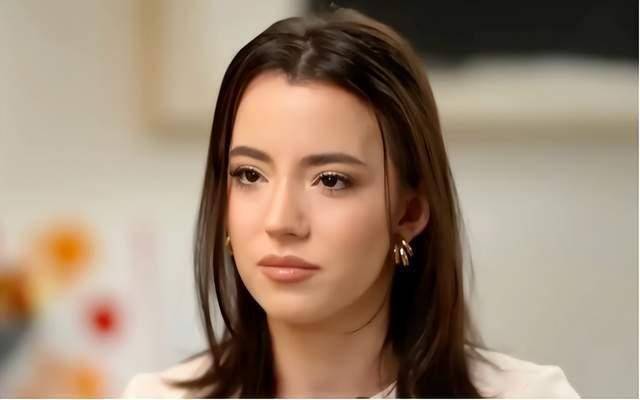
Musk later denied outright: “She was never given such an offer.” He also accused St. Clair of having a history of publishing false accusations. This arrangement is still a matter of dispute between the two parties.
What’s more special than the amount is St. Clair’s description of Musk’s view on fertility. She said that during their relationship, Musk listened to a podcast about Kublai Khan before going to bed, and also sent a message telling her that he hoped to have an “army of children” before the “civil war.” In her telling, having children has been integrated into a plan about population, war, and the future of humanity.
2. Ex-wife: Musk always beautifies himself when talking about his children
Musk’s first wife and writer 賈斯汀(Justine) brings more family details.
Their first child, Nevada, died young. In 2022, Musk publicly said that the child died in his arms and he felt his last heartbeat. Justin corrected in the documentary: She was the one holding the baby in the end. In an article published as early as 2010, she wrote about her experience of holding her child to see her off.
Another incident occurred after the relationship between Musk and his daughter Vivian (the transgender one, born male) broke down. Justine said Musk asked her to tell her daughter that he would always love her. But the next day, he removed Vivian from his health insurance.
3. Why was he so sure on election night?
Another interview with St. Clair takes the controversy beyond the family and into the U.S. election.
She recalled that on election night in 2024, Musk left the party at Mar-a-Lago early and later told her that he had known Trump would win. That kind of certainty about the outcome was something she had never seen before.
She also mentioned that before the election, Musk said that he would “release the anomaly in the matrix” and told her: “I have ten thousand laser beams in space.” St. Clair said that she did not pursue the question because she did not want to be asked to testify in the future. Musk’s answer: “Smart.”
This has also become the focus of the lawyer’s letter. Musk’s lawyers believe that the arrangement of the materials in the film implies that Musk used Starlink to influence the election and therefore was able to know the results in advance. Musk denied this suggestion and asked the film studio to preserve materials such as interviews, research, and internal communications to prepare for possible litigation.
4. “AI Godfather” Hinton: DOGE令人擔憂
Another interviewee, a computer scientist Jeffrey Hinton(Geoffrey Hinton), raised future-oriented concerns.
He mentioned in the film that if someone wants to use AI to influence political outcomes, detailed citizen information will be a key resource, and DOGE’s approach to government data makes him wary.
His statement is a risk judgment, but it undoubtedly further deepens the critical perspective of the documentary. Still the same question, when an entrepreneur owns a social platform, an AI company, and has entered the White House, how should the outside world understand the relationship between these capabilities?
5. Tesla co-founder personally settled old scores: If he had to do it over again, he would not hand over so much control
Co-founder of Tesla Martin Eberhard(Martin Eberhard) was also interviewed. One thing that worries him the most is that many people now think Tesla was founded by Musk.
Eberhard believed that Musk was too egotistical and stated in the film that if he could do it over again, he would not hand over such large control of the company to Musk.
6. Musk’s most powerful ability: Let the future that has not yet been realized generate value first
Gibney’s explanation of Musk’s business ability is that he is particularly good at convincing the outside world that the future is already here. This kind of belief can bring investment, orders and valuation to the company.
Autonomous driving is the focus of the film. Gibney put together the self-driving demonstration video released by Tesla in 2016 with the driving record footage of a fatal accident in 2019: a car using Autopilot killed one person and seriously injured another in Florida. There is a direct contrast between the promises made in technology demonstrations and the consequences in actual use.
Tesla’s cars and SpaceX’s rockets have achieved tangible results, and they have earned Musk trust that lasted for many years. The film asks: When this trust is used for the next promise, can the public distinguish which technologies have been achieved and which are still just his goals?
Gibney had previously photographed Enron and “female Steve Jobs” Elizabeth Holmes, and now he saw familiar routines in Musk. At the Venice press conference, he directly used the term “confidence man” (liar.) to describe Musk, believing that this is not a brand-new technology story: accumulating wealth and power by inflating stock prices is an old story he has already filmed. (Note: Confidence man is a fixed term, which refers to a person who first obtains the trust of others and then uses this trust to defraud, that is, a “liar”.)
However, he also admitted that there are key differences between the two. Holmes’ machine simply cannot fulfill its promise, but Tesla is a car that has been in mass production for many years and some people do like it. In an interview with Vanity Fair, he attributed the commonality between Musk, Enron executives and Holmes to creating an illusion that makes people willing to invest money. What he questioned was not that Musk’s company had no results, but how many unfulfilled promises besides these real results were sold to investors as reality.
By the way, one of the core points of Musk’s supporters’ criticism of this documentary is that Gibney juxtaposes Musk with Enron or Holmes. After all, Musk really made electric cars run on the streets, rockets were lifted into the sky and then recycled, and he built super large AI clusters.
B
Musk’s power is not only reflected in the stories told in the documentary. The filming process outside of the documentary is inherently exciting.
Gibney said many people who knew Musk well during the filming were afraid of speaking publicly, especially on camera.
These include critics, company insiders and even Musk supporters. Some people who could have put in a good word for him responded by saying, “I can’t talk to you without Elon’s permission.”
Musk himself finalized the project early. In 2023, when the film was first announced, he called it an “attack film.” Gibney asked back at the time: “How do you know?” After all, to this day, the outside world still does not know whether Musk has watched the documentary in its entirety.
Three years later, the two still have not sat down to complete an interview, but the confrontation has extended from social platforms to legal letters.
Both sides disagreed on whether they had given them a chance to respond.
Musk’s lawyer said that the team tried to contact the film studio for a response, but was rejected.
Gibney said at the Toronto event that they had formally invited Musk several times, but received no response except for online comments. He also emphasized that the film was reviewed by lawyers and independently fact-checked.
And the documentary wasn’t originally this long.
Gibney said that before Musk turned to Trump, he was working on a two-hour documentary that was nearly completed. But the election changed plans. Musk was no longer just an entrepreneur running cars, rockets and social platforms, but also entered the White House. To explain all this, the original space is no longer enough.
HBO supported additional filming, and the film was cut into a six-hour version, which was later compressed to four hours.
There is another controversial point – Musk never accepts interviews.Gibney eventually arranged for a “Musk stand-in” to appear.
It was a stand-in made with CG and combined with AI voice synchronization technology.
What it said was not a line made up by the screenwriter, but something that Musk actually said in previous interviews and other occasions, which was just rearranged into a mock interview.
Gibney explained that this was a deliberate irony, echoing Musk’s view that humans may live in a simulated world.The production team also consulted lawyers before adopting this plan.
But the fact that it is true does not mean that this way of presentation is uncontroversial. After watching it, NPR reporter Bobby Allin believed that the virtual Musk made people look dramatic and weakened the weight of a serious investigative work. There are similar problems with the gamified scenes in the film, such as having Musk wielding a chainsaw slash at federal agencies. In his opinion, this satire is too literal.
Widespread acclaim for a documentary doesn’t mean it’s taken as a given. Arlin, who has been covering Musk for a long time, believes that the film does not contain much truly new information, and its value lies more in putting together materials that have been scattered for many years. When it comes to “space lasers” and the use of DOGE data to interfere with the election, the film goes beyond what the existing evidence can support.
Of course, overall external evaluation is quite high. Time Out gave “Time Out” four stars, saying that although it was nearly four hours long, it was still engaging, and was particularly positive about the breadth of material covered in the film. The subtitle of the review simply read: “Musk hates this documentary. You don’t.”
C
Musk is not the first tech tycoon to dislike his on-screen image. Sixteen years ago, The Social Network made Zuckerberg uncomfortable.
In 2010, this movie directed by David Fincher and written by Aaron Sorkin made Facebook’s entrepreneurial history into a story of friends turning against each other, equity competition and litigation. It is certainly not an inspirational film about entrepreneurship, but the conflicts mainly occur between the founders and the people around them, and the focus is also on entrepreneurship itself.
Zuckerberg was most dissatisfied with the movie explaining his motivations for starting a business. In 2014, he said in a public Q&A that he felt hurt by the plot that he created Facebook to attract girls.
In his opinion, the real entrepreneurial process does not have so many dramas and conflicts, and the filming is probably like sitting there and writing code continuously for two hours.
Gibney himself has encountered this kind of controversy. In 2015, he filmed “Steve Jobs: Life as a Robot,” interviewing Jobs’ former colleagues and ex-girlfriends to examine the desire for control behind product achievements and the price paid by those around him.
By 2022, the ups and downs of the technology entrepreneurship circle have been filmed into TV series one after another.
“The Dropout” is about the aforementioned “female Steve Jobs” Holmes. She claimed that she could complete multiple disease tests by collecting only a small amount of blood, and she received huge investments based on this promise. But the company never delivered on the technology advertised, and the entrepreneurial star’s story turned into a fraud scandal.
“Super Pumped” focuses on Kalanick, the co-founder of the online ride-hailing platform Uber: He turned a start-up company into an industry giant by expanding at all costs, but he also fell into crisis due to this management style and was eventually kicked out of the company he founded.
The Neumanns in “We Crashed” talk about the shared office business as a business that changes people’s work and lifestyle. WeWork, which they ran, was once valued at $47 billion, and then lost about $40 billion in less than a year. The series not only captures how the couple inspires each other, but also captures how they lose judgment amid their ever-expanding ambitions.
It can also be seen from the plot synopsis that compared to the dramas about entrepreneurship stories in the technology circle represented by “The Social Network” ten years ago, the focus of the technology tycoon film and television has changed in recent years, and it has gone deeper into the “after entrepreneurship”, those ambitions and deceptions, dreams and human nature.
“The Social Reckoning” will be released in the United States on October 9, written and directed by Sorkin, and starring Jeremy Strong as Zuckerberg.
Sony calls it a “companion” to “The Social Network,” and according to the official synopsis, the focus of the story has been given to two other people: Facebook whistleblower Frances Haugen, played by Mitch Maddison, and “Wall Street Journal” reporter Jeff Horwitz, played by Jeremy Allen White.
They teamed up to expose the platform’s internal secrets that it didn’t want to make public.
Another new film, “Artificial”, will premiere at the New York Film Festival on October 5, involving the turmoil of Ultraman’s dismissal from the OpenAI board of directors in 2023 and his subsequent reinstatement.
But it will not only film the chaotic scenes of those few days. The introduction released by the New York Film Festival shows that the film will also trace the process of Ilya Sutskvi following Hinton to study neural networks and later meeting Ultraman, putting the story into the history of AI development in the past twenty years.
The change in the past ten years is not that movies suddenly stopped praising technological geniuses – “The Social Network” has never been gentle. The more obvious change is that the cost in the story has become larger and larger, first it was friends betrayed and partners squeezed out, then employees, investors and consumers were harmed, and now it involves people who never invested in these companies or even used their products.