The probability of Evosi being approved this time is not high, but Kangfang’s time advantage has been weakened.
Text | Caijing reporter Ling Xin
Editor|Wang Xiao
“This is the most frustrating time for me in the 14 years since the establishment of Kangfang Biotech.” Xia Yu, chairman of Kangfang Biotech, said in a conference call at 9 o’clock in the evening on November 15, 2026.
More than 3,400 investors flocked to Kangfang Biological’s conference call because of one piece of news – the U.S. Food and Drug Administration (FDA) rejected Ivosi’s marketing application.
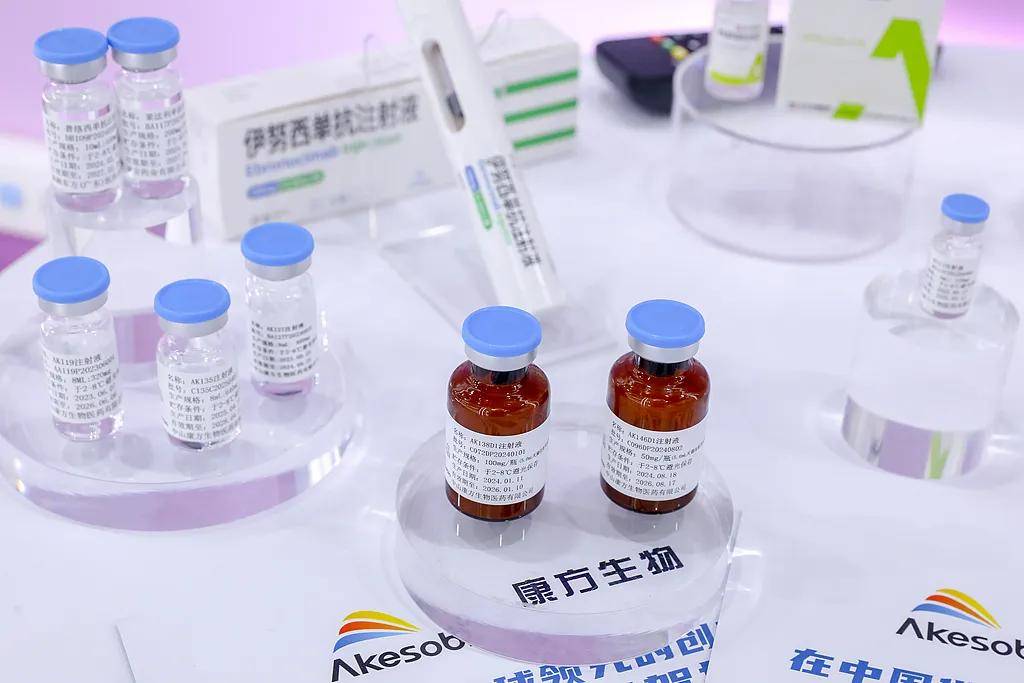
Evosi is an anti-cancer drug PD-1/VEGF dual antibody developed by Kangfang Biology. It is also the first and only drug with the same target approved for marketing in the world.
Goldman Sachs has predicted that Ivosi’s peak annual sales could reach US$53 billion, more than twice that of K-drug, the world’s highest-selling anti-tumor drug. Just two months ago, the multinational pharmaceutical company AstraZeneca made a strategic investment of US$2 billion in Summit, the American partner of Kangfang Biologics, betting on this drug. Summit currently only has this drug.
About an hour before the phone call with Kangfang Biotech, Summit acknowledged that it had received a complete response letter from the US FDA, which is a formal rejection of the marketing application.
Why was such a product that attracted many American patients to fly to China for medication (see Caijing’s September 2 report “A shot costs 990,000 yuan, foreigners come to China to fight cancer”), so why was it rejected by the FDA?
The reason for rejection given by the FDA was mainly that the overall survival (OS) did not meet the standard. The drug has shown to be better at controlling tumor progression than existing treatments, but formal data has yet to prove it can extend patients’ lives.
“With this rejection, the next big Chinese drug to hit the global market may not be from Kangfang Biologics.” A professional pharmaceutical investor analyzed Caijing.
November 16 was the first trading day after Evosi was rejected by the FDA. Kangfang Biotech fell by more than 20% in early trading.
However, there are also investors who are thinking, “Is this an opportunity to buy the dip?”
Once short, two dilemmas
After learning the results from Summit in the morning, Kangfang Biotech organized an investor conference call in the evening. At the meeting, Xia Yu promised that if the market fluctuates, the company will take measures including buybacks to stabilize the market.
Affected by the weekend, U.S. stocks were not trading yet. However, in the early trading on November 16, Kangfang Biological’s stock price fell 23.39%, and the intraday decline once reached 31.83%.
Evosi is the core drug of Kangfang Biologics. Since it awarded overseas rights to Summit for a total of US$5 billion in December 2022, it has become the core support for the stock prices of the two companies. Some investors believe that its overseas market is expected to contribute more than 60% to Kangfang Biological’s share price.
For Summit, this time he stepped into the air and was extremely lethal.
Summit’s valuation is almost entirely supported by Ivosili’s clinical data. On the day it announced the introduction of Ivosi’s overseas rights in December 2022, its stock price rose from US$0.79 to US$2.31; in May 2024, news of its head-to-head defeat of K Drug came out, and it soared 272% in a single day; in May 2025, the OS data did not reach significance, and it fell by 31% in a single day.
A pharmaceutical investment analyst from an international investment institution previously analyzed to Caijing that “Summit itself has no commercialization capabilities.” The path is to introduce overseas rights and interests of potential first-in-class drugs, raise funds to promote clinical trials in the United States, and sell them to multinational pharmaceutical companies after success. Every step is driven by clinical data. Getting approval is probably the next best thing to selling the company as a whole.
Kangfang Biotech currently bears relatively small losses, but judging from the overseas export of China’s innovative drugs, the impact of this incident may be more far-reaching.
According to the transaction structure between the two parties, Summit will bear all the expenses and risks of U.S. market development, while Kangfang Biologics will receive the down payment, milestone payments, and sales shares after future product launches.
At the same time, Evosi and another dual-antibody drug Cardunil have already brought revenue to Kangfang Biologics in the Chinese market. Currently, Evosi has been approved for three indications in China and is included in medical insurance. In 2025, the company’s sales revenue was 3.033 billion yuan, a year-on-year increase of 51%; in the first half of 2026, the company’s revenue was 1.806 billion yuan, a year-on-year increase of 27.92%, and the net loss attributable to the parent company was 447 million yuan, which was narrower than the same period last year.
“The valuations of both parties are based on Ivos’s global market expectations, especially the U.S. market, so the impact on the stock price is relatively large.” An analyst who focuses on medicine told Caijing that it is not uncommon for U.S. biotech companies (Biotech) to plummet 30% in one day. “Summit often rises and falls sharply, but Chinese investors don’t see that much.”
Now, Chinese investors are slowly seeing more of this kind of plunge. In October, Ingen Biotech and the multinational company BioNTech announced that a global phase III study of the antibody conjugate drug (ADC) Pacon trastuzumab achieved the primary endpoint of PFS, but the wording was “statistically significant, moderate magnitude” and no specific data was released. The stock price fell 27.93% in response.
The aforementioned analysts reminded that innovative drugs are characterized by high risks and high returns, and “investment needs to be cautious.”
If it’s not approved, isn’t it because of the medicine?
Many investment institutions in China and the United States have predicted that the probability of Ivosi being approved this time is generally low.
The main reason is that the clinical data used to submit the application this time did not achieve significant OS. OS directly reflects whether patients live longer.
This trial of Ivosit uses progression-free survival (PFS) and OS as the primary endpoints. PFS can be understood as the survival time of a patient’s tumor without progression after taking the drug. The indication for this application is combination chemotherapy for the treatment of EGFR-mutated non-squamous non-small cell lung cancer that has progressed after third-generation EGFR-TKI treatment, based on the global phase III trial HARMONi.
The PFS reached the target, that is, the risk of disease progression or death in the Ivoxil group was about 48% lower than that in the chemotherapy group. However, the OS data has been released three times, but none of them reached the preset statistical significance standard.
In recent years, the attitude of the US drug regulatory authorities has been very clear, repeatedly releasing signals that OS benefit is the “gold standard” for judging the efficacy of anti-cancer drugs. Therefore, to be approved for this indication, there must be a significant positive OS benefit.
So why does Kangfang Biotech still use a single positive PFS data to break through?
First of all, in the same treatment scenario, the OS of Johnson & Johnson’s evantumumab combined with chemotherapy also did not reach statistical significance, but it was still approved by the FDA for marketing. Perhaps it was this precedent that made Summit decide to test whether regulators could loosen their bottom line.
Furthermore, judging from the preset goals, Kangfang Biotech may not have considered OS much at first. Xia Yu recalled that when communicating with the U.S. FDA about this global phase III study at the end of 2022, “the FDA proposed that you should achieve statistical significance for OS.” But at that time, not only had the trial already started, but the enrollment of Chinese patients had also been completed. In other words, the global trial HARMONi is an extension of China’s local trial.
“Kangfang Biotech has set the standard of ‘statistically significant’ for OS too high, and may not have planned to make it from the beginning.” A pharmaceutical industry analyst analyzed to Caijing. In China’s local trials, OS was only a secondary endpoint. In the end, the first indication it was approved in China relied on its outstanding PFS.
However, in the United States, Evosi’s agreement with the FDA during the protocol phase is that both PFS and OS are the primary endpoints. To use only one-third of the Western population to drive the entire trial to reach the extremely high OS positive standard originally set is to “face the difficulties.”
As for Johnson & Johnson’s evantumumab, although it also benefited from PFS and OS did not reach statistical significance, OS was not set as the primary endpoint during the trial design, but as a secondary endpoint.
Xia Yu said at the above-mentioned telephone conference, “The FDA must be very recognized for the safety of our drugs.” Kangfang Biotech is still continuing to track patient data after the aforementioned interim analysis of the trial was announced. However, “When you have completed a formal analysis, subsequent analyzes will not have statistically proven effects.” Xia Yu said frankly.
In this regard, an industry insider believes that Summit submitted a listing application based on the results of this trial, which was a “forced entry”.
Previously, some investment institutions had predicted that the probability of Ivosi’s approval was generally less than 50%, and some institutions believed that the probability was only 15%.
When going to sea, it is important to choose a partner
“AK112 is a good drug, but Summit is not a good match.” A financial professional who focuses on the medical field wrote in an official article.
This failure to pass the FDA may not only affect the stock prices of the two companies, but also undermine investor confidence to a certain extent.
Because, a closer look at the trial data shows that as of June 2026, the data for Asian patients is still stuck at April 2025. In other words, the data of the Asian cohort, which accounts for the majority of the total sample, is no longer likely to change. Putting this old data, which has not been positive, with the data of Western patients, which accounts for about one-third, is tantamount to relying on Western patient data to significantly increase “life-changing”. This is too difficult.
Facts have also proved that there are basically no major fluctuations in the OS of the entire population. In this case, “breaking in” is not self-confidence, but “lucky”. This has caused some investors to question Summit’s decision.
The information disclosed by the management of Kangfang Biotech in various telephone conferences is that overseas clinical trials and applications are controlled by Summit. As a small biotechnology company, Summit’s overseas clinical operation system is still inferior to that of multinational pharmaceutical companies, especially in its communication with the US FDA. It expected to copy the path of Johnson & Johnson, but ultimately failed.
This may be related to Summit’s financing needs. In order to promote the launch of Ivosi, Summit has deployed at least five phase III clinical trials, and the expenditure for a global multi-center clinical trial may be hundreds of millions or even hundreds of millions of dollars. Therefore, Summit, which does not have any commercial revenue, must continue to announce clinical progress and marketing progress to attract more investment, otherwise, cash flow will soon run out.
Summit will submit its listing application at the end of 2025. The financial report shows that as of the end of 2025, it had US$713 million in cash on its books; by the second quarter of 2026, the company stated that working capital was insufficient to support operations in the next 12 months. It was not until September that financial pressure eased after AstraZeneca took a stake.
Xia Yu said during the conference call that Summit currently has approximately US$2.5 billion in cash on its account.
In fact, when 3SBio and Pfizer reached a huge deal for the same target product in 2025, many investors expressed regret for Ivosi’s “low marriage”. At that time, Kangfang Biotech’s explanation was that, coupled with its own equity, its total transaction amount was higher, and Summit only had this one product, it would pay more attention to it than multinational pharmaceutical companies.
Summit does pay attention, but its risk appetite is obviously stronger than that of big pharmaceutical companies, so it spends money more aggressively and is more willing to try more in decision-making. However, judging from the results, the clinical trial in China was extended to multi-center clinical trials around the world. Although it obtained FDA approval, it ultimately failed to achieve the OS goal.
Considering that both Summit and Kangfang Biotech were little-known in the United States at first, it was not easy to recruit, and limited resources were invested in a trial that ultimately failed to lead to success, which may have weakened Ivosi’s leading advantage among similar products globally.
What Evosit applied for this time is a small indication. It is applicable to about 14,000 patients in the United States every year. The commercial space is limited. Looking back, it may not be a good choice to spend a lot of effort on this.
In short, Summit failed to get the FDA to make concessions at the outset, nor did it change the final outcome.
Xia Yu promised investors at the above-mentioned conference call that if the stock price of Kangfang Biotech fluctuates to a certain extent, “the company will also take certain measures, including repurchases, to strive to stabilize the market.”
For more Chinese innovative pharmaceutical companies, Ivosili’s setback reminds them that good medicines may not necessarily produce good results. The strength of overseas partners, clinical operational capabilities and application strategies will also affect the fate of a drug.
(“Caijing” researcher Ding Ning also contributed to this article)
Editor | Yang Minghui
Related Reading
- Anthropic engineer’s warning about Claude Code explains why tech outages could get much worse2026-11-22
- Original Unexpectedly, just one day after the APEC summit, China became famous around the world because of its three “specialties”2026-11-21
- Original Anthropic goes public and creates wealth: 96% of employees became millionaires overnight2026-11-20
- The beauties and handsome guys from UB.com want to enter your home and wait until they arrive.2026-11-20
- Original: Tencent’s shareholders will suffer again2026-11-20