Compete for AI entrance.
Handset Tech (ID:tingtongtech) original
Text | Chen Ke
Editor | Rao Xiafei
Nine and a half months later, Doubao Mobile has ushered in its new narrative.
On September 14, 2026, ByteDance announced that the consumer version of Doubao Mobile Assistant was officially released; the first equipped model Nubia NaviX Ultra went on sale on September 16.
This is nine and a half months since the technical preview version of the Doubao mobile phone debuted on December 1, 2025. For a consumer electronics category, the pace is not fast; but for a brand new AI mobile assistant, this slowness is meaningful.
In the past, Doubao mobile phones were stuck in the ecological blockade caused by operating mobile phone functions. Within a few days of the technical preview version being launched, it became the key “risk control” target of major apps.
But now, Doubao has chosen to “trade the protocol for space, trade openness for scale” and said that the SAEP protocol allows third-party applications to independently declare operating boundaries, and will not perform automated operations on applications that are explicitly rejected.
In short, Doubao mobile phones are now “knocking on the door.”
However, Doubao Mobile Assistant still needs to be looked at.
After all, whether the road is successful does not depend on the upper limit of the model’s capabilities, but still depends on the collective choice of mobile phone manufacturers, application developers, regulators and the market.
-01-
From “engineering prototype” to “consumer version”
Mobile phones are what Byte must do in the AI era.
On September 14, ByteDance announced that the consumer version of Doubao Mobile Assistant was officially released; on September 16, the first equipped model Nubia NaviX Ultra went on sale.
The market is still full of expectations. Data shows that before the launch of sales, the number of reservations on the JD platform has reached 396,000.
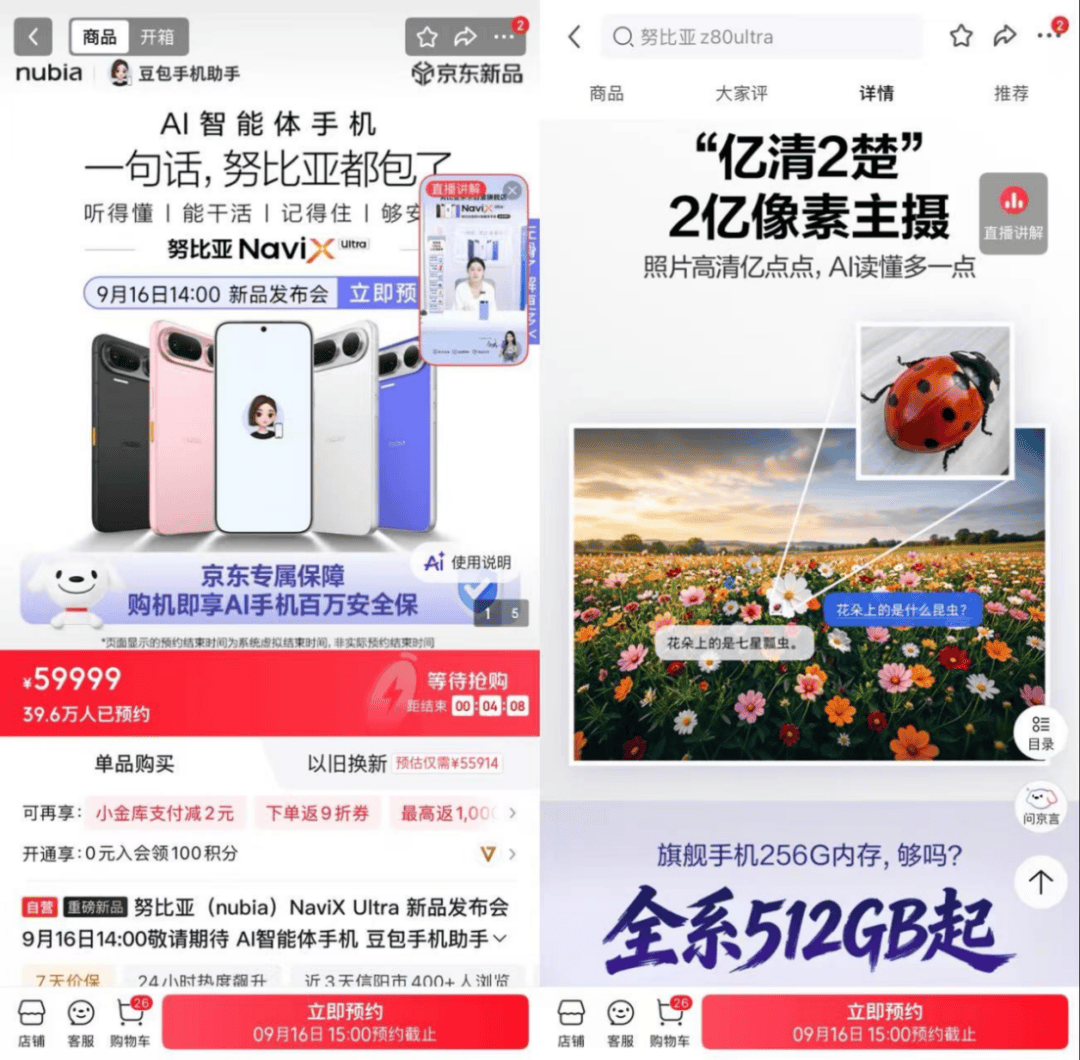
Figure: Introduction to the consumer version of Doubao Mobile Assistant
Official information shows that compared to the past, this phone has undergone multi-dimensional upgrades in terms of AI.
According to reports, Doubao Mobile Assistant supports multiple wake-up methods such as voice and AI keys to adapt to different usage scenarios. Among them, the exclusive AI key has fingerprint authentication capabilities. After completing personal verification, you can call the assistant to perform related tasks without having to unlock it twice.
In addition to interaction capabilities, personal context and memory capabilities are also key to whether the mobile assistant can meet the personalized needs of users.
For example, Doubao Mobile Assistant provides search tools for local data, which can retrieve photo albums, text messages, notes and other information when users need it. When the user asks about the expiration time of the Hong Kong and Macau pass, the assistant can find the answer from the relevant information on the mobile phone.
In addition, focusing on office scenarios, the consumer version of Doubao Mobile Assistant has also upgraded the recording experience and has access to Feishu Miaoji capabilities. Combined with local search tools, users can directly ask for specific content.
Regarding the core ecological application issues, Doubao has also filled in some of the “pits” that have been trampled before.
For example, Doubao stated that the “operate mobile phone” function was open in Beta version. At the same time, it also launched a screen automation operation statement agreement called SAEP and launched a 30-day rule publicity.
The core logic of the protocol is simple and pragmatic. Third-party applications can independently declare operation boundaries and explicitly allow or deny the AI assistant to perform screen automation operations within this application. In addition, Doubao will not perform automated operations on explicitly rejected applications.
Strictly speaking, this is the official version of Doubao Mobile Assistant. The market has also seen that Doubao has “lowered its profile” compared to the preview version.
This kind of restraint is in contrast to the experience of the first generation Doubao AI mobile phone.
On December 1, 2025, the technical preview version of Doubao Mobile Assistant made its debut. The first equipped device, Nubia M153, was sold at a price of 3,499 yuan, and 30,000 units were quickly sold out.
At that time, the path of Doubao was clearly visible. It tried to bypass the App island and embed the large Doubao model into the bottom layer of the operating system. AI simulated human visual recognition and touch operations to directly “drive” the mobile phone. This is also regarded by the outside world as a positive impact on the mobile Internet traffic pattern.
However, the feedback from the market is much more complicated than the technical demonstration.
The day after the technology preview version went online, some users asked Doubao Assistant to operate WeChat, and then received a prompt of “abnormal login environment”, and their accounts were forced offline or temporarily frozen. A verification code popped up on Taobao, and mobile banks such as Agricultural Bank of China and China Construction Bank suspended login and payment due to “risk environment”.
It can be said that this is a collective blockade against ecology.
Byte learned a key lesson from the experience. In the old order of the mobile Internet, AI assistants have no natural right of passage. Therefore, Doubao Mobile Assistant changed its approach of “knocking on the door”.
Doubao chose a new set of rules to draw boundaries for itself and give its partners a predictable framework for negotiation. In the official words of Doubao, it hopes to work with partners to “jointly build an open and standardized mobile AI application ecosystem.”
Obviously, in a track with a vacuum of standards and an absence of governance framework, simply breaking through will only trigger a defensive rebound in the industry.
-02-
AI mobile phone thing
Frankly speaking, on the surface, the consumer version of Doubao mobile phone is still a “mobile phone assistant”.
Judging from market discussions, whether it is on-screen Q&A, local search, cross-application operation, or recording transcription, these functions can actually be found in the demonstrations of Apple, Honor, and Leap.
But the beanbag phone has to do.
QuestMobile data reveals this logic. As of June 2026, the monthly active users of mobile phone manufacturers’ own system assistants have reached 755 million, far exceeding the 499 million of AI native apps.
However, in terms of average monthly usage, the AI native app is 92.7 times, while the system assistant is only 51.4 times. The difference in usage time is even greater, reaching 18.7 times.
This also means that mobile phone manufacturers have gained scale by relying on hardware pre-installation, but they have been left behind in terms of depth of use.
Furthermore, it is not that users do not need AI, but that the pre-installed AI functions of the system are “unusable”. They are just tools scattered in the system, rather than truly understanding the user’s usage scenarios.
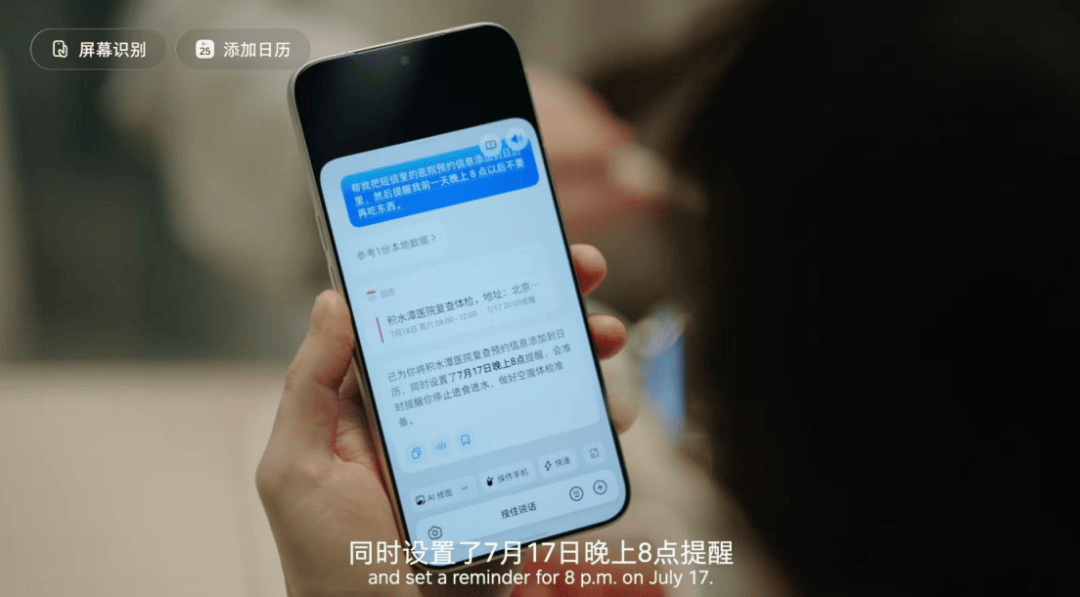
Figure: Interactive experience of Doubao Mobile Assistant consumer version
A research report from Changjiang Securities also pointed out that high-frequency digital terminals represented by mobile phones are the core traffic entrance in the AI era. In-depth integration of large end-side models into digital terminals may further promote the AI-based operating system.
As model performance improves, model manufacturers may further seek to transform into full-stack AI and accelerate commercialization.
In other words, mobile phones are the “last mile” that Byte must win in the AI era.
What Doubao wants to do is to be an assistant who is “usable” and can grasp the entrance.
It is not a mobile phone manufacturer, but uses its core AI capabilities and product methodology to try to build a cross-brand assistant layer in addition to mobile phone manufacturers’ self-developed AI.
At the same time, Doubao App, as an AI portal with hundreds of millions of users, is always separated by an operating system. Users have to open the App to talk to Doubao. This “opening” action itself is a loss of traffic.
Becoming a system-level assistant means that Doubao can be awakened on any interface and can be “present” when the user needs it.
Compared with the complex internal and external environment, what is more worth mentioning is that the mobile phone itself still has its particularity.
Many analysts believe that Byte does not have hardware, so it cannot follow the “closed system” route like Apple; it does not have an operating system, and it cannot follow the “self-developed OS” route like Honor. Also restricted by the chip, it cannot take the path of “native reconstruction” like Step Star.
In this context, since mobile phones must be made, Byte needs to choose “cooperation”.
To put it simply, Byte does not end up on its own and is not an enemy of any mobile phone manufacturer; and cooperation with multiple manufacturers also means that it can become a cross-brand “assistant standard.”
This path may be feasible.
Public information shows that in addition to ZTE, Byte is promoting AI mobile phone cooperation with vivo, Lenovo, and Transsion, among which vivo has confirmed its intention to cooperate. In addition, the negotiations between Honor and Byte have also shifted from a “cautious” attitude to a “successful” attitude.
This also means that Byte may be “offensive” in another way. Regardless of whether the technical version is boycotted or the consumer version launches a “rules announcement”, it shows that Byte is sparing no effort on the road to AI mobile phones.
-03-
A track that has not yet been cleared
If Doubao Mobile Assistant is examined in a longer industry timeline, a more meaningful phenomenon will be discovered.
In May 2026, the Ministry of Industry and Information Technology, the Ministry of Commerce, the State Administration for Market Regulation and other departments jointly launched the implementation of the “Intelligent Classification of Artificial Intelligence Terminals” (GB/Z 177—2026) series of national standards, which divide terminal intelligence from L1 response level, L2 tool level to L3 auxiliary level and L4 collaboration level.
In other words, the standards for the AI mobile phone industry have been initially established.
Therefore, at this year’s World Artificial Intelligence Conference, Honor, Nubia, and Stepstar launched their own “smartphones” almost at the same time, and they all claimed to be “the world’s first”.
“The emergence of three ‘world’s firsts’ at the same time just shows that anyone can define the first in this track. But it also shows that the industry is still in its early stages.” Lin Yi, a consumer electronics observer, said frankly.
Although the certification has been implemented, the ecological problems plaguing AI mobile phones have not been resolved.
Previously, a member of the Information and Communication Economy Expert Committee of the Ministry of Industry and Information Technology pointed out that the most important difference between traditional mobile phones and AI smart phones is “autonomy”. To gain autonomy, AI smart phones need to obtain APP calling permissions and ensure safety when calling.
“This is actually quite difficult to achieve. Because many APPs are worried that obtaining calling permissions for AI smart phones may lead to new security risks and also cause developers to lose control over APPs. Like other brands, this is also a challenge Doubao needs to face.” Lin Yi said frankly.
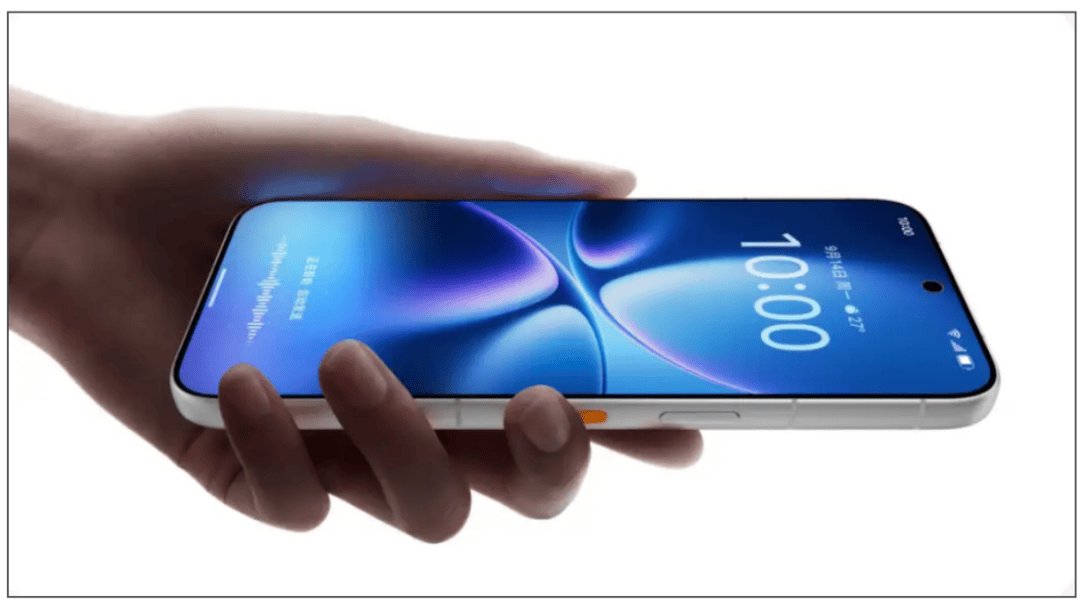
Picture: Doubao mobile phone
The SAEP protocol is a problem-solving idea given by Byte.
It leaves the choice to application developers and replaces confrontation with rules, but the establishment of rules is only the first step. For example, the currently listed support scope for “operating mobile phones” is still limited to system and ZTE applications, Byte-based applications, and some connected third-party applications.
另外,“Whether SAEP can be widely accepted by mainstream applications and how many applications will sign after the 30-day publicity period are the key variables that determine the long-term vitality of the mobile assistant.”Lin Yi said.
In contrast, users’ trust also requires education from the industry.
Doubao emphasized that cloud processing follows the principle of “no storage, no training” and data will also be transmitted and encrypted. But it still takes a long time to gain market trust.
In the eyes of more industry insiders, the maturity of the industry requires a “four-party consensus.”
In short, itIt does not depend on the upper limit of the capabilities of the large model, but on the collective choice of mobile phone manufacturers, application developers, regulators and the market.
“At least for now, the industry is still in its early stages, and everything has yet to be developed and practiced.” Lin Yi said frankly.
Of course, every entrance change in the history of the Internet is accompanied by competition for protocol standards.
For example, HTTP/HTML in the browser era and App Store review rules in the mobile era are essentially “who sets the rules and controls the entrance.” These require manufacturers and supervision to jointly build a balanced ecosystem.
From the market’s perspective, the value of the consumer version of Doubao Mobile Assistant may lie in that if it is accepted by application developers and becomes a de facto standard in the industry, then it may no longer be just a “byte product”, but a new possibility in the era of AI mobile phones.
However, beneath the silence, there is an undercurrent. The game of data power has just begun. The only thing that is certain is that the value of mobile phones as the entrance to the “last mile” in the AI era has reached the stage of competition.
The Doubao Mobile Assistant consumer version is only the first official proposal in this long war.
(Header image generated by AI.)
(Disclaimer: This article is for information exchange only and does not constitute any investment reference advice.)