Source | Bohu Finance (bohuFN)
Author | Kaikai
In August, an independent App called “Free Music” under Tencent Music quietly landed on Huawei App Market. After opening it, a familiar smell hit your face – completing tasks to exchange for gold coins, listening to songs to earn gold coins, these are the common speed version gameplays on the market.
However, this “free music” APP was only briefly launched and is now no longer searchable in the app market. However, Tencent Music’s low-key trial this time has made the outside world turn its attention to the free model of the online music industry again.
Over the past decade, the online music industry has put a lot of effort into educating users that music has a price. Nowadays, users are finally willing to pay for copyright, but the platform seems not to want to charge any more.
Behind this, the industry is reaching a new intersection, where incremental users are becoming increasingly difficult to find, while existing users are repeatedly competed for by short videos, live broadcasts, and games. Free has become a new competitive strategy.
01 Tencent plays the “free card” again
Let’s first take a look at Tencent Music’s “free music APP”. As its name suggests, the product focuses on “free”.
The core mechanism of this APP allows users to obtain gold coins by completing various tasks, and then exchange gold coins for gifts. The entire interactive interface is relatively simple. Users can “refresh songs” through short video-style information streams and make money while listening/watching content.
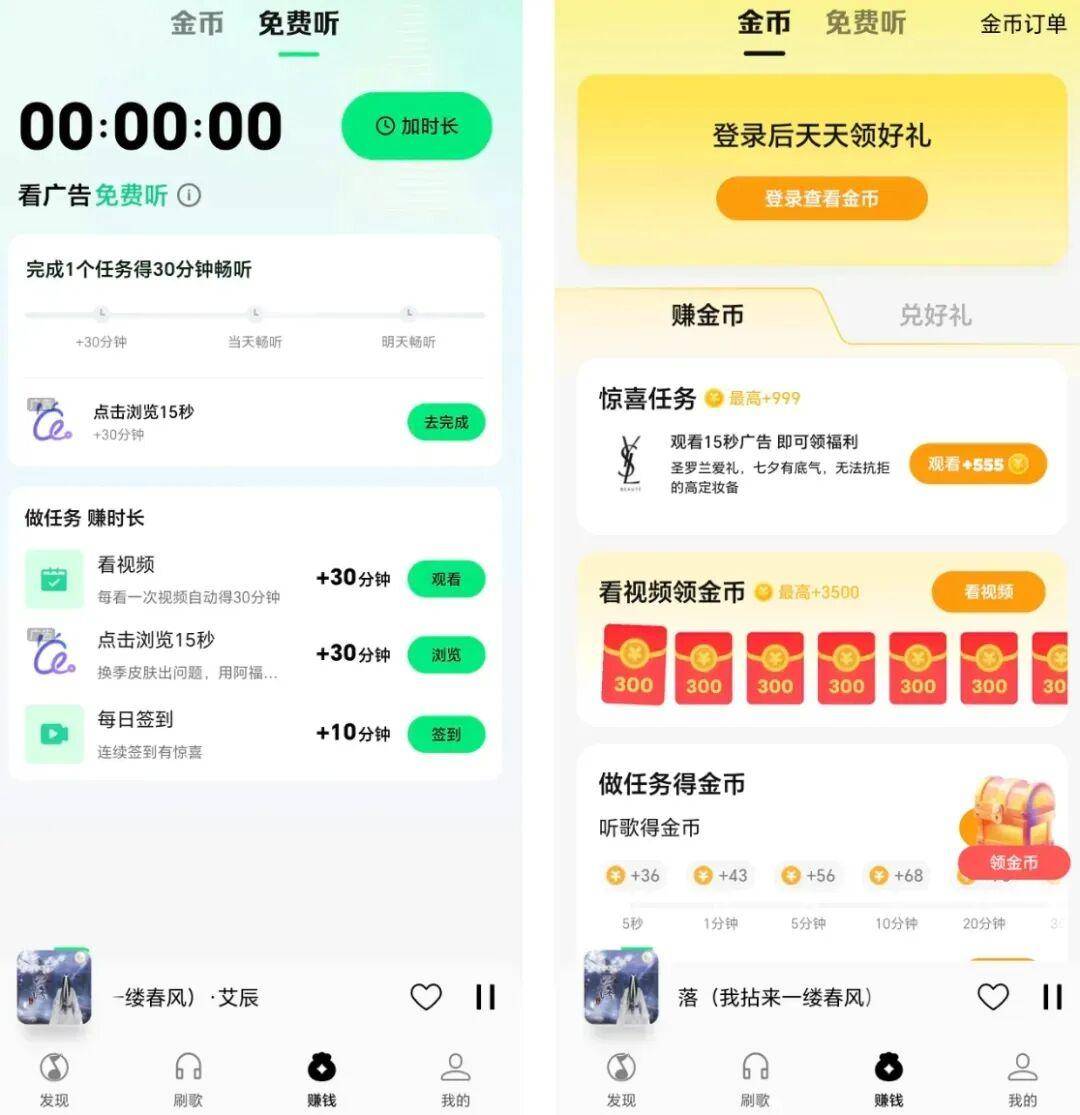
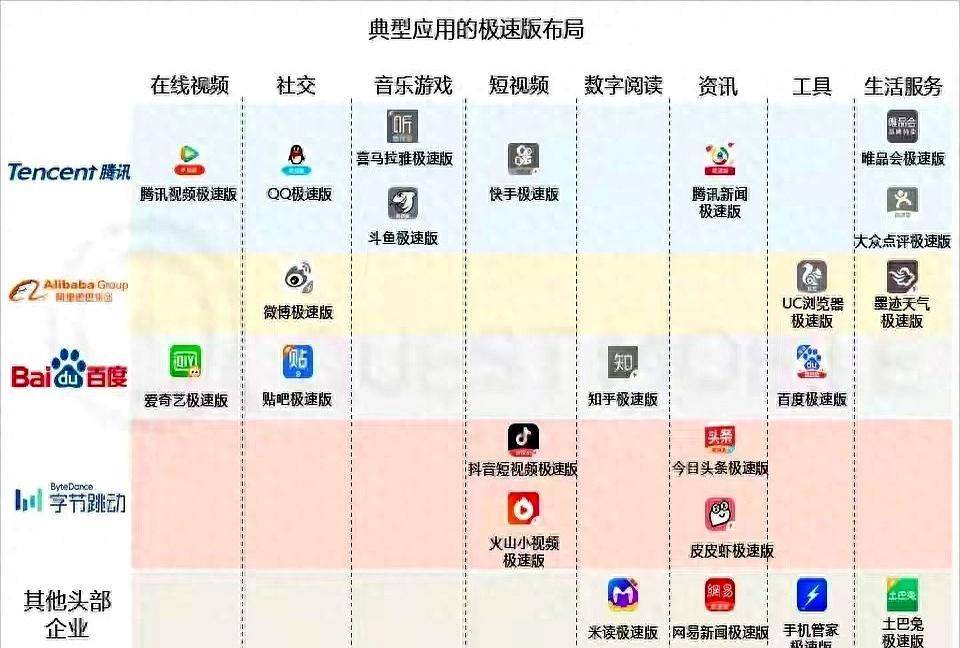
This model is not unfamiliar to major Internet companies. In the past, most of the speed versions launched by apps followed this method, which was essentially a model that exchanged “free” for user time and traffic.
Tencent Music has also tried it for a long time.
For example, “Watch ads and listen to songs for free” will be launched in 2021; “Online Earn Listening Membership” will be launched in 2025. Users can purchase this type of green diamond membership at a lower monthly fee than ordinary members. After completing tasks such as watching ads every day, they can activate the “One Day Listening Card”.
This year, Tencent began to expand the free music model from the main website to other lightweight products.
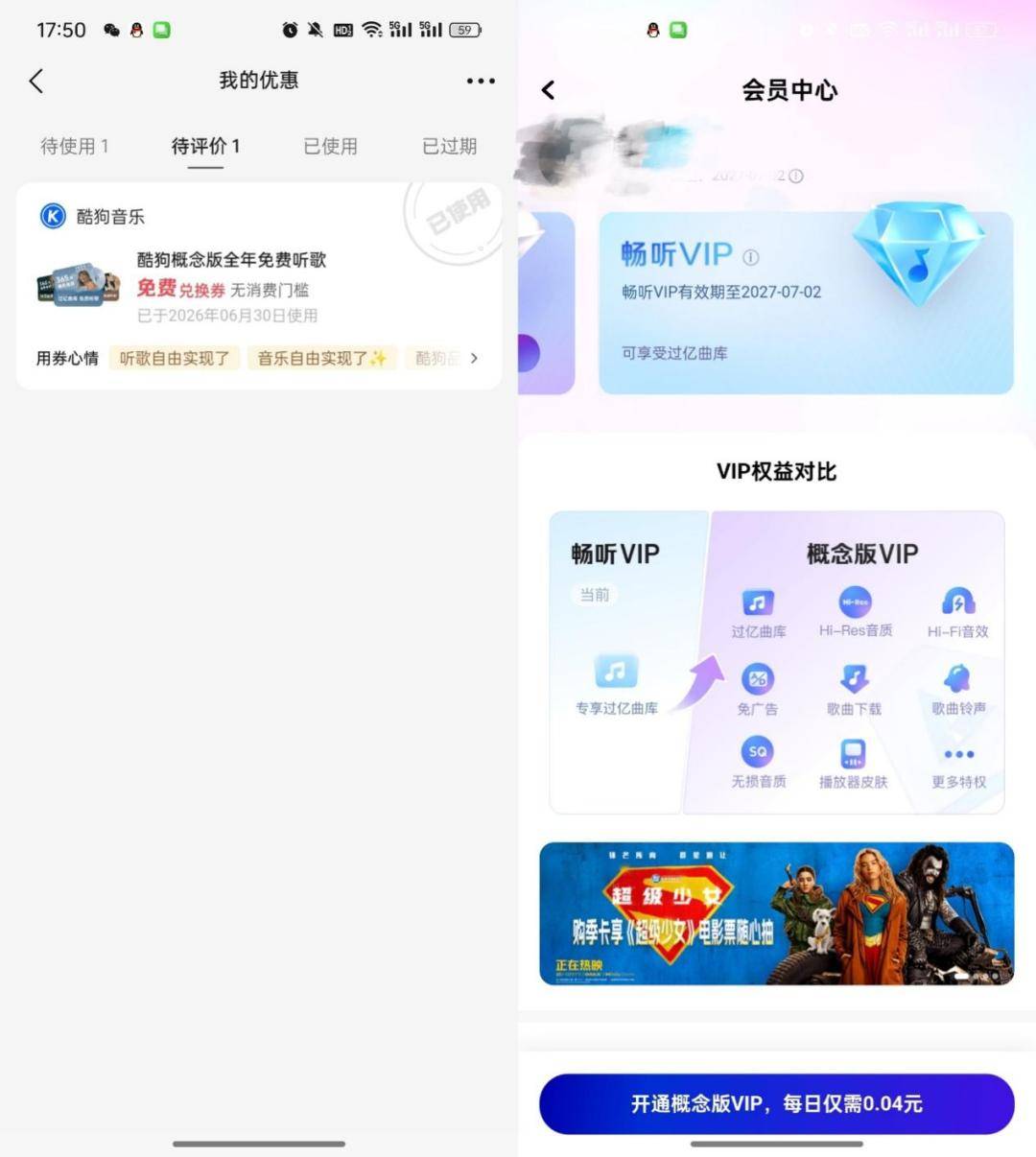
For example, users can use WeChat Pay to obtain “Listening Member Rights” by shaking their hands, which can be redeemed and used on products such as Polka Dot Music and Kugou Concept Edition. In essence, users are encouraged to earn “Listening” through “multi-use”.
Looking globally, free music is also gradually returning.
In September last year, Spotify upgraded the free version, breaking the previous restriction that free users could only play random songs and not select songs independently, allowing free users to search and play any song.
In June this year, Amazon Music launched Amazon Music Unlimited in India. Free users can access the complete music library; if you need offline downloads and high-quality audio, you can subscribe to the Unlimited service.
It can be seen that global music platforms are doing the same thing: stratifying music memberships.
Behind this is a fundamental change in the growth logic of the streaming media industry. As the dividend of user scale reaches its peak, attracting new users is no longer the only main focus of the platform. How to extract more value from existing users has become a must-answer question.
“Free” is the sharpest knife among them. Strictly speaking, online music platforms are not “free” across the board, but have more precise paywalls based on different user groups.
For users who have low willingness to pay or are willing to spend time in exchange for free music, the platform does not package music into commodities, but splits the content into traffic assets, and users use time and data to pay for free music.
For users who have high requirements for content quality, the platform upgrades lossless sound quality and spatial audio into content packages, allowing users to pay for better listening experience and more convenient services, and tap into the different needs of high-net-worth users.
However, the boundaries between different users are not always clear-cut. Free members may not be interested in “paying to listen to music”, but they may be interested in karaoke, live broadcasts and other content on the platform. At this time, music has become a new traffic entrance.
According to a set of data shared by Spotify, more than 60% of the company’s Premium subscribers have used the free version. This also means that most paying users of the platform first established usage habits through the free model and then gradually converted to paying.
This also means that the online music market needs a more sophisticated user management strategy. The free model is responsible for enlarging the pool, and the paid conversion is responsible for deepening the value. Only by working together can we capture as many users as possible in the existing market.
02 The way the music industry plays has changed
However, from paid to free, is the online music industry about to go back?
Before that, we must first understand how the charging logic of online music was established in the past ten years.
Around 2010, the mobile Internet began to rise. Free listening apps represented by Kuwo, Duomi, Xiami, etc. were the most representative music service providers on the track at that time.
However, this “free” is based on a copyright-free status. Out of respect for original music, relevant departments began to tighten copyright supervision in 2015, and the online music industry began to transition from free listening to copyright payment.
Among them, QQ Music, which was established in 2005, once secured all the exclusive copyrights from the three major record companies, Universal, Warner, and Sony, and controlled more than 80% of the exclusive music library resources. It is an important force in promoting music towards a paid model.
But the problem is that when copyright becomes the core barrier, the industry is destined to be pushed into an oligarchy.
Then regulation took action. In 2021, Tencent announced the lifting of the relevant exclusive music copyright; in May 2026, in order to complete the acquisition of Himalaya, Tencent simply gave up the exclusive online audio copyright and terminated the existing exclusive agreement.
On the surface, this is a decision made by Tencent Music in response to policy requirements. But looking in the rearview mirror, Tencent’s initiative to give up exclusive copyrights actually opened up a new path.
In the post-copyright era, the online music market has ushered in more active competition, and growth has followed.
The rising star Soda Music uses algorithms to open up a new music listening scene. The platform decides what to listen to for users, expanding music from serious listening to more fragmented scenes such as housework and commuting, and bringing out a group of non-traditional music users.
NetEase Cloud’s answer is to build a sense of belonging through UGC content. Users not only come to listen to songs, but also come to find the emotions and stories behind a song. The human touch of the community is the core of retaining users.
Tencent Music weaves music into social networking and ecology. Backed by Tencent’s huge user scale and mature ecosystem, it can cover users’ various needs from listening to music to performances, memberships, peripherals, etc. The advantages of this model are clear. Users may not stay for a certain song, but for the lifestyle behind the music, opening up a new consumption landscape.
According to Tencent Music’s 2026 second quarter report, its marketing and consumer services (advertising, offline concerts, artist peripherals, physical albums) revenue increased by 16.2% year-on-year to 2.81 billion yuan, a growth rate twice that of membership subscriptions, and the total revenue share rose to 31%.
In the past decade, the focus of competition in the online music market has been “whoever has exclusive content wins.”
However, this competitive model has become increasingly difficult to continue in the era of explosive content. Opening a user is only the first step. How long they can stay after opening, how much interaction they have, and ultimately what level of experience they are willing to pay for are the new business links of the online music industry.
03 Platforms compete for “time pricing power”
This has also become the underlying logic behind Tencent’s test of “free music”.
At present, platforms such as short videos, live broadcasts, games, and social networking are all competing for the attention of the same group of users. In this battle for attention, short and fast content formats are continuing to attract users’ attention, while music and long videos continue to lose ground.
In the second quarter of this year, Bilibili’s daily active users increased by 7% year-on-year, and the total time spent increased by 14% year-on-year; Nomura Securities cited QuestMobile data, and in July this year, the total monthly usage time of Douyin increased by 29% year-on-year;
In comparison, the “China Internet and New Media Monthly App Tracking Report” released by Nomura Securities in August showed that the monthly usage time of Mango TV, iQiyi, Tencent Video and Youku fell by 24%, 27%, 31% and 47% respectively year-on-year. In March this year, QuestMobile data showed that the monthly active users of Kugou Music and Kuwo Music both declined year-on-year.
In the context of continued dilution of user attention, all content platforms must become more budget-conscious.
As a result, the focus of competition among content platforms has shifted from how to compete for user time to how to create more value per unit of time. Every minute of user attention will directly determine the value of the company’s future growth.
“Free music” plays an important role in this.
For music platforms, being free does not mean giving up on commercialization: when users watch ads for 30 seconds, the platform can collect money from advertisers; when users listen to songs for 10 minutes, the platform accumulates behavioral data; when users continue to stay in the ecosystem, the platform has more opportunities to monetize traffic through different methods such as live streaming rewards, e-commerce shopping, and instant retail.
Tencent Music also mentioned in its second quarter report that it will deepen cooperation with the Tencent ecosystem to expand content distribution and customer acquisition channels.
This is also the natural competitive advantage of content giants. They have more diversified monetization channels than others. As long as users can circulate in the ecosystem, they will have the opportunity to repeatedly create value.
However, this model also has its ceiling.
The first ceiling comes from conversion efficiency. The advertising efficiency transformed from music scenes has not been proven to be comparable to information flow.
Take Tencent Music as an example. In the first half of this year, its total revenue was 16.83 billion yuan, a year-on-year increase of 6.5%; of which membership service revenue was 9.36 billion yuan. In other words, member subscriptions alone accounted for more than half of Tencent Music’s total revenue.
In addition, the average monthly revenue of a single user of Spotify Premium has increased from 4.20 euros in 2022 to 4.70 euros in the fourth quarter of 2025, while the free single-user advertising revenue is 1.02 euros. The single-user return of the subscription model is significantly higher than the advertising model.
Another ceiling comes from user overlap. The users of free music may be the original potential paying users. After the free model becomes larger, it will inevitably divert the existing paid disk.
Therefore, the advertising model of making money through free music may not be as good as imagined. This is probably why Tencent Music is just a simple test.