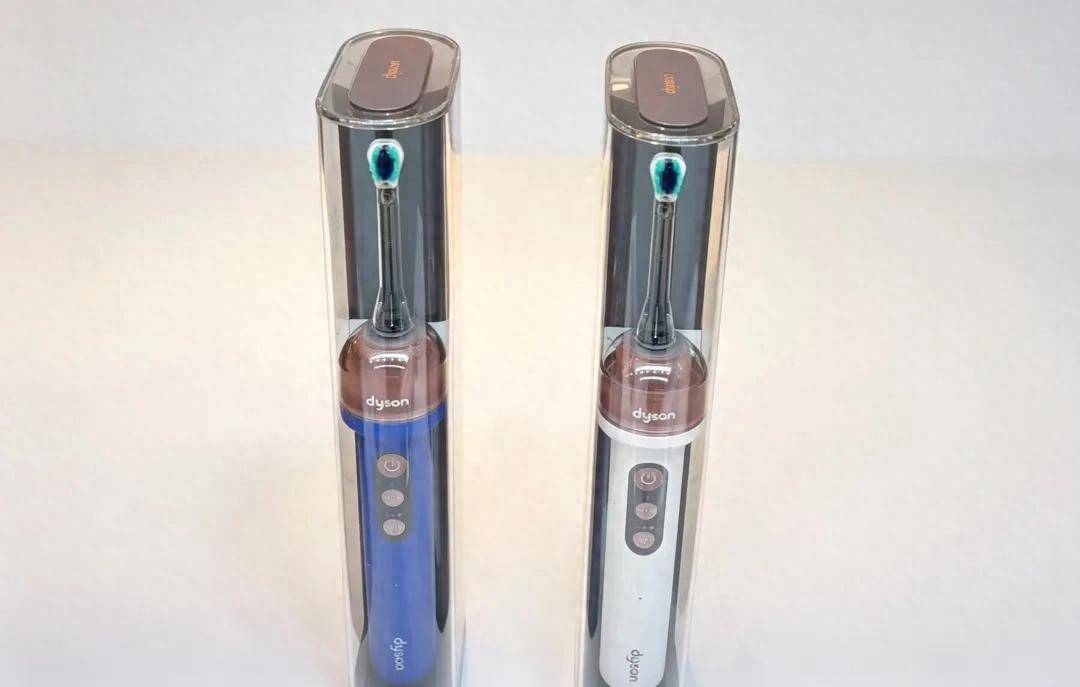
Zhou Min has used Dyson hair dryers for many years, and the wind power and feel have never let her down. Since then, she has become a loyal fan of Dyson. When new products are released, she does not need to repeatedly compare parameters or read reviews, she can just buy them with her eyes closed. Not long ago, she was excited after seeing that Dyson was launching a new electric toothbrush.
After waiting for three days, Zhou Min still couldn’t buy it because Dyson missed the appointment again. As soon as 10 o’clock arrived on September 10, she immediately opened Dyson’s online flagship store. There was no purchase option on the page, and it changed to “1 yuan for priority rights.” Dyson China’s official website showed that it was out of stock.
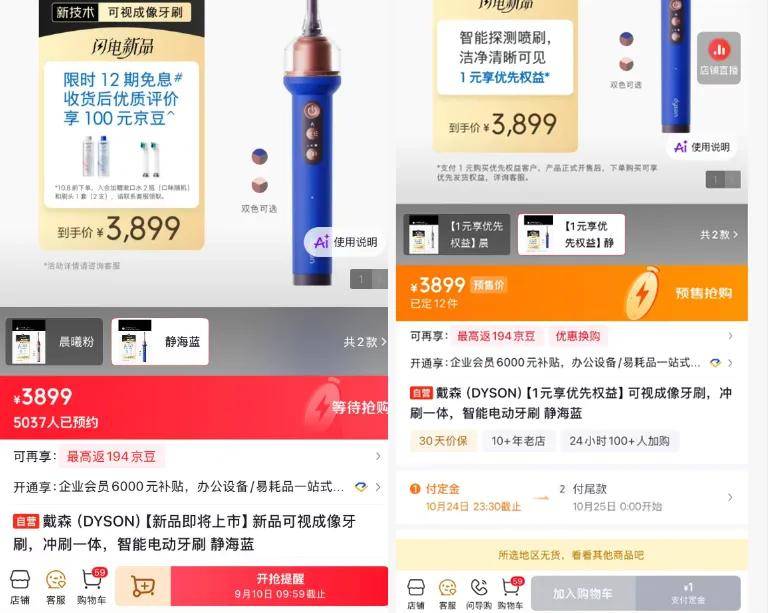
▲The left is a screenshot of the e-commerce platform on September 7, and the right is a screenshot of the e-commerce platform on September 10.
In the following days, Zhou Min tried to buy the 1 yuan priority purchase rights at 10 o’clock every day, but either the quota was exhausted or the product was stuck on the loading page. As of September 16, “1 Yuan Priority Rights” has been removed from the shelves. Why didn’t Dyson electric toothbrush go on sale as originally planned?
01. Quality control problems occurred overseas
Before the Dyson electric toothbrush failed in China, it had already been launched in some overseas countries on September 1. Unexpectedly, quality control problems soon appeared.
A buyer in Singapore reported that the Dyson electric toothbrush could not be paired with the MyDyson App; once after brushing for less than two minutes, it shut down, thinking it was out of power. After charging, the indicator light came on for a while and then went out, and there was no response again. “I exchanged three new ones, but the same problem occurred. Finally, I got a refund.”
“Financial World” learned from multiple channels that after the Dyson electric toothbrush was released in Australia, Singapore and other places in early September, early users reported that the battery compartment was filled with water and could not be charged. On September 9, the American technology news and review media The Verge quoted Dyson Home Technology Senior Communications Manager Kaitlyn Coleman in a statement saying that the company is aware that “a small number of early batches” may have parts problems, and is isolating relevant batches and supporting customers. Some markets will follow up with free replacements.
On September 11, French technology media Les Numériques quoted Dyson as saying that a small number of electric toothbrushes in some of the first production batches may have defective parts, and the company has proactively and temporarily stopped selling the product in France. According to reports, Dyson did not initiate a product recall at that time.
The experience evaluation of Dyson electric toothbrush is polarized. Some overseas netizens believe that “the combination of toothbrush + water flosser is innovative”. For those who have messy brushing techniques, the vibration zone change reminder has a certain auxiliary effect. The built-in 100,000-pixel macro camera can cover blind areas more intuitively than hand brushing.
Wang Qing’s experience was not very good. When he took off the cover and brushed it for the first time, water sprayed on the mirror. When brushing her teeth, water kept coming out of her mouth, and she had to keep leaning over the sink, which was a bit embarrassing. The system continued to vibrate, reminding her that her posture was wrong, but after many adjustments, the system still vibrated to remind her. Two of the four minutes she spent brushing her teeth were spent with the sound of “ding ding”. She still hasn’t figured out whether she brushed it wrong or whether the toothbrush made a mistake.
Wang Qing later saw the user guide. Electric toothbrushes need to flush the equipment and water tank every day, deeply clean the brush head and rehydration base every week, and descale in areas with hard water. It’s best to use a foam-free gel toothpaste with a clear mouthwash to reduce the amount of foam blocking your lens. She lamented, “I was actually asked to serve a toothbrush.”
Filling the refill solution, using foam-free toothpaste, rinsing the water tank every time, and deep cleaning the base every week, this process created a gap for Wang Qing: Spending money on an electric toothbrush originally wanted to save trouble, but now it is even more tiring.
Some people in the industry believe that China’s suspension of sales can avoid turning the first batch of national bank users into water-testing samples before the problems with the early batches abroad are investigated. But for consumers who have already paid 1 yuan and waited for many rounds, this is still a new uncertainty.
02. Forced into new categories by replacements
Oral care is not Dyson’s old territory. From a technical perspective, hair dryers rely on motors and airflow, and vacuum cleaners rely on cyclones and wirelessness. This is a story Dyson has been telling for more than ten years. “Macro camera, sonic vibration, and automatic jet” can be stuffed into a toothbrush, and the technological span is much wider. In order to develop an electric toothbrush, Dyson invested money, people and efforts. Dyson officially stated that the research and development of the electric toothbrush lasted 6 years, with 661 engineers involved and cooperation with 30 dental professionals around the world.
Why is Dyson entering the new category of electric toothbrushes? The core reason is that this is a high-frequency business of “putting it into your mouth twice a day”. Everyone just needs it and the brush head needs to be changed every few months. If you can keep users, you can not only make money for hardware, but also continue to make money for brushing your hair. Dyson will naturally be greedy.
But electric toothbrushes are a very competitive market, and the prices of the main models on sale from various brands range from a few hundred yuan to thousands of yuan. According to data from the China Oral Cleaning and Care Products Industry Association, the top five brands in online retail sales of electric toothbrushes in the first half of 2024 are usmile, Leifen, Philips, Oral-B, and Mijia, with a combined market share of 70.1%. The electric toothbrush market is highly concentrated, which means it is not easy for Dyson to get a piece of the pie.
From the perspective of Dyson’s own development, it also needs to find a new growth curve as soon as possible. In the past few years, Dyson’s home brand hair dryers have been attacked from both sides in China. A research report from CICC shows that in the first half of 2023, the online share of Dyson hair dryers has fallen from 30% at its peak to 12%, and will further fall to 7% in the first half of 2024. Until 2026, Dyson still failed to regain its glory. Panborui online monitoring data shows that in the first quarter, the leader in China’s hair dryer market was Laifen, occupying 32.5% of the market share.

Vacuum cleaners are also diverted. Aowei Cloud data shows that from January to October 2025, Dyson still ranked first in the domestic online vacuum cleaner market, with a market share of 29.75%. Although the data looks okay, sales and sales have both declined year-on-year. The fastest growing brand is Chuimi.
Hair dryers were snapped up by Lai Fen, and vacuum cleaners were chased and diverted. Dyson’s aura of “middle-class standard equipment” is still there, but with differences such as high-speed motors, constant temperature, and lightweight, the domestic supply chain can catch up with it no matter how hard it works. Once the technology gap is narrowed, Dyson’s high price only leaves the brand story to tell.
For Dyson, hair dryers and vacuum cleaners are two “cash cows”. Under the background of their market pressure, they must find new price bands, new categories, and new stories, so they chose electric toothbrushes to make a breakthrough.
If the hair dryer doesn’t work well, you’ll have to blow it again at worst; if the vacuum cleaner doesn’t clean it, you can go over it again. But the toothbrush needs to be put into the mouth twice a day, involving gum bleeding, battery waterproofing, water tank hygiene, etc. In addition, the price is high, and users have a low tolerance for Dyson electric toothbrushes. For them, if a toothbrush worth several hundred yuan cannot be connected to the App, the worst case scenario is that it will be replaced by a manual one. If something goes wrong with the electric toothbrush they bought for 3,899 yuan, they will complain online, “Ordinary people can spend less than 4,000 yuan on a toothbrush in their lifetime.”
For those who want basic cleaning, a mid-range electric toothbrush plus a 100-yuan toothbrush is more trouble-free; for those who are willing to try new things, the Dyson electric toothbrush’s camera, algorithm, jet flow, and weekly maintenance are a threshold. Dyson also has to use its strength to prove that the extra 3,000 yuan Wang Qing and his colleagues spent was not just to pay for a “sense of technology” but not to collect an IQ tax.
03. What is the problem?
Not only in China, Dyson is currently facing challenges around the world. The results disclosed by Dyson showed that revenue in fiscal year 2025 was 6.13 billion pounds, a year-on-year decrease of 6.7%. In order to expand its revenue plate, Dyson released 13 new products throughout the year and invested more than 400 million pounds in research and development. So, why did the electric toothbrush that Dyson had been honing for six years encounter problems soon after it went on sale?
Some people believe that the root cause is not entirely technical. When Dyson made hair dryers and vacuum cleaners, it created categories from scratch. Users had no frame of reference, and Dyson defined both good and bad products. Making electric toothbrushes is different and has been taught by various brands for many years. Dyson’s entry into the market at a price of 3,899 yuan is not creating demand, but challenging users’ existing perceptions.
If the Dyson electric toothbrush wants to gain a foothold, the first batch cannot go wrong, but it happened. Industry insiders said that there were gaps in quality control between the 6-year-old laboratory and the first users of mass production, and the quality control standards of “hair dryers become gods” cannot cross over to the oral category. It is not difficult to understand the reason. Hair dryers and vacuum cleaners are categories that Dyson has been working on for 20 years, with mature supply chains and clear quality control standards. Electric toothbrushes are a brand new category, with camera modules, water tank seals, AI algorithms, and App linkage. Every link is a new challenge.
If the performance is good, Dyson can spend time slowly polishing the electric toothbrush until the quality control is completely stable before launching it on the market. However, high performance pressure forces it to go on the market before it is ready. On September 1, after the overseas sales of Dyson electric toothbrushes ran into problems, domestic sales were forced to be repeatedly extended.
Dyson’s after-sales system has also undergone changes. In February 2026, the after-sales terms updated on Dyson China’s official website showed that products purchased through direct sales and authorized channels can enjoy official free warranty; non-direct sales and non-authorized channels are not included in the scope of official free warranty. If there is a problem with purchasing on behalf of others, cross-border personal carrying, etc., you need to confirm the channel authorization status first; the three-guarantee responsibility that should be borne by the seller according to law will not be replaced by this clause. This means that Dyson electric toothbrush users who purchase on behalf of, cross-border, or second-hand channels may need to pay for repairs at their own expense if something goes wrong.
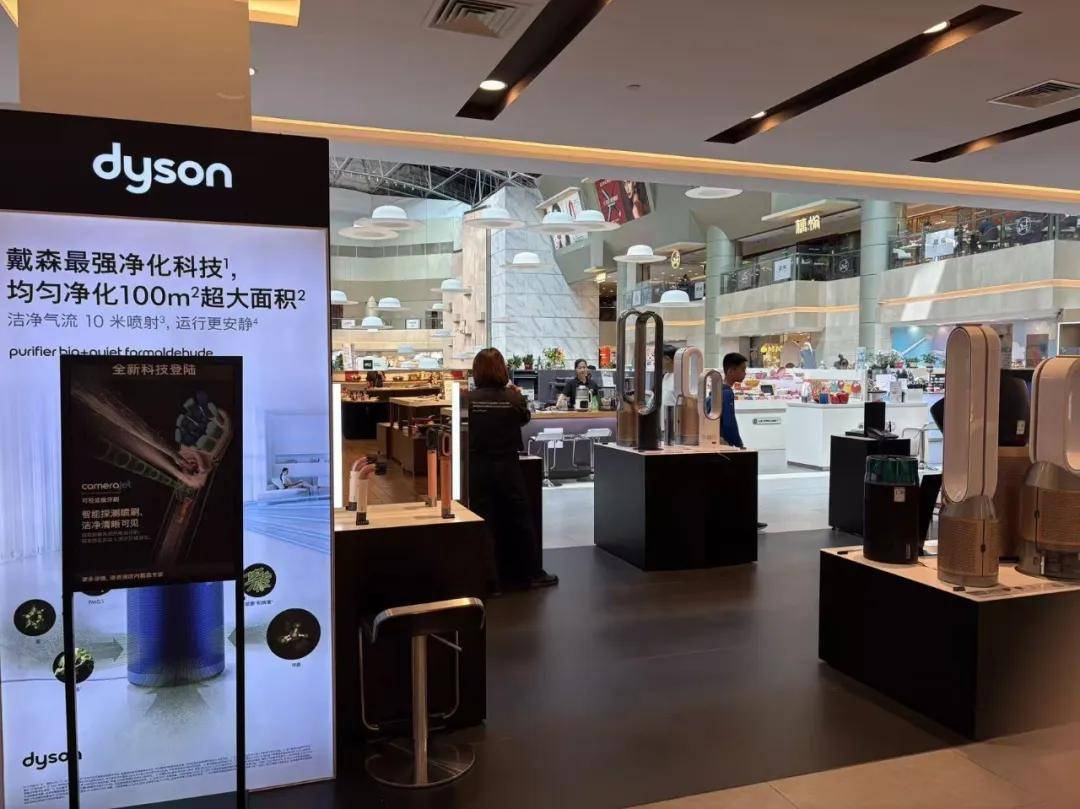
▲圖源 /”Financial World”
Several people close to Dyson told Caijingtianxia that Dyson’s China after-sales authorized company’s southwest region has new trends in personnel adjustments and service process restructuring. Although there are currently no public internal letters to prove the specific details, the after-sales system has shifted from “loose bottom line” to “strictly restricted channels”, which itself releases a signal: Dyson is reducing costs and also tightening the radius of its commitment to users.
In this way, the context of the whole matter is very clear: the growth of the main business has slowed down, allowing Dyson to accelerate the launch of new categories; the quality control of the new category of electric toothbrushes has not been passed, and there are problems with early overseas batches; the after-sales policy has become stricter during the same period, and the response speed may not be able to keep up. Dyson’s electric toothbrush did not go on sale in China as planned. This was not a mistake by any department, but a stall due to Dyson’s growth anxiety: cracks appeared between the R&D rhythm, quality control standards, and after-sales network.
In the era of hair dryers, Dyson can try and make mistakes because it is one of the few brands that sells hair dryers for 3,000 yuan. In the era of electric toothbrushes, it is no longer the only one, nor is it the fastest one. What you buy for 3,899 yuan is not only a toothbrush, but also the user’s unconditional trust in “Produced by Dyson”. When this toothbrush cannot be charged and needs to be removed from the base for descaling every week, the user is not asking “What did I use wrong?” but “What happened to Dyson?”
(Zhou Min, Nan Huan and Wang Qing are pseudonyms in the article)