Produced by Huxiu Technology Group
Author|Huang Tianyuan
Editor|Miao Zhengqing
Header image|AI generated
Anthropic is one step closer to going public.
In the early morning of September 14th, Beijing time, Business Insider reported that Anthropic had selected Nasdaq as the listing exchange for its potential IPO. Previously, the company had secretly submitted a listing application to the U.S. Securities and Exchange Commission. According to the current plan, the company will launch IPO marketing as soon as mid-October.
If all goes well, this could become one of the largest IPOs in the global capital markets this year.
The Wall Street Journal reported that Anthropic’s IPO may raise up to US$100 billion, with a target valuation of approximately US$2 trillion. When it completed US$65 billion in financing in May this year, its post-money valuation was still US$965 billion.
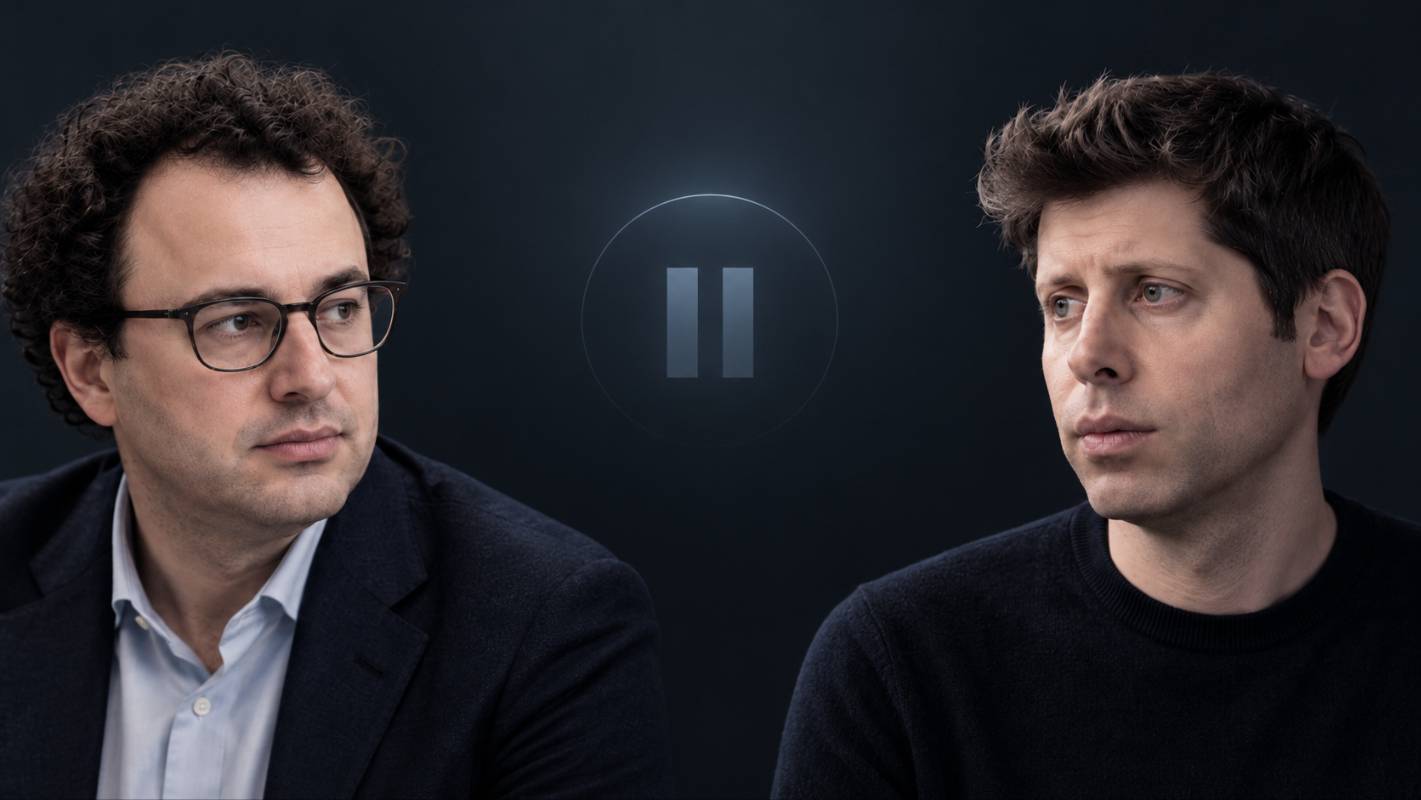
But almost at the same time that Anthropic continued to sprint towards the open market, OpenAI on the other side stepped on the brakes.
As we just discussed the day before yesterday, OpenAI CEO Sam Altman recently made it clear that the company will not IPO in 2026. Considering the recent AI security risks, he believes that “it is not wise to go public now, and OpenAI will not IPO in 2026.”
This situation is completely different from the situation three months ago.
On June 1 this year, Anthropic took the lead in secretly submitting an IPO application. A week later, OpenAI also officially submitted its application. At that time, Reuters directly described the two companies as competing for a public IPO.
Three months later, one continues to move forward and the other chooses to pause.
It’s not just about money
It obviously doesn’t make sense to simply attribute the bifurcation of the road to financial pressure.
OpenAI faces no lighter capital requirements than Anthropic.
According to OpenAI shareholder materials obtained by technology media The Information, as of the end of 2025, OpenAI has committed approximately US$665 billion in computing power expenditures, with the execution cycle extending to 2030. In the first quarter of this year alone, OpenAI burned through $3.7 billion in cash. The company expects cash burn to reach US$25 billion this year and US$57 billion next year.
The company expects cumulative cash burn to exceed $200 billion before it starts generating cash.
When it submitted its IPO documents in June this year, OpenAI was once thought to be on the public market as soon as September, with a valuation that could even reach US$1 trillion.
But before Altman explicitly ruled out an IPO in 2026 on the grounds of AI safety, there had actually been disagreements within OpenAI about the timing of the listing.
The Information previously reported that OpenAI CFO Sarah Freer had privately questioned whether the company was ready for a 2026 IPO.
One of her core concerns is whether OpenAI’s slowing revenue growth can support Altman’s expanding server spending commitment of about $600 billion.
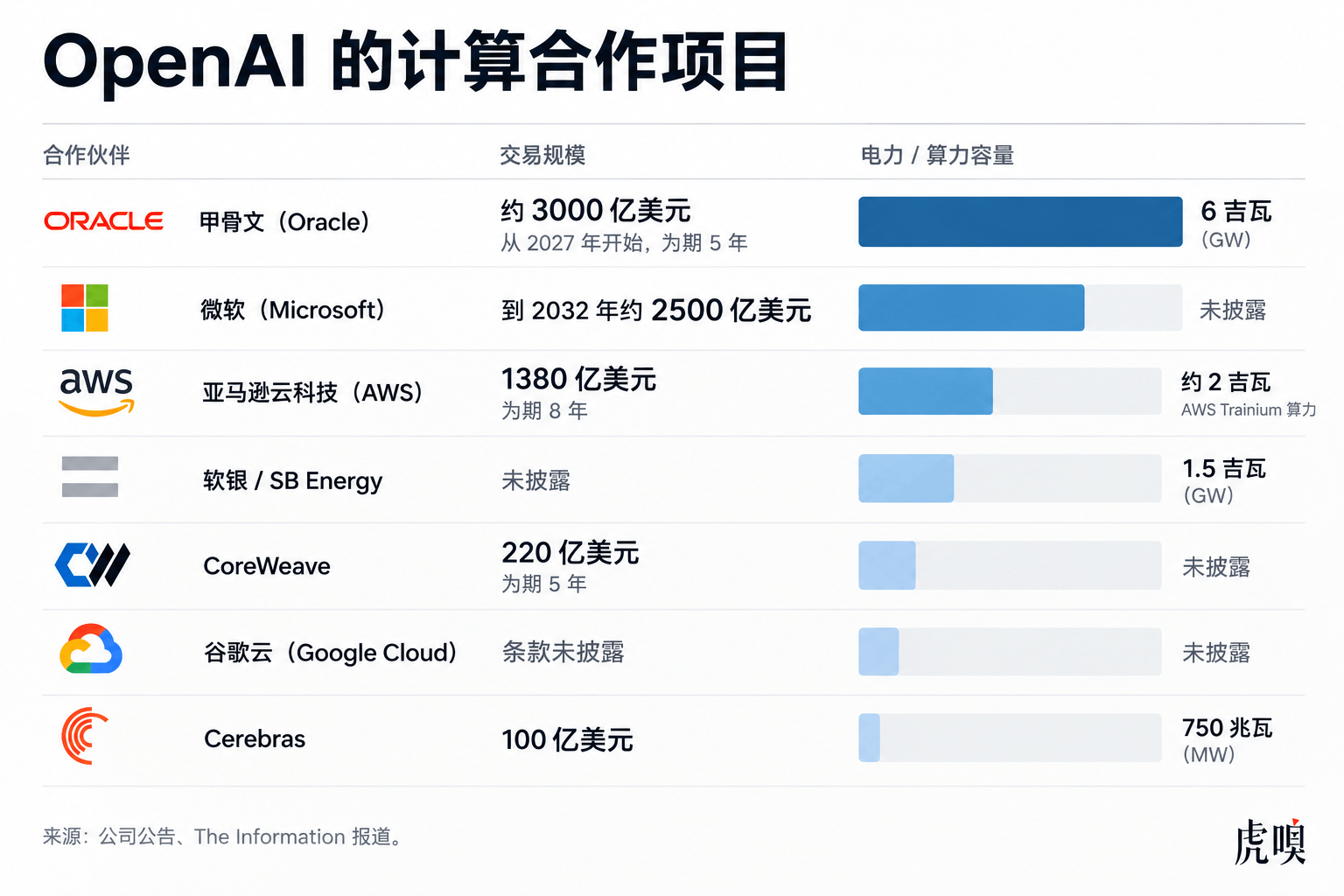
Anthropic has also entered an unprecedented capital-heavy stage.
Reuters reports indicate that Anthropic has committed to investing approximately $30 billion in Microsoft Azure. In addition, the company has also established large-scale computing power cooperation with Amazon, Google, Broadcom, etc.
At the end of August, Anthropic signed a computing power contract of approximately US$35 billion with Lambda, a cloud service provider supported by Nvidia, to rent computing resources in a Texas data center. Previously, it also signed a six-year data center agreement with the British cloud computing company Nscale, totaling approximately US$45 billion.
For these three publicly disclosed computing power commitments alone, the total contract value has reached approximately US$110 billion.
In terms of financing capabilities, there is not much gap between the two companies.
In May this year, Anthropic completed US$65 billion in financing, with a post-money valuation of US$965 billion. OpenAI completed approximately US$122 billion in financing in March this year, with a post-financing valuation of approximately US$850 billion.
Both companies also have large technology companies and global institutional capital gathered behind them. OpenAI is supported by Amazon, Nvidia, SoftBank, etc., while Anthropic has long-term investment from Amazon, Google and many large investment institutions.
At least in terms of financing capabilities, neither company has reached the point where “you can’t get money if you don’t go public” in the short term.
Therefore, one company is suspended and the other is listed. From the current point of view, it is difficult to explain it as a problem of financial pressure.
Anthropic’s launch window
Anthropic’s biggest advantage now is that it has a growth story that can be better explained to Wall Street.
Financial Times reports show that Anthropic’s annual revenue has grown from approximately US$9 billion at the end of 2025 to more than US$65 billion in July this year. Second-quarter revenue reached US$11.5 billion, an increase of approximately 14 times year-on-year. Some investors even predict that its annualized revenue may reach $120 billion by the end of this year.
In addition, Anthropic has told some shareholders that the company’s adjusted operating profit is expected to be positive for the second consecutive quarter.
According to the company’s disclosure to investors, its gross profit margin exceeds 80% before deducting revenue sharing from channel partners such as Amazon and model training costs.
Of course, this caliber cannot be directly equated to the financial gross profit margin of traditional software companies, but at least it sends a signal: Anthropic can not only grow rapidly, but also have the possibility of generating profits under high expenditures.
Rapid growth, corporate revenue expansion, gross profit margin improvement, and adjusted profits beginning to turn positive – a very classic IPO classic narrative.
In contrast, OpenAI is still growing rapidly, but its growth rate has clearly lagged behind Anthropic.
In the first quarter of this year, OpenAI’s revenue was approximately US$5.7 billion, but it did not meet its internal revenue targets. Previously, ChatGPT’s user growth was also lower than the company’s expectations. At the same time, the company burned US$3.7 billion in cash, revenue costs reached US$3.5 billion, and gross profit margin was approximately 39%.
Last year, the gross profit margin was only 33%, significantly lower than the previous internal target of 46%. One of the reasons was that the demand for chatbots and models grew beyond estimates, and the company had to temporarily purchase higher-priced computing resources, further pushing up service costs.
While OpenAI recently raised its revenue forecast for the next five years by 27%, its cash burn forecast has worsened in tandem. The company disclosed to investors in February this year that its cumulative cash burn by 2030 is expected to be more than double its previous forecast.
In the first five months of 2026, OpenAI’s monthly revenue increased by more than 50%, but during the same period, Anthropic’s revenue increased by approximately 5 times, and once surpassed OpenAI in annualized revenue.
Therefore, OpenAI is withdrawing from the 2026 IPO this time. It is not necessarily a “safety first” decision, but more like an overall decision based on financial readiness and growth pressure.
market test
But after going public, Anthropic needs to start accepting market testing.
The core that previously supported this trillion-dollar valuation was the rapid growth of revenue.
But after going public, Anthropic needs to prove to investors that Claude can continue to generate more and more revenue. At the same time, it must continue to invest huge sums of money and ensure that Claude does not fall out of the first echelon.
Reuters previously pointed out that after Anthropic officially makes its listing documents public, investors will see for the first time how its frequently cited annualized revenue is converted into real GAAP revenue, and how high its true computing power cost is. (Huxiu’s note: U.S. GAAP, income that is confirmed in accordance with unified accounting rules and written into financial reports after auditing, has a stricter standard and is more convenient for investors to make horizontal comparisons.)
Previously, when Anthropic secretly submitted IPO documents, Reuters quoted analysts as saying that the first company to go public will have an important advantage. It could lead the way in setting cutting-edge models for how companies should disclose financial data to investors and how such companies should be valued.
Assume that Anthropic eventually goes public at a $2 trillion valuation and continues to rise after its listing.
What is certain is that the market’s judgment on the AI industry is that high computing power expenditures, high-speed revenue growth and temporarily unstable free cash flow can support very high valuations.
Then, the non-public market valuations of OpenAI and other model companies can be used to gain a new reference.
Conversely, if Anthropic breaks out quickly after listing, or if public financial data reveals computing power costs that are much higher than expected, it will also reprice the entire primary AI market.
When Anthropic was the first to submit its listing application in June this year, PitchBook analyst Harrison Rolfes pointed out that although Anthropic grabbed the narrative advantage, it also took the initiative to assume the first batch of disclosure risks.
OpenAI can first observe how institutional investors evaluate the real financial data of a cutting-edge AI company before deciding its own pace of listing.
There is no answer yet as to who took advantage in the end.