According to CCTV news, as the United States and Iran continue to face off over the navigation issue in the Strait of Hormuz, the Bab el-Mandeb Strait, another important transportation channel in the Middle East, is also in tension because the Houthi armed forces have seized several strategic locations in the Red Sea region. As a result, international oil prices rose. As of the close on the 16th, WTI crude oil futures prices and Brent crude oil futures prices both dropped significantly that day, but both remained at a high of over US$100 per barrel.
Faced with high oil prices, U.S. President Trump changed course, continuing the previous thinking of the U.S. Treasury Secretary in blaming the high oil prices on the conflict between Russia and Ukraine, and declared that Russia and Ukraine had reached an “energy ceasefire.” However, judging from the subsequent responses of Russia and Ukraine, Trump’s statement was only regarded as an initiative by both parties.
‘It’s not Iran’: US president blames high oil prices on Russia-Ukraine war
The news about Russia and Ukraine reaching an “energy ceasefire” was first released by US President Trump on his personal social media platform on the 14th.
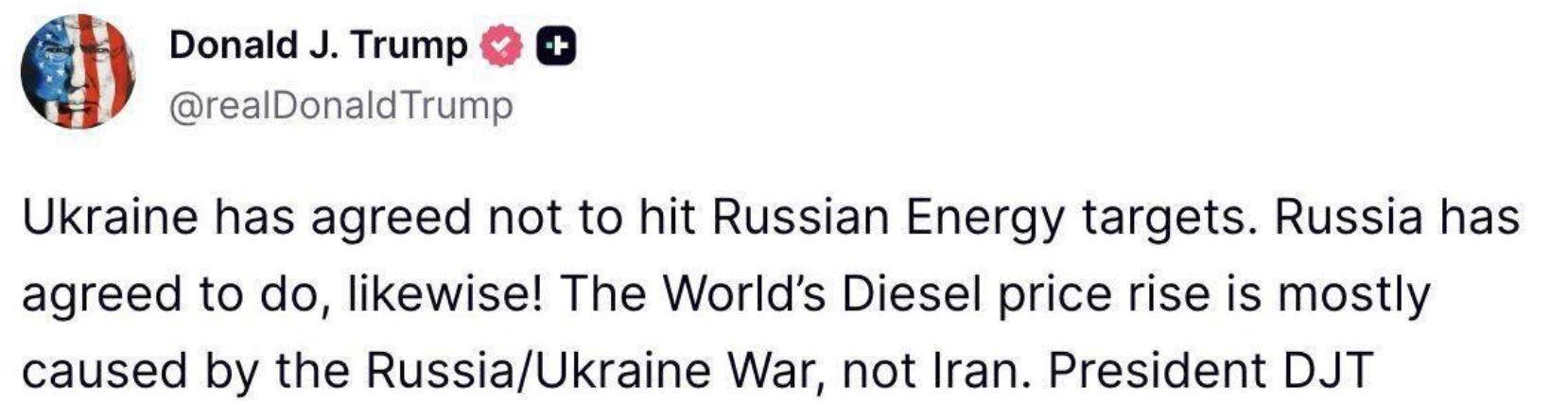
△On the 14th, US President Trump posted on social media.
Trump said in the post: “Ukraine has agreed to stop attacking Russia’s energy targets. Russia has also agreed to corresponding measures.” In addition to announcing that Russia and Ukraine have reached an “energy ceasefire,” Trump also attributed the rise in oil prices to the Russia-Ukraine conflict, rather than the U.S. war against Iran. According to Trump, “The rise in international oil prices is mainly caused by the conflict between Russia and Ukraine, not the war in Iran.”
Trump previously expressed his stance on Russia and Ukraine’s attacks on each other’s energy facilities during his visit to Ireland on the 13th. At that time, Trump said that he had communicated with Ukrainian President Zelensky on the issue of Ukraine stopping its attack on Russian oil refineries, and emphasized that Ukraine “must stop” the attack.
U.S. Treasury Secretary: There are two reasons for the rise in oil prices, the war between Russia and Ukraine is the primary reason
As for blaming the rise in international oil prices on the Russia-Ukraine conflict, U.S. Treasury Secretary Bessent had previously made a similar statement. However, Bessent did not rule out the impact of the war in Iran on the rise in oil prices, but listed the Russia-Ukraine conflict as the primary factor.
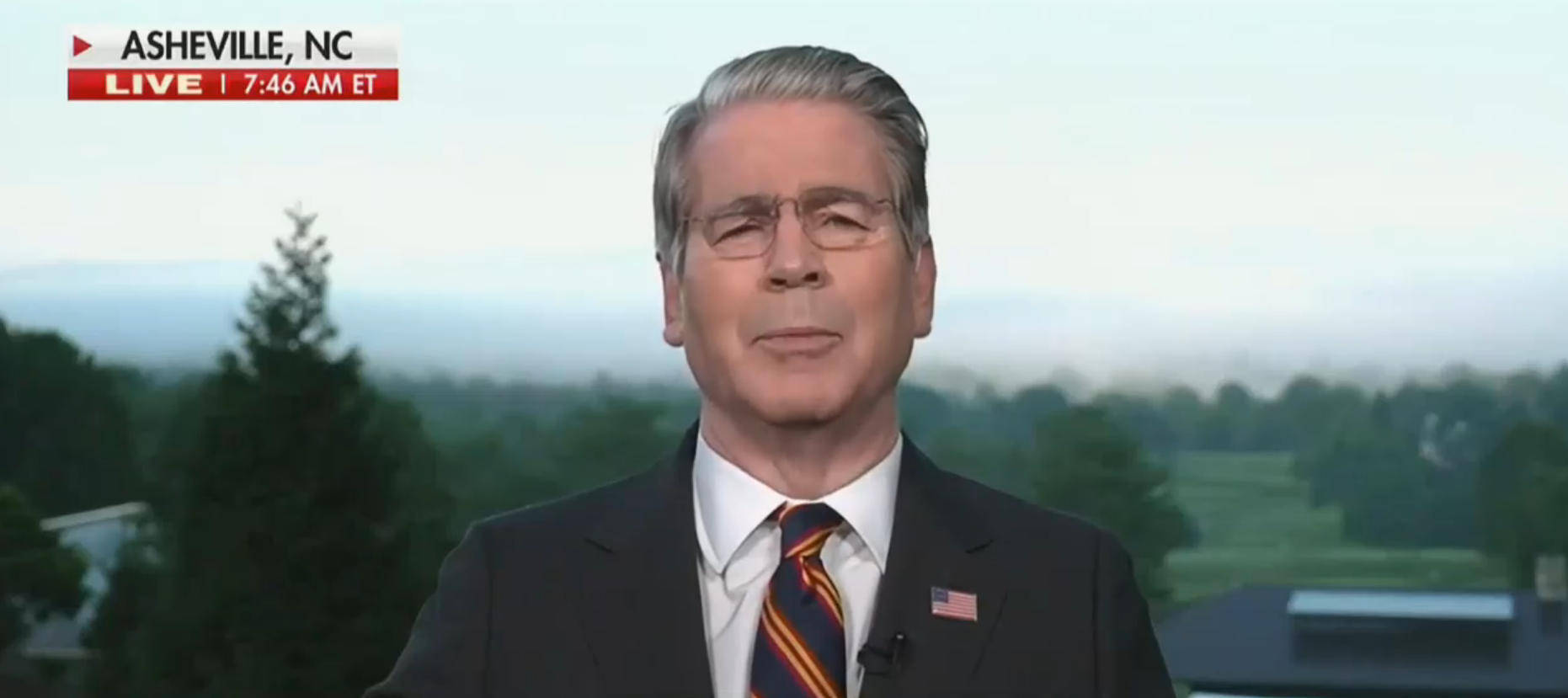
△U.S. Treasury Secretary Bessent accepted an interview with Fox News on September 2.
According to Bessant’s explanation in an interview with Fox News earlier this month, there are two reasons for the current energy shock that Americans are experiencing: First, the Russia-Ukraine conflict, because Ukraine decided to attack Russia’s energy assets and refined oil facilities, which has put upward pressure on the global energy market; second, the conflict in Iran, and this conflict is about to end.
Russia and Ukraine did not reject the US statement, but each set conditions for an “energy ceasefire”
Russia and Ukraine also responded to Trump’s self-declared “energy ceasefire” between Russia and Ukraine. Compared with the straightforward statement that “Russia and Ukraine have agreed” in Trump’s statement, Russia and Ukraine only called it an “initiative” and each added preconditions. In particular, Russia’s latest statement on the 16th showed that Trump’s initiative still faces many uncertainties when it comes to concrete implementation.
Ukraine: Russia must cease fire first and international partners must provide guarantees
Ukrainian President Zelensky was the first to respond on the 14th, expressing his openness to a ceasefire in the energy field. Subsequently, Zelensky stated that Ukraine is willing to stop attacking infrastructure in Russia, provided that Russia also stops related attacks.
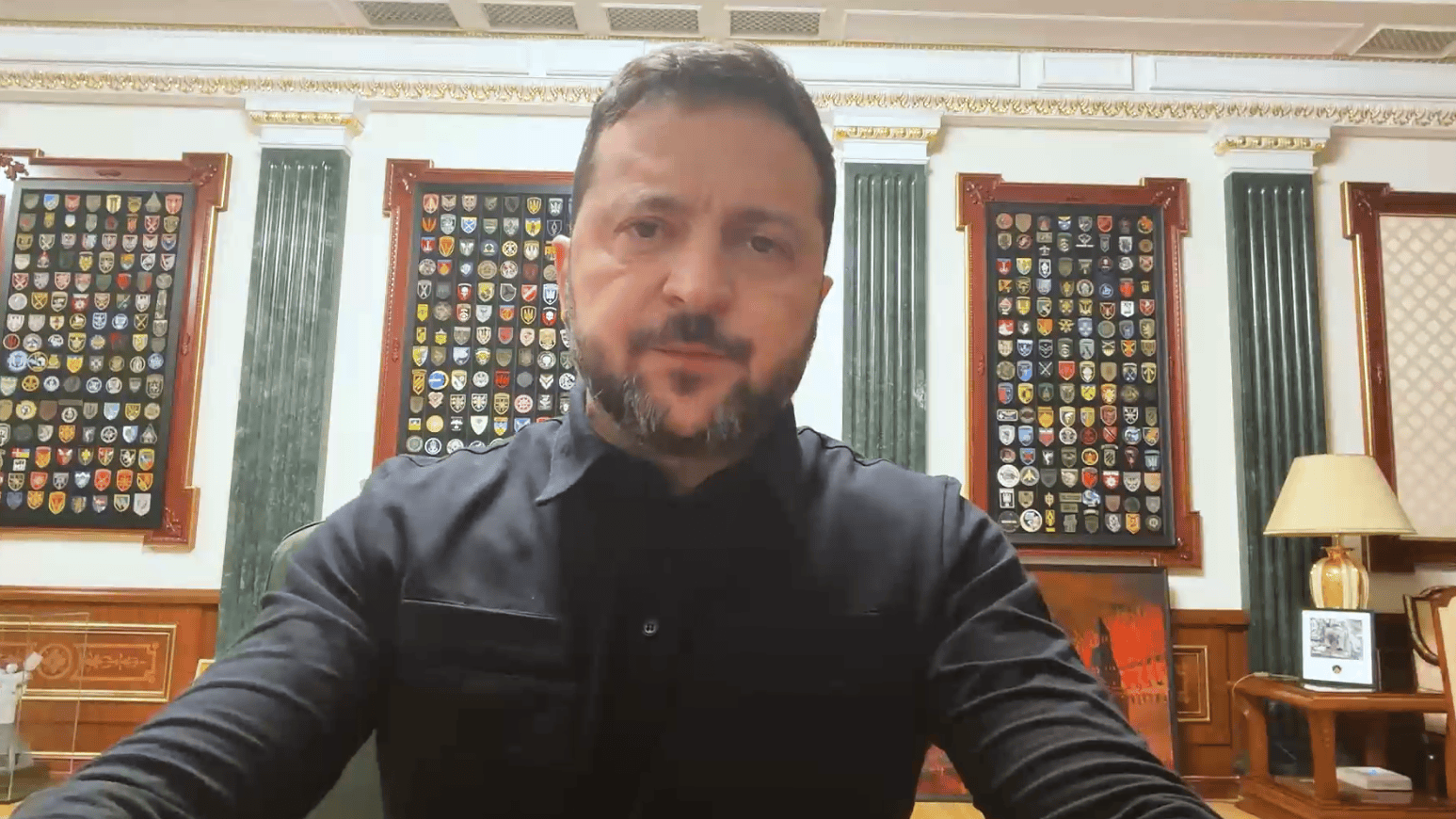
△On the evening of the 14th, Zelensky delivered a video speech.
Later that day, Zelensky put forward new conditions in a video speech, that is, the prerequisite for Ukraine to implement the initiative is that international partners can effectively ensure that Russia stops attacking Ukraine’s key infrastructure such as electricity, energy, and food transportation.
Russia: Only by lifting sanctions on Russian energy exports can oil prices be lowered
Russia’s response was similar to that of Ukraine. Russian Presidential Press Secretary Peskov first welcomed Trump’s relevant statements on the 14th. Peskov said any initiative calling on the Kiev regime to stop attacking civilian economic infrastructure should be welcomed. However, when asked whether Russia was prepared to avoid attacking some of Ukraine’s economic infrastructure if Ukraine agreed to Trump’s request, Peskov refused to answer.
The next day, the 15th, Peskov expanded the issue of “Russian-Ukrainian energy ceasefire” to the need for the West to lift sanctions on Russian oil exports. According to Peskov, the so-called “energy ceasefire” between Russia and Ukraine is only a way to ensure the safe operation of Russia’s domestic refineries, but it cannot solve the core problem of the global supply of petroleum products. Peskov emphasized that lifting sanctions on Russian energy exports by Western countries is the key to enriching global energy supply and lowering global energy prices.
Russia: US “energy ceasefire” proposal lacks practical support
On the 16th, Russian Deputy Foreign Minister Ryabkov further explained the US “energy ceasefire” issue. Ryabkov said that Russia takes all U.S. statements seriously, but these statements often lack the support of concrete measures, practical actions and changes in Uzbekistan’s attitude.
Ryabkov also emphasized that Russia will not shy away from contact and that contact with the United States is continuing and will continue. He also said that the so-called “war faction” is sabotaging any relevant arrangements.
The United States tried to separate high oil prices from the situation in the Middle East, but it revealed that its response methods are limited.
Compared with the successive responses from Russia and Ukraine triggered by Trump’s “Russian-Ukrainian energy ceasefire” statement, Trump’s attribution of the surge in oil prices did not bring about a significant drop in oil prices. On the contrary, actual market factors had a more significant impact on prices.
Geopolitical tensions in many places jointly triggered the surge in oil prices
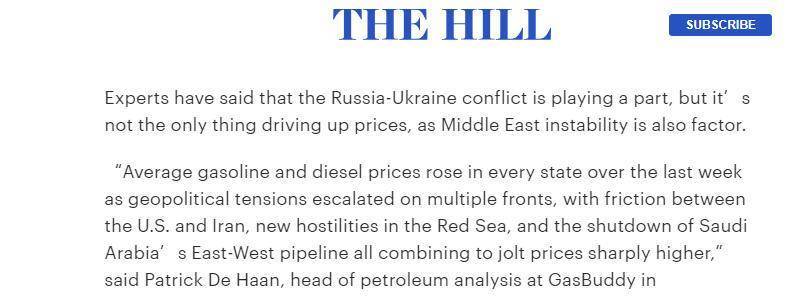
△The “Capitol Hill” quoted energy industry experts as analyzing that the surge in energy prices in the past week is closely related to geopolitical tensions in many places around the world.
Some energy industry experts believe that the surge in energy prices in the past week was caused by multiple geopolitical tensions, involving the US-Iran conflict, new conflicts in the Red Sea region, and the suspension of Saudi Arabia’s east-west oil pipeline.
Li Zixin, an expert on Middle East issues at the China Institute of International Studies, believes that the recent seizure of multiple strategic locations in the Red Sea by the Houthi armed forces has given them the ability to physically block the Bab el-Mandeb Strait and the geographical basis for global surveillance and selective strikes. Combined with the current virtual paralysis of traffic in the Strait of Hormuz, the world’s two major oil transportation throats are in emergency at the same time. As a result, the international energy market is facing a very serious supply shortage, which in turn triggered a surge in oil prices.
The United States’ diverted attention reveals its limited means to deal with high oil prices
The New York Times pointed out in an analysis article that US President Trump and his aides obviously want to shift the responsibility for the surge in oil prices from the war in Iran to the Russia-Ukraine conflict, but analysts believe that the war in Iran is the more important influencing factor.
△The New York Times of the United States: The President of the United States attributed the recent surge in oil prices to the conflict between Russia and Ukraine, but analysts believe that the war in Iran is the more important factor.
According to Li Zixin’s analysis, the U.S. government blames the “crime” of high oil prices on the Russia-Ukraine conflict. The fundamental reason lies in the lack of truly effective means of responding to high oil prices. This move also exposed the United States’ global strategic choices and tried to use the oil price narrative to influence the direction of the Ukrainian battlefield. In addition, because high oil prices are seen as a tool for Iran to exert pressure on the United States, the United States refuses to link high oil prices to Iran, which is also intended to prevent Iran from thinking that its policies are effective against the United States.