In recent days, a promotion list within Xiaomi has thrust a 31-year-old girl into the spotlight of the entire industry.
Luo Fuli, the leader of the large model team, was promoted to level 22. People close to Xiaomi have confirmed that this is the ceiling of Xiaomi’s rank system. Going higher will only change job titles and there will be no room for rank promotion.
It only took her 10 months from her official announcement in November 2025 to reaching the ceiling of her rank.
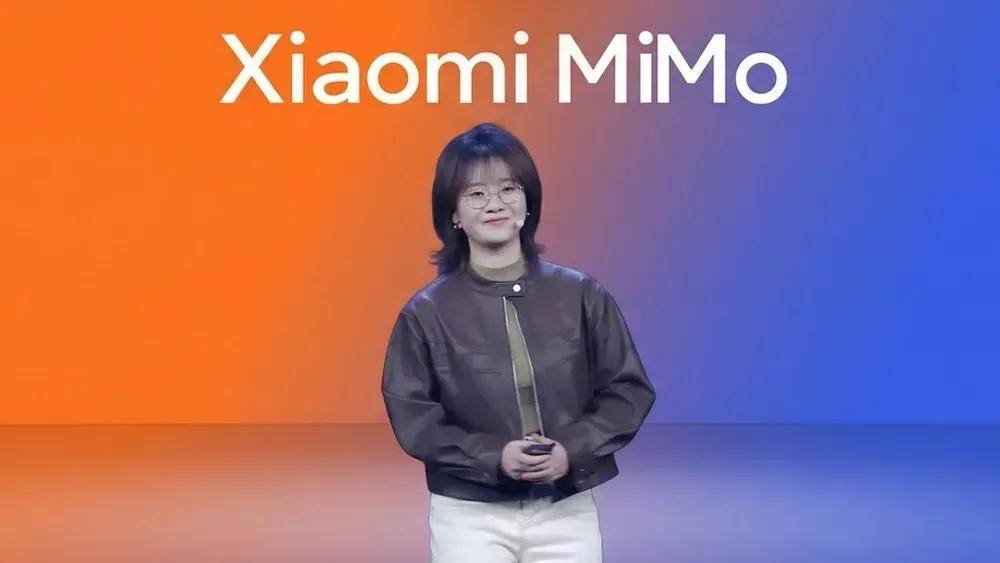
1. 天才少女
Luo Fuli’s resume is eye-catching enough for any technology company.
Born in 1995 in an ordinary family in Yibin, Sichuan, his father is an electrician and his mother is a teacher. He studied in the “Qingbei Class” of Yibin No. 1 Middle School in high school. He went to the Department of Computer Science of Beijing Normal University for his undergraduate degree and went to Peking University for graduate school.
Along the way, there was no support from my family background. I just relied on solving questions, doing projects, and writing papers, step by step.
What really made her famous in the industry was in 2019, when she was still in her second year of master’s degree. She won 8 papers at ACL, the top international conference on artificial intelligence, and was the first author of 2 of them. The title of “AI Genius Girl” came from that time.
But she never recognized this label. Later, she confessed on Zhihu that only 2 of the 8 articles were authored, and the rest were part of projects.
After graduation, she did not follow the academic path and plunged into industry. She entered Alibaba DAMO Academy and then joined DeepSeek as a core researcher. She was deeply involved in the development of core models such as DeepSeek-V2, and is recognized in the circle as a practitioner of large models.
In 2025, when there were rumors that Lei Jun was poaching her with an annual salary of tens of millions, the entire industry turned its attention. Everyone knows that Xiaomi is going to get serious about big models.
Less than a year after joining Xiaomi, the report card she handed over is indeed convincing enough.
On September 22, the same day the promotion list was released, Xiaomi officially released the MiMo-V2.6 series of large models. According to the comprehensive intelligence index of the world’s authoritative evaluation platform Artificial Analysis, MiMo-V2.6-Pro scored 46 points, surpassing Kimi K3 and GLM-5.3, becoming the first global open source weight model on the list.
In the field of AI, a top leader can determine the life or death of the entire front. Because of this, Lei Jun is willing to push her to the highest rank, essentially paying for the results.
2. Xiaomi’s AI war
Many people have no idea about Xiaomi Mi 22. Let me explain it to you.
Xiaomi established a rank system after its organizational reform in 2018, with a total of 10 levels from level 13 to level 22. The entry level for fresh graduates is usually level 13, and the normal pace is about three years to level 15. Managers correspond to levels 16-17, directors correspond to levels 19-20, and vice president levels correspond to levels 21-22.
The founder Lei Jun himself is not in this system and has no rank. This also means that level 22 is a core executive at the group level and has entered Xiaomi’s power center.
Salary data circulated by headhunters and workplace communities show that the comprehensive total salary of Xiaomi’s 19th-level employees is more than 2 million yuan. Level 22 is the highest level in this rank system, and the corresponding salary package, equity incentives, and business voice are all at the top of the group’s pyramid.
Under normal circumstances, it would take more than ten years for a graduate from a prestigious school to reach level 22 without stepping into any pitfalls and getting the best performance every year from the 13th level of his career. Most people will not reach this threshold in their careers. However, it only took Luo Fuli 10 months to complete the journey that took others more than ten years.
This is not the first time that Xiaomi has given young people a fast track, but such a fast promotion speed is unique in Xiaomi’s history. The essential reason is that Xiaomi cannot afford to lose the AI battle, and Luo Fuli is the most critical card in its hand.
In the past five years, Xiaomi has invested hundreds of billions in R&D and completed its transformation from a mobile phone company to a full-scale hard-core technology company for people and cars. Automobiles, chips, and smart manufacturing have all achieved breakthroughs from 0 to 1.
In the next ten years, the big model will be the underlying foundation for all businesses—Xiao Ai on mobile phones will need to be upgraded, the smart cockpit and autonomous driving of cars will rely on AI, and the linkage of the entire smart home ecosystem will also rely on AI brains.
In July this year, Xiaomi just adjusted the organizational structure of Xiaoai and split its AI technical capabilities into three parts: the basic model is provided by Luo Fuli’s MiMo team, cloud engineering is handed over to veteran Luan Jian, and device-side capabilities are delegated to mobile phones, automobiles and other business lines.
Lei Jun said that Xiaomi will invest more than 60 billion in AI in the next three years, and one of the core recipients of this money is Luo Fuli’s team. It can be said that whether the MiMo large model is well done directly determines Xiaomi’s competitiveness in the next era.
3. The logic of talent has completely changed
Luo Fuli is not an exception. If you broaden your horizons, you will find that the core AI positions in the world’s top technology companies today are almost occupied by those born after 1995.
Tencent, Yao Shunyu, born in 1998, serves as the chief AI scientist, and is in charge of both AI infrastructure and large model departments; ByteDance, Zeng Yan, born in 1997, is in charge of Seedance 2.0 pre-training; Baidu, Sun Tianxiang, born in 1997, is the head of the basic model research and development department, reporting directly to Robin Li.
Why are they all young people? Because this is a technical fault.
The previous generation of engineers have done search, recommendation, cloud computing, and speech recognition, but they have not really done large models.
The training paradigm, engineering logic, and iteration rhythm of large models are different from all software in the past. Qualifications, experience, and past military exploits are often not only useless in this new track, but may actually be a burden. The more successful you are in the traditional AI field in the past, the deeper your mindset will be, and the harder it will be to jump out and accept new ways of playing.
And young people have no baggage. They are the generation that grew up with big models. They are more sensitive to new paradigms, more daring to try and make mistakes, and more able to accept the rhythm of rapid iteration.
More importantly, the iteration speed of the AI industry has exceeded the speed of experience accumulation.
In the past, when making mobile phones, the product cycle was one year, and experience was very important; now when making large models, iterations are done every few weeks, and half a year is a generation of technology. By the time you have accumulated enough experience, the technology will have been updated a long time ago.
So you will see that the AI departments of major manufacturers are being flattened crazily. A team of several people reports directly to the CEO and is given a budget of tens of millions. There is no short-term KPI and the results speak for themselves.
The set of rules of “extending years, mixing seniority, and climbing up the hierarchy” in traditional enterprises are completely ineffective in the field of AI.
4. Changes unseen in a thousand years
Looking back at Lei Jun’s entrepreneurial history, you will find that he likes to use young people and bet on young people.
Nowadays, Xiaomi is one of the Fortune 500 companies in the world, with tens of thousands of employees. As the company becomes larger, it is inevitable that there will be big company diseases, there will be hierarchy, there will be bureaucracy, and there will be slackness in following the steps.
And Lei Jun chose to use the most radical way to break the situation. In the most critical AI track, he used unconventional salaries to dig out the top young talents, giving them the fastest promotion speed and the greatest power space.
This is not just a preference, but a strategy.
The most terrifying enemy of a large company is not competing products, but slowness, sluggishness, and being accustomed to walking to the rhythm and forgetting how to run.
Luo Fuli is like a catfish thrown into Xiaomi’s talent pool, telling everyone: At Xiaomi, as long as you can fight and win, age is not a problem, seniority is not a problem, and level is not a problem.
From this perspective, Luo Fuli is not the only person Lei Jun praises. What he praises is a kind of values, a culture of “heroes based on results”, and an atmosphere that allows young people to dare to challenge and fight.
More than 100 years ago, Li Hongzhang said that “the situation is undergoing major changes unseen in thousands of years.” What we are in today is such a changing situation. Technology is changing, rules are changing, and the logic of talent is also changing.
Related Reading
- Original Price has increased 30 times, are Internet cafes living better?2026-09-30
- Original Mate 90 series real phone experience, the telephoto cannon is so explosive!2026-09-30
- Short plays have been hard to make money for a long time2026-09-30
- Magic9 invites Alai, Honor will not be a substitute this time2026-09-30
- McDonald’s AI pricing push is widening the divide with some franchisees2026-09-30