At three o’clock in the afternoon, a heavy rain had just stopped. Standing on the embankment of Shao Qidi Village, you can see that the farmland and greenhouses in the flood area have been covered by floods, and most of the road into the village has disappeared. The overall water flow is very fast, visible to the naked eye – this is the “first stop” of the Yongding River entering Tianjin. This is a real picture during the Haihe River “23·7” basin-wide flood in 2023. This is an unforgettable thrill in the hearts of the villagers.
Turning the camera, it’s this year’s flood season, with frequent rains. What’s it like here?
The reinforced and raised new bridge stably spans both sides of the river, and the newly built small embankment protects the village like an arm. The figure of the embankment patrolman disappears and appears in the rain, various water birds rise and fall on the river, and the green trees on the shore are connected with the crops in the distance…
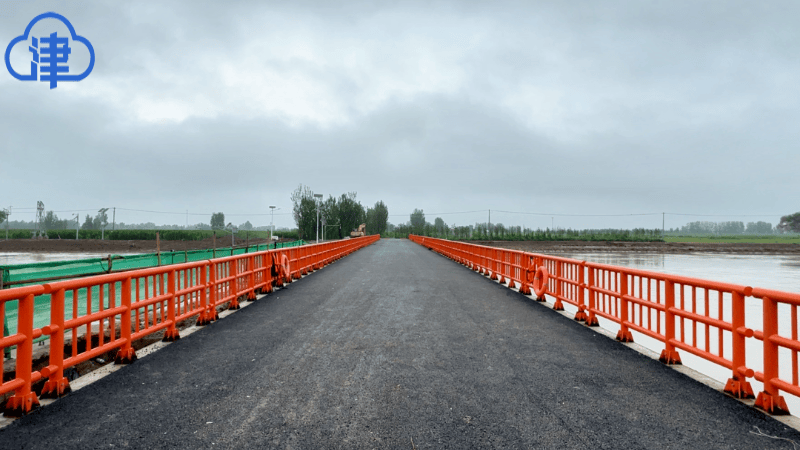
The river in front of me is still the same river, but it seems that its “temper” has changed. Change, where does it come from?
(一)
Yongding River flows out of northern Shanxi, passes through Yanshan Mountain, and enters Jingu. This river, which has been flowing for thousands of years, draws a winding arc on the map of Beijing, Tianjin and Hebei. It is not only a geographical link, but also a question of governance.
This question starts with the meeting between two village secretaries.
The flood season is coming again, and patrolling the embankments is one of the most important tasks of Kou Zhiming, secretary of the Party branch of Shao Qidi Village. “Only when we see it every day can we feel at ease.” No, during a dike patrol not long ago, he once again met an “old acquaintance” – Wang Zhonghai, secretary of Houshawo Village, Anci District, Langfang. This is not an ordinary “small talk”, but a “conversation”: upstream and downstream, flood conditions and water regimes, key points and issues, they are all clear when they meet face to face. “Not only do we meet and chat, we also have a WeChat group. If you have any questions, let us know at any time.” Following Kou Zhiming up the embankment, you can see Houshawo Village not far away. The two villages are “neighbors” and share a section of the embankment.
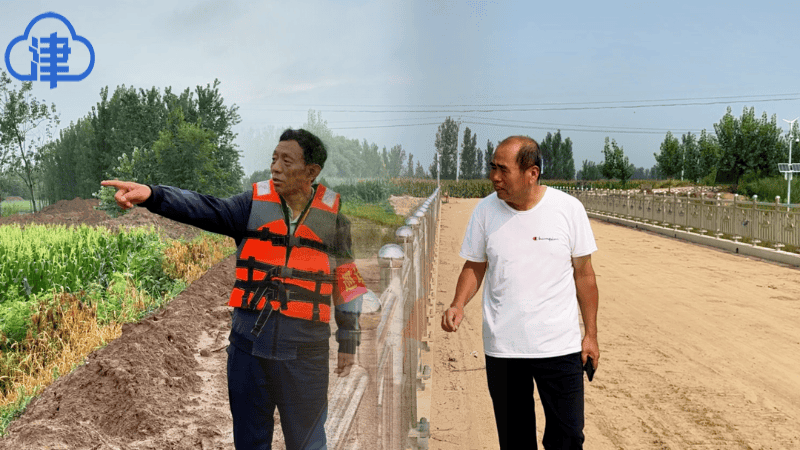
Eyes can see “change”. “In the past, there was always dust and dirt, but now the river bank is green and the scenery is beautiful,” said He Jiangjiang, secretary of the Party Committee of Huanghuadian Town. After the restoration and reconstruction, the river channel has become wider, the water crossing bridge has been reinforced, and the designed flood discharge capacity of the river channel has been increased to 400 cubic meters per second without leaving the trough and 800 cubic meters per second without leaving the trough. Scenery is the quality of governance; numbers are the scale of safety. “Flowing river, green river, clean river, safe river” can be seen.
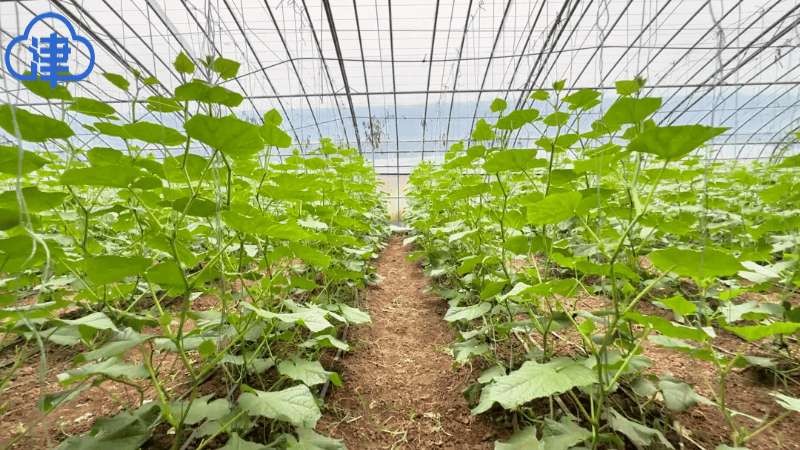
Life can feel “change”. When water comes, life comes. As the saying goes, big rivers are full of water and small rivers are full. According to Kou Zhiming, as the Yongding River is replenished regularly and has water all year round, there is more water in the surrounding ditches, so watering the crops is no longer laborious and the crops grow more happily. He Jiangjiang’s feelings are more concrete. In the past, he planted 2,000 acres of wheat, but now he grows 20,000 acres. The tomatoes grown in the “Zhenying Fruit and Vegetable Base” are sweeter and sell for a higher price. At the same time, the water flow enables water conservancy facilities such as pumps, gates, and culverts to function again, forming a virtuous cycle.
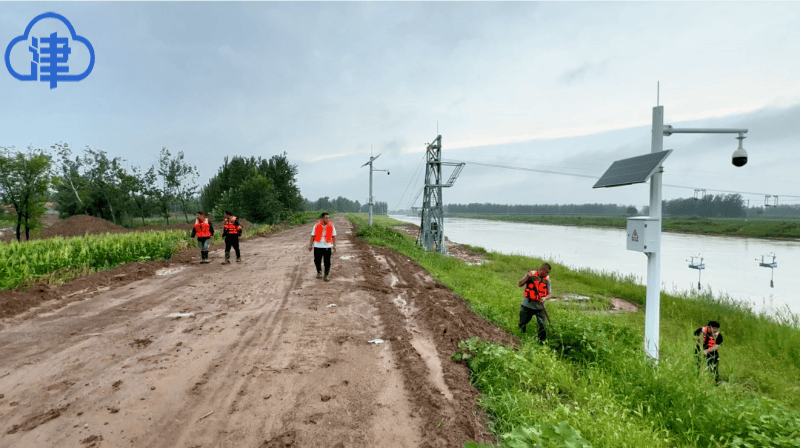
This is the “sum” of a river. Harmony between man and nature, respecting the nature of the river, leaving space for the ecology also opens the way for people’s livelihood; balance between development and security, not occupying the safe space of the river in the name of development, nor giving up livelihood along the river due to choking and waste of food.
As an important water conservation area, ecological barrier and ecological corridor in the Beijing-Tianjin-Hebei-Shanxi region, the changes in the Yongding River have changed the river course, water quality, life, and the way people and the river get along. It is the governance logic of the three places working together. Behind the changes is awe of the laws of nature and an update of development concepts. High-quality development requires finding optimal solutions under multiple constraints. Safety is the most basic constraint, and ecology is the most long-term benefit.
What we seek is exactly this kind of “sum” of economic, social and ecological benefits.
(二)
A big river spans many places. It is “good at silting, good at settling, and good at migrating”. This is its original temperament. How to make it truly “obedient” and achieve clear water, green shores, and joint governance and sharing?
The answer lies in the details of coordinated management of the entire basin.
These details are the characters “Head of Rivers and Lakes” on the embankment sign, the WeChat group that keeps ringing on the village secretary’s cell phone, and the daily routine of patrolling in water and mud.
In 2025, the Standing Committees of the People’s Congresses of Beijing, Tianjin and Hebei successively passed the “Yongding River Protection Regulations”. This is the first time that Beijing, Tianjin and Hebei has carried out coordinated legislation on watershed management and protection, promoting the transformation of Yongding River management from “engineering governance” to “systematic governance” and “governance in accordance with the law.” The three places work in the same direction under the same concept, the same overall situation, and the same mechanism, clenching into one fist to protect the same river.
Today, the river and lake chief system allows every river and every lake to be managed and protected by someone. It sounds very “lofty”; in practice, it is very down-to-earth. For the village secretary, the mechanism means “seeing, hearing and asking about” the river at the door every day; for the villagers, the mechanism means “money scene” – the water quality is better, and more cash crops can be grown; for tourists, the mechanism means the river is cleaner, there are more water birds, and going out for fun is more “film-making”…
“Not only do you have a river in your eyes, but you also have a river in your heart.” The insights of a river chief bring us enlightenment. Collaborative governance is not a system hanging on the wall, but is specific and subtle, sharing information, sharing responsibilities, and solving problems together. This is “unity” at the grassroots level, simple and effective.
Simply put, the “harmony” of a river comes from the “union” of three places. Ecological environment, joint prevention and joint treatment, the new era is full of possibilities, including the power of moving mountains and reclamation, and the gentleness of protecting vegetation. From this, we have witnessed not only the conservation of economic and ecological values, but also the improvement of development concepts and governance precision. Recognize changes, seek changes, and do good deeds. Good mountains and rivers can nourish a good life. Strengthen ecological and environmental protection in all aspects, all regions, and all processes, consciously integrate new development concepts into the entire process of economic and social development, comprehensively consider various factors such as development quality, speed, scale, and efficiency, solve the “multiple equations” with strategic thinking and systemic concepts, preserve good mountains, good water, and good ecology, and increase the “green content”, and the “gold content” of development will be more sufficient.
“The Yongding River has become beautiful and will be even more beautiful in the future.” More stories about a river are waiting for us to write.