In Ju County, Shandong Province, Fulai Mountain is not very high. The altitude is less than 300 meters. On the Qilu land, which is famous for its majestic Haidai, Fulai Mountain is not famous for its majesty.
But the mountain is not high, the beauty of Fu Lai Mountain lies in a tree.
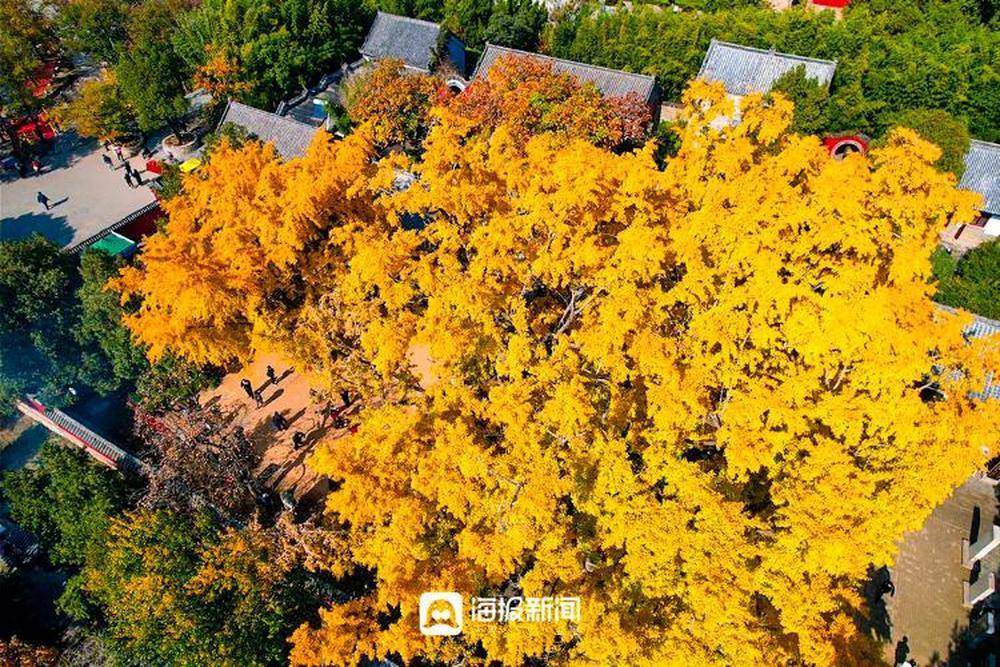
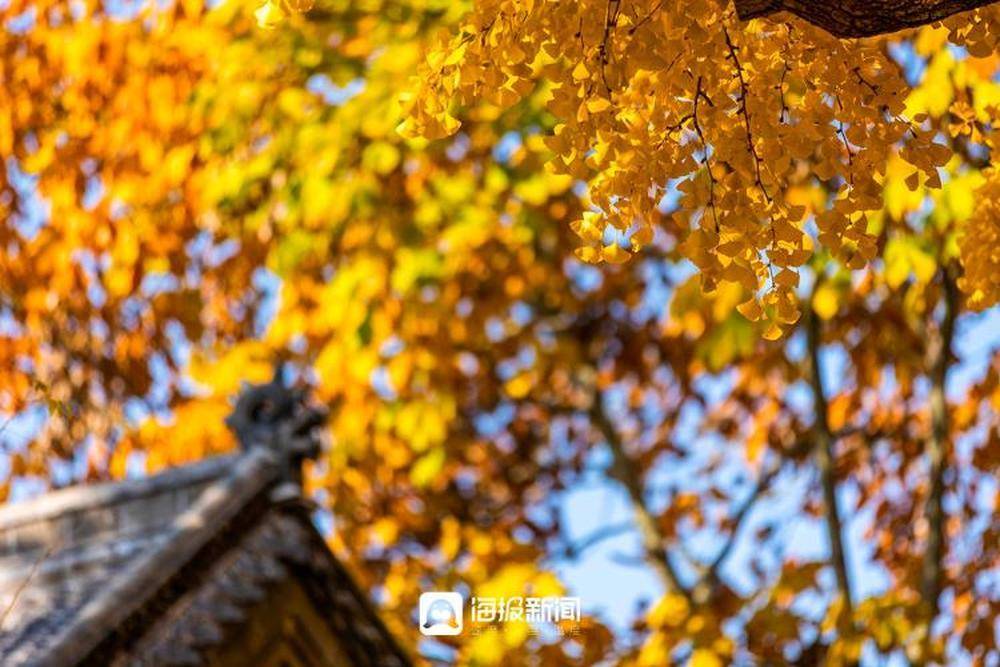
The tree is 26.7 meters tall and 15.7 meters in circumference. A dozen or so people can just stretch out their arms to surround it. The crown spreads out, covering nearly a thousand square meters, and looks like a slowly rising golden hill from a distance. The locals call it “the best ginkgo tree in the world” and also call it “the ancestor of ginkgo”. It is nearly 4,000 years old.
What is the concept of four thousand years? It grew from the soil of the Shang and Zhou dynasties, and passed through the wars of the Spring and Autumn Period, the smoke of the Qin and Han Dynasties, the Sanskrit singing of the Southern and Northern Dynasties, and the poetry and wine of the Tang and Song Dynasties. It has grown to this day, and still sprouts new leaves every spring, and holds the tree full of golden color every autumn.
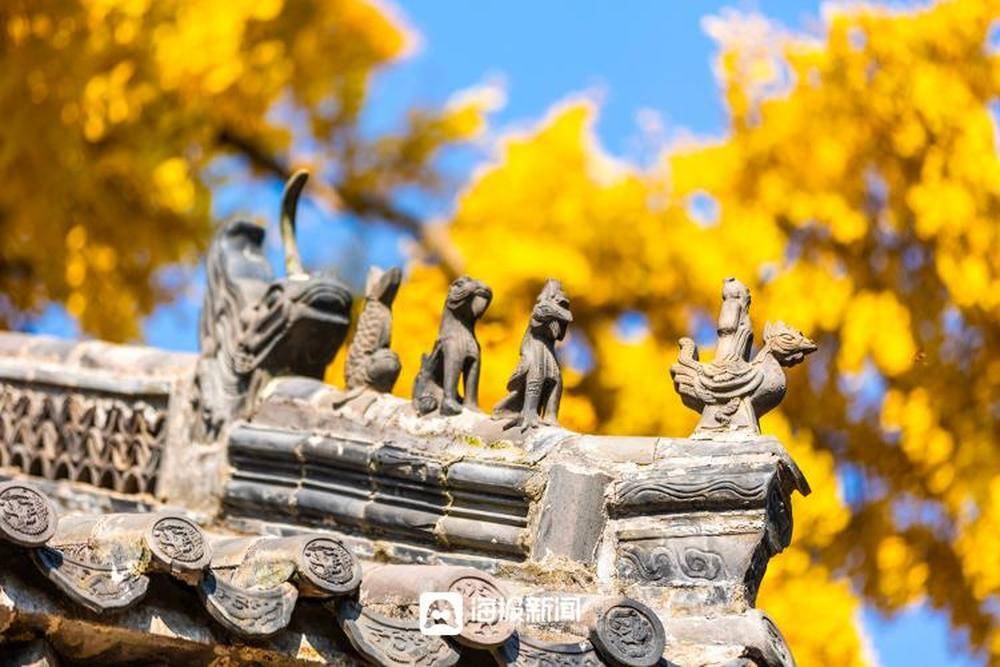
The most famous “appearance” of this tree was in 715 BC.
“Zuo Zhuan” records: “In the ninth month of Xinmao, the Duke and the people of Ju made an alliance in Fu Lai.” Duke Yin of Lu and the king of Ju made a bloody alliance under this ginkgo tree and ended the war. It was the early Spring and Autumn Period, when the disputes between the princes had just begun, and the rift between the two countries of Lu and Ju was temporarily resolved under the shade of a ginkgo tree. At that time, this ginkgo tree was already a towering tree. Later generations called this alliance the “Big Tree Dragon Pan Meeting among the Princes”.
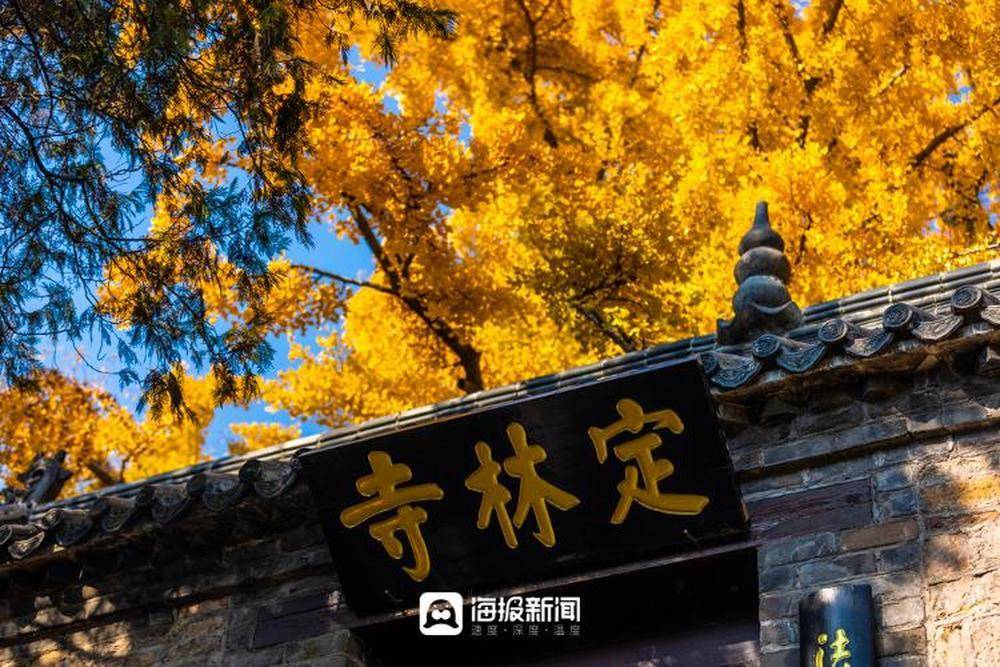
As time went by, in the Southern and Northern Dynasties, Liu Xie, a literary theorist of the Southern Dynasties, returned to Judi in his later years and lived in seclusion in Dinglin Temple to study the classics. The two-story building in the temple has the words “School Scripture Building” on the forehead, which were inscribed by Guo Moruo in 1962. Those sentences about the bones and soul of the article were born under the shade of this ginkgo tree, sharing the same morning mist and moonlight in the mountains with its green branches and leaves. More than a thousand years later, Guo Moruo inscribed the two-story building in the temple as “School Scripture Building”.
The inscriptions under the tree are layered one on top of another. In the Jiawu Year of Shunzhi in the Qing Dynasty, Chen Guoguo, the governor of Juzhou, erected a stone tablet, saying that this tree “has no decay from its trunk to its branches, so it is a wonder.” Chen Yanze, a country squire in the Republic of China, also erected a monument and left a message: “I hope that those who come after me will care about it and protect it at any time.” The growth rings of the ginkgo have grown one after another, and the people who protect the tree have also changed from generation to generation.
In Judi, this ginkgo tree is called the root of “Fushan Shoudi”. Every autumn, the leaves are decorated with a ring of gold from the edges, and then “changed” inch by inch until the entire tree is golden. People come from all over to tie red ribbons under the tree, ring prayer bells, and say their beautiful wishes to an ancient tree.
In June 2024, it was recognized by the Guinness Headquarters of Shanghai World as “the oldest round-bell ginkgo tree”. In August 2025, it appeared on China Post’s “Old and Valuable Trees” special stamps, becoming the only ancient tree in Shandong selected for this series. It was also the first time that the sunshine element appeared on China Post’s special stamps since the founding of the People’s Republic of China.
The CCTV documentary “It’s Better to See a Tree” focuses its camera on it. Zhao Lijian published two promotional articles on social media. “Third Grandpa” in Juxian County speaks with a “London accent” and uses his local accent to send out an autumn invitation to the entire network under the tree. The ancient ginkgo tree “goes out of the circle” again and again, and is seen and paid attention to by people from all over the world.
At the beginning of November every year, the ancient ginkgo enters the best viewing period. The trees are covered with gold and the fallen leaves cover the ground. The courtyard of Dinglin Temple seems to be soaked in sunlight. A ginkgo avenue extends from Fulai Mountain, linking Dinglin Temple and the ancient city of Ju into a golden corridor. There are a large number of tourists on the moss steps, the surrounding merchants are crowded with customers, the supply of cultural and creative products exceeds the demand, and the ginkgo industry is booming. Four thousand years of roots are rooted in the soil, and golden branches and leaves have penetrated into local life. The “golden industries” spawned by the golden color have been transformed into tangible economic benefits, cultural tourism vitality, and industrial momentum.
Standing in the yard of Dinglin Temple in Fulaishan and looking up at the ginkgo tree, it is easy to get the illusion that time is passing elsewhere but is accumulating here. The place where Lu Yingong stood, the path Liu Xie walked, the stone tablet erected by Chen Quanguo, and the plaque inscribed by Guo Moruo are all stacked under the same shade of trees.
It has seen the banners of the alliance, the lamps and candles with books, watched the inscriptions on the poem stele being gradually faded by wind and rain, and experienced the growth of spring and summer, and the golden color of the trees in autumn.
Then it met you and me, on an ordinary afternoon.
So four thousand years of autumn colors are all here.
Related Reading
- AI discovers serious vulnerabilities and many government websites were shut down urgently2026-10-28
- The Japanese government sets standards, and Osaka and other four places compete to become “deputy capitals”2026-10-28
- National standards for accompanying patients will be implemented and service providers will be limited to institutions2026-10-28
- Russia and Ukraine have a regional ceasefire in the Kherson region, but fighting has not stopped in many other places2026-10-28
- A wild winter is brewing. Here’s what meteorologists want you to know.2026-10-28