Adidas’ dominance of the German shoe market is coming to an end.
On October 21, Adidas announced preliminary performance data for the third quarter of fiscal year 2026 as of September 30: global revenue reached 7.252 billion euros, a year-on-year increase of 7% under currency neutrality; operating profit reached 1.008 billion euros; gross profit margin increased by 2.5 percentage points to 54.3%.
Both revenue and profit hit new highs, but there are also hidden worries behind the growth.
Adidas global CEO Bjorn Goulden said that the football, running and training sectors have achieved high profit growth; the lifestyle business is mainly driven by clothing series, while the lifestyle footwear sector still faces the pressure of high inventory and excessive discounts in the industry.
Breaking down lifestyle footwear, the growth rate of Adidas’ footwear business is slowing down: 17% in 2024, 12% in 2025, 4% in the first quarter of 2026, and 1% in the second quarter, compared with 17% and 9% respectively in the same period last year.
The growth rate of Adidas lifestyle segment will be double digits in 2024, 12% in 2025, 6% in the first quarter of 2026, and 2% in the second quarter, compared with double digits and 13% respectively in the same period last year.
Regarding the pressure on lifestyle shoes, Adidas attributes it to the external market environment: the overall inventory level of the global retro casual sports shoe track is relatively high, wholesale channels and discount retail continue to increase volume, competing products generally increase discounts, and the market price environment therefore weakens.
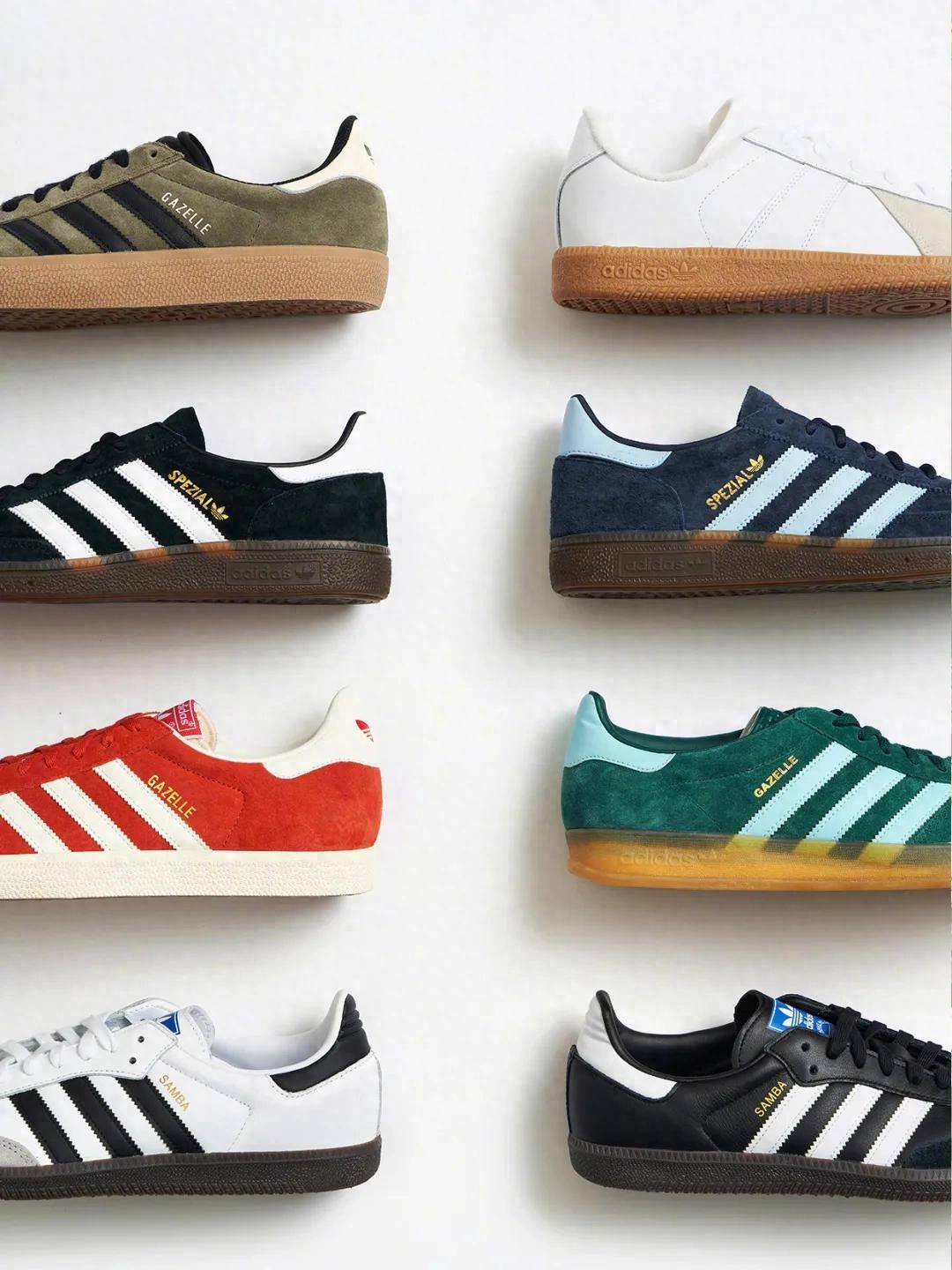
Specific to products, moral training shoes such as Samba and Campus, which have been responsible for the main growth among retro casual shoes in recent years, cannot avoid the influence of this trend.
Take Samba as an example. As of press time, the discounted price of this product in the Tmall Adidas official flagship store is 610 yuan, about 21% off the original price; on the Dewu platform, taking size 38 as an example, the transaction price is 396 yuan, about 46% off the original price.
Judging from the volume, there are also signs of cooling down. On the Xiaohongshu platform, the contents with higher number of likes in Samba-related notes are mostly officially released by the brand and promoted with celebrity topics. The naturally generated discussion among users has obviously decreased.
However, the retro casual shoe track has not turned cold as a whole. Taking Dexun shoes as an example, new domestic brands such as PANE and Shixia are gaining market attention.
On multiple social platforms at home and abroad, videos of foreign tourists queuing up to buy shoes in Chinese stores have been widely circulated, with some videos receiving thousands of likes. This popularity is also reflected in sales figures. Tmall data shows that PANE’s GMV on the platform will exceed 100 million yuan in 2025; in its official Tmall flagship store, the sales of classic moral training shoes such as Qingxun No-Gi and Breeze have exceeded 10,000 yuan. The Tmall official flagship store has a variety of ballet training shoes, with nearly 10,000 pairs sold.
There are different judgments in the industry regarding the weakening of Adidas moral training shoes. Zhang Yi, chief analyst of iiMedia Consulting, believes that retro casual shoes have been the core growth engine of Adidas’ lifestyle segment in the past two years. The weakening growth momentum will directly lower the overall growth rate of footwear. However, high-margin products in professional sports lines such as running and football can still support the company’s resilience and are not expected to have a big impact on profits.
Zhou Ting, president of the Yaoke Research Institute and a luxury goods expert, focuses on the longer-term hidden problem – the loss of brand fashion voice. In her opinion, Samba’s popularity does not stem from how comfortable or high-tech it is, but is driven by the fashion circle, celebrities and high-end consumers; this group is the vane of brand pricing and aesthetics, and their changes are directly reflected in the terminal price. When these consumers turn to brands such as PANE and AZHI, Adidas loses not only the sales of a single style, but also the right to speak fashionably about lifestyle.
However, Adidas has not launched other retro casual shoes in the past two years. Judging from the content released on the official social account of Clover (Originals), Stan Smith and Superstar have been the main series promoted in the past two years. Adidas has also made product innovations based on classic shoe styles. For example, the Superstar’s toe is changed from a round toe to a square toe.
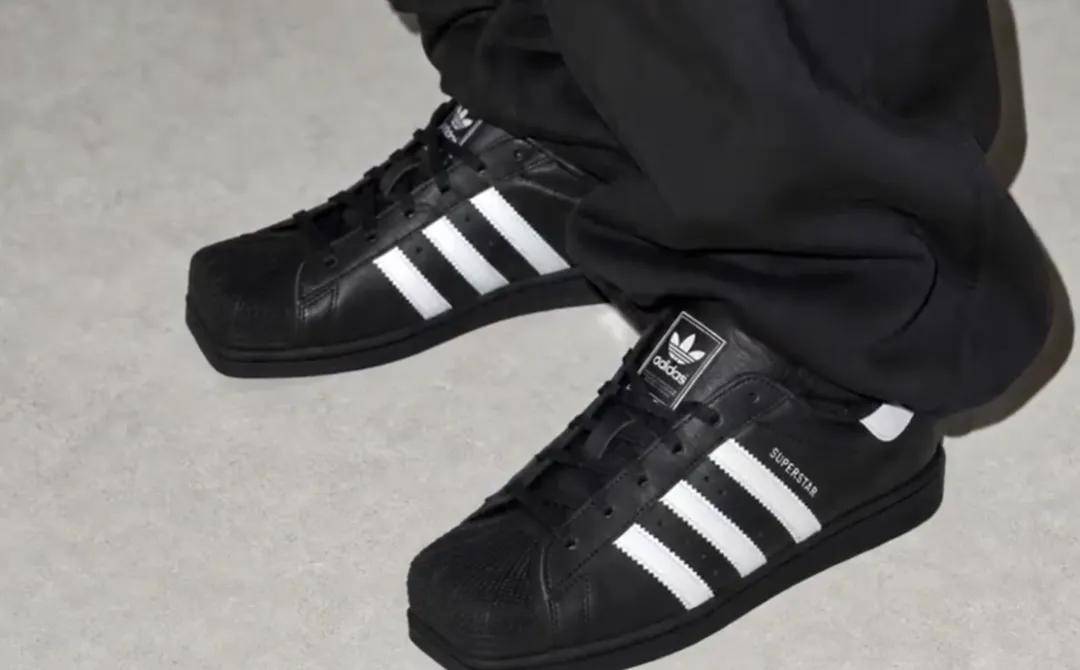
However, both products failed to replicate the popularity of Samba. Data from Tmall’s official flagship store show that as of press time, Superstar’s highest-selling link has sold 50,000+ pairs; and in 2025, Samba’s sold sales have reached 70,000+ pairs or even higher. On the Xiaohongshu platform, sorted by the number of likes, the number of likes for highly praised notes related to Stan Smith is only 2,000+.
Another path is localized innovation. In 2026, Adidas Shanghai Creative Center will launch two shoes, Anfu and Changle (changle), for the Chinese market. Judging from market feedback, the popularity of the two products has not yet reached a large scale. The links with the highest sales volume in Tmall’s official flagship store have both sold 1,000+ pairs.
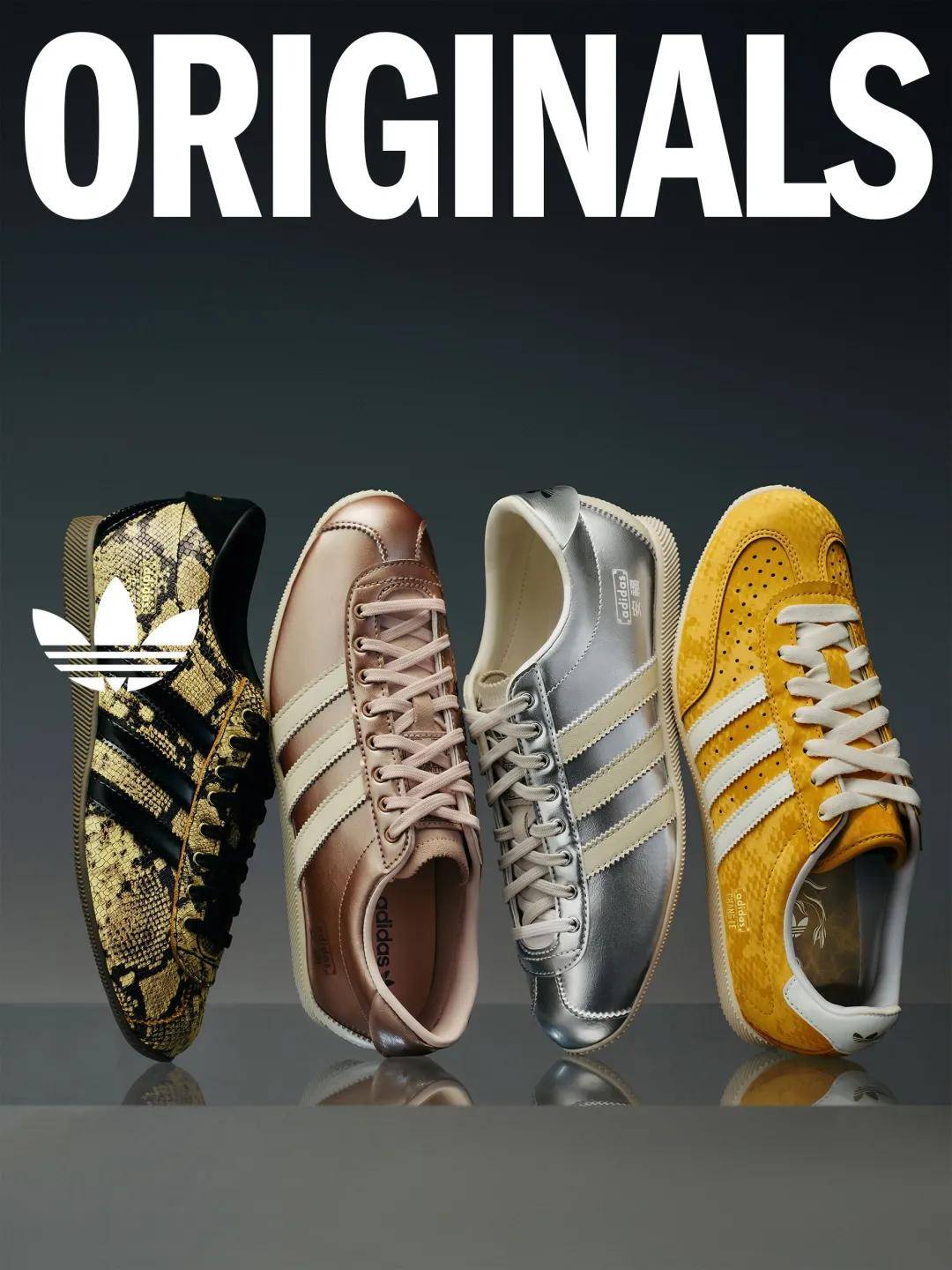
In Zhou Ting’s view, the competitive environment faced by Adidas has changed: luxury brands such as Loewe, Balenciaga, and Prada have entered the field of sports shoes, raising the price and aesthetic upper limit of sports and casual shoes; domestic brands such as PANE and Azhidao are selling and curating retail at prices ranging from 800 yuan to 1,000 yuan, taking on the aesthetic needs of the middle class. Adidas is in between the two – it is difficult to enter the high-end series, and it is difficult to return to the cost-effective market.
Regarding Adidas’s shift in focus towards apparel, Zhang Yi believes that this is a proactive adjustment under passive environmental changes. He believes that the advantages of clothing are rich styles, many SKUs, and fast new arrivals, and can quickly absorb the popularity of Clover IP; however, the ability of clothing to sell items is weaker than that of footwear, the competition threshold is lower, the stability of repurchases and premiums is weak, and the seasonality is more obvious. In the long run, Adidas will have a lot of pressure to let clothing carry the banner of footwear.
Author: Jia Shihui
Related Reading
- Inflation under Trump is only about half the rate under Biden. Voters are still just as mad.2026-10-26
- Original: Global PC manufacturers have also entered the “misfortune competition”?2026-10-25
- Original Zong Fuli’s confidant was revealed to have resigned, has Wahaha’s chairman become a “hot potato”?2026-10-25
- The post-95 generation Prince Anta joins the Arc’teryx board of directors2026-10-25
- The “Great Migration” of Over One Trillion Yuan Deposits, Why Are Funds Flowing to Insurance?2026-10-25